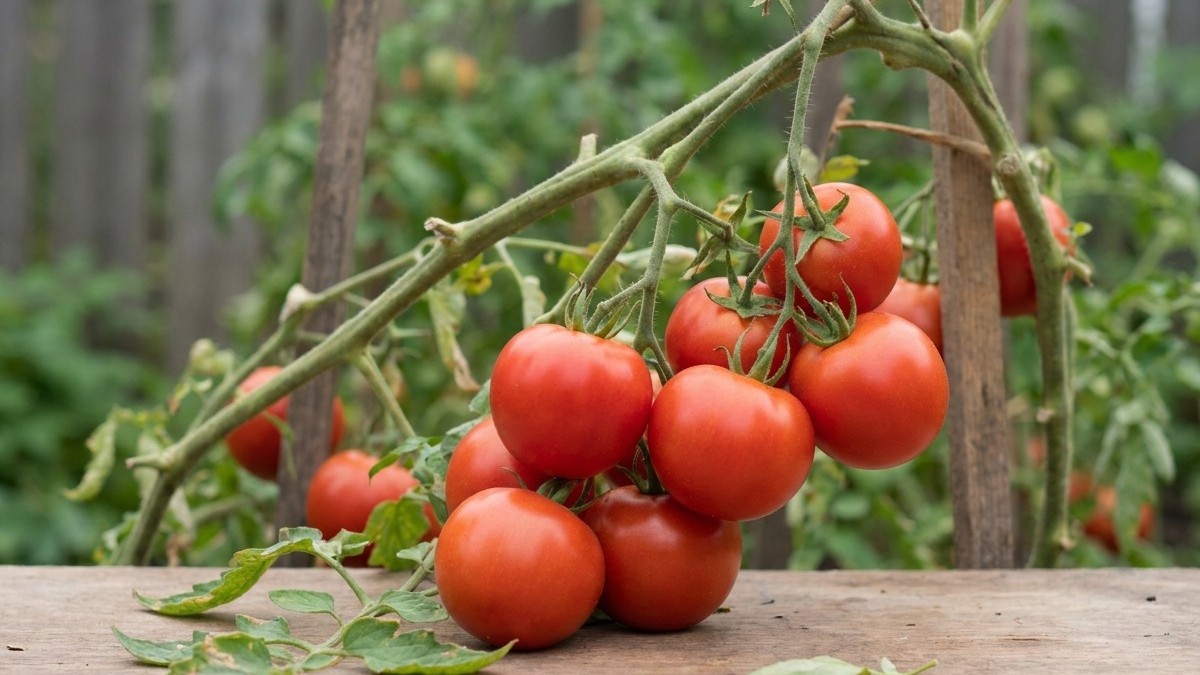

The short answer: most Island tomatoes get picked as they change color, not when a calendar says so, but the season itself is capped by the first fall frost, which averages October 17 at the Charlottetown station. That date is a midpoint, not a guarantee, so the real skill is watching both the plant and the forecast at the same time.
When to pick tomatoes in Prince Edward Island
The mechanism that actually decides your harvest date isn’t the calendar, it’s the gap between two averaged frost dates and how much of that gap your tomato plants got to use. Environment and Climate Change Canada puts the average last spring frost at Charlottetown A at May 16, and the average first fall frost at the same station at October 17. Subtract one from the other and you get a season of roughly 154 days from frost to frost, on paper. Tomatoes started from transplant, as almost all Island tomatoes are, don’t need the full window, but they do need every week of warmth they can get, because Charlottetown sits in Canadian hardiness zone 5b, a system built on seven climate variables rather than the single-variable USDA scale used south of the border. That zone number describes the reference city itself, not the whole province, and it should never be read as a USDA equivalent.
Here’s the part growers tend to misunderstand: an average frost date is not a safety line. It’s a midpoint. In one year out of two, the first fall frost at Charlottetown arrives after October 17, sometimes well after. In the other half, it comes earlier. Treating October 17 as a hard cutoff for picking is exactly backward, since half the seasons on record don’t respect it in either direction.
The numbers side by side
| Measure | Value | Station |
|---|---|---|
| Average last spring frost | May 16 | Charlottetown A |
| Average first fall frost | October 17 | Charlottetown A |
| Hardiness zone (Canadian system) | 5b | Charlottetown |
What this means for picking: the ripening color change on any given fruit, from green to a light blush of pink through to full color, tells you more about readiness than the date on the wall. But once nights start dipping toward frost territory, the color clock and the weather clock start racing each other. Coastal parts of the Island often lag a few days behind or ahead of Charlottetown depending on wind exposure, and inland or elevated ground can run cooler at night even without a documented figure to point to. If your garden sits in a low spot that collects cold air, expect your own frost to show up before the provincial average does, and plan your last picking pass accordingly.
What to do with the green ones
When frost is closing in, and the plant is still loaded, the decision isn’t whether to pick, it’s how to sort what you pick. Not every green tomato is the same tomato. A fruit that’s still hard, pale, and small has barely started its ripening process and likely won’t turn into much worth eating. A fruit that’s full-sized, glossy, and has gone from dark green to a slightly lighter, almost whitish-green shade is what growers call “mature green,” and that one has already done the hard work internally, it just hasn’t started showing color yet. Sorting by this difference before frost hits saves you from wasting counter space on fruit that was never going to ripen anyway.
The practical move, once a frost warning is on the horizon, is a full sweep of the plant rather than a selective pick. Take everything that’s mature green or further along, leave the truly immature small green fruit on the vine if you’re not in a rush (they may still swell a little more before the cold), but don’t gamble the whole crop on a forecast that could shift overnight. Some growers pull entire plants by the roots and hang them upside down in a garage or shed, letting the fruit finish on the vine in a sheltered spot rather than picking individually. Both approaches work; the vine method takes up more room but keeps fruit attached to its original supply line a little longer.
Handle green tomatoes gently during this pass. A bruised green tomato often rots before it ripens, since the skin hasn’t yet built up the resilience it would have at full maturity. Wipe off garden debris rather than washing them at this stage, since added moisture sitting on the skin during storage is one of the more common reasons a promising green tomato turns into a soft, spoiled one before it ever colors up. If a fruit already has a soft spot, a crack, or visible mold when you pick it, use it right away or discard it. It won’t improve in storage, and it can speed up decay in fruit sitting nearby.
This sorting step matters more in Prince Edward Island than in places with a longer, more forgiving fall, simply because the margin between “still ripening on schedule” and “frost tonight” tends to be a matter of days once the first week of October arrives.
Ripening indoors, and how long they keep
Mature green tomatoes ripen indoors through the same internal process they’d use outdoors, they just need warmth and a bit of patience instead of sunlight. In fact, direct sun on a windowsill isn’t necessary and can actually cause uneven softening on the side facing the glass. What ripening tomatoes actually respond to is ethylene gas, which the fruit itself produces in small amounts as it matures, and warmth in the 60s to low 70s Fahrenheit, roughly normal indoor room temperature.
A common approach is to place green tomatoes in a single layer in a cardboard box or paper bag, not stacked or crowded, and check them every couple of days. Adding a ripe banana or apple to the bag concentrates the ethylene those fruits give off naturally and can speed up the color change in tomatoes stored alongside them. Some growers wrap each tomato individually in newspaper instead, which slows moisture loss and makes it easy to spot one that’s starting to spoil before it affects its neighbors.
How long the process takes
Ripening time varies with how far along the fruit was when picked and how warm the storage spot is, so there’s no single countdown that applies to every tomato in the batch. A fruit that was already showing a blush of pink when picked will color up faster than one that was still fully green. What’s consistent is the order of events: color deepens first, then the fruit softens, and it’s ready to eat once it reaches the color and give you’d expect from a vine-ripened one of the same variety.
Refrigeration is the one habit that works against you here. Cold air below about 55 Fahrenheit interrupts the ripening process and damages the texture of the fruit, leaving tomatoes mealy and flavorless even after they eventually turn red. Keep ripening tomatoes on a counter or in a box at room temperature, and only refrigerate fruit that’s already fully ripe and needs to hold a few extra days before use. Fully ripe tomatoes stored at room temperature generally hold their quality for less time than those still working through the ripening process, so it makes sense to eat or preserve the reddest ones first and let the greener ones take their time in the box.
What goes wrong here
The most common mistake isn’t picking too early, it’s picking too late and trusting a single average date to protect the harvest. Because October 17 is a mean figure from Environment and Climate Change Canada rather than a guaranteed cutoff, growers who wait for “the frost date” on the calendar sometimes lose a whole flush of fruit to an early cold snap that arrives well before that average. The safer habit is watching the forecast for frost warnings rather than counting down to a fixed day.
The second mistake is picking fruit that was never going to ripen in the first place. Small, hard, deep-green tomatoes picked in a panic sweep often just shrivel or rot in storage instead of coloring up, because they hadn’t reached the mature-green stage where internal ripening processes are already underway. Sorting before storing, rather than bagging everything together, prevents one rotting immature fruit from taking down a whole box of otherwise promising tomatoes.
Refrigerating green or partly ripe tomatoes right after picking is another frequent misstep, and it’s an easy one to fall into if the fridge feels like the obvious safe place to put produce. Cold temperatures below roughly 55 Fahrenheit stall the ripening process and leave the fruit mealy once it does eventually turn color. A dry countertop or ventilated box at normal room temperature does the job far better.
Finally, growers sometimes underestimate how much their own yard varies from the provincial average. A garden in a low, still pocket of cold air can see frost days before a garden on higher, breezier ground nearby, even within the same community. Since the province’s normals come from a single station, that local variation is worth watching for firsthand rather than assumed away. For general growing-season guidance specific to the province, the Prince Edward Island agriculture resources page is a starting point.
Common questions
Is October 17 a safe date to leave tomatoes on the vine until?
No. That figure is an average first fall frost date for the Charlottetown A station, meaning in roughly half of past seasons frost arrived earlier than that, and in the other half, later. Treat it as a rough midpoint of the risk window, not a deadline you can plan around with confidence.
Does Canadian hardiness zone 5b tell me anything about frost timing?
Not directly. The zone rating reflects a broader set of climate variables and describes long-term conditions at the reference city, not a specific frost date. It’s also a different scale entirely from the USDA zones used in the United States, so it shouldn’t be compared side by side with American zone numbers.
Can every green tomato ripen indoors?
Only fruit that has reached full size and the mature-green stage has a good chance of ripening well off the vine. Small, hard, dark-green tomatoes picked too early usually don’t develop proper color or flavor and are better used for cooking while still green, if used at all.
Why did my ripening tomatoes turn mealy instead of ripening properly?
This usually points to refrigeration during the ripening process. Storing green or partly ripe tomatoes below about 55 Fahrenheit halts the internal changes that build flavor and texture, so even if the fruit eventually turns red, it won’t taste or feel the way a properly ripened tomato should.