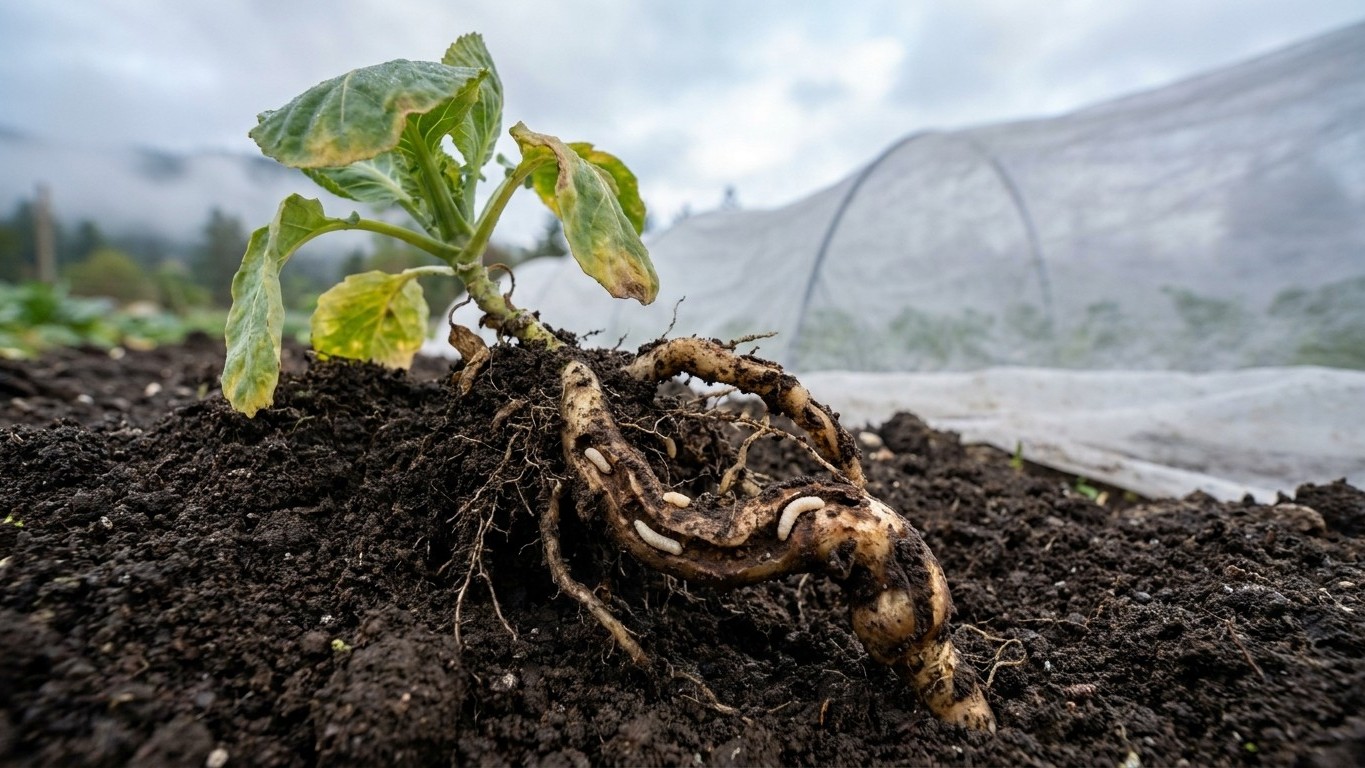

The best sweet potatoes for Quebec are the fast ones: varieties rated at roughly 90 to 100 days from transplanting, planted as slips on warm soil, ideally under black plastic or a low tunnel. Montréal’s frost-free stretch runs about five months on average. That is enough for early types and risky for the slow ones. For the full growing picture, see Growing Sweet Potatoes in Quebec.
The short answer for Quebec
Choose by type, not by brand name. Pick short-season varieties first, mid-season ones only if you can warm the soil early, and skip anything sold for the deep South’s long summers. The table lays out the decision. The day counts are typical seed-catalog ratings measured from transplanting, not figures from this page’s climate data.
| Type | Typical catalog rating | Verdict for Quebec |
|---|---|---|
| Fast, short-season | About 90 to 100 days | Best bet; give it first pick of your warmest bed |
| Mid-season | About 100 to 110 days | Workable with plastic mulch and a tunnel, in a good year |
| Long-season | 120 days or more | Poor odds; roots stay thin before frost |
Catalogs commonly place Georgia Jet and Beauregard in the faster group. Check the day count on the tag, because ratings vary between sellers. This page has no Quebec trial results for specific varieties, so treat names as starting points rather than endorsements.
The reasoning comes from the frost dates. At the Montréal/St-Hubert A station, the average last spring frost is May 6 and the average first fall frost is October 5 (Environment and Climate Change Canada, 1981-2010 normals). Those are mean dates, not safe dates. In one year out of two, the spring frost falls after May 6 and the fall frost arrives before October 5. Treat each as the middle of a window.
Sweet potatoes also cannot go out on the last frost date. They sulk in cold soil, so planting happens well after May 6, which shaves weeks off that five-month span. The When to Plant Sweet Potatoes in Quebec page covers that timing in detail.
Heat is less of a barrier than people assume. At Montréal/Pierre Elliott Trudeau Intl A, the average is 9.3 days a year above 30 °C and 2.8 days above 32 °C. Those are counts of hot days, not a verdict on the season. What decides the harvest is the length of the frost-free period and how warm the summer runs overall. Quebec is a short-window place for sweet potatoes, not a hopeless one.
What will not work here
Long-season varieties lead the failure list. A type that needs 120 days or more has to be in the ground by early June and still get lucky with an October that arrives late. With a mean first frost of October 5, half of all years end the season earlier than that. The usual result is a handful of pencil-thin roots and a lot of leafy vine.
Planting on the average last frost date is the second mistake. May 6 sounds like permission, but it is the midpoint of a spread, and soil stays cold long after the air feels mild. Slips set into cold ground stall, and a stalled slip loses weeks you do not have. Short seasons punish early enthusiasm as much as late starts.
Leaving vines out past the first frost also costs you. Frost blackens the foliage, and cold-damaged roots store poorly. Watch the forecast in late September and be ready to dig ahead of a cold night, since October 5 is only an average.
Weekly watering on a fixed schedule is a quieter problem. Rain at Montréal/Pierre Elliott Trudeau Intl A averages 269 mm (10.6 inches) across June, July and August, out of 1001 mm (39.4 inches) for the year. June is the driest summer month at 87 mm (3.42 inches), and July and August run slightly higher. That is no drought climate. A gardener who waters on autopilot on top of regular rain risks waterlogged roots, especially on clay, which can hold a downpour for a week.
Close spacing suffers the same way. Sweet potato vines sprawl, and crowded foliage holds humidity and slows drying after rain. Setting slips about 30 cm (12 inches) apart, in rows 90 to 120 cm (3 to 4 feet) apart, keeps air moving. A raised ridge or mound helps clay beds drain; a flat bed in heavy soil during a wet August invites rot.
One caution on the numbers: these rainfall normals cover 1981-2010, while the US figures elsewhere on this site cover 1991-2020, so the two are not directly comparable. They describe what the region can usually expect at one airport, not your yard. A straight-sided jar left in the bed will tell you more about your own plot than any normal can.
What changes across Quebec
Every figure above comes from the Montréal area. For that reference city, Natural Resources Canada lists plant hardiness zone 5b (1991-2020 normals). That is the Canadian system, built on seven climate variables, and it does not convert to a USDA zone. NRCan itself says there are no simple conversions between the two. Quebec also stretches far beyond Montréal, so there is no single zone for the province and no single answer.
The frost figures carry the same warning. The St-Hubert station is one point on the map, and northern or upland districts run weeks behind it. Less season means fewer varieties will finish. A reader in the Laurentians, the Saguenay or the Gaspé should treat the fast types as the only realistic choice, not just the best one.
A few shifts help as you move north or uphill. Start with the earliest-maturing variety you can find. Plan to set slips out later than the Montréal timing, because the soil warms later too. Lean on black plastic and a low tunnel to buy back warmth. Put the crop on your best exposure, such as a south-facing slope or the base of a wall that holds heat. Growing in large containers is another option, since the soil warms faster than the ground and you can move the pots indoors if a hard frost threatens.
For your own zone, check the map rather than guessing. NRCan’s Canada’s Plant Hardiness Site lets you look up your municipality directly, and it reflects the same 1991-2020 data used for the figure above. Be aware that zone numbers describe winter survival of perennials, which is not quite the question here. Sweet potatoes are grown as annuals, so frost dates and summer warmth matter far more than the zone number does.
Where to check this for your own county
In Quebec the nearest equivalent of a state extension office is the provincial agriculture ministry, MAPAQ, along with the regional advisory networks it works with. Start there for guidance specific to your region. Quebec has regions and MRCs rather than counties, but the idea is the same: the closer the advice comes to your garden, the better it is.
Look for two things. The first is a local planting calendar for warm-season crops, ideally one tied to your region’s own frost dates rather than Montréal’s. The second is any list of varieties trialled in your area. A variety that finished in a trial near you is worth more than a hundred catalog promises. If a sweet potato listing does not exist for your region, ask for results on comparable heat-lovers such as peppers or melons, which face the same short-season squeeze.
A regional recommendation beats a provincial one, and a municipal or local grower’s note beats both. This page is the provincial one. It rests on a Montréal-area reference and gives you the logic for choosing, not a verdict for your postal code. Where a regional calendar contradicts the average dates here, go with the regional calendar.
Checking this against your own garden
Your own observations outrank every date on this page. Three are worth watching, and none needs equipment.
The first is soil warmth by feel. Push your hand a few inches into the bed in the morning. If it feels distinctly cool, the slips will sit still. Beds that feel comfortably warm earlier than the neighbors’ point to a sheltered, sunny, or sandy spot, which is where your sweet potatoes belong.
The second is the first new leaves after transplanting. Healthy slips push fresh growth within a couple of weeks. If they hold their leaves but add nothing new, the soil or the nights are still too cold. A flat patch means wait, cover, or both. A bed that gets going fast tells you it is a warm pocket.
The third is where frost shows up first. Tender plants such as basil or squash leaves will blacken first in the coldest low spots of the yard. If one corner burns while another stays green, you have found a cold-air pocket, and sweet potatoes should stay out of it. Note the date that frost arrives each year. A few seasons of notes will tell you more than any average.
Common questions
Can you really grow sweet potatoes in Quebec?
Yes, with short-season varieties and some help warming the soil. Plan on smaller roots than a Southern gardener would dig. Success depends mostly on starting with healthy slips at the right time and getting the roots out before hard frost.
Should I buy slips or sprout a grocery-store sweet potato?
Slips from a nursery or catalog are more reliable. Store-bought roots are sometimes treated to stop sprouting, and you will not know the variety or its maturity rating. A named, short-season variety gives you the day count you need to plan around.
Do I need black plastic?
It is not mandatory, but with a short season it often makes the difference. Black plastic warms the soil before planting and holds heat afterward. A low tunnel or row cover adds protection on cool nights. In a sunny, sandy bed you may manage without, though it carries more risk.
How do I know when to dig?
Watch the forecast from late September. The mean first fall frost at the St-Hubert station is October 5, so it is only a midpoint. Dig before a hard frost, then cure the roots in a warm, humid spot for a week or two before storing them.