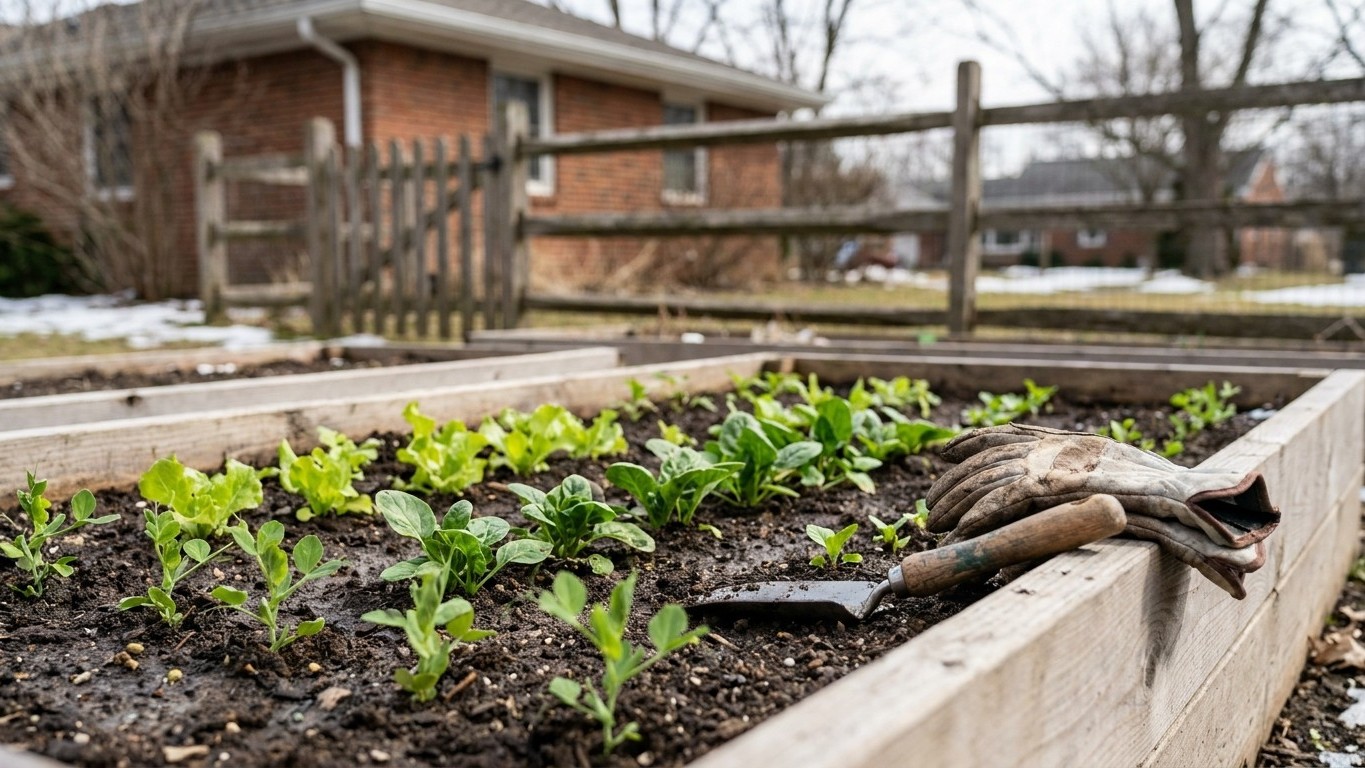

March in Rhode Island sits well before the last spring frost window of April 7 to April 17, so open ground is still off limits for anything tender. What actually goes in this month is narrow: hardy alliums, bare-root stock, and cold-frame greens if the soil has dried out enough to work. Everything else, tomatoes, peppers, squash, waits. Indoors, this is the month seed trays start filling up for the warm-season crops that will go out after that frost window closes.
What goes in the ground in March

The calendar says spring. The soil doesn’t care. What decides whether anything goes into open ground in Rhode Island this month is soil temperature and drainage, not the date on the seed packet. With the last spring frost falling somewhere between April 7 and April 17 at the reference station, March sits in the gap where the air can feel mild on a sunny afternoon while the ground six inches down is still cold, often still wet from snowmelt, and sometimes still locked with frost pockets in low spots and shaded beds.
That gap is not a reason to do nothing. Garlic and shallots planted the previous fall are already in the ground and need nothing more than a check that mulch hasn’t washed away and that standing water isn’t pooling around the cloves. Where a bed has dried enough to crumble rather than clump in your hand, late March is the window for the truly cold-hardy crops: spinach, arugula, and the first pea sowing, all of which tolerate a hard frost after emergence far better than a summer crop tolerates a light one. Onion sets can follow the same logic once the soil is workable.
Bare-root fruit trees, bramble canes, and asparagus crowns are a March job precisely because they arrive dormant and go into ground that hasn’t fully warmed. Planting them now, while they’re still asleep, gives roots weeks to settle before top growth demands water and nutrients they haven’t yet grown the capacity to pull in.
Cold frames and low tunnels extend what’s possible by trapping daytime heat, often enough to let lettuce, mesclun, and radish germinate two to three weeks earlier than they would in the open. Indoors, forcing rhubarb crowns or chicory roots in a dark, cool space gives a harvest of tender stalks or chicons weeks before anything comes out of the garden itself. None of this is a substitute for direct-sowing tomatoes or beans. It’s the difference between waiting out the frost window and using it productively.
What to start under cover
Seed starting in March works backward from the frost window, not forward from a fixed date. With the last spring frost landing between April 7 and April 17 at the reference station, and Rhode Island gardens outside that immediate coastal zone often running a week or two behind it, the arithmetic starts with the crop’s own timeline. Tomatoes and peppers typically need six to eight weeks indoors before they’re sturdy enough to transplant, and they still wait for soil to warm well past the frost date itself, so counting back from mid-to-late May puts the sowing date for those in March, not earlier.
Cool-season transplants move faster. Broccoli, cabbage, and lettuce started from seed need four to six weeks before they can handle a spot under a cold frame or a covered bed, which means a March sowing can be ready for an early-to-mid-April transplant, well ahead of the frost window closing for good.
The two ways this goes wrong are mirror images of each other. Start too early and tomatoes sit in small trays for weeks past their prime, roots circling the pot, stems stretching pale and thin toward whatever light they can find, so that by transplant time the plant spends its first weeks recovering rather than growing. Start too late, particularly for peppers and eggplant, which are slower than tomatoes to size up, and there isn’t enough season left before the first fall frost between October 24 and November 3 to bring a full harvest home. Rhode Island’s frost-free stretch, roughly six months between those two windows, is generous by New England standards but still finite once a slow starter loses its first month indoors.
What is ready to pick
Outdoors, March in Rhode Island offers little. That’s not a gap to apologize for, it’s the honest state of a garden that’s still mostly dormant. What still comes out of it takes some looking. Kale and leeks left in the ground over winter, especially under a layer of straw or row cover, often survive the season’s freezes and thaws intact, and a hard freeze actually sweetens kale’s flavor rather than ruining it. Pull back the mulch, check the leaves haven’t turned to mush, and harvest what’s there.
Cold frames planted the previous fall or in early spring can be yielding baby spinach, mesclun, and arugula by March, cut leaf by leaf rather than pulled whole so the plant keeps producing. Indoors, sprouts and microgreens fill the gap entirely on their own schedule, ready in one to two weeks from seed regardless of what the weather outside is doing, and they’re one of the few crops where March offers no disadvantage compared to July.
The other job this month is inspection, not harvest. Stored squash, potatoes, and onions from the previous fall need a hands-on check now: soft spots, sprouting eyes, or a sweet fermented smell mean that item gets used immediately or composted, not left to spread rot to its neighbors in the bin. A single soft squash in a crate of a dozen can take out the rest within a couple of weeks if it’s not pulled early.
The jobs that matter this month

The work that gets done in March is mostly invisible in the garden itself but shows up in June. Dormant pruning of fruit trees, brambles, and grapevines belongs here, done while the plant has no leaves to lose and before sap starts rising in earnest. Cut now and the wound seals cleanly over weeks of cool weather; cut once growth has resumed and the same wound bleeds sap and invites disease. Blueberries, currants, and gooseberries all take this window too, with old, unproductive canes removed to make room for the ones that will actually fruit.
Seed ordering has its own deadline that has nothing to do with weather: popular varieties, especially disease-resistant tomatoes and heirloom peppers, sell out from suppliers well before the sowing date arrives. Ordering in March for a crop that goes into a tray in April is often already cutting it close.
Soil testing pays for itself now because results take a couple of weeks to come back, and any lime or amendment recommended by the test needs time to work into the soil before planting begins in earnest. Turning a compost pile that’s sat quiet over winter restarts the microbial activity that stalls in cold weather, and a pile turned in March is often ready to use by the time transplants go out.
Tool maintenance is easy to skip and expensive to skip twice: a pruner blade sharpened now cuts cleanly all season instead of crushing stems and inviting disease at every cut. Beds, fencing, and cold frame frames damaged by winter weather are simpler to repair while nothing is growing in or around them yet. Rotation planning, deciding which bed grows tomatoes versus which grows brassicas, is a map best drawn before the first seed goes into a tray, not after.
What not to do in March
The classic March mistake in Rhode Island is reading a 60-degree afternoon as permission to plant tomatoes, peppers, or beans outdoors. Air temperature and soil temperature are not the same measurement, and a warm-season seed sitting in soil that’s still in the 40s will simply rot before it germinates, regardless of how pleasant the day felt. The fix is patience past the last frost window of April 7 to April 17, and even then, waiting until soil has genuinely warmed rather than the calendar alone.
A close relative of that mistake is uncovering cold frames, row covers, or newly emerged perennials after a mild stretch and then getting caught by the next cold snap, which in March is nearly guaranteed. Covers exist precisely because March weather swings hard in both directions; pulling them at the first warm day removes the protection right before it’s needed again.
Working wet soil is a mistake with a longer memory than most gardeners expect. Walking on or tilling a bed while it’s still saturated from snowmelt compacts the structure for the entire season, squeezing out the air pockets roots need and creating a texture that stays clumpy well into summer. Wait for soil to crumble rather than clump before working it, even if that means losing a week of what feels like usable time.
Nitrogen applied too early, before plants are actively growing and able to use it, tends to leach away with spring rain rather than feed anything, wasting the input and occasionally running off into groundwater. Save the nitrogen feed for after transplants are in and growing, not for a bare bed in March.
Checking this against your own county
A state-wide month is a starting point, not an instruction. Rhode Island’s hardiness zones run from 6a to 7b under the USDA system, and that range alone tells you the coastal strip and the inland hills are not on the same schedule. Elevation, distance from Narragansett Bay’s moderating water, and even which side of a hill a garden sits on can shift a frost window by a week or two in either direction from the reference figures cited here. The only way to know your own dates is to track them locally and compare year to year.
The University of Rhode Island Cooperative Extension keeps county-level guidance and a planting calendar built for the state’s actual microclimates, and it’s worth checking before committing a full bed to any of it.
Gardeners who plant by the Moon can check the March 2027 moon planting calendar, a tradition rather than a proven method.
Common questions
Can I plant peas outdoors in Rhode Island in March?
Only if the soil has dried out enough to crumble rather than clump, and only late in the month in most years. Peas tolerate a hard frost after germination, which is why they’re one of the few crops that can go in ahead of the April 7 to April 17 frost window, but they still won’t germinate in waterlogged or still-frozen ground.
Is it too early to start tomato seeds indoors in March?
No, March is typically the right window. Tomatoes need six to eight weeks indoors before they’re ready to transplant, and with the last frost falling between April 7 and April 17, plus extra weeks for soil to warm before transplanting outright, a March sowing lines up well without leaving plants rootbound in their trays.
What can I harvest from a Rhode Island garden in March?
Overwintered kale and leeks under mulch or row cover, cold-frame lettuce and spinach cut leaf by leaf, and indoor sprouts or microgreens started fresh regardless of outdoor weather. Beyond that, March harvests come mostly from the root cellar or pantry, not the bed.
Why does my neighbor’s garden seem ahead of the state average this month?
Microclimate. A garden closer to the coast, at lower elevation, or with more southern exposure can run a week or two ahead of the reference frost dates used here, while an inland or higher-elevation garden often runs behind. The state figures are a starting point; county-level extension data narrows it down.