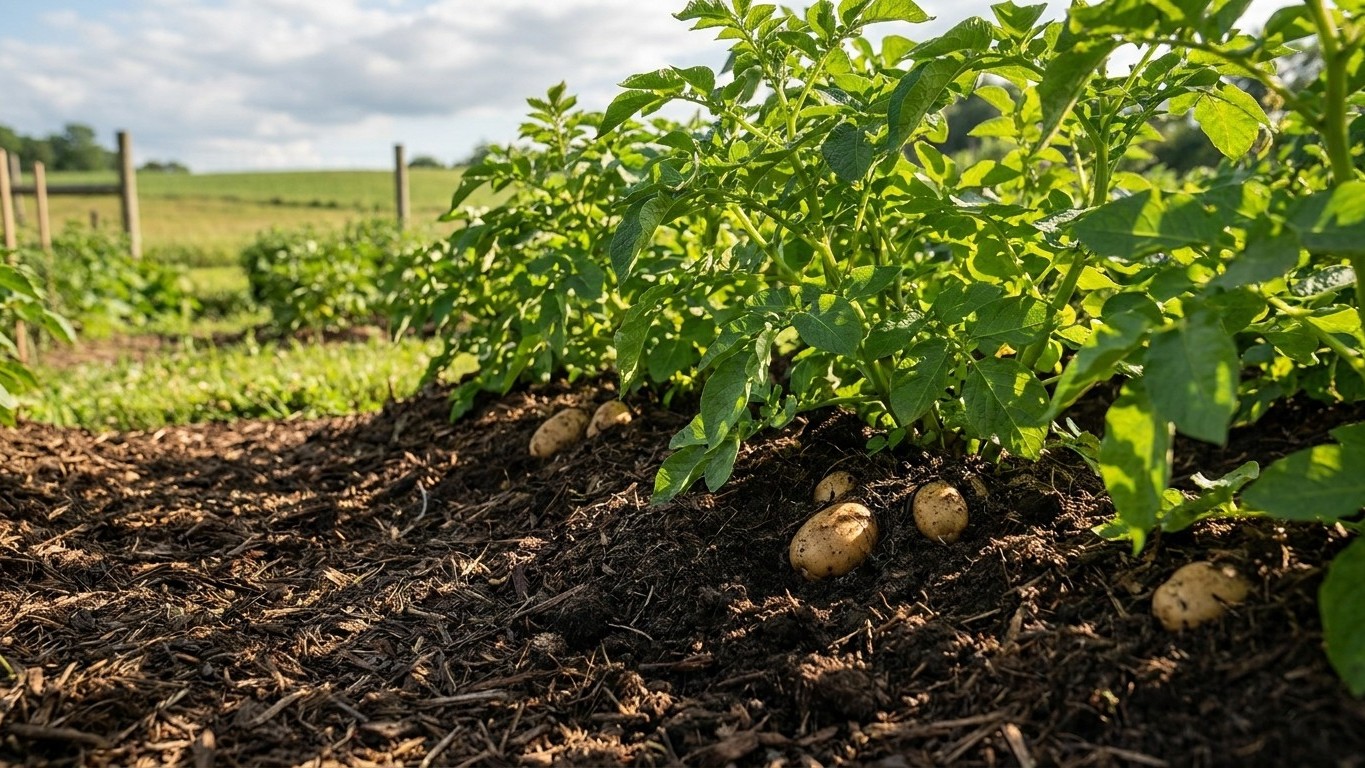

Only one insect on Rhode Island’s documented pest list has any real business in a potato patch: white grubs, including the larvae of Japanese beetle, which chew roots and tubers underground while the adults skeletonize foliage above it. The rest of the state’s tracked pests handle lilies, roses, viburnum, oak trees, and turf, not potato plants. That narrows things down fast, before the calendar even enters the picture.
Which pests attack potato in Rhode Island

University of Rhode Island Cooperative Extension and URI Biocontrol Lab document seven insects with enough regularity across the state to publish guidance on them: Cicada killer wasp, Crypt gall wasp on oaks, Lily leaf beetle (Lilioceris lilii), Rose sawfly (rose slugs), Viburnum leaf beetle, White grubs including Japanese beetle, and Winter moth (Operophtera brumata). That’s the full list this page draws from. No other species gets added here, and if the list looks short for a vegetable-focused search, that’s because it is. URI’s public-facing pest documentation skews toward ornamental landscape plants, since most home reports come from lawns, shrubs, and flower beds, not vegetable rows.
Sorting through that list for potato relevance takes about a sentence per species. Cicada killer wasp doesn’t feed on plants at all; it hunts cicadas to provision its underground nest, so it has no business showing up on a vegetable diagnosis page. Crypt gall wasp forms galls on oak twigs, a tree issue with nothing in common with a potato hill. Lily leaf beetle feeds specifically on true lilies and fritillaries, not on anything in the nightshade family. Rose sawfly larvae, the rose slugs, skeletonize rose foliage exclusively. Viburnum leaf beetle strips viburnum shrubs bare some seasons, but it’s a landscape pest through and through, never reported on potato leaves. Winter moth caterpillars defoliate maples, oaks, and blueberry in spring and have no documented interest in row crops.
That leaves white grubs, including Japanese beetle, as the only entry on this list with a documented connection to potato. The larvae live in soil and feed on roots and developing tubers, while the adult beetles feed on foliage from the top of the plant down. It’s a two-stage pest problem in one insect, which is part of why it causes more confusion than the rest of the list combined.
When each one shows up, and what it does first
Rhode Island’s growing season starts from a frost-free window that runs, according to NOAA NCEI’s 1991-2020 climate normals for the reference station near Providence, from April 7 to April 17. Gardens outside that immediate area, especially inland or at higher elevation, tend to see their own last frost later, so treat this range as a starting reference point rather than a guarantee for a specific yard.
Grub activity in the soil isn’t tied to a calendar date so much as to soil temperature, and it follows the same general rhythm across the state. Overwintering grubs from the previous season sit deep in the soil through the cold months and move upward as the ground warms following that frost-free window. This is the stage that damages potatoes directly, chewing at roots and at tubers as they form, and none of it is visible from above ground. A gardener won’t see a single symptom on the leaves while this is happening.
The first thing anyone actually notices tends to arrive later in the season, once adult Japanese beetles emerge and start feeding on foliage. The first visible sign above ground is skeletonized leaf tissue with the veins left behind, not any sign of what’s happening to the tubers underneath. Beetles typically work the upper leaves first, in small clusters, feeding during the warmest, sunniest parts of the day and resting on cooler mornings. By the time that foliage damage is obvious enough to notice from a few feet away, root and tuber feeding from the larval stage has usually been underway for weeks already, unnoticed.
That gap between an underground problem and an above-ground symptom is the whole reason potato growers get caught off guard by this pest. The plant can look reasonably healthy on top while grubs work the root zone below, and the only way to catch it early is to check both ends rather than wait for leaves to show something.
Telling the damage apart from everything else
Skeletonized leaves and root damage both have look-alikes, and mixing them up wastes a season chasing the wrong fix. Digging a few inches into the hill and checking the roots by hand is the one step that actually separates grub damage from everything else on this list, since none of the other common causes leave a live insect behind to find.
| Symptom | Probable cause | What distinguishes it |
|---|---|---|
| Ragged, skeletonized leaves, veins intact | Adult Japanese beetle feeding | Beetles visible on the plant in daylight, metallic green and copper coloring, feeding in small clusters |
| Wilting despite adequate water, chewed roots when dug | White grub feeding underground | C-shaped white larvae visible in the soil near the root zone when dug up |
| Yellowing on lower leaves, sometimes purpled margins | Nutrient deficiency | No insects present on close inspection; pattern usually spans whole rows rather than isolated plants |
| Wilting or curling leaves, no chewing marks | Drought stress | Soil dry several inches down; symptom largely reverses within a day or two of deep watering |
| Sudden collapse of part of the vine, dark stem lesions | Fungal or bacterial disease | Extension diagnostic lab confirmation needed; not reliably identified by eye alone |
| Torn foliage, snapped stems, bruised tubers near the surface | Mechanical damage | Damage follows a tool path or animal tracks rather than a scattered feeding pattern |
Nutrient deficiency and drought stress get mistaken for insect damage more often than the reverse, mostly because a stressed plant’s yellowing or wilting looks dramatic enough that people assume something is eating it. Neither one leaves an insect behind, and neither responds to any pest treatment, so ruling them out first saves a wasted trip to the garden center. Disease is the trickiest of the group to call from a photo or a quick look, which is exactly why a diagnostic lab exists. If digging turns up no grubs and the plant still looks wrong, that’s the point to stop guessing and send a sample in rather than keep treating for an insect that was never there.
What actually works here, and what is a waste of time
On a short New England growing season, timing beats almost everything else, and that’s especially true for a pest with two separate life stages to manage. Installing row cover before adult beetles emerge, rather than after leaf damage is already visible, is what actually keeps the first wave off the foliage. Once beetles are already feeding, a cover placed over the row traps them inside instead of keeping them out, which makes things worse, not better.
Handpicking adult beetles into a container of soapy water during the cooler part of the morning, when they’re sluggish and less likely to fly off, is one of the more reliable non-chemical options for the above-ground stage, and it works best done repeatedly through the whole period beetles are active rather than as a one-time cleanup. For the grub stage, managing the lawn or turf bordering the garden matters more than anything applied directly to the potato bed, since female beetles lay eggs in turf and the larvae that hatch there are the ones that later move into nearby garden soil. Keeping turf mowed at a reasonable height and avoiding heavy watering during the egg-laying period makes that turf less attractive for egg laying in the first place.
What doesn’t help: treating for a pest that hasn’t been confirmed by digging or by seeing the actual insect, and relying on beetle traps as a control method. Traps draw beetles in from a wide area, and gardens near one often end up with more beetles than they’d have had without it. For anything beyond cultural practices like row covers, rotation, and turf management, University of Rhode Island Cooperative Extension is the source for what’s actually labeled for use in the state, and that’s a question worth asking them directly rather than guessing.
Where to check this for your own county
A pest documented for Rhode Island as a whole is not the same as a pest confirmed in one particular yard. Grub pressure depends heavily on what’s growing nearby, especially turf, soil type, and how a specific property has been managed over past seasons, so state-level documentation is a starting point, not a diagnosis. Confirming an actual grub or beetle problem always comes down to a local check, not a state-wide list.
University of Rhode Island Cooperative Extension is the source named on this page, and its county-level offices are the practical next stop for anyone dealing with a specific garden. Rhode Island’s counties, Providence, Kent, Washington, Newport, and Bristol, each have local contacts through the extension system, and master gardener programs tied to that same extension service often handle plant and insect identification questions directly from home gardeners.
The most useful thing to bring to that conversation isn’t a description over the phone, it’s a physical sample: a few inches of soil dug from around an affected plant, or a beetle collected from the foliage in a sealed container. That single step turns a guess into an identification, and it’s the difference between treating the actual problem and treating whatever seemed likely from a search online.
Common questions
Do wireworms attack potatoes in Rhode Island?
Wireworms aren’t part of the documented list used for this page. If tunneling damage in tubers looks like wireworm rather than grub feeding, that’s a call for University of Rhode Island Cooperative Extension to confirm, since it’s a different insect family from anything covered here.
Are Colorado potato beetles present in Rhode Island?
Colorado potato beetle isn’t part of the documented pest list this page draws from. Given how commonly that insect affects potato elsewhere in New England, anyone seeing striped beetles or orange larvae on potato foliage should check directly with University of Rhode Island Cooperative Extension rather than assume it’s one of the species named here.
When should row covers come off potato plants?
Timing depends on local conditions rather than a fixed date, and it’s tied to when adult beetle activity tapers off in a given season. A county extension office is the better source for that local timing than a general rule.
Does the same white grub show up in lawns and in gardens?
Yes. Japanese beetle larvae develop in turf, and grubs from lawn areas move into adjoining garden soil, where they feed on the roots and tubers of whatever is growing there, potato included.