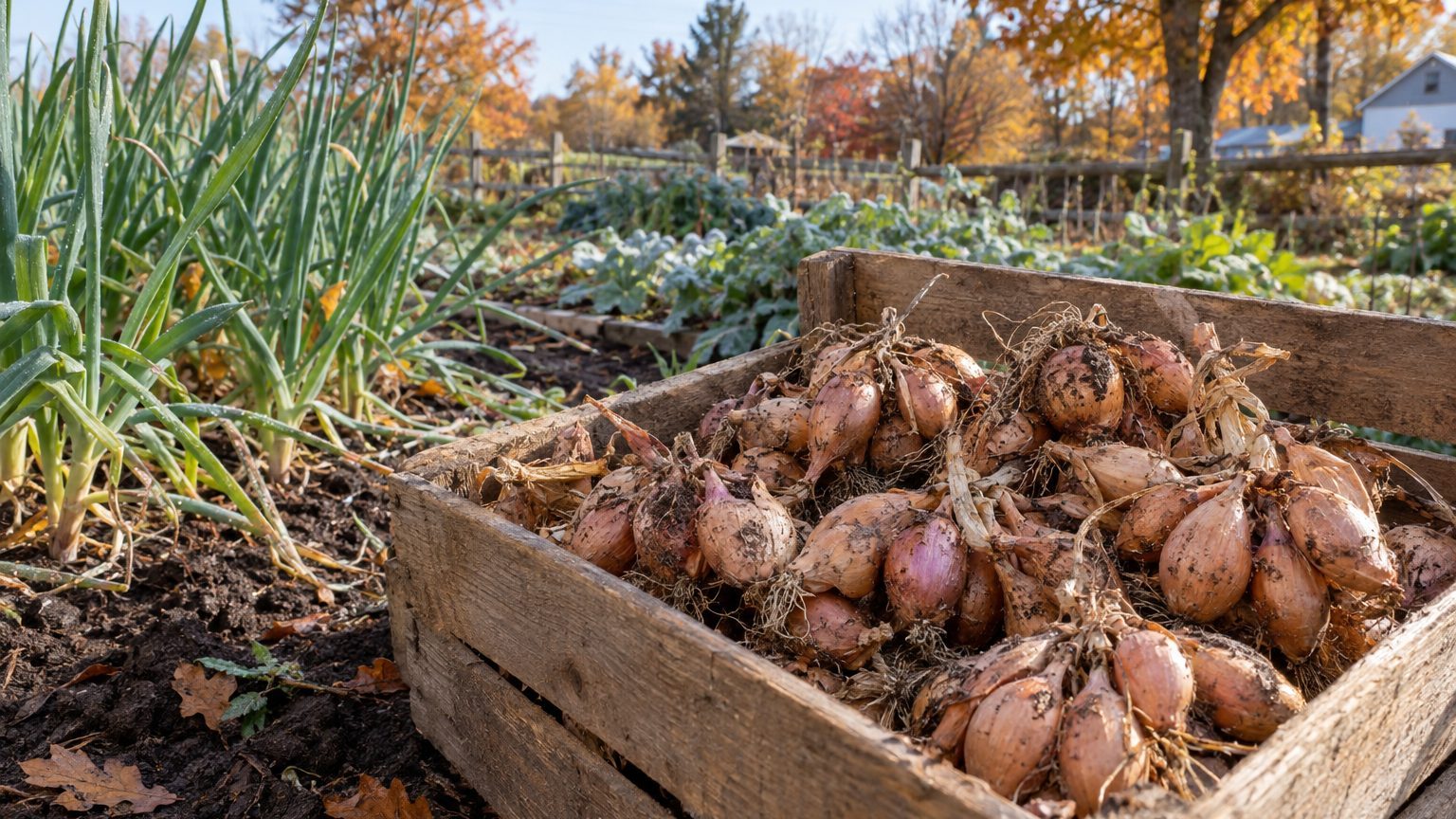

For most Rhode Island gardens, the best shallots are multiplier types planted as cloves in fall. Spring-planted sets are the backup, and seed-grown shallots are the project for gardeners who like tinkering. Winters here are cold enough to call for mulch but mild enough that a fall planting usually comes through. Summer humidity, more than winter cold, decides which plantings disappoint.
The short answer for Rhode Island
Choose by type, not by catalog name. Fall-planted multiplier shallots (the kind sold as bulbs that split into clusters) suit Rhode Island best because the season allows it: the Providence reference station shows a coldest-month mean minimum of 22.1°F, which a mulched shallot clove tolerates, and the roots they set in autumn give a head start on a humid, quick-turning summer.
The frost dates explain why the timing works. At the Providence airport station (NOAA 1991-2020 normals), the last spring freeze falls between April 7 and April 17, and the first fall freeze between October 24 and November 3. Those are windows in which the probability of a 32°F freeze sits between 30 and 70 percent. They are not promises that frost will or won’t come. They are also reference-city figures. A suburban or rural garden typically gets its last spring frost one to two weeks later and its first fall frost one to two weeks earlier, and more so on higher ground.
Even with that squeeze, there is room for all three main types, with different odds:
| Type | Planted | Fit for Rhode Island | Main risk here |
|---|---|---|---|
| Multiplier shallots from bulbs (fall) | Fall, mulched over winter | Best overall; earliest harvest | Wet, heavy soil that rots cloves |
| Multiplier shallots from bulbs (spring) | As soon as soil can be worked | Dependable; slightly smaller bulbs | A hot early summer cuts bulbing short |
| Seed-grown shallots | Started indoors in late winter | Workable, with a longer to-do list | Slow, thin seedlings; more weeding |
Exact planting dates for each type are on the When to Plant Shallots in Rhode Island page, and the broader overview is in Growing Shallots in Rhode Island. This page has no trial data comparing named varieties within the state, so it will not rank individual cultivars. Pick storage-oriented, disease-tolerant types from a reputable seed supplier and treat the type as the real decision.
What will not work here
Slow, long-season shallots are the first casualty. Anything bred for a very long run to maturity, or sold as a cool-climate specialty that wants cool, dry weather through June, is fighting a state where the frost-free stretch at the reference station runs roughly six to seven months and summer arrives wet and warm. Bulbs bulb up in response to lengthening days. If the plant is still building leaves when the heat sets in, you get small, soft shallots that store badly.
Tight spacing is the second mistake. Rhode Island sits between Narragansett Bay and the Atlantic, and humid air lingers in the garden. Shallots crowded in a dense bed stay damp, which invites downy mildew and botrytis on the foliage and neck rot after harvest. The usual spacing of about 6 inches between bulbs is a minimum in a humid place, not a luxury, and it pays to give rows room for air to move through.
Planting too early in fall also fails. A clove set into warm October soil and given too much cosseting can send up lush top growth that winter then burns back. You want roots, not a showy tuft. Planting late enough that only a small green shoot, or none, shows before the ground freezes is the safer bet. The calendar page covers the timing.
Heavy, poorly drained soil defeats fall planting outright. Much of the state’s inland ground is glacial till, stony and often wet in spring, and a clove sitting in cold, soggy soil rots before it roots. Raised rows or a raised bed solve most of it, and so does a sandier spot in coastal gardens, where drainage is rarely the issue.
And walking away in July. Shallots left in wet ground after the tops fall over develop rot and sprout. Rhode Island’s summer thunderstorms don’t care that your bulbs are almost ready. If the forecast turns rainy, pull the crop and cure it under cover rather than waiting for a perfect day.
What changes across Rhode Island
The state is small, but not uniform. The USDA Plant Hardiness Zone Map (2023, built on 1991-2020 normals) places Rhode Island in zones 6a through 7b. That is a spread of several zones inside one tiny state, so there is no single answer for where you live. The measure behind it is the average annual extreme minimum temperature, which tells you about winter survival and nothing about summer humidity or frost timing.
In practice, the coast and islands run toward the milder end. The water holds warmth into winter and cools spring, so frost can linger or arrive later than inland. The northwest interior, with its higher ground and colder nights, sits toward the cooler end. A garden there can expect a later last spring frost and an earlier first fall frost than the Providence figures, by more than the one to two weeks typical of suburbs.
That shifts the plan in a few ways. Inland and higher gardens should lean harder on a thick mulch for fall plantings, usually a few inches of straw or shredded leaves, pulled back in spring once the hardest freezes pass. They should also lean toward spring planting as soon as soil can be worked if winter heave or waterlogging has been a problem. Coastal gardeners get a slightly easier winter but should watch summer humidity and salt-laden wind more than cold.
Which zone your garden is in, I can’t tell you from here. Look up your address on the USDA Plant Hardiness Zone Map and read your zone off the map. Then treat the dates on this page as a starting point for the reference city, not for your property.
Where to check this for your own county
Your state extension service is the best next stop. In Rhode Island, that is the University of Rhode Island Cooperative Extension. It is the land-grant university’s outreach arm, and it employs people who answer garden questions for a living.
What you want from it is specific. First, a local planting calendar for onions and shallots or other alliums, one that reflects frost dates and soil conditions where you actually garden. Second, anything on varieties trialled in your county, meaning plots grown locally and judged for yield, storage and disease. Third, the soil testing options, because pH and drainage change shallot results more than most people expect. If extension staff or Master Gardeners publish local planting guidance, that beats anything written for the whole state.
A county recommendation beats a state one, and this page is the state one. It rests on one reference station and a hardiness zone range that covers four half-zone steps. Neither can tell you whether your lane gets the cold air that drains down a slope. This page does not have a county-by-county shallot calendar, and the extension materials I have access to do not include one for shallots in Rhode Island, so I won’t pretend otherwise. Extension calendars elsewhere tend to be written per crop rather than per state, so look for the one that names the crop you are growing.
Checking this against your own garden
Your own observations outrank every date above. Three are worth watching, and none needs equipment.
- How the soil feels in your hand. In early spring, squeeze a handful from a few inches down. If it crumbles and doesn’t smear or stick in a cold, wet ball, it is ready for sets. Soil that stays soggy long after neighbors’ beds are workable tells you your spot drains slowly, and that fall planting there needs a raised row.
- The first green shoots. When fall-planted cloves poke up in spring, note the week. Early sprouting signals a sheltered, warm microclimate, perhaps near a south wall or close to the coast. Late sprouting points to a colder pocket, so you can push your own dates later.
- The first true leaves on seed-grown plants. If you start seed indoors, watch how quickly seedlings put on proper leaves after the first thin blades. Slow growth after transplanting says your garden stays cool and shaded too long, and the plants will have less time to bulb before summer heat.
Write the dates down, even loosely, on a calendar or in a notes app. After two seasons you will have a better local planting guide than any state page can offer.
Common questions
Are shallots hardy enough for Rhode Island winters?
Yes, with mulch. Providence’s coldest-month mean minimum is 22.1°F, and fall-planted shallot cloves routinely overwinter in conditions like that. Colder inland sites need more mulch.
Should I plant shallots in fall or spring?
Fall gives the earliest, usually largest bulbs and suits most of the state. Spring planting works too, as soon as the soil can be worked, and is the safer choice for soggy ground. See the planting calendar for timing.
Is there one best named variety for the whole state?
This page does not have trial data that would justify naming one. Choose by type, favor storage-oriented, disease-tolerant selections, and ask URI Cooperative Extension about local trials.
Do the frost dates here apply to my yard?
Treat them as the Providence reference figures. Suburban and rural gardens typically see the last spring frost one to two weeks later and the first fall frost one to two weeks earlier, and higher ground more so.