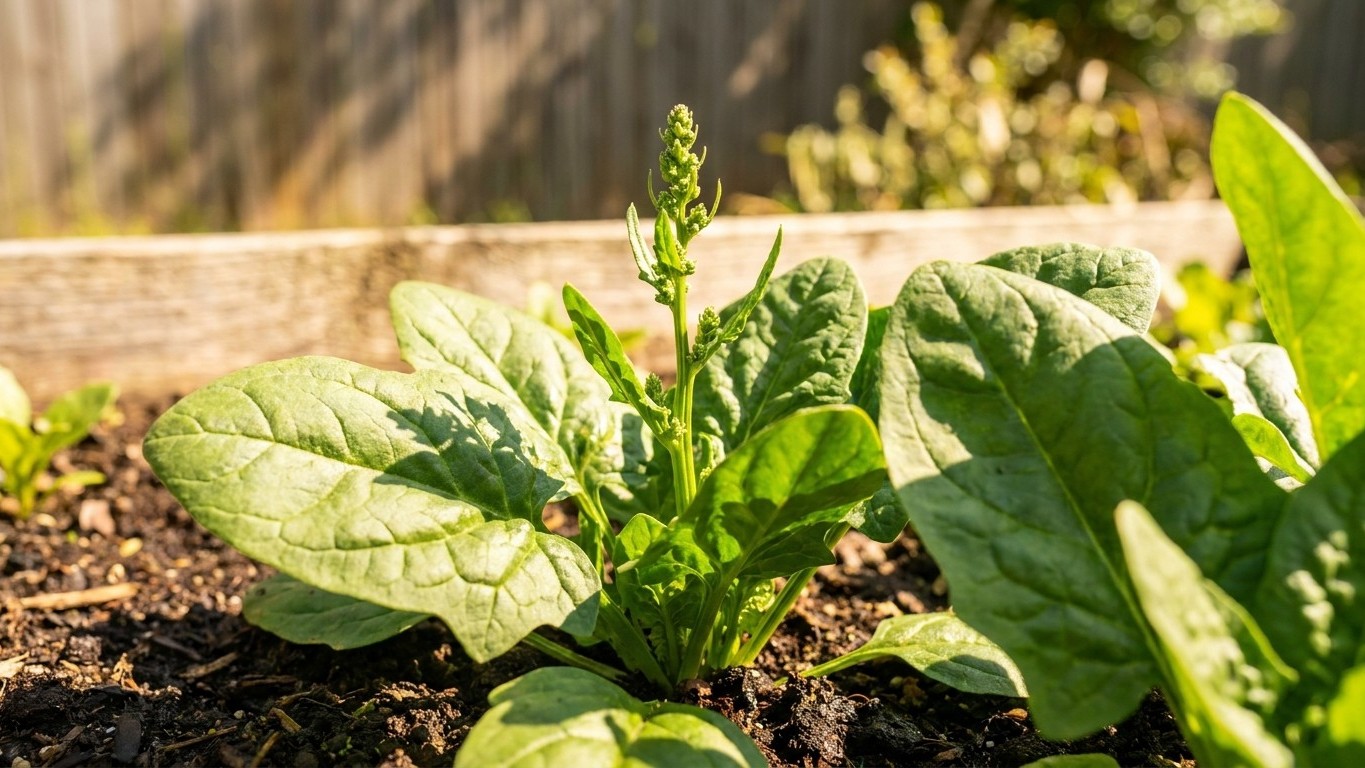

Cut spinach in Rhode Island as soon as a late-March or early-April sowing has leaves worth eating, and finish before the warm afternoons arrive. Sow again in late summer for a fall cut. Once harvested, spinach keeps up to two weeks only in a refrigerator held at 32°F. At ordinary fridge temperatures it yellows within days. Here, the calendar matters more than the seed packet.
The short answer
Providence gets 15 h 02 of daylight on the longest day of the year. For spinach that is a warning, not a gift. Utah State University Extension reports that spinach bolts during long days and warm temperatures, which means long days alone can push it to flower. A cool, rainy June does not buy extra weeks, because the clock keeps running no matter what the thermometer says. That is the same variable that makes onions form bulbs, but for a leaf crop it triggers a flower stalk, and the leaves are done.
Both limits apply in Rhode Island
Day length and heat work together here, and neither one rescues you from the other. Spinach grows best where temperatures do not exceed 75 F. The Providence reference station averages 9.4 days a year at 90 F or hotter, which sounds modest. But 90 F is a far higher bar than 75 F, so that count understates how much of midsummer sits above the line where spinach stops growing well. The same 75 F also marks where leaves turn bitter, so one number carries two penalties. For a closer look at how the two triggers combine, see Will Spinach Bolt Early in Rhode Island?
So cut early rather than late. A planting that is edible and approaching the heat should be harvested, not left to size up. Spinach left standing into long, warm days will not wait for you.
How long it keeps after cutting
Here is the number from the UC Davis Postharvest Technology Center: an optimum of 32°F at 95 to 98 percent relative humidity. The same source calls spinach highly perishable and says it will not maintain good quality for more than 2 weeks. Wilting, yellowing and decay increase after 10 to 14 days, and faster at 41 to 50°F, which is about what a home refrigerator actually holds.
Read that as a ceiling, not a plan. Two weeks is the best case under ideal conditions. In a home fridge, the coldest and most stable spot is the back of the bottom shelf, not the door, which swings through the warmest air in the box every time it opens. A loosely closed bag or a lidded container helps approximate the high humidity the leaves want. Plan to eat cut spinach within the first week, and treat anything beyond that as a bonus.
How long the spring window really is
Spring spinach in Rhode Island is a race between a late start and an early finish. The pieces fit together like this:
- Sowing opens 2 to 3 weeks before the last frost. The reference station’s last spring frost falls between April 7 and April 17. Counting back puts seed in the ground from about March 17 to April 3. Suburban and rural gardens usually see the last frost one to two weeks later, so inland beds may open in the first half of April instead.
- Growth runs only until about 75 F. Above that, spinach stops growing well and starts turning bitter. This is a temperature, not a date. The facts available here do not name a calendar day for the first run of 75 F afternoons, and I won’t guess one.
- Days are lengthening the whole time. From the winter solstice, daylight climbs toward that 15 h 02 peak. By the time heat arrives, day length is already pressing on the plants.
- No days-to-maturity is published. The Utah State source gives no figure for spring spinach, so any number you see for how fast it grows comes from somewhere else. Watch the plants instead of a count.
- The harvest happens in the gap. It runs from the day leaves are worth cutting to the first stretch of 75 F afternoons.
Put together, that is a spring window measured in weeks, not months. Seed goes in during the last half of March or the first days of April, and the cutting has to finish before warm weather settles in. Keep a thermometer in the shade near the bed and log the first week where afternoons hold at 75 F. That record, kept for a couple of years, will tell you more about your own garden than any regional average.
One number, two penalties
The 75 F figure deserves care because it does two jobs. It is the growth ceiling, and it is the bitterness threshold. A spinach plant that is still green at 78 F is not thriving, it is running out its clock. Cut before the afternoons arrive there.
Utah State Extension names four varieties: Bloomsdale, Melody, Teton and Olympia. It publishes no data on any of them, so I can’t tell you which ones tolerate heat or hold off flowering longer. If a seed packet claims one is slow to bolt, treat that as the grower’s claim, not a tested figure. Meanwhile, leaf damage can shorten your window as surely as heat. What Eats Spinach in Rhode Island, and When covers what to watch for.
The autumn crop, and when the soil lets you sow
The fall crop is a count backward from a date you hope to harvest. The source says to plant 50 to 75 days before that date. Two obstacles shape the count, and they sit at opposite ends of it.
The soil is still too warm to germinate
August in Rhode Island is the wrong kind of obstacle. Cold is not the problem in late summer. Seed germination is reduced when soil is above 80 F, and a bed that has baked in full sun since June can stay above that line long after the air feels pleasant. In a hot stretch, the window for fall sowing opens when the soil falls, not when the calendar says so.
A soil thermometer pushed a couple of inches into the bed settles the question. Shade over the seedbed, or watering the row before sowing, may help cool the surface, but check the reading before you trust it. Days are also shortening after the solstice, so the long-day trigger is easing even while the heat lingers. That pairing is why fall spinach, once it is up, is the more forgiving of the two crops.
The frost that ends the season
The first fall frost at the Providence reference station falls between October 24 and November 3, according to NOAA NCEI climate normals. Treat that range as the planning end of the season. Count back from it using the 50 to 75 day rule:
- A harvest aimed at October 24 means sowing between about August 10 and September 4.
- A harvest aimed at November 3 means sowing between about August 20 and September 14.
The early end of those ranges collides with warm soil, so the realistic window often starts later than the arithmetic. Suburban and rural beds typically see the first frost one to two weeks earlier than the airport figure, so shift your sowing earlier by the same margin, if the soil allows it. Your own county’s frost dates are the better guide. The broader picture of how this crop fits the state is in Growing Spinach in Rhode Island.
Common questions
Can I still cut spinach once it starts to bolt?
You can cut what is there, but the plant has switched from making leaves to making a flower stalk, and the leaves tend to turn bitter as warmth builds. Harvest the planting promptly rather than waiting for it to recover.
How long does cut spinach last in the refrigerator?
UC Davis says it will not maintain good quality for more than 2 weeks, and that is at 32°F with 95 to 98 percent humidity. At the 41 to 50°F of a typical home fridge, it deteriorates faster. Store it at the back of the bottom shelf and plan to eat it within the first week.
Which spinach variety bolts last?
Utah State Extension names Bloomsdale, Melody, Teton and Olympia, but the data on how each one performs is not published. Without that, no ranking can be responsibly offered, so choose by the seed packet’s claims and your own results.
Are the Providence frost dates right for my town?
They are a reference-city figure, not a statewide guarantee. Suburban and rural gardens typically see the last spring frost one to two weeks later and the first fall frost one to two weeks earlier, and more so at higher elevation. Both of your windows can be narrower than the table suggests, so check your own county’s dates before you buy seed.