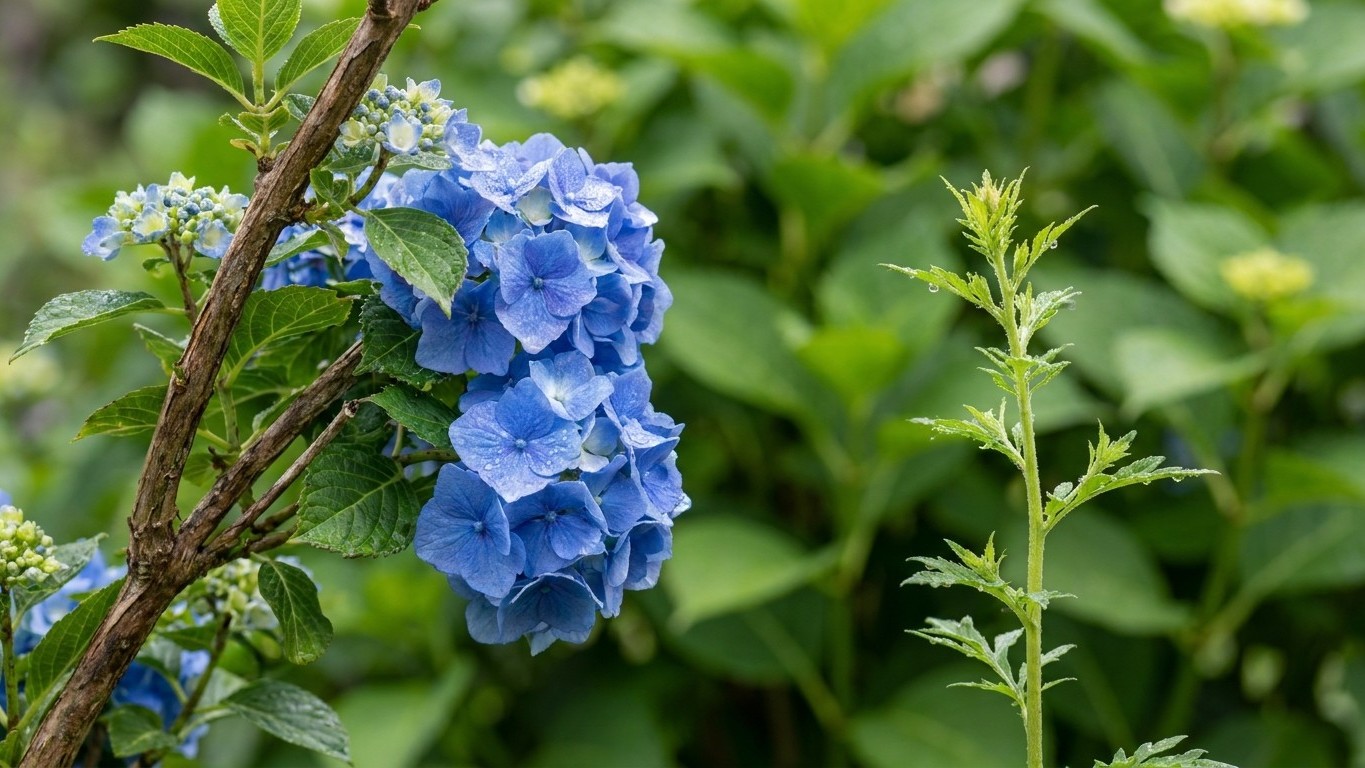

Prune hydrangeas in Saskatchewan in spring, just as the buds swell and before the leaves open. That timing suits panicle and smooth hydrangeas, the two kinds best suited to prairie winters, because both flower on the current season’s growth. Most bigleaf hydrangeas flower on last year’s stems and get only a dead-wood cleanup once growth starts. Cutting in fall, or cutting a bigleaf hard in spring, can cost you the flowers here. What follows explains the calendar and how to adjust it.
What this comes down to in Saskatchewan

At Saskatoon, the reference station for these dates, the mean last spring frost falls on May 18, so spring pruning belongs in the weeks leading up to that date, tied to bud swell rather than the calendar. That date is a midpoint: in one year out of two the last frost comes later, so cutting a little late is safer than cutting early. The same station records a mean first fall frost on September 18, which leaves about 123 frost-free days between the two dates. Saskatoon is rated zone 3a or 3b, depending on the map edition. That is a Canadian zone, built on seven climate variables, and it does not convert to a USDA zone.
Which hydrangeas can you cut back hard in spring?
Panicle and smooth hydrangeas can be pruned in spring without losing flowers. They set flower buds on shoots that grow after winter ends, so an April cut costs no blooms, and it can improve them. Panicles are usually trimmed by up to about a third, while smooth hydrangeas tolerate a harder cut. A cut in spring also leaves the old stems standing all winter. Those stems catch snow, and snow is excellent insulation for a prairie shrub. Which types hold up through zone 3 winters is covered in which hydrangea types survive Saskatchewan winters.
What about bigleaf hydrangeas that bloom on old wood?
Bigleaf hydrangeas form their flower buds the summer before. In a zone 3 winter, the stems above the snowline often die, and the buds die with them. Pruning a bigleaf is therefore mostly a matter of waiting until you can see what survived, then removing only the dead stems. Shaping, if any, happens in the weeks right after flowering, before new buds form for the following year. For how soil chemistry affects the color of those blooms, see how soil pH affects hydrangea color.
| Type | Flowers on | When to prune | How much |
|---|---|---|---|
| Panicle | New wood | Spring, at bud swell | Up to about one-third of the plant, plus any dead tips |
| Smooth | New wood | Spring, at bud swell | Down to a low framework, or lighter if you want a taller shrub |
| Bigleaf | Old wood | Spring for dead wood only; shape just after bloom | Dead stems and spent flowers |
For the general care of these shrubs, including siting and watering, start with growing hydrangeas in Saskatchewan. The question here is narrower: cut new-wood bloomers in spring, and leave old-wood bloomers alone until you can see what lived.
Working it out for your own garden
A calendar date will not survive a late spring, a move to another part of the province, or a winter that kills more wood than usual. Two checks will: the frost window and the buds themselves.
How do you pick the pruning week?
Start from the mean last spring frost, May 18 at Saskatoon, and treat it as the middle of a window. Pruning when buds begin to swell usually lands ahead of that date, so watch the buds rather than the calendar. That is a range to start watching, not a day to cut. In a cold, late spring the buds will be behind, and the cut should wait with them. In a mild one they may swell early, and you can go earlier. A gardener who moves a few hours north can keep the same method and let the buds reset the dates.
How do you tell dead stems from live ones?
In April, dead and live stems look identical. Wait until buds on the lower stems show green tips, then test the stems that look doubtful. Bark that is green and moist under your thumbnail is alive. Brown and dry means the stem is dead, and you can cut it back to the first pair of healthy buds, or to the ground if every bud is dead.
Take a bigleaf hydrangea whose stems look dead above the snowline. If the scratch test shows green, you have lost the top but kept the buds below it, and you will get leaves and probably a few flowers. If all the wood is brown to the ground, cut everything and wait for new shoots from the crown. They will leaf out but usually will not flower that summer, because the flower buds were on the stems you removed. Panicle and smooth hydrangeas in the same garden would flower regardless, because their flowers form on the new shoots.
What changes across the province
The Saskatoon dates describe one place in the middle of the province. Saskatchewan runs from the grain plains of the south to boreal forest in the north, and the spring timetable moves with it. In the north and in higher, more exposed ground, the soil thaws later, buds swell later, and the safe pruning window opens weeks behind Saskatoon. In the south, warmer springs bring buds on earlier, but late-winter mild spells can start them before the cold is done.
Snow cover often matters more than the latitude. A shrub buried under drifts beside a shelterbelt or house can come through with most of its stems alive, while the same variety in an open yard, where wind strips the snow, loses wood down to the ground. Cities add a little shelter too, since buildings and paving hold heat. A bed against a south or east wall wakes up ahead of one in an open lot across town.
So use the frost window as a starting line, not a schedule. The buds are the schedule. If you garden north of Saskatoon or on high, windy land, expect to prune later and to take off more dead wood. If you garden in a sheltered southern yard, check earlier, and be ready to hold off if a hard frost is still forecast after the buds have swelled.
The mistakes this province punishes
Fall pruning comes first. The first fall frost averages September 18 at Saskatoon, and a cut made in late summer or early fall invites tender shoots that will not harden off before winter. Leave panicle and smooth hydrangeas standing until spring. Remove only spent flower heads you cannot stand to look at, and do it lightly.
Second, hard-pruning a bigleaf in spring because it “needs shaping.” Most of its buds are already on those stems. Wait for growth, remove dead wood, and shape only after flowering.
Third, pruning on a warm spell. A run of mild days in March can look like spring, but the frost window is still open, and cuts that stimulate growth can be damaged by the next cold snap. Wait until the buds are swelling, then check the forecast again.
Fourth, cutting everything that looks dead in April. Stems that appear lifeless may still be green inside, and some will leaf out late. Run the scratch test, or wait until late May, before taking a stem down.
Last, tidying in autumn by cutting the whole plant to the ground. That removes the stems that hold snow over the crown, and in a zone 3 winter that insulation is worth more than a neat bed.
Checking this against your local area
Saskatoon’s dates are a starting point for the whole province, and your own yard may run weeks earlier or later. Saskatchewan is organized into rural municipalities rather than counties, so a local garden club, or a regional agriculture office are good places to confirm local frost timing, and the Saskatchewan government’s pages for farmers and ranchers can point you to agriculture contacts. For basics beyond pruning, return to growing hydrangeas in Saskatchewan.
Common questions
Can I prune hydrangeas in fall in Saskatchewan?
Avoid it. The mean first fall frost at Saskatoon is September 18, and cuts made near that date prompt new growth that cannot harden in time. Spent flower heads can come off if you must, but leave the stems standing. They hold snow over the crown through winter.
How far back should I cut a panicle hydrangea?
Remove any dead wood first, then cut the remaining stems back by up to about one-third, just above a pair of healthy buds. Smooth hydrangeas tolerate a harder cut, down to a low framework, because they flower on shoots that grow after pruning.
Why didn’t my bigleaf hydrangea bloom after I pruned it?
Most likely its flower buds were on the stems you cut, or the stems died back over winter and the buds with them. Most bigleaf hydrangeas bloom on old wood, so they need those stems to survive. Wait for growth in spring, remove only dead stems, and shape just after flowering.
How do I know when it is safe to start pruning?
Look for swelling buds with green tips on the lower stems, usually in the weeks before the mean last spring frost of May 18 at Saskatoon. Because that date is a midpoint, frost can still arrive later in half of years. A few cuts on a warm afternoon are fine, but hold the bulk of the work until a freeze is no longer in the forecast.