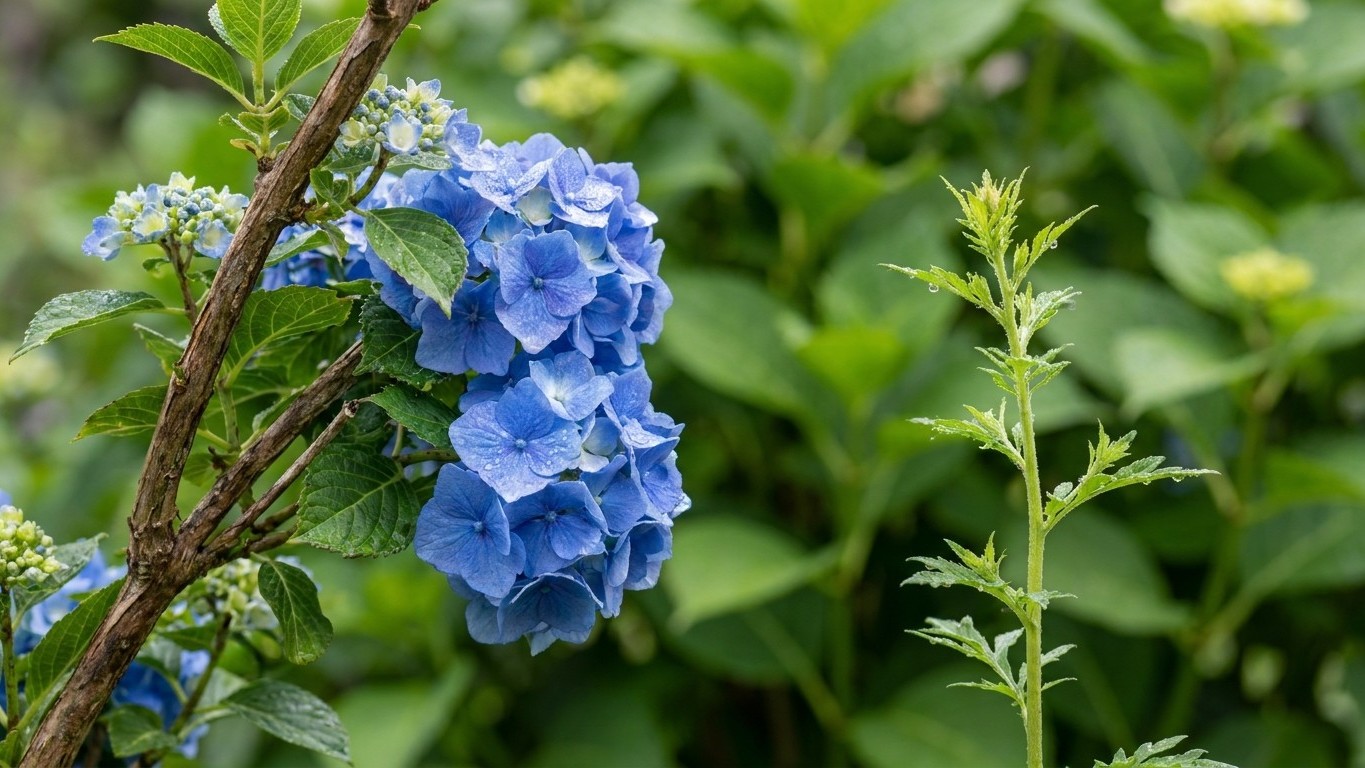

Hydrangeas can grow in Saskatchewan, but the type decides everything. Panicle and smooth hydrangeas bloom on the current year’s growth, so they flower reliably after a hard prairie winter. Bigleaf types bloom on last year’s wood and often fail. Plant after the last spring frost, give the shrub moisture and shelter, and expect color to depend on the type, not on tricks with the soil.
When to plant Hydrangeas in Saskatchewan

Environment and Climate Change Canada’s 1981-2010 normals for the Saskatoon station put the mean last spring frost at May 18. That date is a midpoint. In one year out of two, frost arrives later. Northern districts and higher ground run weeks behind Saskatoon, so gardeners there should shift everything in this section later. (Canadian normals cover 1981-2010, while the U.S. figures used elsewhere in this series cover 1991-2020, so don’t compare the two directly.)
In practice, set container shrubs out in late May through June. A hydrangea planted on May 20 in a year when frost returns on May 28 is not a disaster if you drape it with a sheet or frost cloth overnight. Tender new leaves blacken at a light frost, but the shrub usually regrows. Planting a week or two past the mean date costs almost nothing and removes most of the guesswork.
Do you start hydrangeas from seed indoors?
Almost no home gardener does. Named varieties are grown from cuttings so they match the parent plant. Seed-grown plants vary a lot and take several years to flower. Buy a container plant, or a rooted cutting from a reputable nursery, and skip the grow-light stage entirely.
How do you harden off a nursery hydrangea?
Garden centers in Saskatchewan often sell hydrangeas in April and early May, after they have been forced in greenhouses. The leaves are soft and the plants are not ready for wind or full sun. Hardening off means moving the pot outdoors for a few hours in bright shade, then lengthening the time and the sun exposure over seven to ten days. Bring it inside, or into a garage, on any night with frost in the forecast.
Count back from your planting date. If you plan to plant around May 25, start the outdoor routine around May 15. If you buy the plant later in the season, after it has already lived outside at the nursery, you can skip most of this and plant within a few days.
Can you plant hydrangeas in fall in Saskatchewan?
You can, but spring is the safer choice. The mean first fall frost is September 18 at the Saskatoon station, and in one year out of two it arrives later. A shrub planted in September has only weeks to grow roots before the ground freezes. If you do plant in early fall, water it well, mulch heavily after the soil begins to freeze, and choose a hardy panicle or smooth type.
Soil and site preparation
Pick the site first, because it matters more than anything you add to the soil. Hydrangeas on the prairies do best with morning sun and some afternoon shade, which protects the leaves from scorch and wilt in dry wind. Panicle types tolerate more sun if they get steady water. Choose a spot sheltered from the strongest winter wind, such as the east or south side of a house or fence, where snow collects and insulates the base of the shrub.
Soil texture changes how you water. Heavy clay holds moisture but drains slowly and can drown roots in spring melt. Sandy soil dries quickly and needs more mulch and more frequent watering. A loam rich in organic matter is the target. To check drainage, dig a hole about 12 inches deep, fill it with water, and let it drain. Fill it a second time. If water still stands after several hours, choose another spot or build a raised bed.
Test the soil before you amend it. Many prairie soils run neutral to alkaline, and that affects iron availability and flower color on bigleaf types. A lab test costs little and tells you the pH and organic matter. If the pH is high, lowering it with sulfur takes months to work, so start in fall or at least a full season before planting. Work in compost or well-rotted manure at the same time.
In the weeks before planting, strip the sod, loosen the soil to a spade’s depth, and spread 2 to 3 inches of compost over the bed. Dig the planting hole about twice as wide as the root ball and no deeper. Set the top of the root ball level with the surrounding soil. Space panicle hydrangeas 5 to 8 feet apart, depending on the variety’s mature size, and smooth or compact types 3 to 5 feet apart. Crowded shrubs stay damp, grow weak stems, and invite mildew.
Varieties that suit Saskatchewan
The trait that matters most is where the flower buds form. Panicle hydrangeas (Hydrangea paniculata) and smooth hydrangeas (Hydrangea arborescens) flower on new wood, so a winter that kills stems back to the ground still allows summer bloom. Bigleaf hydrangeas (Hydrangea macrophylla) set buds the previous summer. Winter dieback, or a late spring frost, can wipe out the whole year’s flowers. Gardeners in the milder Kentucky climate can rely on bigleaf types. In Saskatchewan they are a gamble.
The second trait is bloom time. Panicle types flower in midsummer and keep going into fall, which suits a short season. The third is stem strength, since heavy blooms flop in wind and rain. The table lists widely sold varieties that carry these traits. Check the plant tag for mature size and hardiness before buying.
| Variety | Type | Blooms on | Good for |
|---|---|---|---|
| Annabelle | Smooth | New wood | Reliable white blooms; stems can flop in rain |
| Incrediball | Smooth | New wood | Large white heads on sturdier stems |
| Invincibelle Spirit II | Smooth | New wood | Pink flowers in a smooth type |
| Limelight | Panicle | New wood | Lime-green blooms that age to pink; tall shrub |
| Little Lime | Panicle | New wood | Compact version for small yards |
| Quick Fire | Panicle | New wood | Earlier bloom, useful when the season is short |
| Pinky Winky | Panicle | New wood | Two-tone white and pink cones |
| Endless Summer | Bigleaf | Old and new wood | Worth a trial in a sheltered spot; less dependable |
Color follows the type. Smooth hydrangeas open white or green, with a few pink selections. Panicle blooms start white or lime and turn pink, red, or bronze as they age, and cool fall nights deepen the shades. Only bigleaf and mountain hydrangeas shift between blue and pink with soil chemistry. Neighboring Alberta gardeners face the same choice between reliable panicles and risky bigleaf types.
What to plant alongside
Shade-tolerant perennials make the best neighbors. Hostas, ferns, astilbe, heuchera, and bergenia all like the same moist, rich soil, and their foliage covers the bare ground beneath the shrub. Ground cover keeps soil cooler and slows evaporation, which does help the hydrangea in a dry summer. Spring bulbs such as tulips and daffodils flower before the shrub leafs out and fade as its canopy fills in.
Keep the hydrangea away from plants that drink the same water. Large trees with shallow roots, such as maples and poplars, pull moisture and nutrients from the top foot of soil, exactly where hydrangea roots live. Lawn grass planted right up to the stem competes the same way. Leave a mulched ring around the base. Avoid planting thirsty perennials like peonies or large ornamental grasses in the same bed if you cannot water deeply.
Some pairings are popular without good evidence. Planting marigolds, alliums, or lavender to confuse hydrangea pests has no solid research behind it. Pest pressure on these shrubs is low enough that the idea rarely gets tested. Pollinator draw is real but uneven: lacecap and wild-type flowers have small fertile florets that attract bees, while big mophead heads are mostly sterile and offer little. Add flowering perennials with open blooms nearby if you want more pollinators.
Watering, feeding and support
Hydrangeas are named for water, and the habit that works is deep and infrequent. Give about an inch a week in the first two years, delivered in one or two slow soakings so the water reaches 8 to 12 inches down. Shallow daily sprinkling keeps roots near the surface, where wind and heat dry them fast. Prairie summers can add hot, dry spells, so check the soil with a finger. If it is dry 2 inches down, water.
Mulch helps more than any fertilizer. Spread 2 to 3 inches of shredded bark, wood chips, or leaves over the root zone and keep it a few inches off the stems. Mulch holds moisture, moderates soil temperature, and breaks down into organic matter. Refresh it each spring.
Feed lightly. One application of a slow-release, balanced fertilizer when new growth starts is plenty, and a topdressing of compost works as well. Stop feeding by midsummer. Late nitrogen pushes soft new shoots that will not harden before winter, and those shoots die back. Panicle hydrangeas respond to feeding with bigger blooms, but overfeeding gives leafy growth and fewer flowers.
Support matters mostly for smooth types. Annabelle-style heads get heavy and bend to the ground after rain. A peony ring set early in spring lets the stems grow through it and stay upright. Newer selections with stiffer stems often need nothing. Panicle hydrangeas rarely need staking once established.
When and how do you prune hydrangeas in Saskatchewan?
Prune panicle and smooth hydrangeas in early spring, before new growth begins, since they flower on new wood. Cut smooth types back to 6 to 12 inches above the ground if you want a tidy plant, or just remove dead tops. For panicles, remove dead stems and shorten the rest by about a third to shape the shrub. For bigleaf types, wait until the leaves open, then cut out only what is dead. Cutting them earlier removes buds that survived. If your panicle is grown as a single-stem tree form, remove suckers from the base as they appear. A multi-stem shrub needs no sucker control.
Common problems

The most common complaint is a shrub that leafs out and never blooms. On bigleaf types, winter or spring frost killed the buds. On panicles and smooth types, the cause is usually too much shade, too much nitrogen, or pruning that cut off growth in the wrong season. Check the type before blaming the soil.
Leaves that turn yellow between green veins signal iron chlorosis, which is common where soil is alkaline. The iron is in the soil but the plant cannot take it up. A chelated iron product gives a short-term fix, and adding organic matter and mulch helps over time. Brown, crisp leaf edges usually come from wind and dry soil. Midday wilting that recovers by evening is heat stress and not a sign of disease. Wilting that persists after watering points to root rot in soggy soil, or to roots that have dried out completely.
Powdery mildew appears as a white coating on leaves in late summer, usually where air circulation is poor. Thin crowded stems and avoid watering the leaves late in the day. Leaf spots, small brown patches with darker edges, are mostly cosmetic. Rake up and discard fallen leaves in fall so spores do not carry over.
On the insect side, Montana State University Extension and NDSU Extension document pests in neighboring U.S. states, and no Canadian province publishes an equivalent home-garden list. Their lists include thrips, grasshoppers, boxelder bugs, and social wasps. Thrips scar petals and leaves, grasshoppers chew foliage in dry years, and wasps visit blooms but rarely harm the plant. Pests also show up on hydrangeas in hot, dry stretches. A strong spray of water knocks aphids and mites off. Take a sample to your provincial agriculture office if you cannot identify what is chewing the leaves. Animals gnaw stems under snow, so wrap young shrubs with hardware cloth or a plastic guard in late fall.
Ripening before the frost comes back
A hydrangea has no fruit to ripen, so the real question is whether the shrub has time to bloom and then harden its wood before winter. The Saskatoon reference station has about 122 frost-free days between the mean last spring frost on May 18 and the mean first fall frost on September 18. Half of years have a shorter season, and northern or upland districts have fewer days. Panicle and smooth types fit comfortably inside that window because they flower from midsummer on and tolerate a few light frosts on open blooms.
The risk sits at the edges of the season. A late spring frost can burn new shoots and, on bigleaf types, kill the flower buds. An early fall frost browns open blooms, but the bigger concern is soft late growth that has not hardened. Two habits help. Stop fertilizing by midsummer, and let watering taper in late summer so the shrub slows down. Then give a deep soak in October if the fall has been dry, because roots that go into winter dry suffer more damage than roots that go in moist.
To redo the check for your own district, find the mean last spring and first fall frost dates from your provincial agriculture office. Count the weeks between the last frost and mid-July, when panicle blooms should begin to open. Short on weeks? Choose an earlier-blooming panicle, plant a larger container shrub that skips the establishment year, and site it in the warmest sheltered spot. Frost cloth, an old blanket, or a cardboard box over the shrub on a cold night buys a few extra weeks at either end. Black plastic and tunnels, useful for vegetables, do nothing for a shrub this size.
Harvest and end of season
Cut hydrangeas for fresh bouquets in the morning, when stems are full of water, and plunge them into a bucket right away. Smooth and panicle blooms hold well once the florets are fully open. For drying, wait until the heads feel papery and have taken on their late-season color, usually late summer into fall. Cut them with long stems, strip the leaves, and hang them upside down in a dry, shaded spot for two or three weeks. Leave some heads on the shrub, since dried panicle and smooth blooms look good through winter and collect snow.
When the first fall frost approaches (September 18 on average at the Saskatoon station, and in one year out of two it comes later), cover shrubs that still carry fresh blooms. Frost cloth overnight saves them for another week or two. After the first hard frosts, stop deadheading and leave the shrub alone. Do not prune panicle or smooth types in fall, because the stems protect the crown and you can cut them back in spring.
Winter protection depends on the type. Panicle and smooth hydrangeas usually need only a thick mulch layer and good snow cover. For bigleaf types, build a wire cage around the shrub after the ground begins to freeze and fill it with leaves or straw. In spring, pull the mulch back gradually as the soil thaws, but keep frost cloth ready until the last frost has truly passed.
Local help
Dates and soil conditions shift from one district to the next, and the Government of Saskatchewan’s agriculture office can point you to local frost data, soil testing labs, and pest identification. For more regional advice, browse the other Saskatchewan guides, or read the full How to Grow Hydrangeas: The Complete Guide for plant care that applies everywhere.
Common questions
Can hydrangeas survive winter in Saskatchewan?
Panicle and smooth types can. Even if the stems die back to the ground, they regrow and bloom on new wood the same summer. Bigleaf types often lose their flower buds, so they grow but rarely bloom without winter protection.
Which hydrangea is best for Saskatchewan?
Panicle types such as Limelight and Quick Fire, and smooth types such as Annabelle and Incrediball, are the most dependable. They bloom on new growth and tolerate cold. Choose compact versions for small yards.
Can you make hydrangeas blue in Saskatchewan?
Only bigleaf and mountain hydrangeas change color with soil chemistry, and blue needs acidic soil with available aluminum. Many prairie soils run alkaline, so the flowers tend to come out pink. Panicle and smooth types stay white or pink regardless of soil.
Why won’t my hydrangea bloom?
Frost-killed buds on a bigleaf type are the usual cause. On panicle and smooth types, look for too much shade, too much nitrogen, or pruning at the wrong time. Check which type you have before changing anything else.
When should I prune hydrangeas?
Prune panicle and smooth hydrangeas in early spring, before new growth starts. Wait until leaves open on bigleaf types and remove only dead wood. Skip fall pruning, since the old stems help protect the crown over winter.