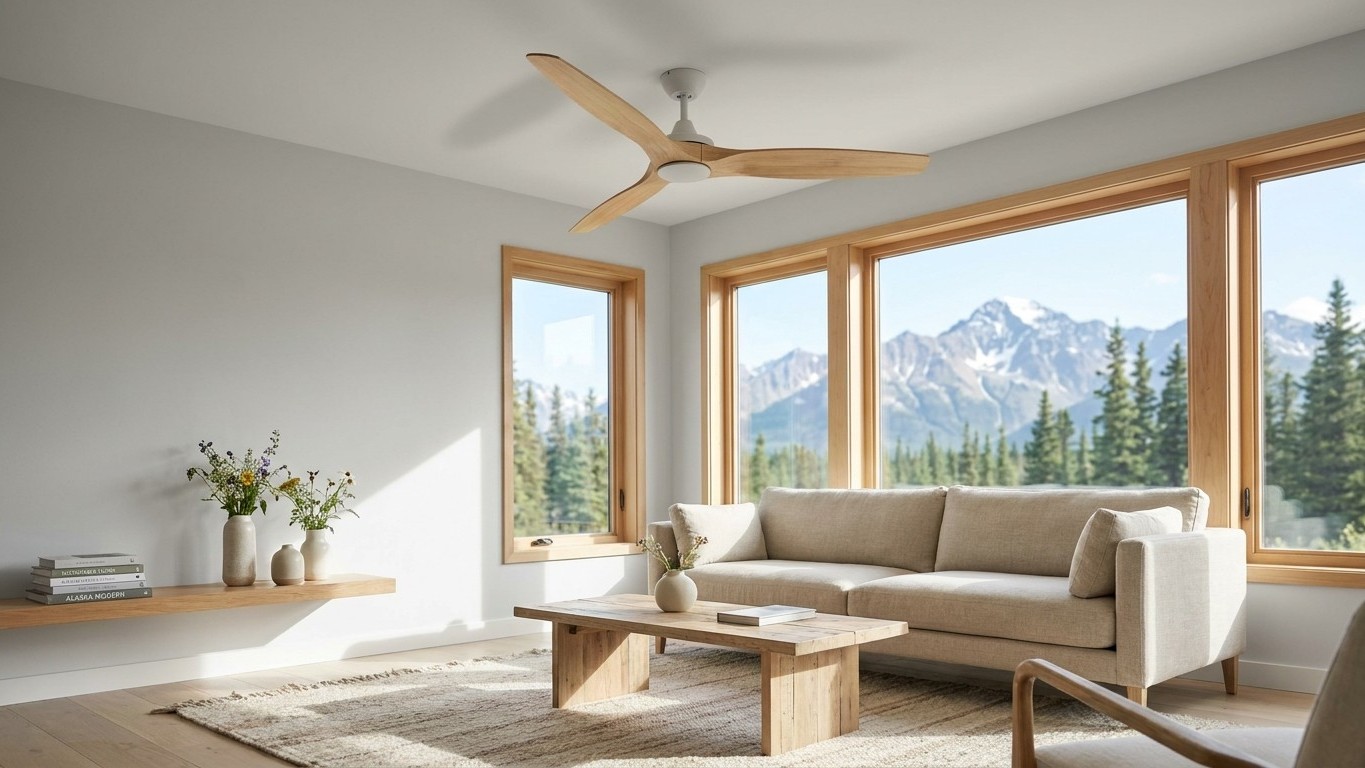

Ninety-five percent of South Carolina homes run some form of air conditioning, and 86 percent of them cool through a central system. The rest lean on individual equipment: window units, wall units, ductless mini-splits, or a portable unit rolled into a bedroom for July. Ceiling fans back up the cooling in 85 percent of homes, doing the job of moving air a compressor has already chilled.
What homes in South Carolina actually cool with
Start with the numbers as the U.S. Energy Information Administration’s 2020 Residential Energy Consumption Survey published them for this state: 95% of homes use air-conditioning equipment of some kind, 86% use a central air-conditioning unit, 18% use an individual unit, and 85% run ceiling fans. Those figures don’t need adjusting. They’re the picture.
The gap worth noticing sits between the 95% with any air conditioning and the 86% running a central system. That nine-point difference, plus the fact that 18% report individual equipment, means a meaningful slice of homes here run window units, mini-splits, or portables either as their only cooling or as backup in a room the central system doesn’t reach well. Some houses do both: central downstairs, a window unit in an attic bedroom that never gets enough airflow. That overlap is normal and the survey doesn’t ask homeowners to pick one.
Compare that mix to a place like Connecticut, where only 34% of homes run central air despite 90% having some form of air conditioning. South Carolina is the opposite story. Central cooling is close to the default here, which tracks with a housing stock built or renovated with ductwork already in place, often alongside a furnace or heat pump sharing the same air handler.
None of this is a recommendation. A share like 86% central describes what got installed when a house went up or got renovated, shaped by what builders and buyers found affordable at the time. It says nothing about what a specific room needs today, and it’s not a case against window units, which remain a practical answer for additions, garage apartments, or a single room that runs hot no matter what the central system does elsewhere in the house.
How much cooling the year actually asks for
The reference station in Charleston recorded a mean of 55.1 days a year at or above 90°F between 1991 and 2020. That’s a count of days at one station, not a statewide average and not a summer temperature reading. It measures how often the outdoor air crosses a threshold that pushes a cooling system to work its hardest, day after day, for weeks at a stretch.
Fifty-five days above 90°F is a serious heat load. Spread across June, July, August and into September, it means the compressor isn’t cycling on for an afternoon spike and shutting down by evening. It’s running through extended stretches where the outdoor air stays hot well past dinner, which matters for how a system is sized and how often it needs attention.
Here the equipment mix and the heat load actually line up. A state with 55 days above 90°F and 86% of homes on central air isn’t a mismatch story. It’s what you’d expect: enough sustained heat to justify whole-house ductwork, in a housing stock old and dense enough that ducts were often part of the original build. The individual-unit share, 18%, fills in where central air doesn’t reach rather than substituting for it wholesale. That’s a different pattern from a milder state where fewer homes ever installed ductwork in the first place, and it’s worth remembering when comparing notes with someone from a cooler climate who swears by a single window unit for the whole season.
Wet heat or dry heat, and what it changes
Summer here brings about 19.8 inches of rain across June, July, and August, out of 52.5 inches for the full year. June is the driest of the three months at 6.21 inches, July comes in at 6.6, and August tops the season at 6.97. That’s a measurement of precipitation, not humidity. It says nothing about dew point or how sticky the air feels standing on a porch at noon. What it does say is that summer here is wet, not dry, with rain distributed fairly evenly across the season rather than concentrated in one month and absent from the others.
That distinction changes what an air conditioner is actually doing all day. Every cooling system does two jobs at once: it lowers the temperature, and it pulls moisture out of the air as that air passes over a cold coil. Removing moisture takes run time. In a dry climate, most of a system’s work is temperature, plain and simple. In a wet one, a real portion of the compressor’s cycle goes toward wringing water out of the air, which is why a system that’s too big for the room is a bigger problem in a rainy state than a dry one: it satisfies the thermostat fast, shuts off, and never runs long enough to finish the drying part of the job. The room reads cool on a thermostat and still feels damp.
Given a wet summer with rain spread across all three months, three things matter more here than in a drier climate:
- Run time over quick cycling. A system sized to run steadily, rather than shutting off the moment the thermostat is satisfied, does more of the moisture-removal work that a short burst never gets to.
- Fan setting on “auto,” not “on.” Running the fan continuously recirculates moisture the coil already condensed back into the room instead of letting it drain away.
- Sizing to the room, not above it. An oversized unit is the single fastest way to end up with a cold, clammy room in a state where summer humidity is part of the daily weather, not an occasional spike.
Sizing a room unit, from the published chart
For anyone shopping for a window unit, a wall unit, or a portable, ENERGY STAR publishes a straightforward chart matching room size to cooling capacity. It’s reproduced exactly as published, with no rows added and no interpolation between the listed steps.
| Area to be cooled (square feet) | Capacity needed (BTU per hour) |
|---|---|
| 100 up to 150 | 5,000 |
| 150 up to 250 | 6,000 |
| 250 up to 300 | 7,000 |
| 300 up to 350 | 8,000 |
| 350 up to 400 | 9,000 |
| 400 up to 450 | 10,000 |
| 450 up to 550 | 12,000 |
| 550 up to 700 | 14,000 |
| 700 up to 1,000 | 18,000 |
| 1,000 up to 1,200 | 21,000 |
| 1,200 up to 1,400 | 23,000 |
This is a starting point for a room unit, not a substitute for a load calculation. It doesn’t size a central system, and in a state where 86% of homes already cool through central air, most readers here won’t need it for their main system at all. It matters most for the 18% running individual equipment, and for anyone in the central-air majority adding a window unit to a converted attic, a sunroom, or a garage apartment that the ductwork never reached.
The chart’s biggest practical warning has nothing to do with the numbers themselves: buying bigger than the room calls for isn’t a safety margin, it’s a fault. An oversized unit cools the air fast, satisfies the thermostat, and shuts off before it’s run long enough to pull humidity out, leaving the room cold on the thermometer and damp everywhere else, which matters more here than in a drier state given how much of the summer’s total precipitation falls between June and August.
What actually needs looking after here
With 86% of South Carolina homes running central air, ductwork is the majority story, and ENERGY STAR is blunt about what that means: “In a typical house, however, about 20 to 30 percent of the air that moves through the duct system is lost due to leaks, holes, and poorly connected ducts.” That applies to central systems specifically. A home cooling entirely through window units or mini-splits has no ducts to leak, so this caution belongs to the majority of homes here, not all of them.
Filters matter regardless of which system a home runs. ENERGY STAR’s instruction is specific: “Inspect, clean, or change air filters once a month in your central air conditioner, furnace, and/or heat pump.” Once a month, not once a season, and the sentence covers all three pieces of equipment together, which matters for anyone assuming filter care is a furnace-only chore. The payoff for skipping it is measurable: “Airflow problems can reduce your system’s efficiency by up to 15 percent.” A system can be mechanically sound and still underperform simply because nobody swapped a filter since spring.
A seasonal pass before the heat load hits its stride in June covers the basics:
- Check or replace the filter on every central unit, and on any window or portable unit with a washable filter.
- Have ductwork inspected for the leaks, holes, and loose connections ENERGY STAR flags, especially in attics and crawlspaces where a duct run is easy to forget.
- Confirm the thermostat fan setting is on “auto” rather than “on,” so the coil isn’t reintroducing moisture it just removed.
- For individual units, recheck sizing against the room they’re actually cooling, not the room they were bought for years ago.
For a deeper look at any single piece of that list, from duct sealing to heat pump upkeep, the equipment guides on this site cover each one on its own rather than repeating the basics here.