
In Iowa, nearly every home runs some form of air conditioning, and the vast majority of that cooling comes from a central system rather than a window unit or portable. That single fact, more than the weather itself, shapes how homeowners here think about maintenance, sizing and what actually needs attention before the first 90-degree stretch hits.
What homes in Iowa actually cool with
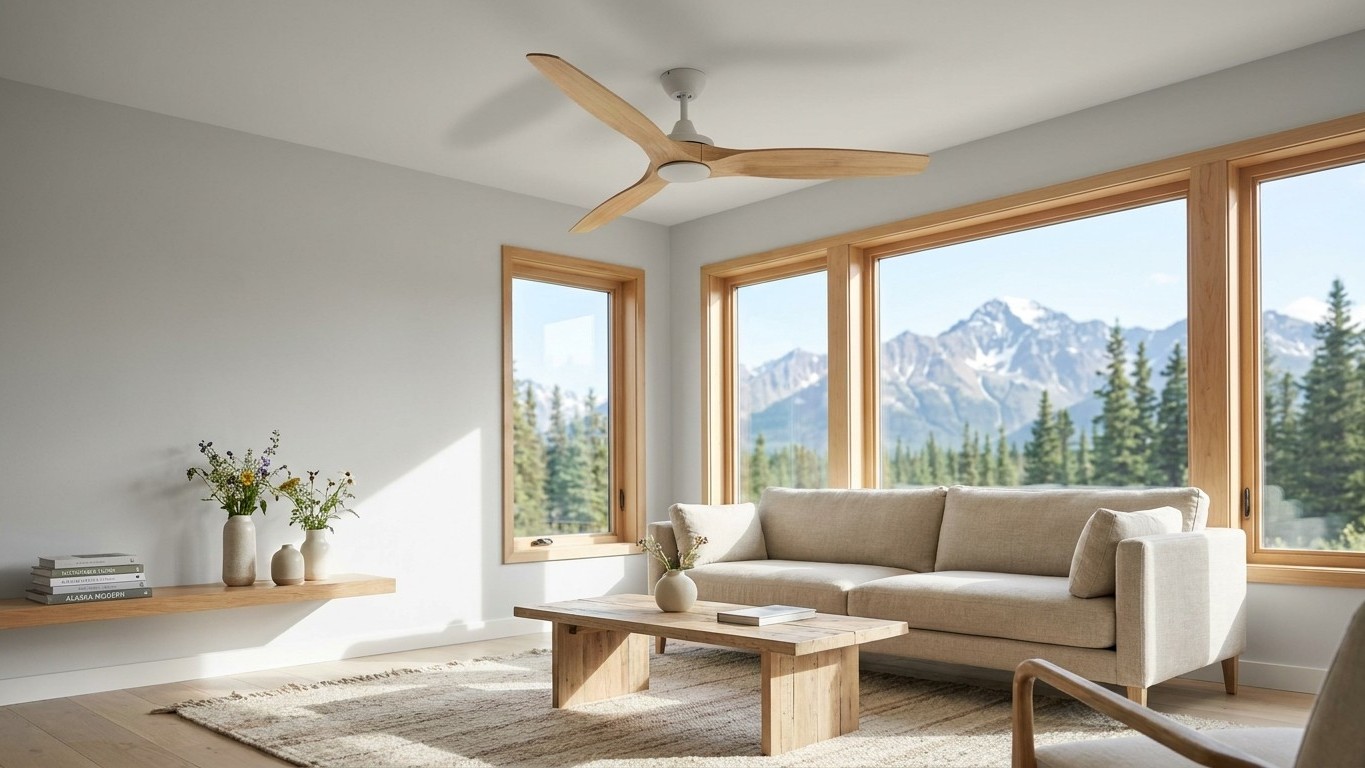
According to the U.S. Energy Information Administration’s Residential Energy Consumption Survey, 97% of Iowa homes use some form of air-conditioning equipment, and 81% of homes run a central air-conditioning unit specifically. Another 22% rely on an individual unit, whether that’s a ductless mini-split, a window or wall unit, or a portable model. Ceiling fans show up in 80% of homes, which tells you air movement is treated as a companion to mechanical cooling, not a substitute for it.
Those numbers don’t subtract cleanly into a simple story, and that’s worth sitting with for a second. A household can have central air installed and still keep a window unit running in a bedroom or sunroom, so the 81% and 22% figures aren’t mutually exclusive slices of the same pie. What the gap between “has air conditioning” and “has central” reveals, state by state, is how much of the cooling burden falls on individual equipment instead of a whole-house system. In some states that gap tells the entire story: Connecticut shows air conditioning in 90% of homes but central in only 34%, meaning most Connecticut households are cooling room by room. Alabama, by contrast, runs 94% air conditioning and 81% central, meaning central systems do nearly all the work.
Iowa lands closer to the Alabama pattern than the Connecticut one. With 81% of homes on central air and 97% using air conditioning of some kind, the individual-unit share of 22% is mostly supplemental rather than the primary cooling method for most households. That’s consistent with a housing stock where ductwork was already built in for winter heating and central cooling was added to the same system rather than retrofitted room by room. It also means that when something goes wrong with cooling in an Iowa home, the more likely culprit is the central system itself, its ductwork, or its outdoor condenser, not a single window unit.
How much cooling the year actually asks for
NOAA’s Climate Normals for 1991-2020, measured at the Des Moines reference station, put the mean number of days reaching 90 degrees Fahrenheit or higher at 18.4 days a year. That’s a count of days at one station, not a statewide average and not a measure of how hot those days actually got. It’s the closest thing to a heat-load number available: how often the outdoor air genuinely pushes a cooling system to work, as opposed to days where an open window and a ceiling fan would do the job.
Eighteen-plus days above 90 is a real but moderate load, nowhere near the sustained triple-digit stretches that hotter states log every summer. That matters because equipment mix and heat load don’t always move together. A hot state can lean heavily on individual units if its housing stock is older and never got ductwork retrofitted, while a milder state can still be almost entirely central if the homes were built with heating ducts already in place and central cooling was simply added on.
Iowa is a case where the two figures line up rather than fight each other. A moderate 18.4-day heat load doesn’t demand the kind of supplemental, room-by-room cooling you’d expect in a place fighting extreme or prolonged heat, and the housing stock’s existing ductwork made central air the natural, affordable choice when the equipment went in. The 81% central share isn’t an anomaly here; it’s what you’d expect given both the climate and the way Iowa homes were built.
Wet heat or dry heat, and what it changes
NOAA’s normals for the same station put summer rainfall at about 13.2 inches across June, July and August, out of 36.5 inches for the year. July is the driest of the three summer months at 3.82 inches, while June runs wetter at 5.26 inches and August sits in between at 4.17 inches. That’s a measure of precipitation, not humidity or dew point, and it shouldn’t be read as either. But by that measure, Iowa summers are wet: more than a third of the year’s total rainfall arrives in just three months, and even the driest summer month clears well over three inches.
The mechanical reason this matters is straightforward. An air conditioner does two jobs at once: it lowers the air temperature, and it pulls moisture out of that air as it passes over the cold coil. Removing moisture takes run time, not just cold air. In a dry summer, most of a unit’s work is temperature and the moisture-removal job is light. In a wet one, a meaningful share of every cooling cycle is spent wringing water out of the air, which is exactly why an oversized unit is a problem in a wet climate: it satisfies the thermostat fast, shuts off, and never runs long enough to do the drying part of its job. The room reads cool on a thermostat but feels clammy.
Given Iowa’s wetter summer pattern, a few practical priorities follow:
- Favor longer, steadier run times over short bursts of hard cooling, since the drying work needs sustained airflow across the coil.
- Use a fan setting that runs continuously rather than cycling on and off with the compressor, so moisture removal keeps pace with temperature drop.
- Resist sizing up “for safety margin” on any unit, central or individual, since an oversized system in a wet-summer state is more likely to leave rooms feeling damp than a correctly sized one.
Sizing a room unit, from the published chart
For anyone shopping for a window unit, wall unit, or portable rather than relying on the central system, ENERGY STAR publishes a straightforward starting chart tying room area to cooling capacity:
| Area to be cooled (square feet) | Capacity needed (BTU per hour) |
|---|---|
| 100 up to 150 | 5,000 |
| 150 up to 250 | 6,000 |
| 250 up to 300 | 7,000 |
| 300 up to 350 | 8,000 |
| 350 up to 400 | 9,000 |
| 400 up to 450 | 10,000 |
| 450 up to 550 | 12,000 |
| 550 up to 700 | 14,000 |
| 700 up to 1,000 | 18,000 |
| 1,000 up to 1,200 | 21,000 |
| 1,200 up to 1,400 | 23,000 |
This is a starting point published by ENERGY STAR for a single room served by a room air conditioner, not a formula that scales up in a straight line and not a way to size a whole-house central system. A central unit is sized through a proper load calculation that accounts for the whole home’s construction, orientation and ductwork, and that calculation is a job for whoever installs or services the system, not a chart lookup. Pick the row that matches the room’s actual square footage, not a rounded-up guess, since going a size larger doesn’t buy comfort, it buys a unit that short-cycles and never pulls the moisture out of the air.
Given that 81% of Iowa homes already run central air, this chart is most relevant to the smaller slice of households cooling a bonus room, a garage conversion, or a bedroom with a standalone unit rather than the whole house. For that use case, matching the room size to the chart’s bracket is the entire job.
What actually needs looking after here
ENERGY STAR’s maintenance guidance is written for exactly the equipment mix Iowa has: it directs homeowners to “inspect, clean, or change air filters once a month in your central air conditioner, furnace, and/or heat pump.” That’s a monthly task, not a seasonal one, and it covers all three pieces of equipment together, which matters for anyone who assumes filter care is only a furnace chore. Skipping it has a measurable cost: ENERGY STAR notes that “airflow problems can reduce your system’s efficiency by up to 15 percent,” meaning a system can be running, cooling, and still quietly underperforming because nothing about it is broken except the airflow reaching it.
Because most Iowa homes cool through a central system, ductwork deserves its own line item. ENERGY STAR states that “in a typical house, however, about 20 to 30 percent of the air that moves through the duct system is lost due to leaks, holes, and poorly connected ducts.” That figure explains a common complaint: a room that never quite cools down even though the outdoor unit and thermostat both check out fine. The lost air is often escaping into an attic or crawlspace before it ever reaches the vent, which is a duct problem, not a compressor problem.
A seasonal pass that fits Iowa’s equipment mix looks like this:
- Check and clean or replace the filter monthly through cooling season, on whichever of the central system, furnace, or heat pump it serves.
- Have ductwork inspected for leaks or disconnections before peak summer, since a quarter of conditioned air can be lost before it reaches a room.
- For any supplemental window, wall, or portable unit, confirm its size against the ENERGY STAR chart before the season starts, rather than after a room fails to cool.
- Pair this with the site’s other equipment guides, from central-system upkeep to individual-unit care, for the step-by-step tasks each piece of equipment needs.