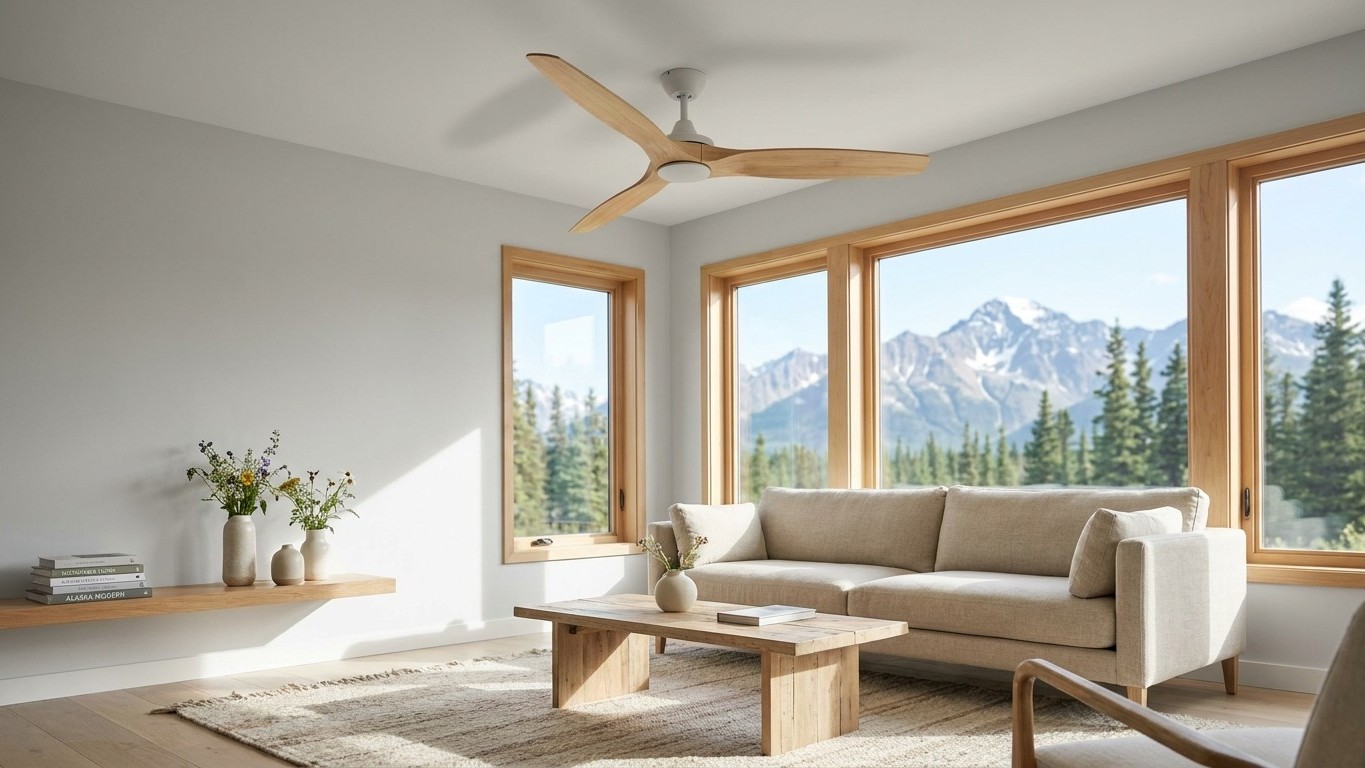

Arkansas homes run heavily on air conditioning, and mostly the central kind. Ninety-three percent of households cool with some form of AC equipment, 72% specifically with a central system, and 26% with an individual unit like a window, wall, or mini-split model. Add ceiling fans, found in 82% of homes, and you get a state built around beating summer heat with layered strategies rather than one single fix.
What homes in Arkansas actually cool with
Start with the numbers as the U.S. Energy Information Administration’s 2020 Residential Energy Consumption Survey reports them for Arkansas: 93% of homes use air-conditioning equipment of some kind, 72% use a central air-conditioning unit, and 26% use an individual unit, meaning a ductless mini-split, a window or wall unit, or a portable. Ceiling fans show up in 82% of homes, which is its own signal about how the state manages heat without always running compressors.
The gap between the first two figures, 93% with any AC and 72% with central, tells the real story. That gap is the share of homes leaning on individual equipment instead of, or alongside, a central system. In Arkansas that gap runs to roughly a quarter of all homes, which is meaningful but not dominant. Compare that to a state like Connecticut, where 90% of homes have air conditioning but only 34% run central, and the individual-unit share becomes the majority story. Arkansas sits closer to Alabama’s pattern, where 94% of homes have AC and 81% run central, a state where central systems carry most of the load and individual units fill in around the edges, in add-on rooms, older buildings without ductwork, or as a supplement in the hottest weeks.
None of this is a recommendation. What’s installed in Arkansas homes follows what builders and buyers found affordable and practical when a house went up, not necessarily what would be chosen new today. A ranch house built in the 1970s with ductwork already in place stayed central. A converted porch or a rental unit added later often got a window unit instead, because retrofitting ducts into an existing wall costs far more than plugging in a box. That’s why the mix looks the way it does: a majority on central, a real minority on individual equipment, and ceiling fans doing quiet work in the vast majority of homes regardless of which cooling system sits underneath them.
Worth noting too: no figure here is marked “Q” for Arkansas, meaning the sample size was large enough to publish every category cleanly. That’s not always true across states, some report a sample too small to give a reliable number for central units specifically, and in those cases the honest answer is that the data doesn’t exist, not that the share is zero.
How much cooling the year actually asks for
The heat load figure for Arkansas, drawn from NOAA’s 1991-2020 Climate Normals at the Little Rock reference station, is 69.2 days a year reaching 90 degrees Fahrenheit or higher. That’s a count of days at one weather station, not a statewide average and not a measure of how hot those days actually get. It tells you how often the threshold gets crossed, which is the number that actually drives compressor run time, water demand, and heat stress on anything living outdoors.
Sixty-nine days is a lot. That’s close to ten weeks a year where outdoor temperatures push past the point where most bodies, pets, and un-air-conditioned interiors start to struggle. It’s the kind of number that explains why Arkansas homes lean so heavily toward central air rather than treating a single window unit as sufficient for the whole house.
Does the equipment match the heat here?
This is the part that makes a state-by-state look worth doing instead of reading a national average. Heat load and equipment mix don’t always line up. A state can post a high number of 90-degree days and still run mostly on window units, because the housing stock is old apartment buildings without ductwork. Or a milder state can be almost entirely central because tract housing there was built with ducts as standard from day one.
Arkansas is a state where the two figures agree. Sixty-nine days above 90°F is a serious heat load, and 72% of homes answer that load with central air, the equipment best suited to running for long stretches without the maintenance headaches that come with multiple individual units scattered through a house. The 26% on individual equipment aren’t contradicting that pattern, they’re filling gaps, cooling a garage conversion, a mobile home, or a room an older central system doesn’t reach well. The state’s cooling choices track its climate reasonably closely, which isn’t true everywhere.
Wet heat or dry heat, and what it changes
Summer rainfall at the same reference station averages about 10.0 inches across June, July, and August, out of 50.4 inches for the full year. June brings 3.55 inches, July 3.33, and August, the driest of the three, still holds at 3.16 inches. That’s a genuinely wet summer by national standards, roughly a fifth of the year’s total precipitation falling in just three months, with no sharp dry stretch the way some Western states see in late summer.
This figure measures rainfall, inches of precipitation, nothing about relative humidity or dew point. But wet summers and humid air tend to travel together in this part of the country, and even without converting one measurement into another, the practical point holds: a lot of summer moisture in the air and soil around Arkansas homes means air conditioners here are doing double duty.
An air conditioner has two jobs running at once: dropping the temperature and pulling moisture out of the air. The temperature drop happens fast. The moisture removal takes run time, because water has to condense on the cooling coil and drain away, and that’s a slower process than simply cooling air. In a dry-summer state, an AC unit’s job is almost entirely about temperature, and a slightly oversized unit isn’t a big problem, it wastes some energy but doesn’t leave the house feeling off. In a wet-summer state like Arkansas, a big chunk of the unit’s real job is drying the air, and an oversized unit that cools the room quickly and then shuts off never runs long enough to finish that part of the work. The result is a room that reads cold on the thermostat but still feels damp and clammy.
Given a wet Arkansas summer, three things matter more here than they would in a dry climate:
- Favor a properly sized unit over an oversized one, since extra capacity cuts run time and leaves moisture behind.
- Use the fan’s “auto” setting rather than “on” when the goal is dehumidifying, since continuous fan operation can re-evaporate moisture sitting on the coil back into the room.
- Size any window, wall, or portable unit to the room it’s actually cooling rather than rounding up “to be safe,” since rounding up is exactly what causes the clammy-but-cold problem in a humid state.
Sizing a room unit, from the published chart
For anyone shopping for a window, wall, or portable unit rather than a whole-house system, ENERGY STAR publishes a straightforward starting chart matching room area to cooling capacity.
| Area to be cooled (square feet) | Capacity needed (BTU per hour) |
|---|---|
| 100 up to 150 | 5,000 |
| 150 up to 250 | 6,000 |
| 250 up to 300 | 7,000 |
| 300 up to 350 | 8,000 |
| 350 up to 400 | 9,000 |
| 400 up to 450 | 10,000 |
| 450 up to 550 | 12,000 |
| 550 up to 700 | 14,000 |
| 700 up to 1,000 | 18,000 |
| 1,000 up to 1,200 | 21,000 |
| 1,200 up to 1,400 | 23,000 |
This chart is a starting point published by ENERGY STAR for a single room unit. It is not a substitute for a load calculation, and it does not size a central system, the kind of equipment 72% of Arkansas homes actually run. A central air conditioner or heat pump needs a proper load calculation that accounts for the whole house’s insulation, window area, and orientation, not a single number pulled off a room-by-room table.
Where this chart earns its keep in Arkansas is with the 26% of homes running individual equipment, a mini-split in a converted space, a window unit in a room the central system doesn’t reach well, or a portable unit in a rental. Given the wet summers covered above, the sizing matters more than usual here: an oversized window unit in a humid Arkansas summer is the textbook case of a room that reads cold and feels wrong. Bigger is not safer with room air conditioners. An undersized unit runs longer and dries the air properly, an oversized one short-cycles and never finishes the job.
What actually needs looking after here
With 72% of Arkansas homes on central systems, duct-related maintenance matters for most households here, even though it’s invisible work happening inside walls and attics. ENERGY STAR notes that “in a typical house, however, about 20 to 30 percent of the air that moves through the duct system is lost due to leaks, holes, and poorly connected ducts.” That’s air a homeowner paid to cool, leaking into an attic or crawlspace before it ever reaches a vent, which matters especially in a state fighting nearly 70 days a year above 90 degrees.
For the 26% of homes on individual units, that particular caution doesn’t apply, a window or wall unit has no ductwork to leak from. But two other pieces of ENERGY STAR guidance apply to every Arkansas home regardless of equipment type. First: “Inspect, clean, or change air filters once a month in your central air conditioner, furnace, and/or heat pump.” That’s once a month, not once a season, and it covers all three pieces of equipment together, which matters for anyone assuming filter care is only a furnace chore. Second: “Airflow problems can reduce your system’s efficiency by up to 15 percent,” which is the reason a system in otherwise perfect working order can still underperform on a 95-degree Arkansas afternoon.
A reasonable seasonal pass for an Arkansas home looks like this:
- Check or change filters monthly through the cooling season, on any central system, heat pump, or individual unit with a washable filter.
- Have ductwork inspected for leaks and poor connections if the home runs central air, given the 20 to 30 percent loss ENERGY STAR describes as typical.
- Clear anything blocking airflow around vents, returns, and outdoor condenser units before the heaviest heat arrives, since restricted airflow is the quiet 15 percent efficiency loss most homeowners never notice.
- Confirm ceiling fans are running counterclockwise in summer to push air down, useful given how many Arkansas homes, 82%, already have one installed.
For equipment-specific detail, from mini-split care to central system troubleshooting, the guides elsewhere in this section cover each type in depth rather than repeating it here.