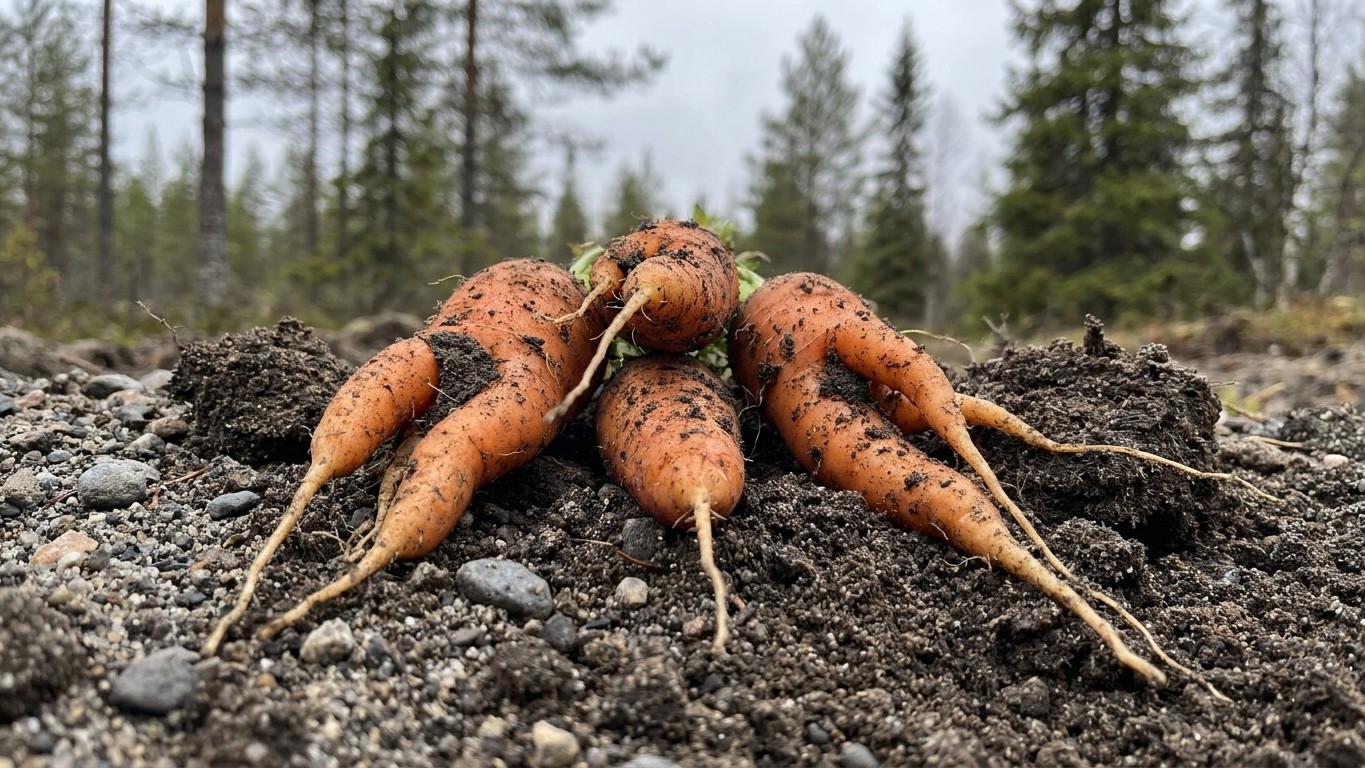

Nothing in the verified figures behind this page is a pest calendar, so it won’t hand you a list of insects and dates it can’t back up. What it does carry is the ground, the days to harvest and how long carrots keep, and those three things decide how much of a South Carolina crop actually reaches your plate. The state’s representative soil is heavy, wet clay, and carrots fork in it.
The short answer
USDA lists the Bohicket series as the soil that represents South Carolina, and the surface numbers are not what a carrot wants. The mapped surface layer is 17 percent sand, 35 percent clay and 48 percent silt, which makes it a heavy clay. It is an Entisol, a very young soil with almost no profile development. The surface pH is about 7.3, near neutral, and organic matter is about 15.0 percent. The drainage class is very poorly drained. Those are representative values for the surface of the major components of the series (27 of them) in USDA’s Soil Data Access database, not a measurement of anyone’s worked bed.
Will a carrot fork in it?
Yes, it will. Utah State University Extension describes the carrot’s ideal as deep, sandy, well-drained soil rich in organic matter, and says heavy or rocky soil makes the root fork. Set that beside 17 percent sand and a very poorly drained rating and the match is poor. The root meets resistance, splits and grows around it, and you pull up a many-legged oddity instead of a straight taproot.
Organic matter at 15.0 percent might look like a point in the soil’s favor. It isn’t enough to offset the texture and the water. A soil can be rich and still be a wet, dense clay, and a carrot cares more about how easily it can push down than how well fed the ground is.
What answers it
The fix is to change the ground, not the seed. USDA Extension guidance points to plenty of compost and double digging for heavy soil, which loosens the layer below the one you normally turn. Where drainage is the bigger problem, a raised bed filled with loose, friable mix sidesteps the clay completely. Switching varieties doesn’t solve forking, and the source names no variety anyway.
A starting point, not a diagnosis
One caution matters more than any number above. A state spans hundreds of soil series, and Bohicket is a single one. Your back garden may be sandy ground, river bottom, upland clay or fill a builder scraped and hauled in, and any of those will behave differently. Use this soil to understand what the region’s ground tends to do, which is hold water, stay dense and resist a taproot. For your own beds, the test below gives a better answer than the state average. Our guide on Will Carrots Fork in South Carolina Soil? goes deeper on the soil question, and the Growing Carrots in South Carolina overview puts it in the context of the whole season.
The test that settles it in your own garden
You don’t need a lab to know roughly what you have. You need a shovel, a bucket of water and a little patience. Do this in the bed where you plan to sow, not at the edge of the yard where the soil is easiest to dig.
Four checks, in order
- Dig a hole and look at the wall. Go down as deep as a carrot would need to grow. Notice how far the shovel goes in easily before it stops. A hard layer, a band of a different color or a pan of compacted soil is where roots fork.
- Pull out what you find. Stones, chunks of old brick, buried roots or construction debris all bend a taproot. Heavy or rocky soil is exactly what Utah State University Extension flags as the cause of forking, so count what you take out.
- Feel the texture. Take a handful of moist (not soggy) soil and rub it between your fingers. Gritty means sand. Smooth and powdery means silt. Sticky, and able to roll into a ribbon or a long snake that holds together, means clay. A soil that squeezes into a tight, shiny lump and stays there is leaning toward the heavy end.
- Watch the water. Fill the hole you dug and let it drain, then fill it again and time how long it takes. Compare a couple of spots if you have several beds. Water that still stands long after it should have gone is the sign of poor drainage, and in clay it tends to go with forked, stunted roots and rot.
Reading what you found
If the shovel slides down, the soil crumbles, stones are few and the water disappears quickly, you are closer to what the carrot wants, and compost alone may be enough. If the hole was tough to dig, the wall was slick and gray and the water sat, treat the bed as heavy clay: work in plenty of compost, double dig it, or build up.
The numbers a lab gives you are worth having if you can get them. A soil test through your county Extension office reports what is in your bed, which this page cannot. No pH is offered here for your garden, because the 7.3 above belongs to the state’s representative soil and not to yours.
What goes wrong here
The heavy ground and the long, hot growing season cause a short list of problems over and over. Each one has a remedy you can apply before the next sowing.
- Forked, stunted or twisted roots. This is the classic result of heavy or rocky soil. Remedy: work in plenty of compost and double dig the bed, or grow in a raised bed filled with loose, sandy, well-drained mix. Pull stones and debris out first, and don’t put fresh, chunky material deep in the bed where the roots will run into it.
- Seed that rots or never comes up in wet ground. A very poorly drained soil keeps the seedbed soggy, and carrot seed sits there for a long time before sprouting. Remedy: raise the bed so excess water leaves, and sow into a fine, crumbly surface rather than a cloddy one. Skip sowing right after a soaking rain, when the ground is at its most waterlogged.
- Poor germination in a hot spell. If the surface bakes, the seedbed dries out between waterings and seedlings fail to show. This source carries no temperature threshold, so watch the ground, not a number. Remedy: keep the top layer evenly damp until seedlings are up, and time the sowing with the help of When to Sow Carrots in South Carolina: Counting Back From the Last Frost. Carrots are sown in place, so there is no transplant to rescue a bad start. The days to harvest run from seeding.
- Roots that split after a dry stretch and a downpour. Uneven water makes the core swell faster than the skin can stretch. Remedy: water on a steady schedule instead of in bursts, and mulch lightly to slow the swings between dry and wet. Harvest on time instead of leaving roots in the ground to overgrow.
- Soft, wilted or sprouting carrots in storage. Clemson Cooperative Extension says to harvest carrots about 65 to 75 days after planting and to store them at 33 °F with high humidity to prevent wilting. That is just above freezing, not a cellar temperature, and a carrot kept near 50 °F sprouts and softens far faster. Cut the tops off first. The leaves keep drawing moisture out of the root, which is why bunched carrots with tops on keep only about 10 to 14 days while trimmed ones can last months.
- Unknown damage to the roots. Nibbled, tunneled or scarred carrots have several possible causes, and this page does not carry the pest list or the calendar that would pin them down. Take a damaged root to your county Extension office for identification before you treat anything.
Clemson’s own guidance on this crop is at Clemson Cooperative Extension, Home & Garden Information Center, which is where the harvest and storage figures above come from.
Common questions
Will carrots fork in South Carolina’s state soil?
They will. The Bohicket series is a heavy clay (35 percent clay, 48 percent silt, 17 percent sand) and very poorly drained, while carrots want deep, sandy, well-drained soil. Compost and double digging, or a raised bed, are the answer. Your own bed may differ from the state soil, so run the dig-and-drain test first.
Can I transplant carrots to get a head start?
No. Carrots are sown in place, so there is no transplant date. The days to harvest are counted from seeding. Clemson puts harvest at about 65 to 75 days after planting, and the wider range of 70 to 100 days also runs from the day the seed goes in.
How long do harvested carrots keep?
Clemson Extension says carrots store at 33 °F and high humidity, and that bunched carrots with their tops on keep about 10 to 14 days. Trimmed carrots keep far longer, in the range of months, because the tops no longer pull moisture from the root. Cut the tops first.
Does this page tell me which pests eat carrots and when?
It does not. The verified figures here cover soil, days to harvest and storage, and no pest calendar is published in them, so none is invented. If something is chewing your crop, bring a damaged root to your county Extension office, or see the Growing Carrots in South Carolina guide for the rest of the season.