
South Carolina gardeners get one of the longest collard seasons in the eastern United States, but the real timing question isn’t the calendar. It’s soil temperature in spring and the winter low that decides whether the crop stands in the ground through January or ends at the first hard freeze. Everything else follows from those two numbers.
When the soil is warm enough in South Carolina

The last spring frost across most of South Carolina falls between February 28 and March 17, according to NOAA’s 1991-2020 Climate Normals freeze-probability data for station USW00013880. That’s a 30-to-70 percent band, meaning frost has roughly even odds of showing up on either side of it. It’s a probability, not a promise, and treating it like a fixed date is how a March cold snap wipes out a flat of young transplants.
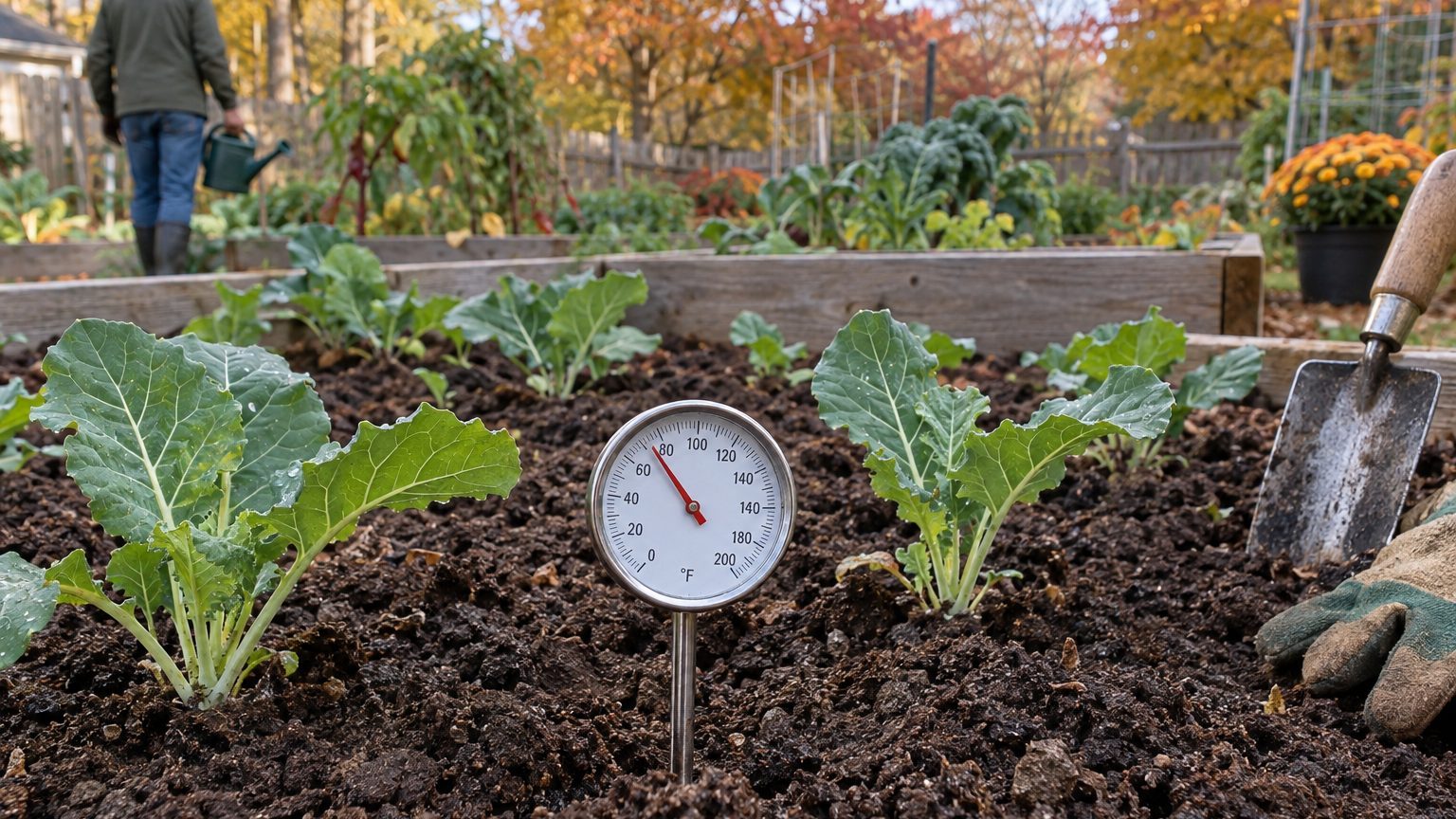
Collards, though, don’t actually organize their year around frost. Mature plants shrug off a light freeze and often taste better for it. What they’re waiting on is warm soil, and soil lags behind air temperature by two to three weeks in spring because the ground holds onto winter’s chill long after daytime highs climb. A gardener near Columbia or Greenville who seeds the day after the average last frost is frequently working cold, wet dirt that stalls germination and invites damping-off before the first true leaves ever show.
The practical move is to wait until soil at a two-inch depth holds consistently above the mid-40s before direct-seeding, and to hold transplants back another week or two if overnight lows are still flirting with freezing. A soil thermometer pushed into the bed each morning for a week tells you more than any date on a seed packet.
Upstate South Carolina runs on a tighter, later schedule than the coastal plain does. Peninsular Charleston, milder than the inland airport station NOAA uses to set the statewide range, often has workable soil two to three weeks before Greenville does. That gap matters more for collards than for most vegetables, because a plant seeded into cold ground doesn’t just grow slowly, it’s more likely to bolt straight to a flower stalk once real heat finally arrives, skipping the leafy stage a gardener actually wants.
Collards belong to the same brassica family as turnip, rutabaga, cabbage, kale and mustard, and that kinship follows them into the soil. Flea beetles, cabbage worms and clubroot don’t distinguish between these crops, so a bed that grew cabbage last spring isn’t a clean start for collards this year. Working a full rotation into the plan before seeding, rather than reacting after the first pest shows up, is worth checking against the site’s brassica rotation guidance, since it applies to collards exactly as it does to their relatives.
How long the season lasts here
Subtracting the earliest last spring frost date (February 28) from the latest first fall frost date (December 5) gives South Carolina a frost-free stretch of roughly 281 days in its most generous combination. Run the tighter pairing instead, the latest spring frost against the earliest fall frost, and the window still holds at 249 days. Either way, that’s close to 250 to 280 frost-free days, one of the longer growing windows anywhere collards are grown outdoors in the country.
A window that long changes the math on planting. It allows a spring sowing for early-summer leaves and a separate fall sowing for the crop most South Carolina gardeners actually build their year around, since collards seeded in late summer mature into cooler, sweeter conditions and can be picked well into winter. In a shorter-season territory, growers often have one shot and have to make it count; here, there’s room for a second attempt if the first sowing gets eaten by flea beetles or bolts early.
The length of the window also affects whether transplanting is worth the trouble compared to direct-seeding. With this much season to work with, transplants started indoors a few weeks early can get a head start on spring heat without the stakes being as high if a batch needs replacing. In a tighter climate, losing three weeks to transplant shock might cost a grower the whole crop; in South Carolina, there’s usually enough calendar left to recover. Anyone stacking a spring sowing against a fall one should look at the site’s succession sowing guide before deciding how tightly to space the two plantings.
Heat and water in South Carolina

South Carolina summers run long and heavy, with afternoon highs regularly pushing into the 90s from June through August and humidity that keeps the air sticky well after sundown. That heat doesn’t kill collards outright, but it changes them: leaves grown in July heat turn coarser and more bitter than leaves grown in cool weather, and the humid air that comes with it is exactly what downy mildew and black rot need to spread through a bed of brassicas. Overhead watering at midday in August does more to spread disease among tightly spaced plants than it does to cool them.
None of that summer heat, though, is what decides whether collards behave as a standing crop here or a seasonal one that ends with the first hard freeze. That comes down to winter, specifically the coldest month’s average daily minimum, which sits at 38.9°F at the Charleston reference station (NOAA NCEI Climate Normals, 1991-2020). That figure never drops into territory that kills a hardened collard plant outright, which is why coastal and southern South Carolina gardeners can treat collards as a genuine standing crop, picked leaf by leaf from November into March, with the plant pushing new growth on any mild stretch between cold snaps.
That picture shifts inland and upstate. South Carolina’s hardiness zone range runs from 7a to 9a under the USDA system, and the colder end of that range, closer to the mountains, sees harder and more frequent freezes than the Charleston normal suggests. In those areas, collards behave more like an autumn crop: planted for a fall harvest, picked hard through the shortening days, and finished off by a freeze that a coastal garden would barely notice. The winter low at the specific location, not the statewide average, is what should drive the planning decision.
Which collards suit South Carolina
The honest answer here is by type, not by name. This page can’t responsibly recommend a specific cultivar, because the varieties that actually perform well shift from the Piedmont to the Lowcountry, and the only recommendations worth trusting are the ones trialled in South Carolina’s own test plots.
What the territory’s facts do support is reasoning about type. A growing window this long, 249 to 281 frost-free days, means earliness isn’t the deciding factor it would be in a shorter-season state; there’s room for both a quick spring crop and a slower-maturing fall one. The heat and humidity argue for types bred with some resistance to downy mildew and black rot, since a bed of susceptible plants in a wet August is asking for trouble regardless of how it’s watered. In the hottest inland pockets, giving plants afternoon shade and airflow around the base matters as much as which type is in the ground, since crowded plants trap the humidity that disease needs.
For gardeners on the coldest edge of the state’s hardiness range, cold tolerance matters more than earliness, since a plant that can hold through a hard freeze without collapsing extends the standing-crop harvest by weeks. For those near Charleston, where the coldest month barely dips below 39°F on average, that trait matters far less than resistance to the diseases a warm, humid winter still allows to spread.
The next step is to check Clemson Extension’s current variety recommendations before buying seed, since Clemson (clemson.edu/extension) maintains the trial data specific to South Carolina’s growing conditions, from the Piedmont to the coast, that this page doesn’t have and shouldn’t guess at. Naming a cultivar here would be a confident-sounding answer to the wrong question; the right one lives in a state trial report, not a general guide.