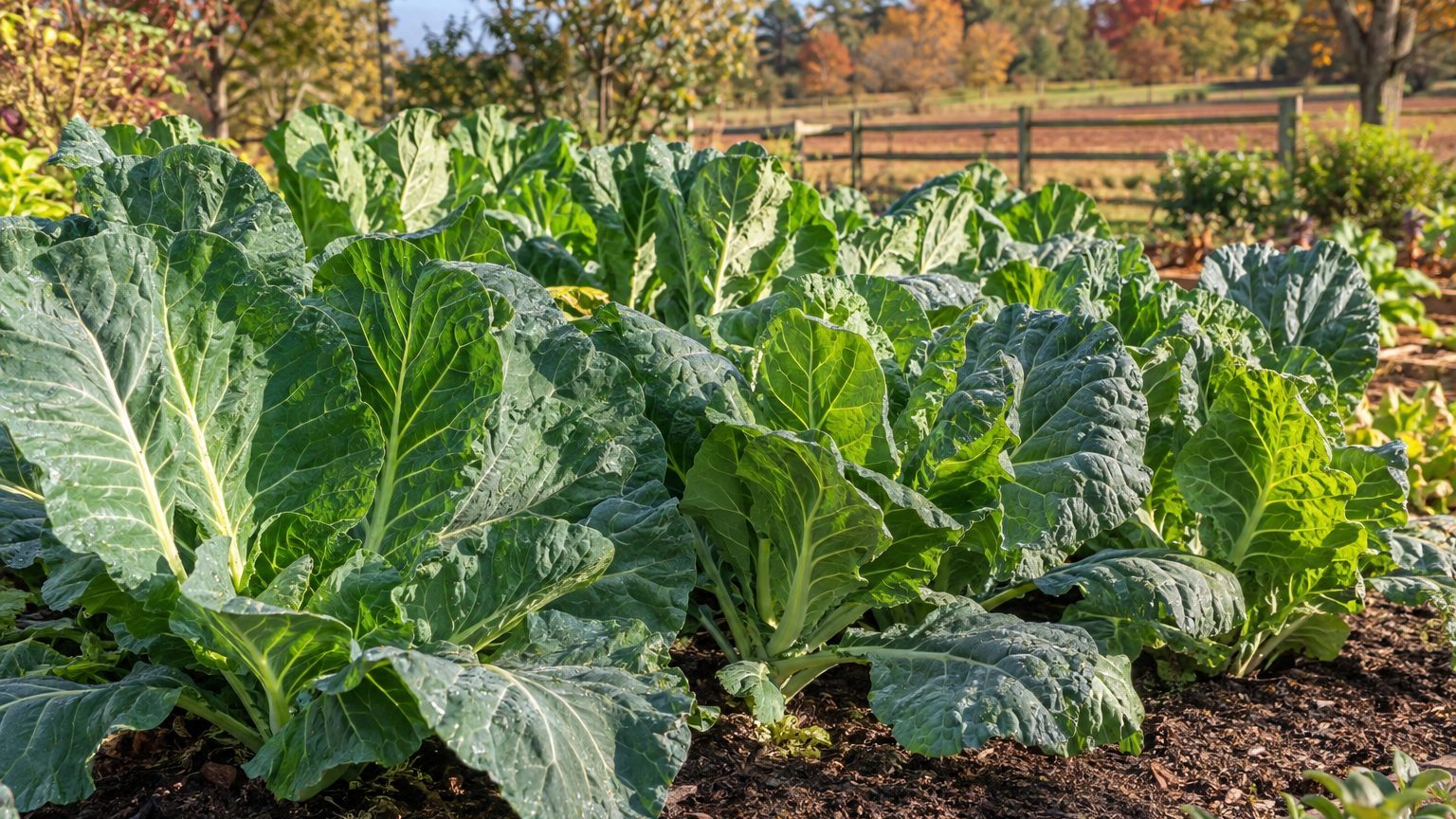

Wyoming gives collards about 130 frost-free days at 6,000 feet, and that number decides everything. Fast, compact collards and hardy cousins like kale do well here. The tall, slow Southern heirlooms are a gamble. The right pick depends on how much of the season your elevation leaves you, and nothing on this page replaces your county’s numbers.
The short answer for Wyoming
Choose early-maturing, compact collards and start them as transplants, then add kale and quick mustard or turnip greens as insurance. Save the tall Georgia-style heirlooms for a year when you can protect them. The reason is arithmetic: the frost dates leave a window of roughly 130 frost-free days at 6,000 feet, and frost is possible in any month at higher elevations.
Those dates are probabilities, not promises. The NOAA 1991-2020 Climate Normals (Cheyenne station, NCEI data) put the last spring 32°F freeze between May 7 and May 18. That is the 30-70% probability band. The first fall freeze falls between September 24 and October 5, same band. Inside those ranges a freeze is still a coin flip, so a sensible calendar starts from the later spring date. The full timing logic is laid out in When to Plant Collards in Wyoming.
How the types compare
| Type | Fit for Wyoming | How to grow it |
|---|---|---|
| Compact, early collards (Vates is a common example) | Best bet for a full harvest | Transplant after the spring freeze risk fades |
| Tall Southern heirlooms (Georgia Southern is the classic) | Risky, needs season extension | Start early indoors, cover on cold nights, pick young leaves |
| Kale | Strong margin, shrugs off cool weather | Transplant or direct-seed |
| Mustard and turnip greens | Quick payoff, forgiving | Direct-seed in spring and again as nights cool |
Read the days-to-maturity number on the seed packet, and remember it usually counts from transplanting, not from sowing. Pick the lowest number you can find. If you want the broader growing picture beyond varieties, Growing Collards in Wyoming covers the crop from seed to harvest.
What will not work here
Overwintering fails first. The coldest month’s mean daily minimum is 18.1°F at the Cheyenne reference station, and that is an average night, not the worst one. A plant standing in the open with no serious protection is not going to make it to April. Treat collards as an annual and stop hoping for a second-year crop.
Planting on the first mild day of May fails too. The spring band runs May 7 to May 18, which means that on May 18 the odds of another 32°F freeze are still around 30%. Would you bet a tray of seedlings on a 30% chance of losing them? Tender transplants set out on the early date need row cover or a cold frame, and I would hold them until the later date unless you have that cover ready.
The slowest heirlooms lose the arithmetic battle. A variety that wants a long, hot, steady summer is being asked to finish inside a window that starts late and ends abruptly. You may still get edible leaves, since collards are picked leaf by leaf, but the plants will stay small and the harvest thin. Buying a slow variety and expecting Deep South results is the most common mismatch.
Late sowing for a fall crop runs into the other end of the calendar. With the first fall freeze arriving between September 24 and October 5, a seedling started in midsummer has very little time to size up. Fast greens like mustard and turnip can still make it. Collards sown that late mostly become a lesson.
Watering on a fixed weekly schedule is another quiet failure. Wyoming’s wind and dry air pull moisture out of a raised bed quickly, and greens that dry out turn tough and bitter. I would rather see a thick mulch layer and a finger-deep soil check than a calendar reminder. Finally, at higher elevations frost can arrive in any month, so a plan with no covers in the shed is not a plan. Season extension is not optional here, as the frost data makes plain.
What changes across Wyoming
Wyoming has no single answer. The USDA Plant Hardiness Zone Map (2023 edition) puts the state anywhere from zone 3a to 6a, three full zones apart. That spread reflects a gap of roughly 30°F in average annual extreme minimum temperature between the coldest and mildest parts of the state. Zone rating measures one thing only, the winter low, so it says nothing about how short your summer is. Still, the two tend to travel together as you climb.
The frost dates above come from the Cheyenne station, a reference point and not a statewide rule. Someone gardening in a colder valley or at a higher elevation should expect a later spring date and an earlier fall one. The practical shifts are these:
- Move transplanting later and lean on covers instead of hope.
- Favor compact, early collards and kale over anything tall.
- Plan to harvest young leaves rather than waiting for full-size plants.
- Expect to protect plants before the first fall freeze, not after it.
Gardeners in the milder, lower parts of the state gain some breathing room, but not a different crop plan. Even there, wind and late freezes keep the short-season logic in charge. Look up your own zone on the USDA map by ZIP code instead of assuming, because the difference between a 4b yard and a 5b yard can decide whether a cover is optional. And keep in mind that zone 3a to 6a is a range for the whole state, not a number for anyone’s backyard.
Where to check this for your own county
Your state extension service holds the local answer. University of Wyoming Extension is at https://www.uwyo.edu/uwe/, and its county offices are the people who know what actually grows near you.
Two things are worth looking for there. First, a local planting calendar or vegetable guide for your county, with the frost dates that fit your elevation. Second, any variety trials or recommended-variety lists, because a variety tested in your county has already survived your wind, your soil and your short summer. If the office publishes a leafy greens or cool-season vegetable sheet, that is the document to print.
A county recommendation beats a state one, and this page is the state one. It draws on a single reference station and a statewide hardiness range, so it can tell you what type of collard suits the general climate but not the week to plant in your town. This page also does not have a Wyoming-specific collard calendar from extension, so I am not going to invent one. If a county office gives you a date that conflicts with what you read here, follow the county.
Extension offices will also take a direct question. Call or email with your town, your rough elevation and what you want to grow, and you will usually get an answer grounded in local records instead of a national average.
Checking this against your own garden
Your own observations outrank every date on this page, and three of them cost nothing. The first is soil warmth by feel. Press your bare palm flat on the bed in the morning: if the soil feels cold and damp, transplants will sit and sulk, and a warm patch by a south wall tells you where your earliest bed belongs.
The second is the first true leaves on your seedlings. The first pair to appear are seed leaves; the true leaves come after. When they show up on trays kept in a window or a cold frame, you know the seedlings are ready for hardening off, and how quickly they arrive tells you how much light and warmth your setup really gives. Slow seedlings mean you should start earlier next year, or pick a faster variety.
The third is where frost lands. On the first cold clear morning of fall, walk the yard and note which spots are white and which are not. Low corners collect cold air, while a spot near a wall or fence can stay clear a few nights longer. That map is your personal microclimate, and it tells you where to put the collards and where to put the row cover.
Write those three observations down each year. After two seasons your notes will be a better local calendar than any statewide table.
Common questions
Can collards survive a Wyoming winter?
Not reliably. With a coldest-month mean minimum of 18.1°F at the Cheyenne reference station, plants left in the open are unlikely to come through. Grow them as annuals.
Are collards or kale the better choice here?
Kale gives more margin in a short, cool season, while collards reward you if you pick a compact, early type. Plenty of Wyoming gardeners grow both and see which does better in their own bed.
Do I need to start collards indoors?
With roughly 130 frost-free days at 6,000 feet, transplants give you a head start that direct seeding cannot match. Direct seeding works better for mustard and turnip greens, which are quick.
Do a few frosts really improve the flavor?
Yes, cool nights make collard leaves taste sweeter, which is why a light fall frost is welcome. A hard freeze is another matter, so cover plants when the forecast turns severe.