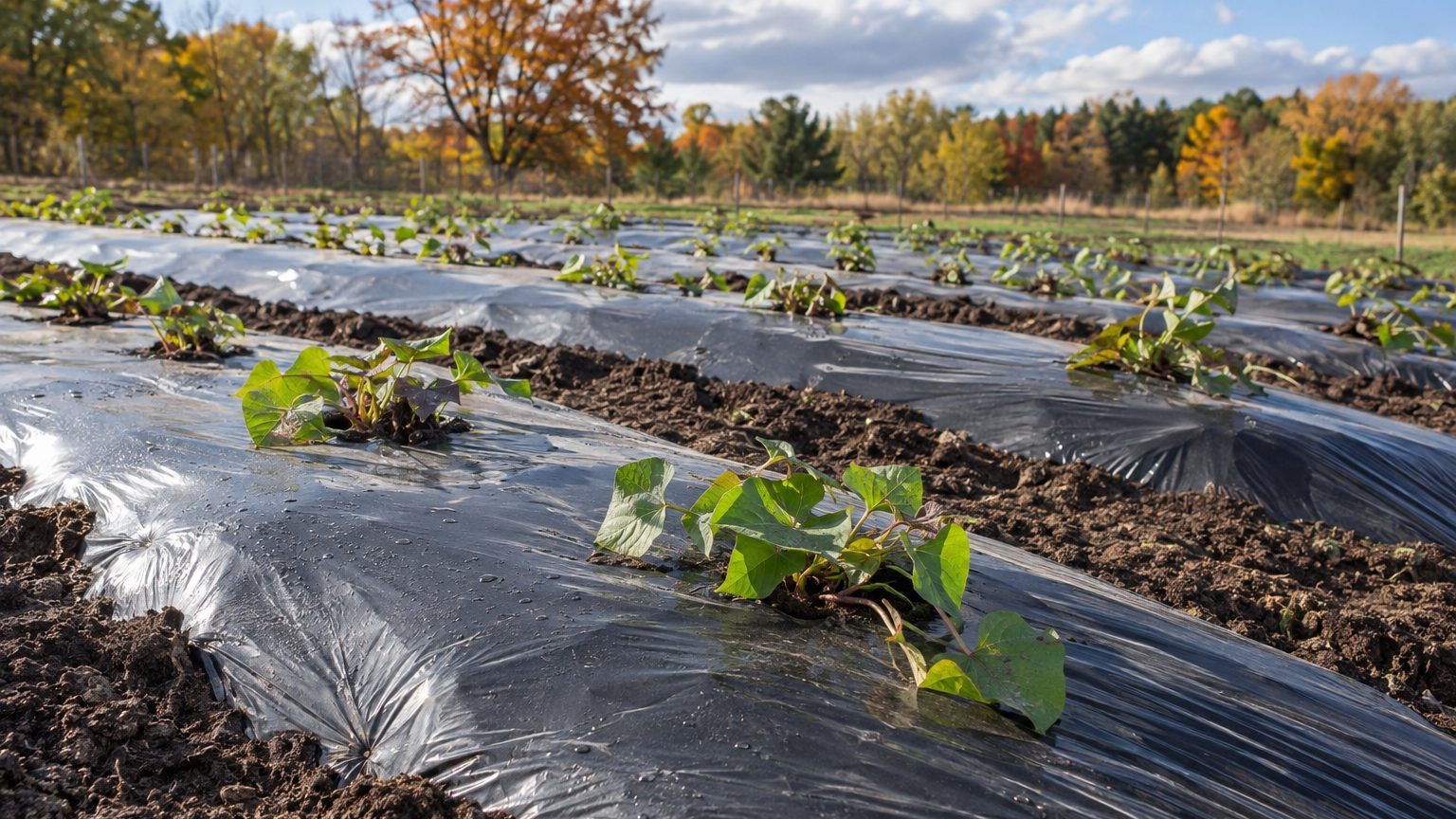

Black plastic pays off for sweet potatoes wherever summers start late or run cool. The film soaks up sunlight, holds heat in the soil, and can lift root-zone temperature by several degrees, which this tropical crop turns into faster vine growth and a better shot at sizable roots. It does not warm the air, it sheds rain, and in a hot climate it can backfire. Here is how to decide, and how to lay it.
What is actually going on
Heat accumulation, not a switch
Sweet potato is a tropical vine, a cousin of the morning glory, and it measures its summer in accumulated warmth. Every day the soil spends warm adds a little to the account. Every cold day, or every day the soil sits sulking in the low 60s or below, adds nothing and may take something away. Black film works by making small daily deposits. Dark plastic absorbs sunlight, converts it to heat, and passes it into the soil it touches. It also stops evaporation from the soil surface, which is a cooling process, and it blocks the light weeds need. A few degrees sounds trivial until you stack it across six or eight weeks.
Contact matters as much as color. A film stretched tight over a smooth, moist bed transfers heat well. A film draped loosely over cloddy ground traps an insulating layer of air, and the soil underneath barely benefits. That single detail explains most of the “plastic did nothing for me” reports.
Clear plastic warms soil even more, but it also lets light through, so weeds germinate under it and cook or thrive depending on the day. For a season-long crop, black is the usual choice for that reason.
Why it matters more in a marginal climate
Where summers are long and hot, bare soil gets warm enough on its own, and the extra degrees from plastic add little. They can even push the root zone past comfortable. Where the season is short or springs are slow, those same degrees decide whether the crop gets a real head start. In a marginal climate, black plastic is the difference between a crop and an experiment.
Plastic also changes the usual garden logic. Potatoes like cool soil and get hilled to protect them from light. Sweet potatoes are not potatoes (and not yams, whatever the supermarket label says), and they are not nightshades. They want heat, and they follow their own rotation rules, not tomato-and-potato ones. Treat the bed as a warm-weather bed.
Variety type counts too. Shorter-season types exist and behave differently from the long-season ones, but which named varieties have been trialed near you is a question for your state extension service, not for a general page. The full growing sequence, from slips to curing, is covered in Growing Sweet Potatoes: Slips, Heat, and a Careful Cure.
In the garden
Laying the film and planting through it
The order of operations matters more than the brand of film. Pre-warming is where the real gain comes from, so the plastic goes down before the plants do. Each step below has a way of going wrong, and knowing it saves a season.
| Step | What to do | If it goes wrong |
|---|---|---|
| Shape the bed | Loosen the soil, rake it smooth, form a raised bed or ridge, and water it before covering. | Dry, lumpy soil leaves air gaps under the film. Heat transfers poorly and wind gets a grip. |
| Lay the film tight | Stretch it across the bed and bury both edges in a shallow trench of soil. | Loose edges flap, tear, and can lift the whole sheet in one gusty night. |
| Let it pre-warm | Leave the film in place for a week or two before planting if the calendar allows. | Planting right away skips the head start, and slips go into soil that is still cold. |
| Cut planting holes | Make small holes at your chosen spacing (see How Much Room Sweet Potato Vines Need). | Oversized holes let weeds in and heat out. Holes set too close crowd the vines later. |
| Set the slips | Plant on a cool, cloudy day or in the evening. Firm the soil and water each slip in. | A stem touching hot film at midday can scorch. Slips planted in a heat spell often wilt hard. |
| Water | Run drip tubing or a soaker line under the film before you cover the bed. | Overhead watering runs off the plastic and the soil below dries out unseen. |
| Clear it out | Pull and dispose of the film once the vines are cleared, then dig the roots carefully. | Brittle, sun-baked film breaks into fragments that stay in the soil for years. |
The watering complication
Plastic sheds rain. A half-inch storm that would have soaked a bare bed runs off the film and into the paths, leaving the root zone as dry as before. Gardeners who forget this see slow, yellowing vines in the middle of a wet week and can’t work out why. Irrigation belongs under the film, installed first, and a finger pushed into a planting hole tells you more than the sky does.
The reverse problem exists in soggy summers. Water that does get under the edges has nowhere to evaporate, so a poorly drained bed can stay wet longer beneath plastic. Raised beds help here. Remember that swollen roots that sit in wet soil are more likely to rot.
One more thing to watch: the gap between film and soil is shelter. Voles and other small burrowers like the cover, and they like a sweet potato even more. If you find gnawed roots or narrow tunnels at harvest, Holes and Tunnels in Sweet Potato Roots helps you tell rodent damage from insect damage.
What it depends on where you are
The national part and the local part
The mechanism is national. Dark film warms the soil it touches, it blocks rain, and it works best on a smooth, moist, well-formed bed. Those facts hold in Michigan, Georgia, and Oregon alike. The tactics built on top of them are local, and this page does not know your garden.
Three things move the answer more than anything else. First, season length: the shorter your frost-free window, the more each week of early warmth is worth, and the more plastic earns its place. Second, summer heat: in a long, hot summer, film can push the root zone warmer than the crop wants, and many growers in hot regions skip it or pull it back once vines fill in. Third, summer rainfall: in a dry region the plastic saves water by cutting evaporation but demands drip irrigation, while in a wet one it may shed enough rain to help a heavy bed but leave puddles at the edges.
Where to get the local answer
Your state’s cooperative extension service is the best single source. It can tell you which varieties have actually been trialed in your region, when soil typically warms enough to plant, whether plastic is recommended for your conditions, and which film thickness local growers use. Search for your state name plus “extension” and “sweet potato,” and look for a commercial-grower bulletin, since those are written by people who track soil temperature closely.
The state pages on this site cover regional planting patterns and common trouble spots, so check yours next to the extension advice. Where the two differ, trust the source closest to your soil. A cheap soil thermometer, read the same time each morning, gives you your own local data within a week or two, and it beats any general rule.
The mistake that costs the most
Treating plastic as permission to plant early
The costliest error is planting slips weeks ahead of schedule because the film “warmed the soil.” Plastic warms the soil, and only the part of it beneath the film. It does nothing for the air. A slip has a stem and leaves standing above the plastic, and a cold night, a chilly wind, or a stretch of gray days hits that top growth as hard as it would on bare ground. Chilled slips stop growing, and plants that stall early often struggle for weeks to catch up, sometimes never producing much. The gardener who planted early ends up behind the one who waited.
There is a hot-weather version of the same mistake. Plant a tender slip through black film on a bright afternoon and the stem can scorch where it touches the plastic. Warmth is what the crop wants, but not delivered like that.
What to do instead
Use plastic to make the soil ready sooner, not to plant sooner. Lay the film early, then check soil temperature at planting depth in the morning, when readings are lowest. Wait until the reading holds at the level your state extension service gives for sweet potatoes, not just on one sunny afternoon but across several days. Time planting for mild nights, and plant on a cool, overcast day or toward evening.
Keep a cover ready anyway. Lightweight row cover or overturned buckets protect against a surprise cold snap, and they cost far less than replacing slips. If a cold night does arrive after planting, cover the plants before dusk. Watch the crop’s response afterward: healthy slips push new leaves, while chilled ones sit and sulk.
Common questions
Should I use black plastic or clear plastic?
Black is the standard for a full-season crop because it blocks weeds while warming the soil. Clear film warms more but lets weeds grow underneath, so it is usually reserved for pre-warming bare beds before planting, and it has to come off or be replaced before the crop goes in.
Do I need plastic if I live somewhere hot?
Often not. Where summer heat arrives early and stays, bare soil warms enough by itself, and film can overheat the root zone. Your extension service can tell you whether local growers use it. If you are unsure, mulch part of the bed and compare how the two sections do.
Can I use straw or leaves instead of plastic?
Organic mulch does the opposite job. It insulates soil and keeps it cooler, so laying it on cold ground slows warming. It has a place later, after the soil is warm and the vines are growing, where it conserves moisture and suppresses weeds.
Does plastic change how I harvest and store the roots?
Not the curing or storage. Harvest gently, since the skin bruises easily, then cure the roots in a warm place, not a cold one. Never put sweet potatoes in a refrigerator or a cold cellar. Chilling injury is irreversible and shows up later as hard cores or spoilage. Before you store any root, look it over. A soft patch or a weeping spot ends the question, and that root should not be eaten or stored, however sound the rest of it looks. Even a short spell in the fridge can injure a root that seemed fine going in.