
Pick by type. In South Carolina, the safest unusual roots are the heat-lovers (sweet potato relatives, ginger, turmeric) planted after frost, and fast cool-season roots like daikon, turnips and rutabaga sown for fall. The slow, cool-loving ones, such as parsnips and celeriac, are the gamble. Here is why, and what shifts from the coast to the mountains.
The short answer for South Carolina
The frost dates are where the decision starts, and it helps to know what they measure. NOAA’s 1991-2020 Climate Normals for the Charleston airport station (USW00013880) give a last spring frost of February 28 to March 17 and a first fall frost of November 20 to December 5. Both are probabilities of a 32°F freeze, taken across the 30-70% band. They are not promises. A freeze after March 17 can still happen, and a freeze before November 20 can too.
That station is Charleston, though, and the figures carry a warning. The peninsula runs milder than the airport, and the Upstate runs several weeks tighter at both ends. Treat the dates as the coastal reference, not a statewide rule. For the broader picture of how these crops behave here, start with Growing Unusual Root Crops in South Carolina, and for sowing dates by crop see When to Plant Unusual Roots in South Carolina.
Decision by type
The long frost-free stretch between those dates rewards crops that need a lot of warm days. It punishes crops that need a long, cool, steady growing period. That sorts the choices cleanly.
| Type | Examples | South Carolina verdict |
|---|---|---|
| Heat-loving, long season | Sweet potato, ginger, turmeric | Best fit. Plant after the last frost risk has passed. |
| Tough perennials | Jerusalem artichoke, horseradish | Reliable. They tolerate heat and humidity and come back each year. |
| Fast cool-season | Daikon, turnips, rutabaga, beets | Good in fall. Spring sowings run into heat. |
| Slow cool-season | Parsnip, celeriac, salsify | Hardest. Needs careful timing and some luck. |
Why fall beats spring for the cool crops
Spring here is short. Frost can linger into mid-March, and by May the soil is warm enough that cool-season roots turn woody, bolt or stall. Fall works the other way. Soil is still warm at sowing, which helps germination, and the first frost does not arrive until November 20 to December 5 at the Charleston reference. Roots bulk up in cooling weather and sweeten after the first light freezes.
What will not work here
Slow, cool-season roots sown in spring are the most common failure. A parsnip seed sown in March needs a long run of mild weather, and South Carolina rarely gives it. Seed that sits in cold, wet soil rots, and the seedlings that survive meet summer heat before the roots have sized up. Celeriac has the same problem: it wants a long, cool season, and a coastal summer is neither.
Humidity and close spacing
Gardeners used to dry-climate advice are often told to pack roots tightly to save water. In a humid state that backfires. Dense foliage stays wet after rain and dew, which invites leaf diseases and rot, and crowded roots compete for the little oxygen left in saturated soil. Give daikon, rutabaga and beets room, and favor raised rows or beds that drain.
Watering is the opposite of a dry-summer problem. The risk here is too much water, not too little. Heavy summer storms, followed by a long dry spell, cause split roots on crops like sweet potatoes and carrots. Even moisture, with mulch to buffer the swings, does more than any weekly schedule.
Soil pests and the wrong winter assumption
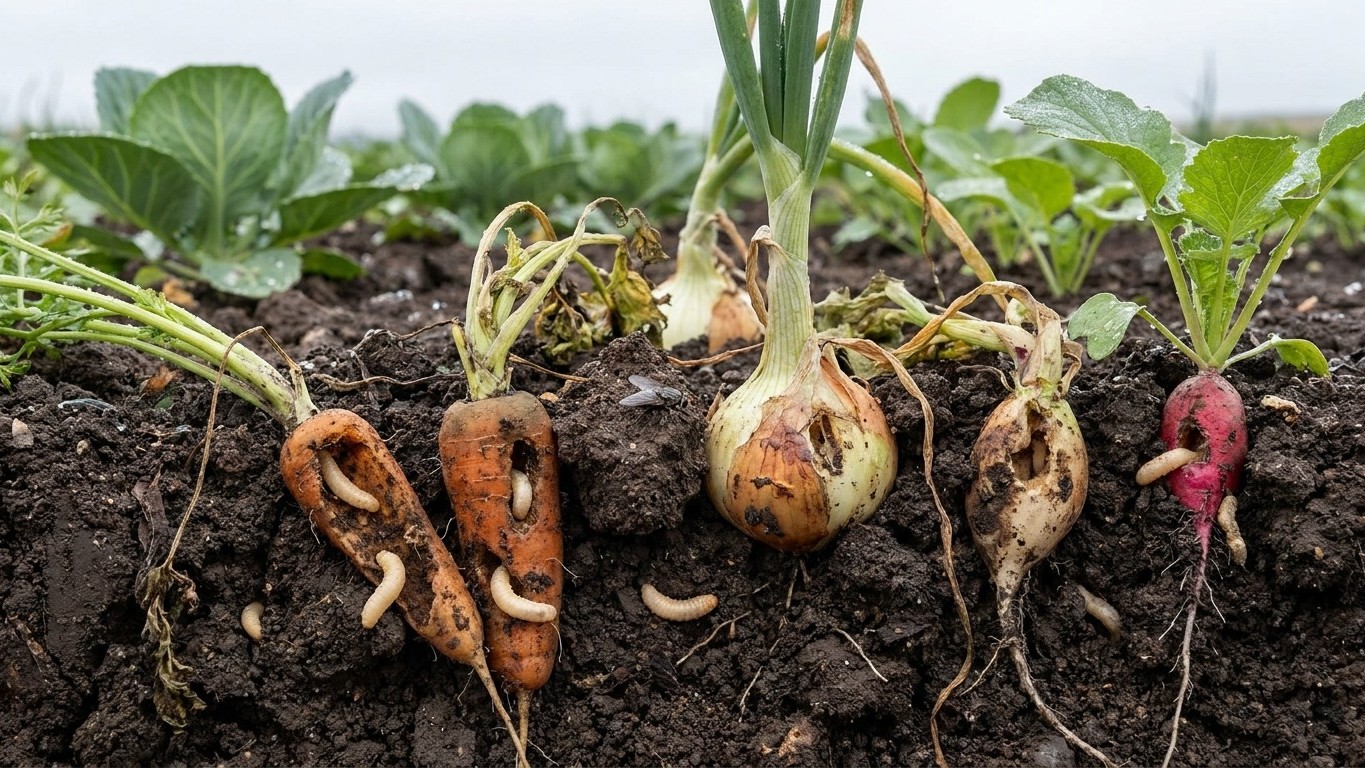
Sandy soils, common on the coastal side of the state, drain quickly but are well known for root-knot nematodes. These microscopic worms gall and distort root crops, and warm winters do little to knock them back. Rotate crops, add organic matter, and expect cosmetic damage on some roots.
Winter cold is rarely the limit. The coldest month’s mean daily minimum at the Charleston reference is 38.9°F. That is an average of nightly lows, not a record, so single nights go much lower. Even so, tender crops such as ginger and turmeric will not survive frost, and they need protection or a container that comes inside. Hardy roots left in the ground generally cope with a coastal winter without trouble.
What changes across South Carolina
The state is not one garden. By the USDA Plant Hardiness Zone Map (2023, built on 1991-2020 normals), South Carolina spans zones 7a to 9a. That system rests on a single variable, the average annual extreme minimum temperature. So there is no single answer for the state, only a spread, running from the cold mountain edge to the mild barrier-island coast.
Readers in the Upstate or at higher elevations should shift in three ways. First, push spring planting of tender crops later, because last frost comes weeks after the Charleston window. Second, start fall sowings earlier, since the first frost arrives weeks before the Charleston range. Third, favor shorter-season varieties of sweet potato and start ginger or turmeric in containers indoors, because their window is tighter at both ends.
Coastal readers get the opposite. The long season lets you stretch heat-lovers further and sow fall roots later, even into the cooler months, with fewer frost interruptions. Mild winters also make overwintering hardy roots easy. The cost is more pressure from pests and humidity-driven disease.
Whichever end you garden at, check the USDA map yourself. Enter your ZIP code on the USDA Plant Hardiness Zone Map, and treat that zone, not anyone else’s guess, as your starting point. Zones also shift over a few miles, and a low-lying yard can be colder than a ridge nearby.
Where to check this for your own county
The best next stop is Clemson Cooperative Extension, the state’s land-grant extension service. A county recommendation beats a state one, and this page is the state one. The state is too varied for any single set of dates to be right everywhere.
When you reach your county office or its resources, look for two things. The first is a local planting calendar for vegetables, which will give frost-based windows closer to your own conditions than a statewide reference. The second is any list of varieties trialled in your county: which sweet potatoes, turnips or beets performed well in local soil, and which struggled with pests or disease.
One caution about what is available. The calendars this page has on file from Clemson’s Home and Garden Information Center are lawn maintenance calendars, one per grass species. They are useful for turf, but they do not cover root crops, so do not use them for sowing dates. If your county office has no root-crop calendar, ask an agent whether any vegetable calendar applies, and which unusual roots they have seen succeed locally. County agents hear what actually fails in your soil, which no statewide article can.
Checking this against your own garden
Dates are averages and your yard is not average. Three observations outrank anything printed here.
- Soil warmth by feel. Push your hand a few inches into the bed in the morning. If it feels cool and damp, hold off on sweet potato slips or ginger. Compare a sunny bed with a shaded one: the difference tells you which spot warms first, and where cool-season sowings will last longest in fall.
- The first male flowers on squash or cucumbers. These appear before the female blooms and usually mean real warmth has settled in. If they show up earlier in one corner of your yard, that corner is your warm pocket for heat-loving roots.
- First true leaves on a test row. Sow a short row of radishes or turnips and watch for the first true leaves, the ones that follow the rounded seed leaves. Fast, even emergence means the soil temperature suits that crop. Slow or patchy emergence points to wet or cold pockets, or to heat.
Keep notes for a season. A few dates written on a calendar, such as when the soil felt warm, when the first flowers opened and when the first frost actually hit, become your own planting calendar, and they get more accurate every year.
Common questions
Which unusual root is easiest for a first-time South Carolina grower?
Heat-tolerant, forgiving crops are the best starting point. Sweet potatoes and Jerusalem artichokes both handle South Carolina heat and humidity, and fall-sown daikon or turnips are a low-risk way to try cool-season roots.
Can I grow ginger and turmeric outdoors?
They are tender and will not survive frost. On the coast, where frost-free months are long, they can grow outdoors through the warm season. In the Upstate, containers that can move indoors are the safer choice.
Are parsnips worth trying in South Carolina?
They are a gamble. Spring sowings struggle with cold, wet soil and then heat, so timing and drainage matter more than variety. Try a small test row before committing a whole bed.
Do I need to protect roots from winter cold?
On the coast, mostly not for hardy roots. The coldest month’s mean daily minimum at the Charleston reference is 38.9°F, but individual nights can go lower, and USDA zones run from 7a to 9a. Tender crops still need protection, and Upstate and higher-elevation gardens should plan for colder nights.