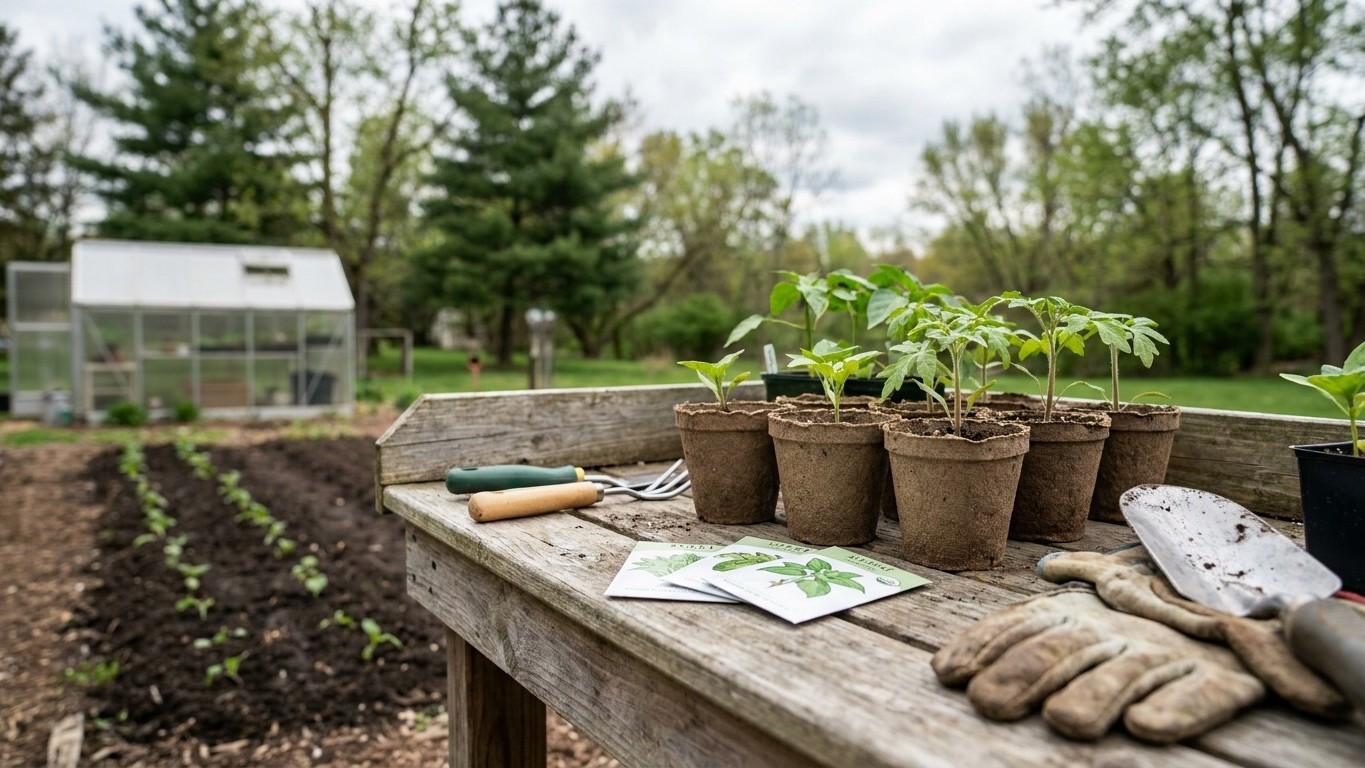

April in South Dakota sits ahead of the last frost window (April 29 to May 9 at the Sioux Falls reference station), so the ground is workable but the calendar can’t be trusted alone. Cold-hardy crops like peas, spinach, onion sets, and garlic go in now. Tomatoes, peppers, beans, and squash wait until after that frost window closes.
What goes in the ground in April

The date on the wall matters less than two things: soil temperature and the freeze probability for your spot. NOAA’s 1991-2020 climate normals put the 32°F freeze window for the Sioux Falls area between April 29 and May 9, which means anything planted in early or mid-April is still gambling against a hard freeze. Soil that’s cold and wet also rots seed before it germinates, so squeezing a handful of soil to check it crumbles rather than balls up matters more than checking a calendar.
What tolerates this stretch: garden peas and sweet peas, direct-sown as soon as the soil can be worked. Spinach, lettuce, and radishes handle a light frost without complaint. Onion sets and onion transplants go in as soon as the ground thaws and drains. Garlic that wasn’t planted in fall can still go in early, though yields usually run smaller than fall-planted bulbs. Asparagus crowns and rhubarb divisions, both perennial and both tough, are classic April plantings across the state.
Brassica transplants (broccoli, cabbage, kale) can go out late in the month if they’ve been hardened off over a week or two, since they shrug off a frost down into the upper 20s once acclimated. Potatoes are a judgment call: many South Dakota gardeners chit seed potatoes indoors and plant in the back half of April, betting the sprouts stay below the frost line until the danger passes.
What stays indoors: tomatoes, peppers, eggplant, cucumbers, squash, melons, beans, and corn. None of these forgive a frost, and soil this cold slows their roots to a crawl even if the air feels mild on a sunny afternoon. That gap between air temperature and soil temperature is the single most common trap of the month.
What to start under cover
Work backward from the frost window instead of forward from a fixed date. If the last freeze risk runs April 29 to May 9, tomatoes and peppers, which need six to eight weeks indoors before transplanting, should already have been started by early-to-mid March. If that window was missed, buying started transplants from a local greenhouse is a better bet than starting late and rushing a stunted plant into the ground.
April is still the right moment to start crops with a shorter runway. Cucumbers, summer squash, zucchini, and melons need only three to four weeks under cover before transplanting, so starting them indoors in mid-to-late April lines them up for a post-frost move outside. Fast annual flowers like zinnias and marigolds follow the same math.
The two ways this goes wrong are opposites. Start too early and seedlings outgrow their pots weeks before it’s safe to plant them outside, turning leggy and rootbound under grow lights that can’t match real sun. Start too late and the plant never reaches a productive size before the shorter days of fall force it into decline. Both mistakes trace back to skipping the arithmetic: count the weeks a crop needs indoors, then count backward from your local frost date, not from when the packet feels like it should go in.
A south-facing window rarely supplies enough light on its own in early spring; a basic shop light or grow light run twelve to fourteen hours a day keeps stems stocky instead of stretched.
What is ready to pick
Outdoors, April offers little in most of South Dakota, and it’s worth saying plainly rather than padding the list. The ground is still too cold for most spring crops to have grown into anything harvestable. What’s worth checking instead is what’s overwintered under cover or in storage.
Kale and other hardy greens that were left standing under row cover or a cold frame often survive the winter and put out fresh growth as soon as temperatures rise, and that new growth is usually sweeter than fall leaves because cold exposure converts starches to sugars. A cold frame started in late winter may already be yielding baby lettuce and spinach thinnings by April.
Indoors, sprouts and microgreens fill the gap for households wanting fresh greens on a five-to-ten day cycle regardless of what’s happening outside. Both need nothing more than a tray, a shallow layer of soil or a jar, and a windowsill.
Storage crops need a hands-on check this month. Squash that’s begun to soften near the stem or develop a sour smell is turning and should be used first. Potatoes sending out long pale sprouts are pulling sugar reserves down fast; trim the sprouts and use them soon rather than let them keep drawing on the tuber. Onions with soft necks or a sprouting green shoot are past their storage life and belong in the kitchen this week, not back in the bin.
The jobs that matter this month

Several tasks in April carry a real deadline attached, not a vague sense that they’d be nice to finish eventually.
Soil and structure
Soil testing done now gives results back in time to amend before the main planting season, which is the whole point of testing in the first place. Turning compost that’s been sitting over winter speeds it up right when the garden needs finished material. Raised beds, trellises, and fencing that took winter damage should get repaired before plants are in the ground and everything becomes harder to reach without stepping on something.
Pruning and dormant work
Fruit trees and cane berries still dormant or just breaking bud are easiest to prune now, while the branch structure is visible and cuts heal before the growing season’s stress arrives. Waiting until leaves fill in makes the same job slower and messier, and pruning too late into active growth can push a tree to put energy into healing instead of fruiting.
Planning ahead
Seed catalogs sell out of popular varieties fast, so ordering anything still needed for direct sowing or a late indoor start should happen early in the month rather than after the good options are gone. This is also the window to finalize crop rotation plans, since beds are about to fill up and decisions made on paper now are far easier than decisions made while standing in the garden holding a trowel.
Tools and mulch
Cleaning and sharpening tools before the heavy planting push saves time later, and a dull hoe or pruner makes every task slower all season. Mulch pulled back too far in a warm stretch should stay nearby, not hauled off, since a late cold snap can still return.
What not to do in April
The most common mistake is planting warm-season crops because a stretch of 70-degree afternoons made it feel like summer arrived early. Air temperature swings fast; soil temperature lags behind by days or weeks. A tomato transplant set into soil still in the 50s will sit stalled, vulnerable to root rot, long after a week of warm air convinced someone it was safe.
Uncovering cold frames, removing row cover, or pulling back winter mulch too early after a mild spell is the second trap. South Dakota’s frost window runs into early May at the reference station, and gardens away from that station, especially at higher elevation or farther from any lake moderation, often see frost even later. A single warm week doesn’t cancel that risk.
Feeding nitrogen at the wrong point causes trouble too. High-nitrogen fertilizer applied to fruit trees or berries too early pushes soft, leafy growth right before a late frost can hit, and that tender growth is exactly what gets damaged first. It’s better to hold nitrogen until growth is already underway and the frost risk has genuinely passed, then feed to support the season rather than to jump-start it.
Working wet soil rounds out the list of classic errors. Digging or tilling clay-heavy South Dakota soil while it’s still saturated compacts it into clumps that take a full season to break back down. The simple squeeze test, soil that crumbles rather than forms a wet ball, is worth doing before any bed gets touched with a shovel.
Checking this against your own county
A statewide answer for April is a starting point, not an instruction for a specific yard. The frost figures here come from one reference station, and elevation, local terrain, and the long east-west stretch of South Dakota shift real frost dates by a week or two in either direction, sometimes more at higher ground or in low-lying frost pockets. Suburban and rural gardens typically see the last spring frost later than an airport station records, not earlier.
The most reliable next step is checking that local pattern directly through South Dakota State University Extension, which tracks regional planting guidance and frost data specific to counties across the state.
Common questions
Can tomatoes go outside in South Dakota in April?
No. The last spring frost at the reference station runs April 29 to May 9, and tomatoes are killed by frost. Keep them indoors under light until that window has passed in the local area.
Is it too early to plant peas in April?
No, peas are one of the safest April crops. They tolerate cold soil and light frost and are traditionally among the first direct-sown seeds of the season across South Dakota gardens.
What USDA hardiness zone is South Dakota?
The USDA Plant Hardiness Zone Map places South Dakota across zones 3b to 5b, based on average annual extreme minimum temperature. That range means a plant rated hardy for one part of the state may struggle in another, so checking a variety’s rating against the local zone matters more than the state average.
When does the growing season actually start in South Dakota?
Based on the reference station’s climate normals, the frost-free window runs roughly from early May (after the April 29 to May 9 spring frost range) through late September (before the September 24 to October 4 fall frost range). Local conditions can shorten or lengthen that window by a week or more.
Gardeners who plant by the Moon can check the April 2027 moon planting calendar, a tradition rather than a proven method.