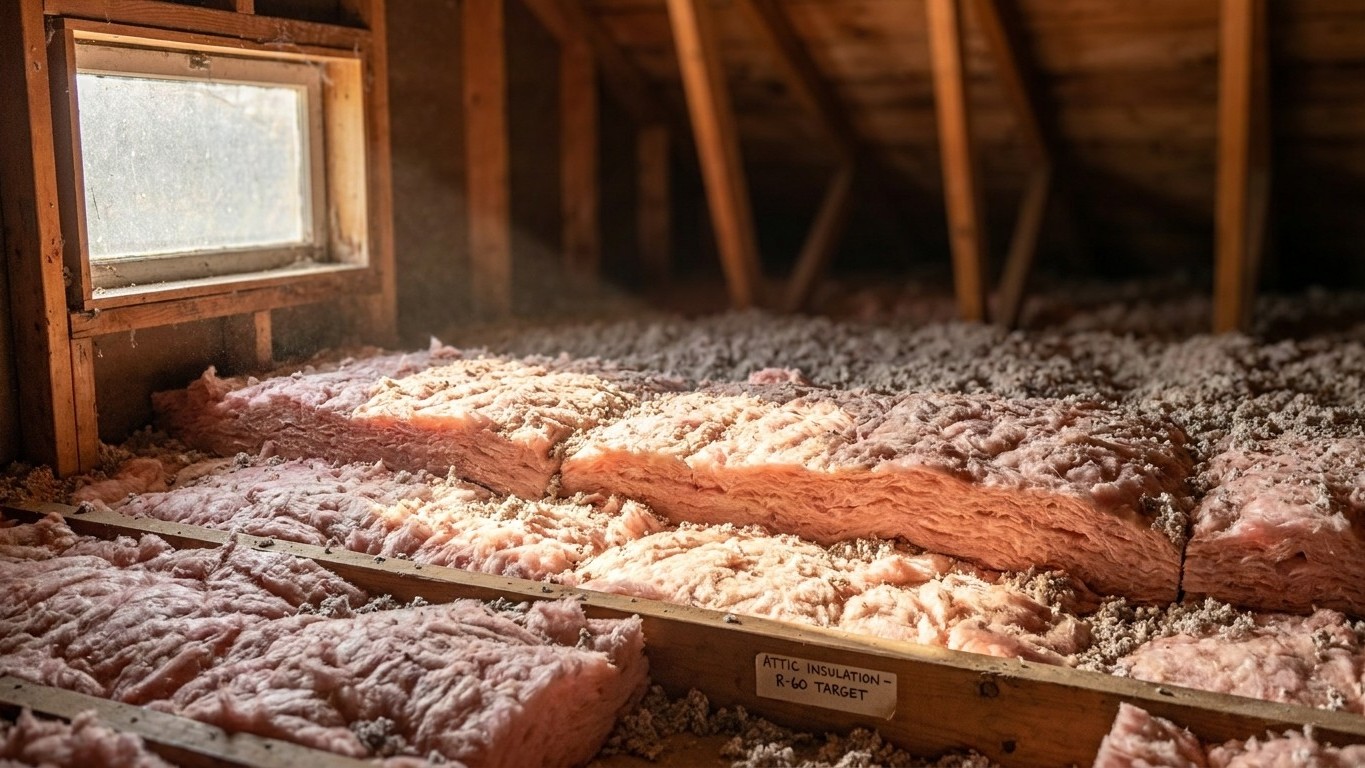

Texas covers six different IECC climate zones, so there’s no single R-value that fits the whole state. A home near the Gulf Coast and a home in the Panhandle are working against very different weather, and ENERGY STAR’s insulation table treats them differently too. The zone your county falls into decides which row applies.
Which climate zone Texas is in

There is no one answer for Texas. The 2021 International Energy Conservation Code splits the state’s 254 counties across six zones, and the spread is wide enough that a statewide recommendation would be wrong for a large share of readers. Here’s how the counties break down:
| IECC Zone | Number of Counties |
|---|---|
| 2A | 81 |
| 3B | 70 |
| 3A | 58 |
| 4B | 28 |
| 2B | 14 |
| 1A | 3 |
Notice that’s a count of counties, not a share of people. Zone 2A holds the most counties by far, but that doesn’t tell you where most Texans actually live. A handful of counties in a different zone can still contain millions of residents. Don’t assume your zone from the biggest number in the table; that’s exactly the kind of shortcut that leads to buying the wrong amount of material.
A climate zone number reflects how cold or hot the winters and summers typically run, with lower numbers meaning milder winters. The letter that follows the number is the moisture regime: A means humid, B means dry, and C means marine. Zones 7 and 8, which don’t appear in Texas at all, carry no letter because they’re defined by cold alone. That letter matters here because the ENERGY STAR insulation table groups zones by both number and letter, and the wrong letter can put you in the wrong row.
This page won’t tell you which of these six zones your own county sits in, because doing that correctly means checking the county, not guessing from a statewide table. The IECC’s official Table R301.1 lists every Texas county by name, and ENERGY STAR also publishes a zone map. Either one will get you the right answer faster than an average ever could.
The insulation levels that apply here
Once you know your zone, ENERGY STAR’s retrofit table tells you what to add. It’s built for existing wood-framed homes, not new construction, and it’s based on the 2021 IECC’s residential provisions. The table has a header that’s easy to misread: two of the three numbers per zone cover the attic, and the third covers the floor. They are not three attic values.
| Zone | Attic if Uninsulated | Attic if 3-4 Inches Already Present | Floor |
|---|---|---|---|
| Zone 1 | R30 | R25 | R13 |
| Zone 2 | R49 | R38 | R13 |
| Zone 3 | R49 | R38 | R19 |
| Zones 4A and 4B | R60 | R49 | R19 |
| Zones 6, 5, and 4C | R60 | R49 | R30 |
| Zones 7 and 8 | R60 | R49 | R38 |
Texas touches four of these rows: Zone 1, Zone 2, Zone 3, and Zone 4B. That’s a meaningful spread. A home in one of the three counties sitting in Zone 1 is working from a Zone 1 line, calling for R30 attic insulation if there’s none yet. A home in one of the 28 counties in Zone 4B follows a very different line, calling for R60 in an uninsulated attic and R19 under the floor. Someone in the far south of the state and someone near the Panhandle are simply not buying the same amount of material, even though they share a state and a state energy code cycle.
Resist the temptation to split the difference between rows. Averaging Zone 1 and Zone 4B numbers to land on something in the middle produces a figure that’s wrong for both ends of the state and doesn’t correspond to any actual code guidance. Find your county’s zone first, then read off that single row.
Sealing comes before insulating
ENERGY STAR treats air sealing and insulation as two parts of one job, and its own guidance puts attic air sealing ahead of attic insulation, not after it. The reasoning is straightforward: insulation slows heat moving through a material, but it does nothing to stop air moving around it. Lay batts or blown-in fill over a gap in the attic floor, and you’ve hidden the leak, not closed it.
ENERGY STAR lays out the work in this order:
- Seal air leaks in the attic
- Add attic insulation
- Seal and insulate the rim joist
- Insulate the floor over a crawlspace or basement
- Address wall insulation last
Note there’s no separate savings figure attached to sealing by itself. The percentage ENERGY STAR publishes covers sealing and insulating together as one project, so treating sealing as a free-standing upgrade with its own return isn’t something the source supports. For the mechanics of each step, from finding attic bypasses to insulating a rim joist, the national insulation guides on this site walk through the work in more depth than a state-level page needs to.
What the winter here actually asks for
Degree days measure demand, not temperature. At Houston Intercontinental Airport, NOAA’s 1991-2020 climate normals put the annual figure at about 1,266 heating degree days and about 3,288 cooling degree days. That’s a heating season that’s genuinely light by national standards, paired with a cooling load that runs nearly three times as heavy. For a lot of Texas, insulation is doing more work against summer heat gain than winter heat loss, though the attic and floor levels recommended above are the same regardless of which season is driving the bill.
The U.S. Energy Information Administration’s 2020 Residential Energy Consumption Survey shows what Texas homes actually run for heat: 61% use a furnace, 19% use a central heat pump, and steam or hot-water boiler use wasn’t reported in enough households to publish a figure. That’s not the same as zero; it means the sample was too thin to give a reliable number. By fuel, 51% of homes heat with electricity and 42% with natural gas, while propane accounts for 2% and fuel oil or kerosene wasn’t reported at all.
A furnace-and-duct state has a different weak point than a boiler-and-radiator one. Ductwork routed through an unconditioned attic loses conditioned air before it ever reaches a room, and no amount of insulation at the attic floor fixes that on its own. For homes in this position, priorities tend to run in this order:
- Seal and insulate attic ductwork, or better yet, bring it inside conditioned space
- Air seal the attic floor before adding or topping off insulation
- Bring the attic up to the level shown for your zone
- Check the rim joist and any floor over a crawlspace
Where ducts are the issue, the duct sealing and duct insulation guides on this site cover that work in the detail a whole-house page can’t.
What the work is worth
ENERGY STAR’s own estimate, from its methodology page, reads: “EPA estimates that homeowners can save an average of 15% on heating and cooling costs (or an average of 11% on total energy costs) by air sealing their homes and adding insulation in attics, floors over crawl spaces, and accessible basement rim joists.” Both numbers matter together. Fifteen percent applies to heating and cooling costs specifically; eleven percent applies to total energy costs, which is a bigger denominator that includes things like water heating and appliances.
These are averages built from energy modeling of a typical existing U.S. home, not a guarantee for any single house in Texas. The estimate also names exactly where that modeling looked: attics, floors over crawl spaces, and accessible basement rim joists. It doesn’t cover walls, windows, or doors, so stretching the figure to a full-house renovation overstates what the source actually supports.
Worth keeping straight from two other numbers floating around the same topic. ENERGY STAR’s program landing page separately advertises “up to a 10% savings on your annual energy bills” for similar work, which is a different, capped figure on a different denominator. The Department of Energy’s often-cited 10% is unrelated to insulation altogether; it comes from a thermostat setback of 7 to 10 degrees held for eight hours a day. Three real numbers, three different claims, and only the first one belongs to insulation work itself.