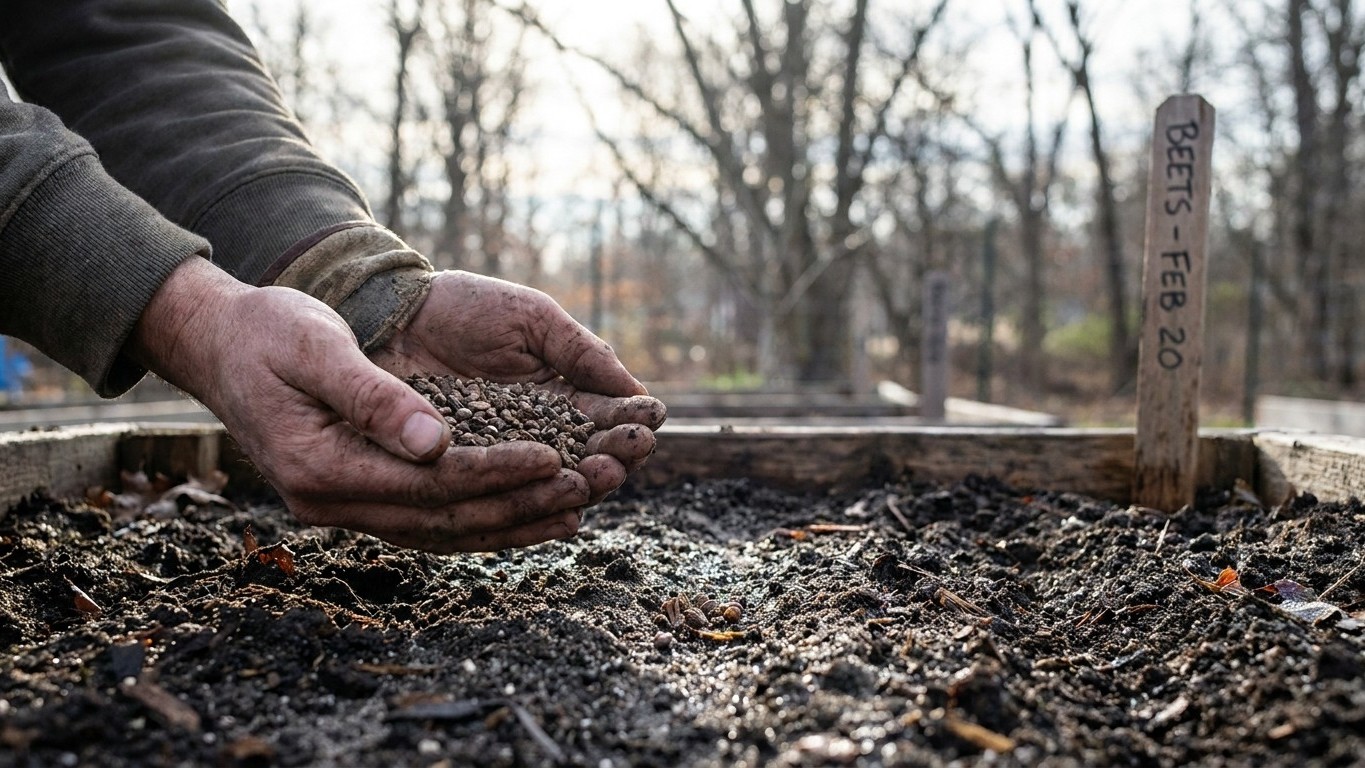

In the Houston area, beet seed goes into the ground about two to three weeks before the last spring frost, which NOAA’s 30-year data puts between February 4 and March 1. That pushes sowing into mid-January through mid-February for most Gulf Coast gardens. Texas spans four USDA hardiness zones, though, so that window shifts hard once you leave the coast.
The short answer
The soil USDA lists as representative of Texas is the Houston Black series, a Vertisol, and it is nothing like what a beet root wants to push through. It runs 20 percent sand, 54 percent clay and 26 percent silt at the surface, with organic matter around 3.0 percent and a surface pH near 7.9, on the alkaline side. That texture is the definition of shrink-swell clay: it cracks open into fissures when it dries out, then swells back into a sticky, airless paste the moment it takes on water. Drainage is rated moderately well drained, which sounds fine on paper but in practice means water sits longer than a root vegetable likes after any real rain.
Utah State University Extension’s guidance on beets calls for deep, sandy, well-drained ground rich in organic matter. Houston Black is the near-opposite: heavy, clay-dominant, and prone to swinging between too dry and too wet within the same week. That mismatch is exactly why raised beds and heavy compost amendment show up so often in Gulf Coast vegetable advice, and why straight-into-native-clay sowing is a common way to lose a beet crop before it germinates.
On the heat side, the brief fact set here doesn’t carry a published count of how many days a year the Houston area sits above 90 degrees, so that number isn’t stated on this page. What is documented is the threshold that matters: once temperatures push past 85 degrees while the plant is also short on water, the root turns woody. Gulf Coast summers tend to arrive early and hold, which is why the sowing calendar for this region leans toward getting beets in the ground and finished before the heat locks in, rather than trying to stretch the season into it.
None of this is a diagnosis of any single backyard. Texas covers hundreds of distinct soil series, and a plot in the Hill Country, a river-bottom garden, or a lot a builder filled and graded can look nothing like Houston Black. Treat this soil profile as a regional starting point, then run an actual soil test on the bed in question before deciding how much to amend.
The six weeks that decide it here
Sowing two to three weeks ahead of the last frost means the first six weeks of a beet’s life in the Houston area run roughly from mid-to-late January through early-to-mid March, depending on where in that February 4 to March 1 window the actual freeze lands that year. That stretch is Gulf Coast late winter into early spring, and it is not a calm one. Temperatures swing: a run of mild, almost warm days can be followed within a week by a cold front and a hard rain, then another dry, breezy stretch that pulls moisture out of the topsoil fast.
That swing matters more on Houston Black clay than it would on sandier ground. The same soil that turns to glue after a downpour will crack and pull away from a seedling’s roots within days once the rain stops and the surface dries. A beet seedling in its first six weeks has a shallow root system with no reserve to ride out that kind of whiplash, and Utah State’s guidance is specific about the consequence: water stress in that early window is what pushes beets toward premature flowering, or bolting, before the root has bulked up at all.
The practical read for this region is that the six-week window after sowing is less about a single hard freeze, since the frost date itself is already accounted for by sowing three weeks ahead of it, and more about keeping soil moisture steady through a spring that doesn’t hold steady on its own. A cracked, dry surface one week and a waterlogged one the next both starve or drown the same shallow root system. Consistent moisture through that stretch matters more here than in a region with a gentler, more predictable spring.
What goes wrong here
- Crusted, cracked surface blocks even germination. Houston Black’s clay-heavy surface can seal into a hard crust after rain, then crack apart as it dries, leaving beet seed either unable to push through or exposed in a fissure. Working in up to 1 inch of composted organic matter per 100 square feet before sowing, the upper limit Utah State recommends, loosens that surface enough for seedlings to break through evenly.
- Alkaline surface pH near the top of the beet’s comfort range. A surface pH around 7.9 sits at the high end of tolerable for most root crops, and can start to lock up certain micronutrients before it becomes a problem you can see in the leaves. A soil test on the actual bed, rather than relying on the regional series number, tells you whether any correction is worth doing at all.
- Early bolting from moisture swings in the first six weeks. The same clay that ponds after rain dries and cracks days later, and that back-and-forth is enough water stress to trigger premature flowering before the root has sized up. A regular watering schedule through that window, rather than watering only when the surface looks visibly dry, keeps the swings smaller.
- Woody roots once Gulf Coast heat sets in. Once temperatures climb past 85 degrees and the plant is also short on water, the root turns fibrous and woody rather than tender. Because the region’s warm season tends to arrive early, timing the harvest to finish before that heat takes hold matters more here than in a cooler climate where the growing window runs longer.
Common questions
When exactly should I sow beet seed in the Houston area?
Roughly two to three weeks before the last spring frost, which NOAA’s 30-year data places between February 4 and March 1 for the Houston station used here. That puts sowing in the mid-January to mid-February range for most years, though the exact date still shifts with how that particular spring’s freeze risk plays out, and Hobby Airport runs about two weeks milder than the station cited here.
Does Houston Black clay need to be amended before sowing beets?
Beets want deep, sandy, well-drained ground, and Houston Black is heavy clay that cracks when dry and turns sticky when wet, so some amendment is typically worth doing. Utah State University Extension’s ceiling is up to 1 inch of composted organic matter per 100 square feet worked into the bed, not a heavier application.
What causes beets to bolt early in Texas gardens?
Water stress in the first six weeks after sowing is the trigger, not heat on its own. On shrink-swell clay, that stress often comes from the soil’s own swing between waterlogged after rain and cracked dry days later, rather than from a simple lack of rainfall.
Why do beets turn woody instead of tender in Texas heat?
Woodiness is a separate failure from bolting. It happens when temperatures climb past 85 degrees while the plant is also short on water, which toughens the root’s fiber. Since Gulf Coast summers tend to set in early, finishing the crop before that heat arrives matters more than trying to push the harvest later.