
December in Utah means no direct-sowing and no outdoor transplanting almost anywhere in the state. The ground is frozen or close to it from the valleys to the benches, months away from the April 12 to April 29 last-frost window that governs spring planting. What actually happens this month is indoor seed starting for early alliums, dormant-season orchard work, and the kind of soil and planning work that decides whether spring goes smoothly or badly.
What goes in the ground in December

Nothing goes into open, unprotected ground in Utah in December. That is the honest answer, and it holds from St. George to Logan, because soil temperature, not the calendar, is what a seed or a root actually responds to. Frozen or near-frozen soil stalls root growth and rots dormant bulbs before they can establish. The last spring frost across the reference station runs April 12 to April 29, and December sits nowhere near that window, so treat any outdoor planting advice for this month with suspicion.
That said, a few things still work if the ground is diggable and unfrozen, which happens in warmer pockets of southern Utah and in mild spells at lower elevations:
- Garlic and shallots, if you missed the usual fall window and the soil hasn’t locked up yet. Push the planting depth a bit deeper than you would in October to buffer against freeze-thaw heaving.
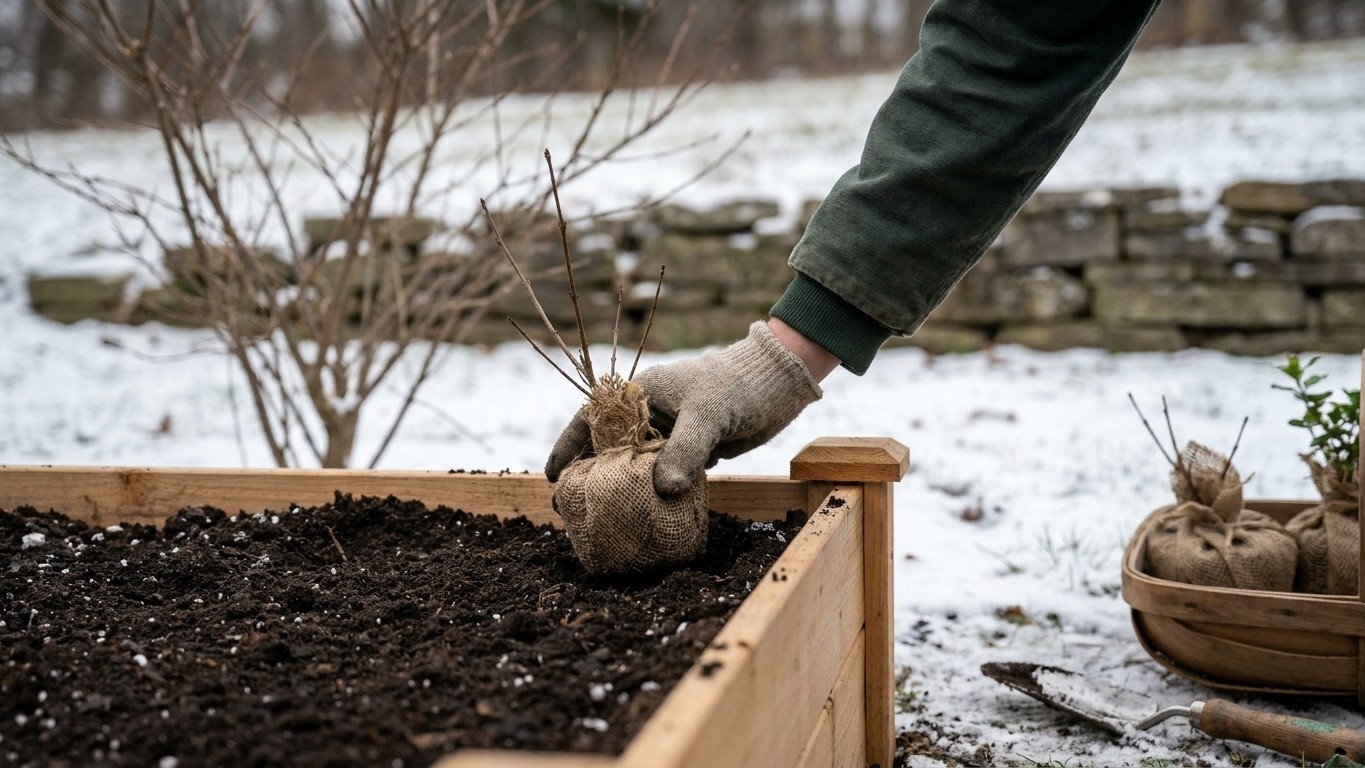
- Bare-root and dormant stock, meaning fruit trees, roses, and cane berries sold dormant, can go into prepared holes on a mild, unfrozen day, then get mulched heavily.
- Cold frames and low tunnels holding hardy greens (spinach, mâche, some kales) planted earlier in fall can keep producing, but this is protected cultivation, not open-ground planting.
Forcing is the other real option this month. Rhubarb crowns and Belgian endive (chicory) roots dug from the garden and brought into a dark, cool basement or garage will push tender, blanched growth in a few weeks, giving you fresh harvest while the outdoor beds sit dormant. It’s a trick market gardeners have used for generations, and it works in any Utah climate zone because it happens indoors.
What to start under cover
Seed starting in December works backward from your local last-frost date, not forward from today. Onions and leeks are the crops that reward an early start, because they need ten to twelve weeks of indoor growing time before they’re ready to harden off and transplant outside. If your area’s last frost falls in the April 12 to April 29 range, count back roughly ten to twelve weeks and you land in late January to early February for most of the state, which means December is still a touch early for onions in most Utah locations, but growers at higher, colder elevations who see later frost dates sometimes start now to build in a buffer.
The bigger use of December indoors is testing your setup: check that grow lights, heat mats, and seedling trays are working before the real starting rush hits in January and February. Starting too early with tomatoes, peppers, or other warm-season crops is the classic mistake this time of year. Nobody is remotely close to a safe outdoor transplant date, so anything started now would sit under lights for four or five months, turning into a leggy, rootbound, stressed plant long before the soil is ready to receive it.
The opposite failure, starting too late, is less of a risk in December since almost everything can still be started on schedule in January. Use this month instead to inventory leftover seed, check germination viability on anything more than two or three years old, and order the varieties you actually want before seed companies sell out of the popular ones, which routinely happens by late winter.
What is ready to pick
Outdoors, there’s little to nothing to harvest fresh in Utah in December, and that’s true across the hardiness range from zone 4a to zone 9a. Anything still standing in an open bed was likely killed or badly damaged by the first fall frost, which arrived October 18 to October 29 depending on location.
What still feeds the household comes from three places. Overwintered kale, leeks, and Brussels sprouts, if they were left in the ground under a thick layer of mulch or snow cover, can often be dug or cut on milder days; snow itself acts as insulation, so a snow-covered bed is frequently warmer at soil level than a bare, wind-exposed one. Cold frames and low tunnels planted with hardy greens in September or October are the second source, and they can keep producing sporadically through the month if temperatures inside stay above the low twenties.
The third source is indoors: sprouts and microgreens grown in trays on a countertop take one to two weeks from seed to harvest and need no outdoor conditions at all, which makes them the most reliable fresh green this month regardless of where you garden in the state.
Storage crops need a check now, too. Go through stored winter squash, potatoes, and onions and pull anything showing soft spots, sprouting, or a sour smell before it spreads to the rest of the batch. One rotting onion in a mesh bag can taint everything around it within a couple of weeks.
The jobs that matter this month

December is dormant-season orchard work, and skipping it costs you next summer’s fruit, not this one. Prune apple, pear, cherry, and other deciduous fruit trees while they’re fully dormant and the structure is visible without leaves in the way. Dormant pruning heals faster than pruning done during active growth, and it reduces the risk of spreading disease through wet, sappy cuts. Cane berries like raspberries also take their major structural pruning now, removing spent canes at ground level.
Soil, tools, and planning
Pull soil samples while the ground is workable and send them to a lab, because results take weeks and you want amendments ready to apply as soon as the soil thaws in spring. Turn compost piles if they haven’t frozen solid; even a partial turn keeps microbial activity going and speeds up finished compost for spring beds. Clean and sharpen pruners, loppers, and shovels now rather than fighting dull, rusty tools when the planting rush hits.
This is also the month to order seed. Popular varieties, especially of onions, tomatoes, and peppers, sell out by late winter in most catalogs, so ordering now guarantees you get the specific varieties you planned around rather than settling for whatever’s left. Pair that with drawing up next season’s crop rotation on paper: deciding now which bed grows nightshades, which grows brassicas, and which rests under a cover crop prevents the scramble of figuring it out in April when transplants are already waiting.
Finally, walk the garden and check physical infrastructure: fencing that’s loosened, raised bed corners that have shifted, trellis posts that are leaning. Repairs made now, on a calm day with no seedlings at stake, are far easier than repairs made in a rush during the growing season.
What not to do in December
The most common mistake this month is reacting to a warm afternoon as if it were a season change. A stretch of 50-degree days in the middle of winter does not mean the soil has warmed enough for planting, and it does not mean frost risk has passed. Utah’s last spring frost doesn’t arrive until April 12 to April 29 at the earliest reference point, and most of the state, sitting at higher elevation than that valley station, runs later still. Planting warm-season seedlings or bulbs on the strength of one mild week is a reliable way to lose them to the next cold snap.
A related error is uncovering cold frames, tunnels, or mulched beds too eagerly after a warm spell. Pulling mulch off garlic beds or opening a cold frame’s lid wide during a mild stretch exposes tender growth to the next freeze, which often follows within days in Utah’s variable winter pattern. Leave protection in place until the mild stretch is clearly part of a real warming trend, not a one-off.
Feeding nitrogen at the wrong point is the third classic mistake. Fertilizing dormant fruit trees, roses, or perennials in December pushes no useful growth, since the plants aren’t actively growing, but it can still leach through the soil and go to waste, or worse, encourage a late flush of tender growth during a brief warm spell that then gets killed by the next freeze. Save nitrogen applications for when growth is actually starting in spring, and use this month instead for phosphorus and potassium amendments based on your soil test, which don’t carry the same risk.
Checking this against your own county
Everything above is a statewide starting point, not a instruction sheet for your specific yard. Utah’s elevation swings, the Great Salt Lake’s moderating and sometimes destabilizing effect on nearby valleys, and the real climate gap between the warmer south and the colder north and high-elevation counties can shift frost windows by weeks in either direction. A garden in St. George behaves nothing like one in Logan or Park City, even though both sit inside the state’s 4a to 9a hardiness range.
Before acting on any date in this piece, check it against your county through Utah State University Extension, which maintains localized planting guidance and can point you to frost data specific to your elevation and region.
Common questions
Can I still plant garlic in Utah in December?
Only if the soil is still workable and unfrozen, which happens in some mild spells or lower-elevation, southern parts of the state. Plant slightly deeper than a normal fall planting and mulch heavily right away to protect against freeze-thaw heaving through the rest of winter.
Is it too early to start onion seeds indoors in December?
For most of Utah, yes, since onions need about ten to twelve weeks before transplanting and most last-frost dates fall April 12 to April 29, pointing to a late January or February start. Growers at higher, colder elevations with later frost dates may reasonably start a bit earlier.
What fruit trees should I prune in December?
Apples, pears, cherries, and other deciduous fruit trees take their structural dormant pruning now, along with raspberry and other cane berries. Prune while the trees are fully leafless and dormant, on a dry day, to reduce disease spread through the cuts.
Why does my county’s frost date differ from the ones listed here?
The dates cited come from one reference station in a mild valley; most of Utah sits higher and colder, and the south runs milder than the north. Check Utah State University Extension for guidance closer to your actual elevation and region.
Gardeners who plant by the Moon can check the December 2026 moon planting calendar, a tradition rather than a proven method.