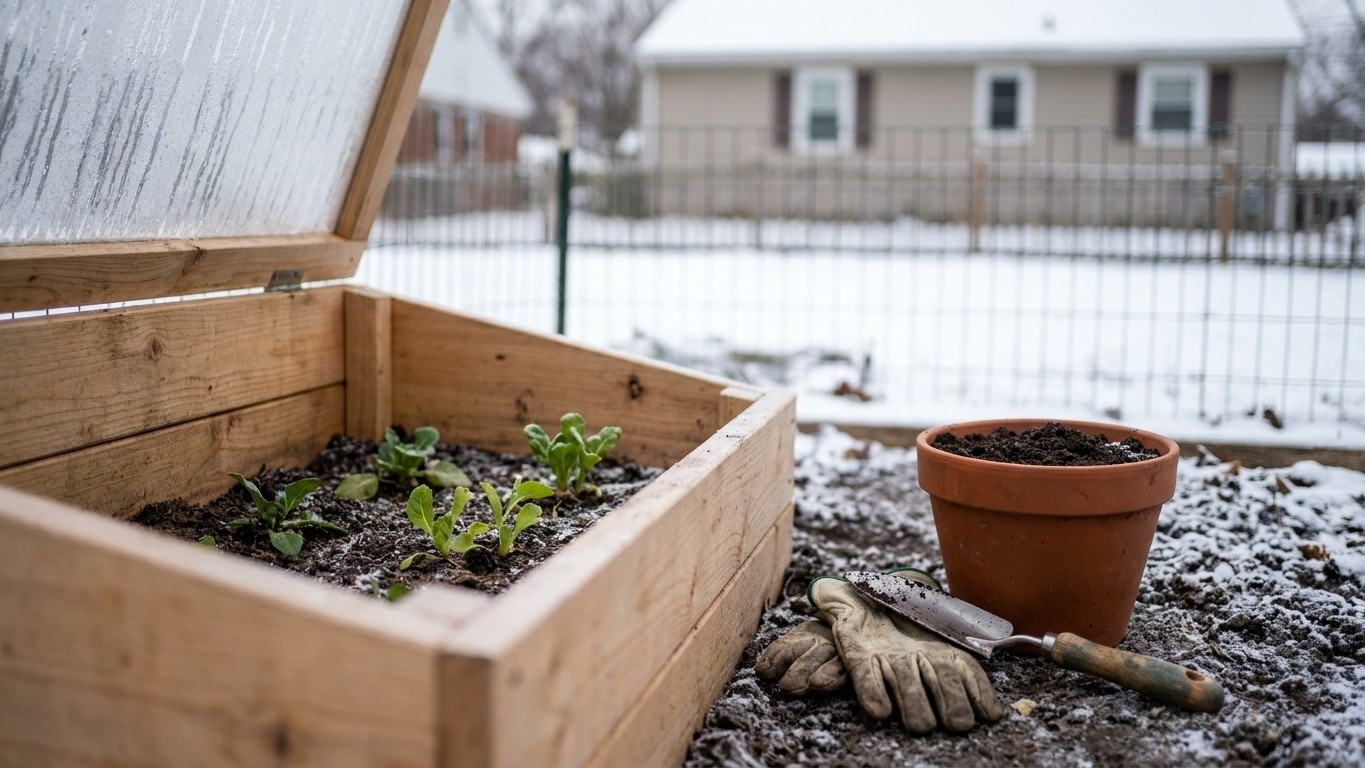

January in Utah is dormant-season work, not open-ground planting. With last spring frost running April 12 to April 29 around Salt Lake and most of the state sitting colder and higher than that valley reference point, the ground is frozen or close to it almost everywhere. The real activity this month is bare-root prep, pruning, seed ordering and protected sowing under cover.
What goes in the ground in January

The decision here isn’t the calendar, it’s the soil. Frozen or waterlogged ground won’t accept roots no matter how mild the afternoon feels, and Utah’s soil temperature in January stays well below what any seed or transplant needs to establish. With the last spring frost window stretching from April 12 to April 29 at the Salt Lake reference station, and higher-elevation and northern Utah counties running colder still, January sits roughly three to four months ahead of that safe planting range in the mildest parts of the state, and longer everywhere else.
So the honest answer: nothing goes into open, unprotected ground in most of Utah this month. That’s not a gap in the calendar, it’s just where the season is.
What does move forward:
- Garlic and shallots already planted in fall continue their dormant root development underground; if you missed fall planting and have a rare stretch of workable, unfrozen soil in a warm microclimate (raised beds, south-facing slopes in southern Utah), a late planting can still root before growth resumes, though it’s a gamble compared to fall-planted bulbs.
- Cold frames and low tunnels can hold cold-hardy greens like spinach, mâche, and claytonia that were seeded earlier and are simply waiting out winter under cover.
- Bare-root fruit trees, berry canes, and roses can go into the ground during any window when soil isn’t frozen solid, particularly in the milder valleys and southern Utah, since these dormant woody plants tolerate cold far better than seeds or leafy transplants.
- Forcing rhubarb or chicory indoors in a dark, cool space gives you a harvest from dormant roots without needing outdoor conditions at all.
Peas and hardy alliums, often cited as early risks elsewhere, still need workable soil above freezing to germinate. In most of Utah that soil condition simply doesn’t exist in January, so treat those as February-or-later crops here, not January ones.
What to start under cover
Indoor seed-starting in January is about counting backward from your local last-frost date, not forward from the new year. Take April 12 to April 29 as the Salt Lake area’s frost window, add extra weeks if you garden at higher elevation or in northern valleys, and subtract the number of weeks a given crop needs before it’s ready to transplant outside.
Onions and leeks need the longest runway, typically ten to twelve weeks indoors before they’re ready for the garden, which puts a January start roughly in line with an April transplant date for the earlier end of that frost window. Peppers need eight to ten weeks and can also reasonably begin now, especially if you’re gardening at higher elevation where the outdoor season starts later. Slower celery and celeriac also benefit from a January start given how sluggish their germination is.
Tomatoes are the trap. Started too early in January, they’ll be six to eight weeks old and rootbound, stretching for light, by the time outdoor soil is warm enough in a typical Utah spring. Six to eight weeks before the last frost is the standard window for tomatoes, which for most of Utah lands in late February or March, not January.
The two failure modes worth naming directly: starting too early leaves you with leggy, stressed transplants that sulk or stall once they finally go outside, since a plant that’s spent too long in a small pot develops a root system it can’t recover from cleanly. Starting too late means the plant hasn’t sized up enough to make full use of the short growing season once it finally goes in the ground, cutting yield before the season even gets started. Neither mistake is about intent, it’s about doing the math for your zone rather than a national average.
What is ready to pick
Little to nothing comes out of open Utah ground in January. That’s the plain truth of the season, and there’s no point dressing it up.
What the garden and pantry still offer:
- Overwintered kale, leeks, and Brussels sprouts that were left in the ground under mulch or snow cover often taste better after a hard freeze, since cold triggers sugars to concentrate in the leaves and stalks. Dig or cut as needed, checking that the crown hasn’t rotted where snow has repeatedly melted and refrozen.
- Cold-frame and low-tunnel greens, spinach, mâche, arugula, can be harvested a few leaves at a time through the coldest months, provided the cover has kept them from freezing solid.
- Sprouts and microgreens grown indoors on a windowsill or under simple grow lights give a fast, reliable green harvest with no dependence on outdoor conditions at all, ready in one to two weeks from seed.
- Stored squash, potatoes, and onions need a hands-on check now. Rotate through the stock, feel for soft spots on squash (a sign of internal breakdown), and pull any potato or onion that’s started to sprout, shrivel, or smell off before it spreads decay to its neighbors.
That stored-crop check matters more than it sounds. A single soft squash or sprouting onion left in a bin can take down a chunk of the winter’s stock within a couple of weeks if it’s not caught and removed.
The jobs that matter this month

January’s real value is in tasks that quietly determine how the whole season runs, not in seeds going into soil.
Pruning and dormant-season tree work
Dormant pruning of apple, pear, and stone fruit trees, plus raspberry and blackberry canes, is best done now while the plant is fully asleep and you can see its structure without leaves in the way. Cuts made during dormancy heal cleanly with the coming spring’s growth, and removing dead, crossing, or crowded wood now reduces disease pressure and improves fruit set later. Wait until the coldest snap has passed if temperatures are running unusually severe, since pruning wounds in extreme cold can be slower to seal.
Ordering seed before it sells out
Popular varieties, particularly heirloom tomatoes, specific pepper types, and anything marketed as disease-resistant, routinely sell out of seed catalogs by late winter. Ordering now, while selection is full, is the difference between growing what you planned and settling for whatever’s left.
Planning, soil, and equipment
January is also the month to sketch next season’s crop rotation on paper (moving nightshades, brassicas, and legumes to new beds each year cuts down on soil-borne disease and pest buildup), to send a soil sample for testing if it’s been a few years, to turn the compost pile so it keeps breaking down through winter, and to clean, sharpen, and oil pruners, shovels, and hoes so they’re ready when the ground opens up. Checking raised beds, cold frames, and fencing for winter damage now means repairs happen before they’re urgent.
What not to do in January
The most common misstep is trusting a warm afternoon over the actual soil and forecast. A 55-degree day in the middle of January doesn’t mean the ground has warmed or that the frost risk has passed, and warm-season seeds or transplants pushed outside on the strength of one mild stretch are almost always lost to the next cold snap.
A close second: pulling covers off cold frames or row covers too early after a few gentle days. Utah’s frost window runs into late April in the Salt Lake area and later at elevation, so a mild week in January or February is not the end of winter, it’s a pause in it. Greens and overwintered crops under protection should stay covered until the frost risk in your specific area has genuinely passed.
Feeding nitrogen at the wrong moment is another trap. Fertilizing dormant fruit trees, canes, or perennial beds in January pushes no growth (the plant isn’t active enough to use it) and can leach away before spring anyway, wasting the input and sometimes throwing off soil balance. Save nitrogen applications for when plants are actively growing in spring.
Last, don’t skip the stored-crop check because “it was fine last week.” Squash, potatoes, and onions can turn quickly once one piece starts to break down, and a five-minute look through the bin now can save the rest of the batch.
Checking this against your own county
Everything above is built around the Salt Lake area’s frost data and Utah’s statewide hardiness range of 4a to 9a on the USDA Plant Hardiness Zone Map, a system based purely on average annual extreme minimum temperature. That’s a wide spread, and it means a schedule that works in the Salt Lake valley can be weeks off in a mountain town, a high desert county, or the warmer reaches of southern Utah. Elevation, local cold-air pooling, and simple north-south distance all shift these windows.
Confirm these windows against your own conditions through Utah State University Extension, which publishes county-specific planting guidance tuned to local frost data and elevation.
Common questions
Can I plant anything outdoors in Utah in January?
In most of the state, no. Soil is frozen or too cold for germination and root establishment. The exceptions are bare-root fruit trees, canes, and roses in a rare workable-soil window, and fall-planted garlic or shallots already growing underground.
Is it too early to start tomato seeds indoors in January?
Generally yes for most of Utah. Tomatoes need six to eight weeks before the last frost, which for the Salt Lake area’s April 12 to April 29 window points to a late February or March start, not January. Starting in January usually produces leggy, rootbound plants by transplant time.
What can I harvest from a Utah garden in January?
Overwintered kale, leeks, and Brussels sprouts left under mulch or snow, plus anything growing under cold frames or low tunnels. Indoors, sprouts and microgreens give a fast, reliable harvest regardless of outdoor conditions.
Why does my frost date matter more than the calendar month?
Because Utah spans hardiness zones 4a to 9a and elevation shifts frost timing by weeks between counties. The Salt Lake reference frost window (April 12 to April 29 last spring frost, October 18 to October 29 first fall frost) doesn’t apply evenly across a state with mountain valleys, high desert, and a warmer south.
Gardeners who plant by the Moon can check the January 2027 moon planting calendar, a tradition rather than a proven method.