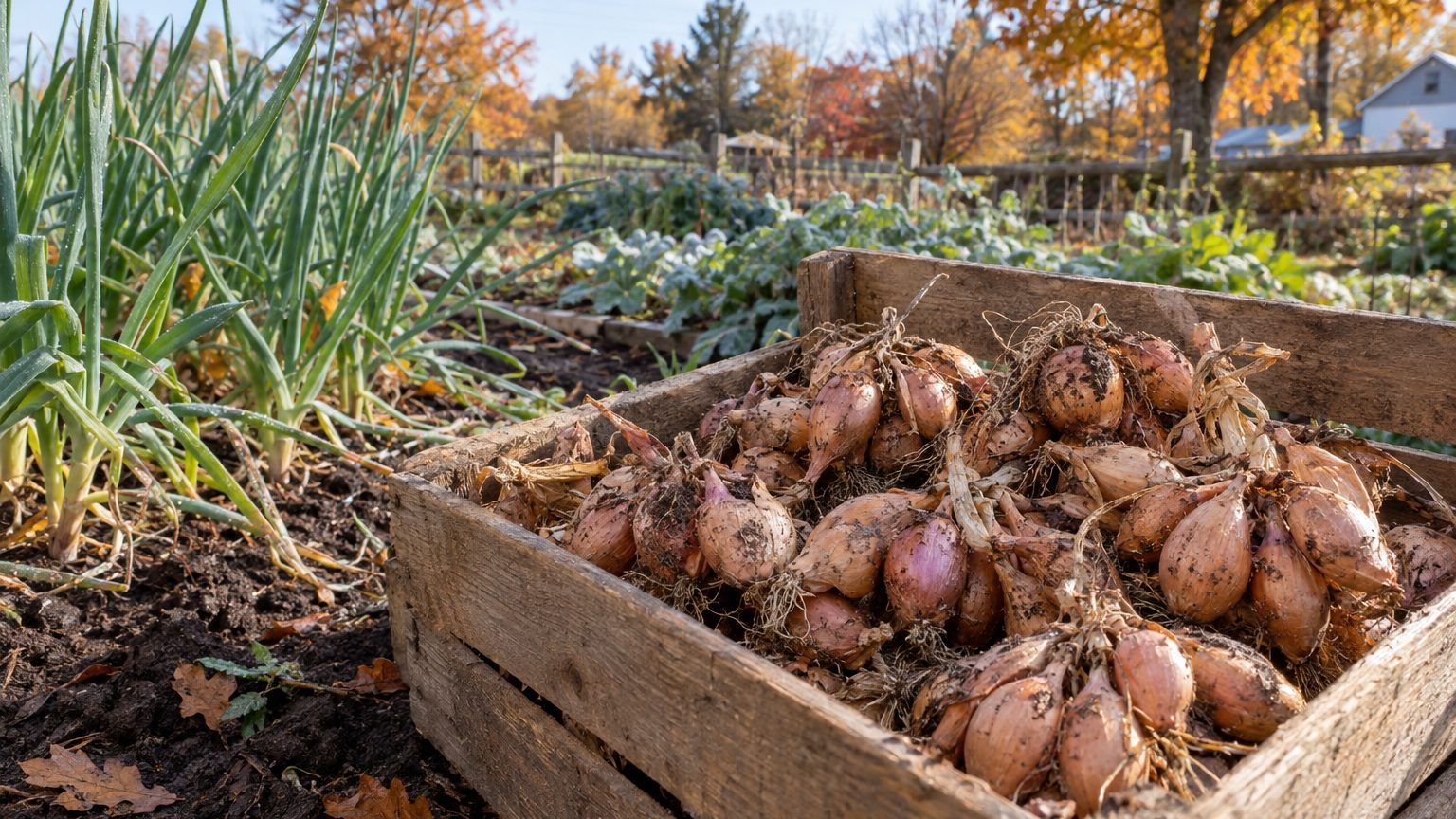

For most Utah gardens, the best shallots are bulb-grown types planted in fall: French red and grey types, plus Dutch yellow. Seed-grown shallots work as a spring backup. Cold winters, dry summers, and big swings in elevation decide which type earns its bed space. Season length and July heat matter more than any catalog description.
The short answer for Utah
Plant bulb-grown shallots in fall and you get the most reliable crop across most of the state. Choose French red or grey types and Dutch yellow types first, since they take the cold and finish before the worst summer heat. Seed-grown shallots are the second choice, started early indoors and set out in spring.
The numbers explain why. At the Salt Lake City reference station, the mean daily minimum of the coldest month is 24.2°F. That is cold enough to stop growth but not usually cold enough to kill a clove that rooted in the fall and wears a layer of mulch. The last spring frost falls between April 12 and April 29, and the first fall frost between October 18 and October 29. Those dates are the band where the chance of a 32°F freeze runs between 30 and 70 percent, so any given year can land on either side. Salt Lake sits in a mild valley. Most of Utah is higher and colder, and southern Utah is warmer.
Which shallot type fits which Utah garden?
Fall-planted cloves put down roots before the ground freezes, then restart in early spring and bulb up as days lengthen. They are ready to harvest when the tops fall over. Spring plantings have less time to build size. For specific dates, see When to Plant Shallots in Utah.
| Type | Planted | Best fit |
|---|---|---|
| French red and grey, bulb-grown | Fall | Valleys and mid elevations with cold but workable winters |
| Dutch yellow, bulb-grown | Fall or very early spring | Gardeners who want a mild flavor and easy storage |
| Banana-type, elongated bulbs | Fall | Cooks who want easy peeling and fewer layers to lose |
| Seed-grown hybrids | Started indoors, set out in spring | Missed fall window, or soil that was frozen too early |
Variety names change from seller to seller, so match the type first and the name second.
What will not work here

Utah’s weak spots are a short season at elevation, hot dry summers, and soil that often runs alkaline and low in organic matter. Each one rules out a particular habit.
Why do late spring plantings come up small?
Shallots set bulbs in response to lengthening days and warming weather. A clove pushed into the ground has only a few weeks of cool growth before heat arrives, and the plant ends up with a small clump of thin bulbs. At higher elevations, where the last frost comes after the April 12 to April 29 band seen in the valley, the season is shorter still. The slowest seed-grown shallots, the ones that need a long stretch of steady growth, are the first to fail there.
Can you water shallots once a week through a Utah summer?
Not well. Shallots have shallow roots, and a weekly soak lets the top few inches of soil dry hard between waterings. In dry air and strong sun, that gap stresses the plant, and stressed shallots either bulb small or send up a flower stalk. Lighter, more frequent watering does better, with mulch to slow evaporation. The balance has to be right, though. Heavy clay that stays wet around the bulbs invites rot, so loosen it with compost before planting.
Two other mistakes show up often. Planting too early in fall (while soil is still warm) produces tall green tops that burn in winter, so wait until nights are cold and then plant. And skipping mulch leaves cloves exposed to freeze-thaw heaving, which pushes them out of the ground. Dry summer air does allow tighter spacing than in humid regions, but crowded clusters still make smaller bulbs. For the full growing routine, see Growing Shallots in Utah.
What changes across Utah
Utah spans USDA hardiness zones 4a to 9a, so there is no single answer. The USDA system is built on one variable, the average annual extreme minimum temperature. It tells you how cold the worst nights get, not how long your season runs or how hot July becomes. Two gardens in the same zone can still behave differently.
In northern mountain valleys and at altitude, winters are harsher and spring comes late. Fall-planted shallots do well there, but they want a thick mulch of straw, planted a little earlier so roots establish before the ground locks up. In spring, pull the mulch back once growth starts. If the ground is frozen too early for fall planting, switch to spring-planted cloves or seed-grown types and choose the quickest finishers you can find. Plan on a later start than the valley dates, since the April 12 to April 29 window applies to a mild valley and not to a high bench.
Southern Utah is warmer, and the problem flips. Fall planting goes in later, after soil cools, and bulbs finish earlier in the year. The risk is heat, so a spring planting can stall quickly. Afternoon shade and mulch help.
To find your own zone, use the USDA Plant Hardiness Zone Map and enter your ZIP code. Zone is a starting point, and the next step is a local one.
Where to check this for your own county
Your county office at Utah State University Extension is the best next stop. Look for two things there: the local planting calendar for onions and shallots, and any varieties that have been trialled in your county’s soil and climate. Ask the county office or the master gardeners about the fall planting window for your elevation, since it varies a lot from one valley to the next.
A county recommendation beats a state one. This guide covers the state as a whole, which means it draws on a mild valley station and ranges that span desert and alpine terrain. Extension staff know which neighborhoods get cold air pooling, which soils crust over, and which varieties have held up locally. If a specific variety is listed as trialled in your county, pick it over any general pick here.
When you call or visit, bring three details: your approximate elevation, your soil type (sandy, loamy, or clay), and whether you can irrigate on a regular schedule. Those three answers shape the advice more than anything else you can tell them.
Checking this against your own garden
Dates on a page are averages. Your own bed tells you more. Three things are worth watching.
- Soil feel in spring. Squeeze a handful from a few inches down. If it crumbles and doesn’t clump into a wet ball, it is workable. If your soil reaches that state weeks after a neighbor’s, your garden runs cold, and you should plant later.
- The first green shoots. Fall-planted shallots that send up tall tops before winter went in too early. If shoots barely show by late winter, your site is cold or shaded, and you may want a sunnier bed next year.
- When the tops yellow and flop. This is the harvest signal. If it comes in early, your site is hot and your spring plantings are at risk. A later fall means a longer, cooler growing period.
Write the dates down for two seasons. After that, your notes will outrank any calendar.
Common questions
Are shallots hardy enough for Utah winters?
Yes, when planted in fall with mulch. Cloves root before the ground freezes and wait out winter underground. The more exposed your site, the thicker the mulch should be.
Can I grow shallots from seed in Utah?
Yes. Start seed indoors early and transplant in spring. Seed-grown shallots tend to give single bulbs, and they need a steady start, so they suit gardeners who missed the fall window.
Can I plant shallots from the grocery store?
You can try, but the variety is unknown, and some store bulbs may be treated to resist sprouting. Garden-supplier stock is more dependable and often labeled by type.
How many bulbs does one clove produce?
A single planted clove typically multiplies into a cluster of several bulbs by harvest. Give each clove room, since crowded clusters give smaller bulbs.