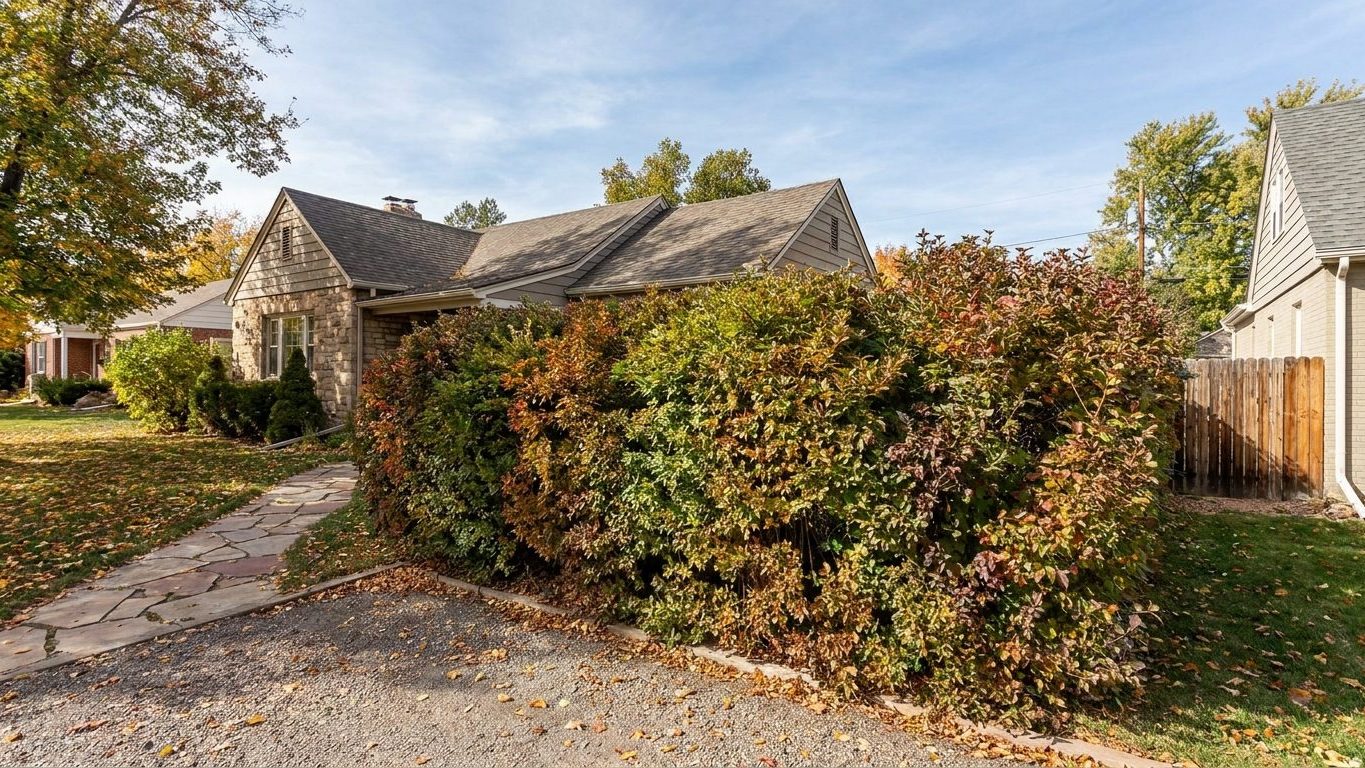

Short answer: Vermont has no statewide hedge height limit. No state statute sets a number in feet for how tall a hedge, fence, or living screen can grow. That authority sits with each city and town, which write their own zoning bylaws and enforce them through local zoning administrators. If you want a real number, you need your municipality’s code, not a state law.
There is no Vermont hedge height law
Search “hedge height law Vermont” and you’ll find plenty of pages that confidently name a figure, four feet, six feet, sometimes eight. None of them are quoting Vermont law, because there isn’t one to quote. Vermont, like every other state, treats hedge and fence height as a land-use question, and land-use questions in Vermont are decided at the municipal level. The state legislature has never passed a statute capping how tall a homeowner’s boundary hedge can grow.
What does exist is Vermont’s tradition of strong municipal zoning authority. Cities and towns adopt their own zoning bylaws, and those bylaws are where height limits for fences, walls, and sometimes hedges actually live. One town might cap fences at four feet in a front yard and allow six feet along a side or rear line. The town next door might have no fence height rule at all, but a strict sight-triangle requirement at intersections. There is no way to average these into a single “Vermont rule,” because the rule genuinely changes at the town line.
This is also where a second wrinkle shows up, and it trips up a lot of homeowners. Many municipal codes regulate “fences” as a category of structure, with materials, setbacks, and height limits spelled out. A living hedge is not always covered by that same language. Some towns fold hedges into the fence definition explicitly. Others regulate them separately under landscaping or vegetation rules, often only through the sight-triangle provision at corners and driveways. Others don’t mention hedges at all, treating them as a landscaping choice outside the zoning code’s reach entirely. Assuming your town’s fence-height number automatically applies to your arborvitae row is a common and understandable mistake, but it’s still a mistake until you’ve checked the actual wording.
None of this means the topic is a free-for-all. It means the answer is local, and finding it takes one extra step most people skip: locating and reading your own town’s bylaw instead of trusting a number that circulates online. A commercial page that names one figure for the whole state is not simplifying the law. It’s getting it wrong, because the entities that actually regulate hedge height in Vermont are the towns themselves, not Montpelier.
How to find the rule that actually applies to you
Start with your municipality’s name, not the word “Vermont.” Your town or city zoning bylaw is the document that matters, and most of them are published online today, even for small towns. Three publishing platforms host the majority of American municipal codes: Municode (library.municode.com), American Legal Publishing (codelibrary.amlegal.com), and eCode360. Search your town’s name plus one of those platform names, or plus “zoning bylaw,” and you’ll usually land directly on the current code.
Once you’re in the document, don’t search for “hedge” first. Go to the zoning chapter, and within it look for a section titled “fences,” “accessory structures,” or “supplementary regulations.” That’s almost always where height limits, if any exist, are written down. Read the definitions section too. If the bylaw defines “fence” as including “any hedge, wall, or other structure or planting that serves to enclose or separate,” then your hedge is covered by whatever number appears for fences. If the definition is narrower, limited to constructed materials like wood, wire, or masonry, your hedge may fall outside that specific rule and be governed only by more general provisions, like the sight-triangle requirement covered below.
Some small Vermont towns don’t use any of the three major platforms. Their zoning bylaw may live as a PDF on the town’s own website, under a planning or zoning tab, rather than on a dedicated code-hosting service. If a web search doesn’t turn up your bylaw quickly, go straight to your town’s official website and look for “Planning Commission,” “Zoning Administrator,” or “Land Use Regulations.”
Call before you assume
If the document is confusing, unclear, or seems out of date, call the town office and ask for the zoning administrator. In Vermont’s smaller towns this is often a part-time position, but it’s the person legally responsible for interpreting and enforcing the bylaw, including any provision that touches hedges, fences, or sight lines. A five-minute phone call answers the question far more reliably than any national gardening article, including this one. Ask specifically: does the fence height section apply to living hedges, and is there a separate sight-triangle rule for corner lots or driveways in this town’s code?
The branches that cross the line
Height limits aside, there’s a second question that comes up constantly with boundary hedges: what happens when branches or roots grow onto the neighbor’s side. Here the answer isn’t zoning at all. It comes from property law, specifically from court decisions built up over decades rather than from a single statute, and the general principle is broadly similar across states even though the details vary.
The widely recognized rule is this: a property owner may trim back branches, roots, or growth that crosses onto their land, up to the boundary line and no further. They cannot cross onto the neighbor’s property to do the cutting, and they generally cannot cut in a way that kills the plant, since doing deliberate damage to a neighbor’s tree or hedge can expose them to liability. This is sometimes called the “self-help” remedy, and it exists precisely so neighbors don’t have to go to court every time a lilac hedge leans two feet over the line. It is a common-law principle shaped by case law, not a Vermont statute, and it is worth treating as a general rule of thumb rather than a guaranteed local outcome, since specific circumstances and local court decisions can shift how it applies.
Where this gets complicated is scale. Trimming back a few overhanging branches is one thing. A six-foot-wide hedge that’s been encroaching for a decade, shading a neighbor’s garden or damaging a fence, is another, and disputes at that level often move past self-help and into conversations about boundary surveys, shared maintenance costs, or, in a genuine standoff, a small claims or civil case. If a disagreement has reached that point, a local attorney familiar with Vermont property law is the right next call, not a gardening guide.
There’s one rule that shows up almost everywhere, regardless of what a town’s general fence or hedge provisions say: the sight triangle. At intersections and at driveway entrances, most municipal codes prohibit anything, fence, wall, or hedge, from blocking a driver’s line of sight above a certain height, and that height is typically well below whatever general limit applies elsewhere on the property. This rule exists for a straightforward safety reason, and it tends to survive even in towns whose codes are otherwise silent on hedges specifically. If your hedge sits anywhere near a corner lot, a driveway apron, or an intersection, check for this provision specifically. It’s often the one number in the whole code that actually applies to you.
What to check before you plant
Before you put a row of arborvitae, privet, or lilac along a boundary line, a short checklist saves a lot of grief later. First, confirm the property line itself. A hedge planted a foot or two off from where you think the boundary sits can turn into a genuinely awkward conversation five years later when the plants are eight feet tall and rooted in. If there’s any doubt, a property survey, even an informal one using existing pins or a title document, is worth the cost before planting starts.
- Find and read your town’s zoning bylaw, specifically the fences and accessory structures section, and check whether “hedge” is included in the definition.
- Check for a sight-triangle requirement if your planting is anywhere near a corner, intersection, or driveway.
- Call the town’s zoning administrator if the wording is unclear, especially for corner lots or unusual setbacks.
- Confirm the exact property line before planting directly on a boundary.
- Ask about any homeowners association rules if your property is part of one, since HOA covenants can be stricter than the town’s own zoning bylaw and are enforced separately.
It’s also worth thinking ahead to mature size, not planting size. A hedge that looks modest at three feet in a nursery pot can reach ten or twelve feet within a decade depending on the species, and a height limit that seemed irrelevant at planting time can become a real problem once the hedge matures. If your town’s bylaw does cap hedge or fence height, choose a species and a maintenance plan that can realistically be kept under that limit with routine pruning, rather than assuming you’ll deal with it later.
Finally, keep a copy of whatever you find, the bylaw excerpt, the zoning administrator’s name, the date you called. If a boundary dispute or a code enforcement question comes up years down the road, having your own record of what the rule said when you planted is far more useful than trying to reconstruct it after the fact.
Common questions
Does Vermont have a state law setting a maximum hedge height?
No. There is no statewide statute in Vermont that sets a height limit for hedges. Height rules, where they exist, come from individual municipal zoning bylaws, and they vary from town to town.
Where do I find my town’s hedge or fence height rule?
Search your town’s name along with “zoning bylaw” or check the three major municipal code platforms: Municode (library.municode.com), American Legal Publishing (codelibrary.amlegal.com), and eCode360. Look in the zoning chapter under fences or accessory structures. If you can’t find it online, call your town’s zoning administrator directly.
Can my neighbor cut my hedge if branches grow over their property line?
Generally yes, up to the boundary line. The widely recognized property-law principle allows a neighbor to trim back branches or growth that crosses onto their side, at their own expense, without crossing onto your land, and without killing the plant. This comes from case law rather than a Vermont statute, and specifics can vary, so treat it as a general principle rather than a guaranteed outcome.
What is a sight triangle, and does it apply to hedges?
A sight triangle is a zoning provision that keeps the area near a corner, intersection, or driveway free of obstructions, including hedges, above a certain height, so drivers can see cross traffic and pedestrians. It’s one of the most consistently enforced rules across municipalities and often applies even where the general fence or hedge provisions are unclear or silent.