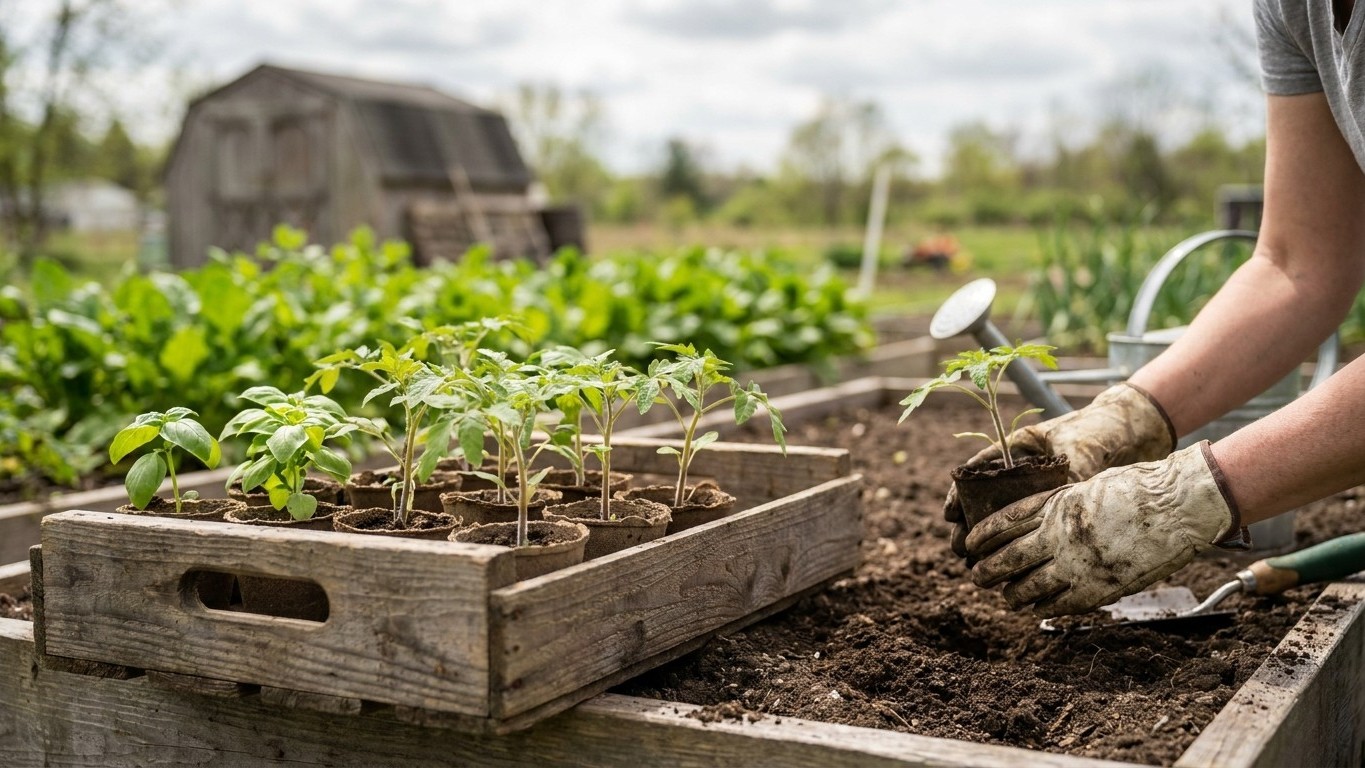

May in Vermont splits the calendar in two. In the Champlain Valley, hardy crops go straight into the ground as soon as the soil can be worked, while tomatoes, peppers, and other tender plants wait for the frost risk to clear, usually toward the back half of the month. In the hills and the Northeast Kingdom, push everything later.
What goes in the ground in May
The number that actually runs this month is soil temperature, not the date on the wall. NOAA’s 1991-2020 climate normals put the last spring freeze at Burlington’s reference station (USW00014742) somewhere between April 30 and May 10, which means the first third of May still sits inside the frost window for the mildest part of the state. Away from Lake Champlain, in the Green Mountains and the Northeast Kingdom, that window runs noticeably later, so treat early May there as still-frozen-ground territory in a cold spring.
That doesn’t mean the garden sits empty. Peas, spinach, lettuce, arugula, and radishes germinate in soil that would stall a bean seed cold, so they go in as soon as a shovel goes into the bed without hitting a frozen layer. Onion sets, seed potatoes, carrots, and beets follow the same logic. Garlic, if it’s in the ground, was planted the previous fall and just needs the mulch pulled back as shoots push through.
Brassica transplants (cabbage, broccoli, kale, Brussels sprouts) can go outside in early-to-mid May with a floating row cover on cold nights, since they shrug off a light frost that would flatten a squash seedling. Hold the tender crops back: tomatoes, peppers, beans, squash, cucumbers, and sweet corn all want soil that’s held steady warmth for at least a week, and setting them out before the frost window closes is a bet against the odds, not a plan. In the Champlain Valley that bet gets safer toward the last week of May; at elevation or in the Kingdom, wait longer.
What to start under cover
Work backward from the frost window instead of forward from a fixed date, and the math gets simple. Tomatoes and peppers need six to eight weeks indoors before they go outside, so if the target transplant date sits near the end of May, those seeds should already be up and growing by now, not just sprouting. If they’re only now going into a tray, expect a later, smaller harvest window, which in a state with a first fall frost landing between October 3 and October 13 is a real constraint, not a minor inconvenience.
May itself is the starting month for the crops that need a shorter head start. Squash, cucumbers, melons, and zucchini only need three to four weeks under cover before they’re ready to transplant, so sowing them indoors in early May lines them up for a late-May or early-June move outside, right as the tender-crop window opens in the milder valleys.
Two mistakes show up every spring. Start too early and the plants outgrow their pots before the ground is warm enough to take them, turning into leggy, rootbound seedlings that sulk for weeks after transplant. Start too late and there isn’t enough growing season left before the fall frost to bring a full harvest home, especially for anything that needs 70 or more days to mature. A basic setup, a sunny window or a shop light on a timer, is enough to hold seedlings on schedule until the soil catches up.
What is ready to pick
Not much is coming out of newly planted beds yet, and that’s expected. What May actually delivers is what survived the winter. Asparagus crowns that have been in the ground more than a couple of seasons start sending up spears, and once they do, cutting every few days keeps the bed producing instead of going straight to fern. Rhubarb stalks are usually thick enough to harvest by mid-to-late month, pulled rather than cut, leaving the smaller stalks to keep growing.
Chives, sorrel, and other perennial herbs green up early and can be cut back hard without hurting the plant. Anyone who kept a cold frame or low tunnel running over winter should still be pulling spinach, mâche, or hardy lettuce from it, since those crops hold in cold soil far longer than a calendar suggests. Check stored crops from the previous season too: squash, potatoes, and onions in a root cellar or basement should get a look for soft spots or sprouting, and anything starting to turn goes to the kitchen before it goes to the compost pile.
The jobs that matter this month
Soil prep earns its keep more in May than in any other month, because everything planted from here on inherits whatever condition the bed is in. Working compost into beds before they’re planted, rather than around growing plants, avoids disturbing roots later and gets nutrients where seedlings can reach them early. A simple soil test, run through the state extension service, catches a pH problem before it stunts a whole season of tomatoes.
Staking and trellising belong on the early side of this month, not the late side. Peas and any climbing crop grow fast once the days lengthen, and setting supports before the vines sprawl saves an afternoon of untangling stems later. Mulch goes down once the soil has actually warmed, since mulching too early traps cold in the ground and slows germination and root growth.
Succession sowing keeps the lettuce and radish patch producing instead of bolting all at once: a small new row every couple of weeks beats one big planting that all matures the same week. Pest scouting matters now too, before populations build. Slugs go after tender seedlings in wet spring soil, and flea beetles show up on brassica transplants almost the day they hit the ground, so a floating row cover or a ring of diatomaceous earth around vulnerable plants is cheap insurance. Anyone with fruit trees or cane berries who hasn’t finished dormant pruning should wrap it up before buds fully break, since cuts made after leaf-out cost the plant more energy to heal. This is also the month to finish ordering seed for anything not yet sown, since the popular varieties of squash, tomato, and pepper sell out earlier every season.
What not to do in May
The classic mistake is planting by the feel of the air instead of the state of the soil. A run of 70-degree afternoons convinces a lot of gardeners that tomatoes are safe, and then a clear night drops the temperature well below what a pepper seedling can survive. Soil holds cold far longer than air does, so a warm week doesn’t mean warm ground four inches down. Check the soil, not just the forecast, before tender transplants go out.
Uncovering perennials and cold frames too early after a mild stretch is the same error in a different shape. A week of gentle weather can trick a gardener into pulling mulch off strawberries or opening a cold frame full-time, right before a late cold snap that Vermont’s frost window makes entirely plausible into early May in the valleys, and later at elevation. Keep protection in place, or at least within reach, until the frost window has actually closed for the local area.
Nitrogen timing trips people up too. Feeding a heavy dose of nitrogen to young transplants or overwintered greens pushes soft, fast leaf growth right when a cold night is still possible, and that soft growth is exactly what frost damages first. Hold off on nitrogen-heavy feeding until plants are established and the frost risk has genuinely passed, and lean on compost or a balanced feed in the meantime.
Checking this against your own county
Everything above is a state-wide starting point built on data from one reference station on Lake Champlain, the mildest corner of Vermont. Elevation changes the frost calculus fast: a garden a few hundred feet higher than Burlington can run a week or two behind it, and the Northeast Kingdom routinely lags further still. Lake effect works the other way, holding warmth near the shoreline longer into fall and releasing it later into spring.
Before betting a season on any date in this article, check it against the University of Vermont Extension, which tracks local frost data and planting guidance closer to specific counties and elevations than any statewide figure can.
Common questions
Is it too late to plant peas in May in Vermont?
No. Peas tolerate cold soil and light frost, so early-to-mid May plantings are normal and often preferred over earlier attempts in ground that’s still too wet or cold to work well.
Can tomatoes go outside in May in Vermont?
In the Champlain Valley, late May is often workable once the frost window (April 30 to May 10 at the reference station) has closed and soil has warmed. At elevation or in the Northeast Kingdom, wait longer and check local extension guidance before committing.
What USDA hardiness zone is Vermont in?
Vermont spans USDA Plant Hardiness Zones 3b to 5b, based on the 2023 map’s average annual extreme minimum temperature. That’s a wide range built on one variable, so a zone number alone won’t tell you the local frost window; pair it with the actual frost data for the nearest reference point.
Why does my neighbor a few miles away plant weeks before or after me?
Elevation and lake effect both shift frost timing significantly within Vermont. A garden higher up or farther from Lake Champlain can run its own frost calendar weeks apart from a garden in the valley, even within the same county.