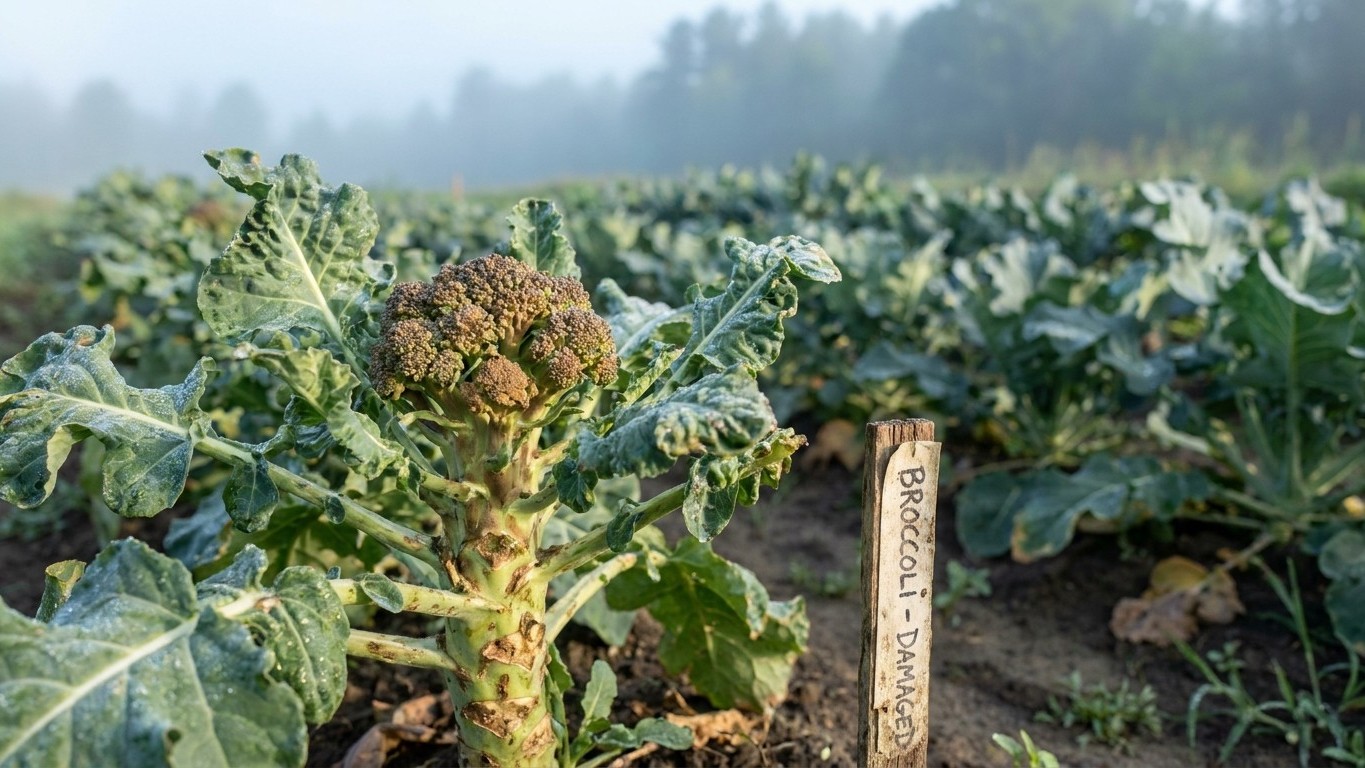

Swede midge shows up in Vermont brassica fields as early as mid-May, with the heaviest damage typically landing between late May and September. This tiny fly, barely the size of a mosquito’s ancestor, doesn’t announce itself with visible insects crawling on your kale. Instead, you notice the damage first: crumpled leaves, scarred stems, and broccoli heads that never form properly. By the time symptoms appear, larvae have already done their work and moved on.
Vermont growers first confirmed the pest within the state around 2016, following its spread south from Ontario, Canada, where it was first detected in North America in 2000. Since then, it has settled into pockets of Addison, Chittenden, and Franklin counties, riding the same cool, humid conditions that make the Champlain Valley good for growing cabbage in the first place.
What Swede Midge Actually Does to Your Plants

The adult midge is almost invisible to the naked eye, roughly 1/16 inch long and pale tan. You’ll never spot it hovering over your Brussels sprouts. What you will spot is the aftermath: multiple growing points on a single plant, leaves that curl and pucker instead of lying flat, and a broccoli head that looks like it forgot how to form a single crown. Farmers call this “blind head” syndrome, and once it happens, there’s no fixing that particular plant.
Female midges lay eggs in clusters near the growing tip of brassica plants, tucked into the folds where new leaves are just emerging. The larvae hatch within a few days and immediately start feeding on that soft tissue, which is exactly the part of the plant responsible for producing a marketable head. Cabbage ends up with multiple small heads instead of one large one. Kale and collards develop twisted, scarred new growth that’s tough and unappealing even though the plant survives.
Cauliflower and broccoli take the hardest hit because their entire commercial value depends on a single, uniform head. A home gardener growing a few kale plants might shrug off some cosmetic damage. A commercial grower supplying Vermont farmers markets or wholesale accounts can lose an entire planting.
Timing: When Swede Midge Is Active in Vermont
Vermont’s growing season gives swede midge room for two to three generations a year, depending on how warm the summer runs. The first adults typically emerge from overwintering pupae in the soil once soil temperatures climb into the mid-50s Fahrenheit, which in most of Vermont lands somewhere between mid-May and early June.
Each generation takes roughly two to four weeks from egg to adult, so populations build steadily through the season. That means the pest pressure in August can be noticeably worse than what growers saw in May, even on the same field. Fall plantings of brassicas, popular with Vermont farmers growing storage cabbage or late kale, often face the heaviest midge pressure of the whole year because by September the population has had all summer to multiply.
Cool, wet weather favors the midge. A rainy Vermont June, the kind that leaves standing water in low spots of a garden, creates ideal humidity for larvae development in the soil. Drought years tend to suppress populations somewhat, though Vermont rarely goes dry enough for long enough to make a real dent.
Which Vermont Regions See the Most Pressure
Confirmed detections cluster in the Champlain Valley and parts of central Vermont, where brassica farming is concentrated and soils stay consistently moist. The Northeast Kingdom, with its shorter season and generally cooler summers, has reported fewer confirmed infestations so far, though University of Vermont Extension entomologists caution that absence of reports doesn’t necessarily mean absence of the pest. Swede midge is easy to miss until damage is already visible, and by then it’s too late for that planting.
How to Confirm Swede Midge Versus Other Damage
Distorted brassica growth has several possible causes in Vermont gardens, from herbicide drift to nutrient deficiency to plain old cabbage looper damage. Swede midge has a few tells that separate it from the usual suspects.
- Damage concentrates at the growing tip, not scattered across older leaves
- New leaves emerge puckered, crinkled, or asymmetrical rather than flat
- Multiple small growing points replace what should be a single main stem
- No visible chewing marks or holes, since the larvae feed by scarring tissue rather than eating through it
- Damage appears in a pattern across a field or bed rather than on isolated plants
Confirming an actual midge infestation, as opposed to guessing, usually requires either pheromone-baited sticky traps or sending a damaged plant sample to a state diagnostic lab. Vermont growers who suspect swede midge should contact University of Vermont Extension, which tracks confirmed county-level detections and can help with identification.
What Actually Stops Swede Midge
No single tactic knocks out swede midge on its own. Growers who manage it successfully layer several strategies together, because the pest’s biology, tiny size, soil-dwelling pupal stage, and multiple overlapping generations, makes any silver-bullet approach unrealistic.
Crop Rotation and Physical Distance
Pupae overwinter in the soil right where the previous season’s brassicas grew. Planting brassicas in the same spot year after year guarantees a built-in midge population waiting to emerge each spring. Rotating brassica plantings at least a quarter mile away from the previous year’s location, when space allows, cuts down significantly on how quickly a new planting gets colonized. For most home gardeners with a fixed plot, that distance isn’t realistic, but even rotating to the opposite end of a larger garden helps some.
Row Covers Timed Correctly
Fine-mesh row covers, installed at transplanting and sealed tightly at the edges, physically block adult midges from reaching new growth. This works best when covers go on immediately after transplanting and stay sealed until harvest, since even brief gaps let females in to lay eggs. The catch: covers also block pollinators and trap heat, so timing and ventilation matter, especially during Vermont’s warmer July and August stretches.
Insecticide Timing, Not Just Product Choice
Because larvae feed hidden inside leaf folds at the growing point, most contact insecticides struggle to reach them once damage has started. Effective control depends on timing sprays to target adult midges before they lay eggs, which means monitoring with sticky traps to catch the start of each generation’s emergence rather than spraying on a fixed calendar. Growers working with Extension-recommended products typically need to reapply on a tight schedule during active flight periods, since adult midges live only a few days but new ones keep emerging continuously through the season.
Resistant and Less-Attractive Crop Choices
Not all brassicas draw equal attention. Broccoli and cauliflower, with their single concentrated growing point, suffer the worst damage. Loose-leaf crops like collards and some kale varieties tolerate midge feeding better simply because they don’t depend on one perfect head to be marketable or edible. Vermont growers dealing with confirmed infestations sometimes shift acreage toward less-vulnerable crops in heavily infested fields while managing broccoli and cauliflower elsewhere.
What Home Gardeners Can Realistically Do
A backyard gardener growing a handful of cabbage and kale plants doesn’t need a commercial rotation plan, but a few adjustments make a real difference. Starting transplants under row cover from day one, rather than adding cover after noticing damage, blocks the first wave of egg-laying entirely. Checking new growth weekly for the telltale puckering, rather than waiting for an obvious problem, catches infestations early enough to remove affected plants before larvae spread to neighboring ones.
Cleaning up brassica debris at the end of the season also matters more than most gardeners realize. Leaving old cabbage stems and leaves in place through winter gives overwintering pupae exactly the shelter they need. Pulling and disposing of plant material, rather than composting it on site, removes part of next year’s starting population.
Vermont’s brassica growers, from small market gardens to larger diversified farms, are still adjusting to a pest that wasn’t part of the regional pest calendar a decade ago. Populations tend to build over several seasons in a given field once established, which means the fields that look fine this year deserve just as much monitoring as the ones with obvious damage last summer.