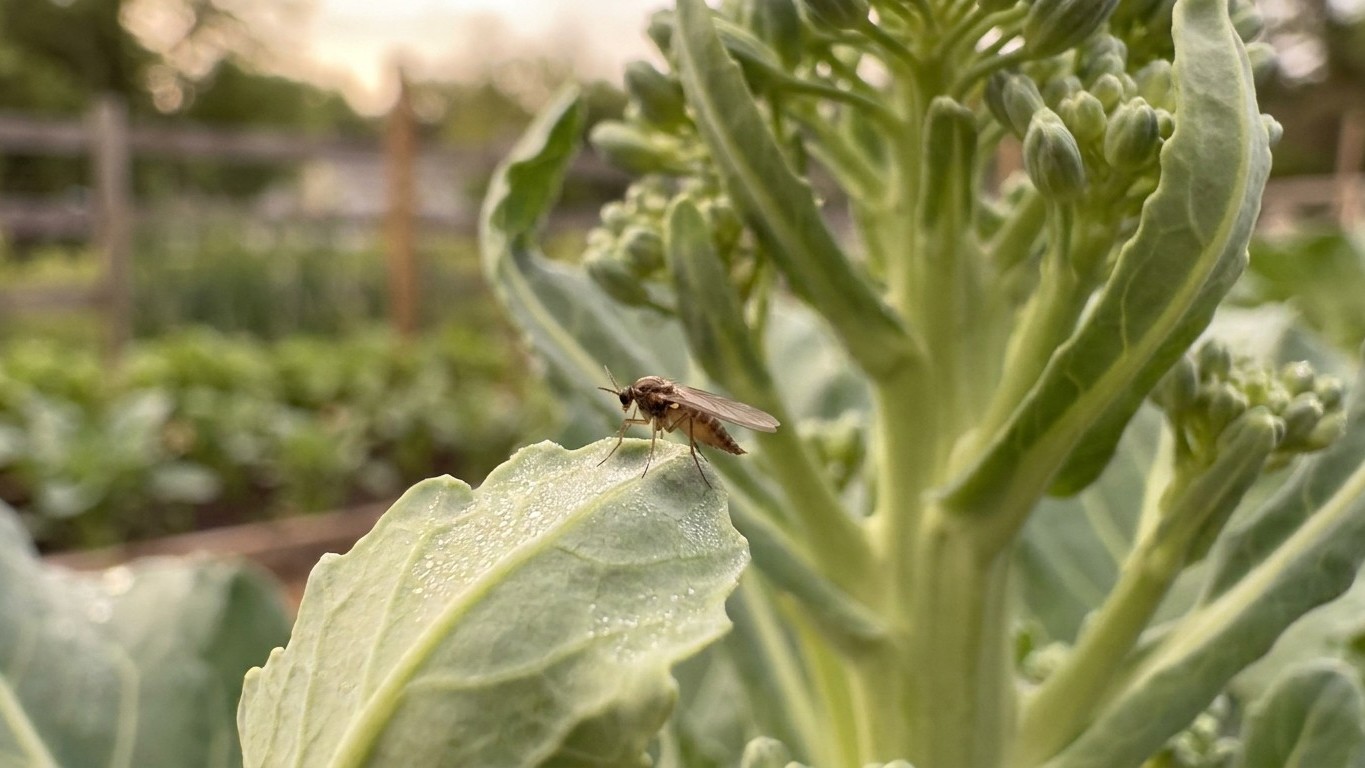

As of the 2026 growing season, swede midge has not been confirmed as an established pest in Minnesota, but state agriculture officials and University of Minnesota Extension entomologists are watching the border closely. The insect has already colonized parts of Ontario, Quebec, New York, and other northeastern states, and it travels well on nursery transplants and contaminated soil, which is exactly why Minnesota’s cole crop and canola growers are being asked to monitor now rather than wait for an outbreak to prove the risk real.
What the Swede Midge Is and Why It Matters Here

Swede midge (Contarinia nasturtii) is a fly barely the size of a gnat, about 1.5 to 2 millimeters long, native to Europe and parts of central Asia. It doesn’t bite people or pets. Its target is the growing point of any plant in the mustard family, which in Minnesota means far more than backyard cabbage. Broccoli, cauliflower, Brussels sprouts, kale, collards, turnips, radishes, and mustard greens are all fair game. So is canola, a crop grown on hundreds of thousands of acres in the Red River Valley and northwestern Minnesota. Wild mustard and other roadside brassicas can host the midge too, which means the pest doesn’t need a farm field to survive between plantings.
The insect first turned up in North America in Ontario in 2000, likely arriving in imported plant material or soil. Within four years it had spread into New York State, and from there it worked its way through Vermont, Maine, and other parts of the Northeast. That spread pattern, hitchhiking on nursery stock and moving along transportation corridors, is the reason Great Lakes and Upper Midwest states, Minnesota, Wisconsin, and Michigan among them, now run active detection programs instead of waiting for a confirmed infestation.
How It Behaves and When It Shows Up
Timing is where swede midge gets tricky. Adults emerge in spring once soil temperatures warm, typically in the range that also triggers early brassica transplanting, and the adult stage lasts only a few days. Females use that short window to lay eggs in tight clusters on the youngest leaf tissue near the growing tip. Because the adults are so small and short-lived, growers rarely spot the fly itself. What they notice instead is the damage the larvae leave behind weeks later.
In a Minnesota growing season, expect overlapping generations rather than one clean wave. Depending on temperature, the midge can complete two to six generations between spring and fall, with generations blending into each other as the season progresses. That overlap is part of what makes control so frustrating. By the time one generation’s damage becomes visible, the next batch of eggs may already be developing.
The larvae themselves are almost translucent, yellowish-white, and no bigger than a grain of rice. They feed in tight clusters hidden inside leaf folds and growing points, protected from wind, rain, and most contact insecticides. After feeding, larvae drop to the soil to pupate in silken cocoons. Those cocoons are the pest’s long game: pupae can remain dormant in soil for up to two years, waiting for conditions and host plants to line up again. That single fact drives most of the crop rotation advice research programs recommend.
Damage Symptoms to Check For
Because the insect itself is so hard to see, diagnosis usually comes from the plant’s reaction to feeding. Growers and gardeners should look for:
- Distorted, crumpled, or blind growing points where the main head simply fails to form
- Multiple small heads on broccoli or cauliflower instead of one central head
- Swollen, thickened leaf petioles with a scarred or corky texture near the leaf axils
- Puckered, twisted young leaves that don’t unfurl normally
- Stunted plants that look otherwise healthy but never bulk up
These symptoms overlap with nutrient deficiencies, herbicide drift, and other insect damage, which is part of why the pest can go undetected in a new region for a season or two before anyone connects the dots.
Detection and Monitoring in Minnesota
Because visual scouting catches damage late, the standard early-warning tool is a pheromone trap that lures male midges using a synthetic version of the female sex pheromone. This method, developed largely through research out of Cornell University following the New York detections, gives growers a count of adult activity before larvae start scarring plants. Regional monitoring networks in the Upper Midwest use this same trap design to screen commercial brassica fields, seed potato and canola operations, and nursery stock coming in from known infested regions.
For home gardeners in Minnesota, formal pheromone trapping isn’t practical, but the state’s extension offices and county master gardener programs are useful first stops if unusual, unexplained blind-heading shows up repeatedly on cole crops in the same garden bed. Because swede midge damage mimics several common problems, confirming an actual midge population typically requires sending a sample to a diagnostic lab rather than relying on symptoms alone.
What Actually Stops Swede Midge
Chemical control alone doesn’t solve a swede midge problem, and that’s worth being upfront about. The larvae live tucked inside leaf folds and growing points, largely shielded from sprays, and the adult stage that’s actually exposed only lasts a few days per generation. Effective insecticide timing depends on trap counts that flag when adults are actively flying, not a fixed calendar spray schedule. Growers in already-infested regions have had to build entire spray programs around trap thresholds rather than routine treatment.
Cultural controls carry more of the load in practice:
- Crop rotation away from any brassica crop for at least two years, since pupae can survive that long in soil
- Physical separation of new plantings from previous brassica fields, since adults have limited flight range but can still spread short distances
- Residue destruction after harvest to eliminate larvae before they pupate in soil
- Weed control targeting wild mustard and other non-crop hosts along field edges
- Row covers or fine insect mesh on high-value plantings to physically block egg-laying adults
Some brassica cultivars show partial tolerance, producing usable heads even under light midge pressure, but none are fully resistant. Breeding programs are still working on that piece.
The other half of prevention has nothing to do with the field itself. Because the pest moves primarily through infested transplants and contaminated soil, sourcing brassica seedlings from certified or regionally verified nurseries matters more than any spray decision. Anyone bringing in bare-root brassica transplants, potted cole crop starts, or even soil-containing nursery stock from the Northeast or eastern Canada is the exact pathway that let swede midge jump from Ontario into New York in the first place.
What Minnesota Growers and Gardeners Should Do Now
Given that the pest hasn’t been confirmed established in Minnesota, the practical move right now is prevention and early detection rather than treatment. Commercial cole crop and canola growers should stay in touch with University of Minnesota Extension’s pest alert updates and participate in regional trapping programs if invited, since early detection dramatically improves the odds of containing a small population before it spreads across a farm operation.
Home gardeners growing broccoli, cabbage, or kale don’t need to panic, but it’s reasonable to keep an eye on plant sources. Buying transplants from local greenhouses rather than mail-order stock shipped from known infested states lowers risk without any extra effort. If blind heads or corky, swollen stems show up on cole crops two seasons in a row with no obvious explanation, that’s worth a call to a county extension office rather than an assumption that it’s just poor weather or a nutrient issue.
The broader lesson from swede midge’s spread through the Northeast is that it moves at the speed of commerce, not the speed of flight. A midge that can barely travel a few hundred yards on its own wings still managed to cross state lines within four years, riding along with plants people were trying to grow.