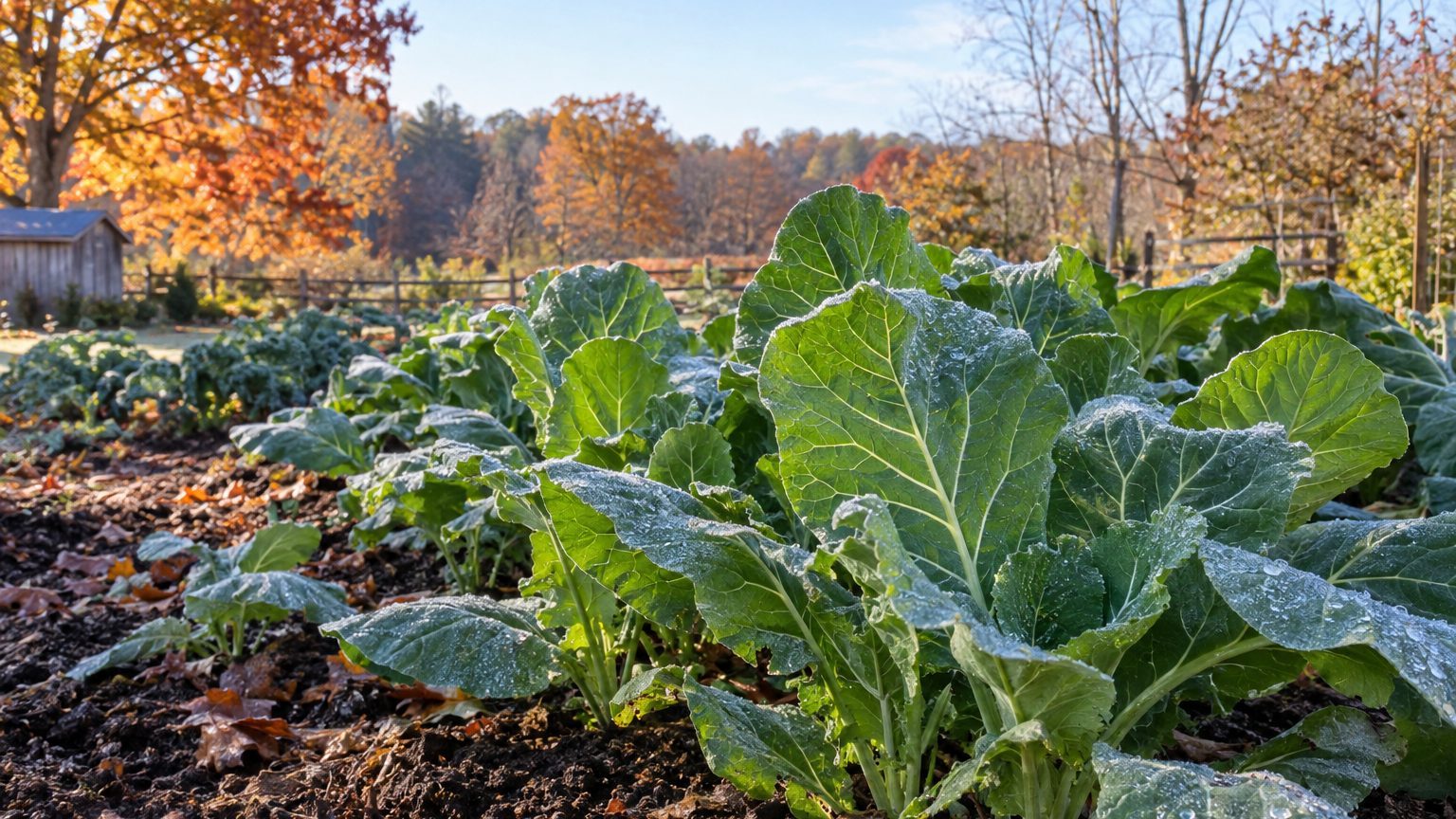

Western Washington gets two collard windows: a spring sowing that starts indoors and moves outside once the soil is workable, and a summer sowing that lets plants size up before fall. The frost dates only anchor these windows, because cold wet soil holds spring crops back well past the last freeze. And all of this describes the west side. East of the Cascades, the calendar shrinks.
The short answer for Washington
Aim spring collards at the last-freeze window of February 27 to March 18, then let the soil, not the calendar, pick the actual day you set plants out. For fall collards, work backward from the first-freeze window of November 13 to November 30 and get plants established well before it.
Both ranges come from NOAA’s 1991-2020 Climate Normals for a Seattle-area station (USW00024233). What they measure is the probability of a 32°F freeze. Each window is the band where the odds of that freeze sit between 30 and 70 percent. A freeze after March 18 or before November 13 can still happen in any given year, so treat the dates as a planning range rather than a guarantee.
Spring: start early, plant out later
Collards shrug off light frost, so the last-freeze date is not a hard wall the way it is for tomatoes. The trouble is that a mild frost date tempts gardeners to sow outdoors the moment the window opens. In western Washington, cold wet soil and low winter light stall spring crops long after the last freeze has passed. Seed sitting in soggy ground tends to rot, and seedlings in cold mud sit still.
Starting seed indoors near the front of the window works better, with transplants going out when the bed drains and warms. This page has no soil-temperature threshold or days-to-harvest figure to offer, so take those from the seed packet for your variety.
Fall: count backward
The fall crop is sown in summer, timed so plants are well grown when growth slows in late autumn. Collards handle light frost and often taste sweeter after it, so November 13 to November 30 is less a deadline than the point where cold and short days take over. The coldest month at the Seattle reference station has a mean daily minimum of 37.1°F, which means nights there average above freezing even at the depth of winter. Established plants can stand through the season on the west side, with hard cold snaps as the exception. The rest of this page covers where that comfort stops.
For background on the crop itself, see Growing Collards in Washington.
What will not work here
Sowing outdoors because the frost date says so
The most common failure is treating the February 27 start of the window as a sowing date. A Seattle-area last freeze in late winter or early spring says nothing about how wet the ground is or how many hours of usable light the seedlings get. Outdoor seed sown then often sits, rots or gets eaten by slugs before it grows. The frost window tells you when a freeze stops being a threat. It does not tell you when growth starts.
Late sowing and the slowest varieties
The fall window closes fast once summer ends. A slow-maturing collard sown late reaches November as a small plant, just as the shortening days stop adding growth. It will survive, since the west side is mild, but it will not give you a real harvest. Late sowings do better with faster types, and The Best Collards and Greens for Washington sorts varieties by how they handle this short finish.
Carrying the Seattle numbers east
Every date on this page belongs to the west side, a mild maritime climate. Eastern Washington, beyond the Cascades, is high desert with a far shorter season, and this page does not have frost dates for it. Do not lift the February 27 to March 18 window onto an eastern garden, and do not lean on the 37.1°F coldest-month figure either, because it describes the Seattle reference station, not a place where winter nights run much colder.
Watering habits fail the same way. A once-a-week soak that suits a damp west-side bed leaves a high-desert bed with shallow roots and bitter, tough leaves. Dry ground east of the mountains calls for deep, more frequent watering and a thick mulch. In the wet spring on the west side, the opposite mistake shows up: plants crowded at the tight end of the packet’s spacing range stay damp, and leaf disease and slugs follow. Give them a little more room than the minimum.
What changes across Washington
Washington has no single answer, and the hardiness map shows it. The USDA Plant Hardiness Zone Map (2023 edition, built on 1991-2020 normals) runs from 4a to 9a across the state. That is five full zones apart, a spread few states can match. The system is built on one variable, the average annual extreme minimum temperature, so it describes how cold winter gets and says nothing about summer heat, soil or rainfall.
That is why the dated advice here rests on the reference city, Seattle, rather than on any zone in that range. Other parts of the state differ, and by a lot. This page does not carry frost dates for the cold end of the range, so it cannot tell you exactly how far to move the calendar. It can tell you the direction, which follows the same logic everywhere: the colder the location, the later the last spring freeze and the earlier the first fall one.
For a reader in the north or at altitude, that means the spring window slides later and the fall sowing has to happen earlier. The stretch between them gets squeezed, so faster varieties and starting transplants indoors matter more. A gardener in a cold-zone valley can end up with less growing time than the west-side numbers suggest, and the win is in choosing a variety that finishes quickly.
Do not guess your zone from a neighbor or from the nearest big town. Look up your own location on the USDA map, which resolves down to a small area, and read the result alongside the regional caution above.
Where to check this for your own county
The state’s land-grant extension service is Washington State University Extension, at extension.wsu.edu. It is the right next stop, and two things are worth looking for there. The first is the local planting calendar for your county’s vegetables, which will show sowing and transplanting dates for cool-season crops in your climate. The second is the varieties trialled in your county, since a collard that performs in one valley can sulk in another.
Your county extension office and its Master Gardener program can usually answer the local questions a state page cannot: which side of the county floods in spring, when the local frost tends to break, and which greens have done well in nearby gardens. A county recommendation beats a state one every time, because it comes from people who have watched plants grow where you garden.
This page is the state one. It is built from a Seattle-area frost record and a statewide hardiness range, and it does not include a WSU collard-specific calendar, so it cannot replace one. Use it to get the shape of the season right, then let the county sources set the actual dates.
Checking this against your own garden
Your own observations outrank every date above. Three are worth watching, and none needs equipment.
First, feel the soil. Grab a handful from the bed: if it squeezes into a cold, slick lump, it is too wet and cold for seed, and if it crumbles and feels neutral or slightly warm in your palm, it is ready. A bed that reaches that point weeks before the one across the yard tells you which spot is your warm, well-drained microclimate.
Second, watch the early bloomers around you. Hazel and alder catkins loosening and shedding pollen mean spring has arrived locally, and comparing your street’s timing with a friend’s across town shows how your patch runs against the regional average.
Third, look at first true leaves on seedlings. The first pair are seed leaves. The next ones are true leaves, and how fast they arrive, and whether they come out stocky or stretched and pale, shows your light and warmth. Pale, leggy seedlings mean the spot or the window is too dim.
If you are unsure, plant a short test row alongside your main sowing and see which one moves first. Two beds that look identical on paper can differ by weeks in how fast they warm.
Common questions
Can I sow collards outdoors on the last frost date in western Washington?
You can, but it often goes poorly. The last-freeze window of February 27 to March 18 says when a 32°F freeze stops being likely, not when the soil is ready. Cold wet soil and low light hold spring crops back past that window, so transplants or a later direct sowing usually do better.
Will collards survive winter in western Washington?
Often, yes. The coldest month at the Seattle reference station has a mean daily minimum of 37.1°F, so average nights stay above freezing. That is an average, though, and a hard cold snap can still damage plants, especially small ones sown late.
Does the Seattle planting window apply to eastern Washington?
No. Eastern Washington sits beyond the Cascades in high desert with a far shorter season, and this page has no frost dates for it. Do not apply the western window there.
Where do I find a collard planting calendar for my county?
Start at Washington State University Extension, https://extension.wsu.edu/, and look for your county’s local planting calendar and its trialled vegetable varieties. A county source will be more accurate than this state-level page.