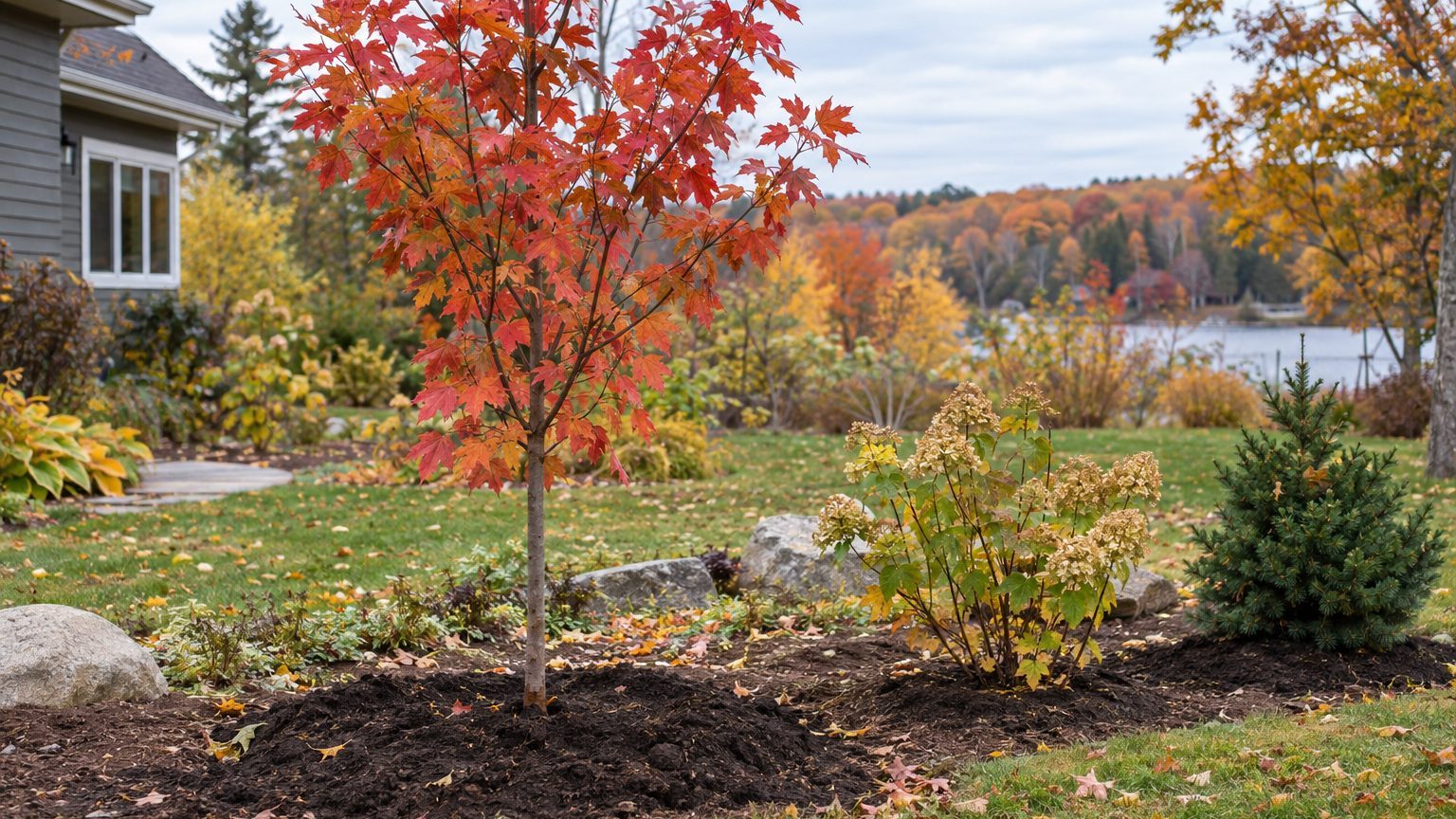

In the Seattle area, the safe target for planting trees and shrubs in fall is October 2 to October 19, which is six weeks before the first fall frost (November 13 to November 30, according to NOAA’s 1991-2020 climate normals). That is the cautious deadline, not a hard stop. Western Washington’s coldest-month nights stay above freezing on average, so the soil rarely locks up and planting can run well into winter. East of the Cascades the calendar is shorter and stricter, and those dates do not carry over.
The deadline in Washington
Roots don’t track the air temperature the way leaves do. They keep growing as long as the soil is workable and above freezing, so a newly planted maple can be building root length in December while its branches stand bare. That gap between air and ground is the whole logic of fall planting. Cornell Cooperative Extension puts the rule this way: “Fall is an excellent time for transplanting, provided you get them to their new home at least 6 weeks before the ground freezes, allowing them time to establish roots before winter dormancy.”
Notice what that rule counts from. It’s the day the ground freezes, not the first frost of the air, and the ground freezes later. A New York extension office wrote it, so the six weeks has to be translated for Washington rather than copied onto a calendar.
Western Washington: the numbers
For Seattle, NOAA’s 1991-2020 normals put the first fall frost between November 13 and November 30. That range is the 30-70% probability band for a 32°F freeze, so some years bring frost earlier and some later. Count back six weeks from that range and you get October 2 to October 19, the conservative planting deadline. Treat it as the safe target. The true limit, the ground freezing, usually falls well after it.
In the Seattle area it may never arrive. The mean daily minimum of the coldest month there is 37.1°F (NOAA NCEI Climate Normals, 1991-2020), which stays above freezing. Where that holds, the ground doesn’t freeze, and the six-weeks-before-freeze deadline simply doesn’t apply. Fall, and even winter, is the best time to plant here. The soil is cool but workable, rain does much of the watering, and a new tree doesn’t have to fight summer heat while its roots are still small.
So if you’re reading this in early October, you aren’t late. You’re at the edge of the cautious window and well inside the practical one. The one thing to avoid is treating the mild frost date as a reason to rush: a tree set in the ground in November still needs the same watering attention as one planted in October.
East of the Cascades: a different clock
Eastern Washington is high desert with a far shorter growing season. The Seattle window shouldn’t be applied statewide. The colder part of the state reaches its deadline earlier, so for a yard in the high desert the safe date comes before October 2 to October 19, not after. Work from your own local first fall frost range, which you can look up in First and Last Frost Dates in Washington, and count back from there.
The USDA Plant Hardiness Zone Map (2023 edition, built on 1991-2020 normals) runs from 4a to 9a across the state. That’s a very wide spread, and it is the reason no single Washington date can serve every yard. The Seattle figures above are a reference point for the western lowlands, nothing more.
What to plant late, and what to wait on
Container-grown and balled-and-burlapped plants that are fully hardy in your zone are the safest late plantings. They arrive with an intact root mass, they’ve already been growing in a mix that drains, and fall’s cool soil gives them time to spread roots before spring’s demand for water. Hardy deciduous trees, shrubs that drop their leaves, and most hardy perennials fall in this group.
Hardiness here means one thing: whether a plant survives the cold at all. The coldest-month mean minimum of 37.1°F for Seattle is a mean, not a record low. It tells you the typical winter is gentle, but it says nothing about the rare cold snap. For anything borderline, look at the USDA Plant Hardiness Zone Map, which is built on the average annual extreme minimum, and compare your ZIP code’s zone with what the plant tag says.
| Plant type | Western lowlands (Seattle area) | Colder parts of the state |
|---|---|---|
| Hardy deciduous trees and shrubs, container or balled | Good through fall and into winter | Plant early, ahead of the local first frost range |
| Hardy perennials in containers | Good through fall | Plant early so roots settle before dormancy |
| Borderline-hardy plants | Safer in spring | Wait for spring |
| Evergreens, broadleaf and needled | Fine if planted early and kept moist | Risky late; wait or plant well ahead of frost |
Evergreens are the awkward case. They lose water through their leaves and needles all winter, and a root system only a few weeks old can’t always keep up. In western Washington the soil stays unfrozen, so established roots can still draw water, and the real danger is a dry autumn. In colder parts, frozen soil shuts off the supply while sun and wind keep pulling moisture out, which is how evergreens end up brown by March.
The rule for borderline plants is simple: wait until spring for anything rated close to your zone’s limit. A plant that would be fine in an average winter can still be lost in a hard one, and a spring planting gives it a full season of roots first. More on timing and technique is in Planting and Caring for Trees, Shrubs and Perennials.
Watering and mulch until the ground freezes
A new tree’s first winter is a root project. The top is dormant, so nothing above ground needs feeding, but the roots keep working in cool soil, reaching out from the original root ball. Every bit of energy the tree spent on leaves last summer is now being redirected downward. If the soil dries out during that window, the roots stop and the tree starts spring with a smaller reach than it should have.
Water deeply and slowly, so moisture soaks below the surface instead of running off. A short daily sprinkle wets the top inch and does little else. In colder parts of Washington, keep watering until the ground freezes. In the western lowlands, where it doesn’t freeze, keep watering through any dry stretch until steady fall rain takes over, and check again whenever a long dry spell sets in during winter.
Mulch holds that moisture in. NC State Extension’s Gardener Handbook (chapter 11, Woody Ornamentals) says: “A 2-inch to 3-inch layer of mulch suppresses most annual weed seeds and makes it easy to hand-pull any that do germinate.” On trees specifically, it says: “Provide a 3-inch layer of mulch to reduce water loss and maintain uniform soil moisture and temperature around roots.” Two sentences, two purposes, and they land on the same depth. Spread a 2-inch to 3-inch layer in a wide ring over the root zone.
Make it a ring, not a volcano. Mulch piled against the trunk holds constant moisture against the bark, which invites rot, and the extra depth does nothing for the roots. Leave the base of the trunk, where it flares out, visible and clear of mulch. More is not better here, and the depth in the handbook is the ceiling, not a starting point. For the full technique, see Mulching Without Killing the Plant.
What goes wrong
Most fall-planting failures come from a mismatch between the plant and the soil it ends up in.
Where the ground freezes
The first mistake is planting too late for the climate. In the colder parts of the state, the ground reaches freezing earlier than the Seattle numbers suggest, so the October 2 to October 19 range shouldn’t be borrowed. If you’re in a place where the ground locks up early, the same logic is laid out in How Late Can You Plant Trees and Shrubs in Fall in Newfoundland and Labrador?, where the ground freezes much sooner.
Winter burn is the second. Evergreens keep losing water through winter, and where the ground is frozen the roots can’t replace it. The needles or leaves turn brown, usually along the side facing wind and sun. Heaving is the third. Where soil freezes and thaws repeatedly, shallow root balls can be pushed up out of the ground, exposing roots. Both problems belong to places where the ground freezes. They aren’t something to plan around in the Seattle lowlands, where it doesn’t.
Everywhere: a dry fall
The last mistake can happen anywhere in the state. Fall often brings rain, but some autumns stay dry, and a tree planted a few weeks earlier hasn’t built the roots to ride it out. Water a new planting through any dry stretch until steady rain returns. In western Washington the opposite also happens: a planting hole in heavy soil can hold standing water through a wet winter, which roots tolerate poorly. A hole that drains is as important as one that is watered.
Common questions
Can I plant a tree in the Seattle area in November?
Yes, in most years. The first fall frost there falls between November 13 and November 30 (NOAA NCEI 1991-2020 normals), but the coldest-month mean minimum is 37.1°F, above freezing, so the ground generally stays workable. The conservative deadline of October 2 to October 19 is a safe target, not a ceiling. Water during dry spells and mulch the ring.
Does the October window apply east of the Cascades?
No. The October 2 to October 19 range comes from Seattle’s frost dates and fits the western lowlands. East of the Cascades is high desert with a much shorter season, and the colder parts of the state reach their limit earlier. Count six weeks back from your own first fall frost range, and browse the other Washington guides for local timing.
Does a mild frost date mean I can plant earlier in spring?
Not by much. Western Washington’s frost dates are mild, but cold, wet soil and low light hold spring crops back well past the last freeze. The mild climate widens the fall and winter planting window for trees and shrubs. It doesn’t hurry spring.
What hardiness zone is Washington?
The USDA Plant Hardiness Zone Map (2023) lists Washington as 4a to 9a, a range across the whole state, so look up your own ZIP code rather than relying on one zone. The Seattle coldest-month mean minimum of 37.1°F is a different measure from the zone map, which is built on the average annual extreme minimum.