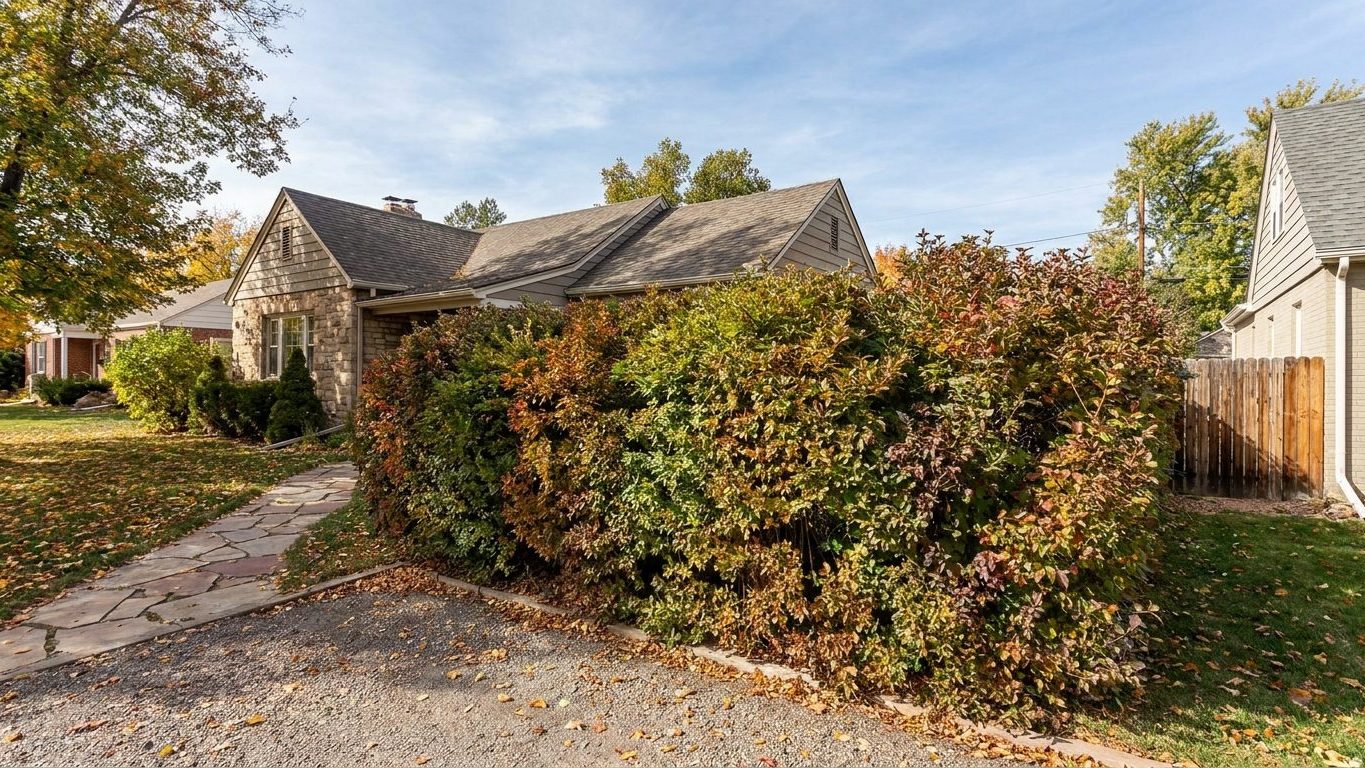

Washington doesn’t set a maximum hedge height anywhere in state law. The Revised Code of Washington has plenty to say about property lines, boundary disputes, and nuisance claims, but nothing that tells a homeowner in Spokane or Tacoma how tall a laurel hedge can legally grow. That number, if it exists at all, lives in your city’s municipal code, and it can be completely different three miles away in the next town.
There is no Washington hedge height law
Search “hedge height law Washington” and you’ll land on pages that quote a single number as if it applied statewide. It doesn’t. There’s no chapter in the Revised Code of Washington that regulates how tall a hedge, shrub row, or living fence may grow on residential property. Height limits for fences, hedges, and similar screening come from municipal ordinance, decided city by city (and sometimes county by county in unincorporated areas).
This is not unique to Washington. No state in the country has a statewide hedge height statute. Height control is a land-use function, and land use is handled locally almost everywhere in the U.S. A city council in one county can cap front-yard hedges at a certain height for sightline safety, while an unincorporated area twenty minutes away has no hedge rule at all, only a general fence ordinance that may or may not even mention living plants.
That local variation is the whole story. Two houses on the same rural road, one inside city limits and one in the county, can be governed by entirely different rulebooks. One might have a documented sight-triangle rule near driveways; the other might have nothing written down beyond a general nuisance clause that only kicks in if a neighbor complains and a hedge is provably blocking light, view, or access.
Why aggregator sites get this wrong
A lot of the pages ranking for this exact question name a single figure, something like “6 feet” or “8 feet,” and present it as Washington’s rule. Usually what happened is a writer found one city’s fence ordinance, or borrowed a number from a completely different state, and generalized it. There is no source that can honestly attribute a statewide hedge height limit to Washington, because none exists. If a page doesn’t name the specific city and link to that city’s actual code, treat the number as unverified.
The honest answer to “how high can my hedge be” is: it depends entirely on where your property sits, and you can find that answer in about ten minutes using the method below.
How to find the rule that actually applies to you
Municipal codes are public documents, and most Washington cities publish theirs online through one of three services: Municode (library.municode.com), American Legal Publishing (codelibrary.amlegal.com), or eCode360. If you don’t know which one your city uses, a search for “[your city name] municipal code” will get you there almost every time, since these platforms are built for public search engines to index.
Once you’re in the code, don’t search for “hedge” first. Head straight to the zoning chapter (sometimes labeled “Land Use” or “Development Code”). Inside that chapter, look for a section called “Fences,” “Accessory Structures,” or occasionally “Screening and Landscaping.” Height limits for yard barriers, whether wood, chain-link, or living, usually sit in one of those three spots. Some codes separate front-yard limits from side- and rear-yard limits, so read the whole section rather than the first number you see.
The word matters more than you’d think
Here’s the detail that trips up most homeowners: a hedge is often not legally a “fence” at all. Many municipal codes define “fence” narrowly, as a built structure of wood, metal, or vinyl, and either regulate hedges under a separate definition (like “vegetative screen” or “living fence”) or don’t mention them by name at all. If your code’s fence section never uses the word “hedge,” “vegetation,” “planting,” or “living,” don’t assume the fence height limit applies to your boxwood row. It might, if the code defines “fence” broadly enough to include plantings, but you need to check the definitions section to know for sure, not just the height table.
If the zoning chapter genuinely has nothing on hedges, your next stop is the city’s planning or code enforcement department. A quick phone call, or an email through the city’s contact form, asking “does our municipal code regulate the height of hedges, and if so under what section” will usually get you a straight answer faster than more searching. Planning staff field this question often enough that most have the citation memorized.
One more layer worth checking before you conclude there’s no rule at all: homeowners association covenants, if you’re in a planned development, frequently impose hedge and fence limits stricter than anything the city requires. Those are private contracts, not law, but they’re enforceable against you all the same, and they don’t show up in any municipal code search.
The branches that cross the line
Even in places with no hedge height rule on the books, one limit shows up almost everywhere: the sight triangle. At intersections and at driveway entrances, most municipal codes restrict anything, fence, hedge, parked trailer, that would block a driver’s line of sight, and that restriction is typically far lower than any general yard height limit. A city might allow an 8-foot hedge along a side yard but cap growth to something like 3 feet within a triangular zone measured back from a corner or driveway apron. This rule exists for public safety reasons, and it’s one of the few pieces of hedge regulation you’ll find consistently across Washington cities, even ones with otherwise thin fence codes. If your hedge sits anywhere near a corner lot, a shared driveway, or an alley entrance, check for a sight-triangle or “clear vision area” clause specifically, since it can override a more generous general height limit.
Then there’s the question that generates the most neighbor disputes: what happens when a hedge grows over the property line. The general principle, which comes from long-standing case law rather than a Washington statute, is that a neighbor whose property is being encroached on by overhanging branches or invasive roots may trim the growth back, at their own expense, up to the boundary line and no further. They generally cannot cross onto your side of the line to cut, and they cannot cut so aggressively that they kill the plant, since that can cross into a separate damage claim. This is a widely recognized common-law principle across many states, not a specific Washington statute, and the exact boundaries of what’s “reasonable” trimming can vary by jurisdiction and by the facts of the case.
What this means practically: if your neighbor’s hedge is dropping branches over your fence, you likely have the right to prune back to the line yourself, but not to reach onto their property, remove the whole shrub, or demand they replace it. And if you’re the one whose hedge is being cut back by a neighbor, the same logic protects you from having it hacked well past the boundary or killed outright. When a dispute gets heated, especially over an older, valuable hedge, that’s the point to stop relying on general principles and get advice from a Washington attorney who handles property line disputes, since the details of your specific situation (survey lines, easements, how long the hedge has been there) can shift the outcome.
What to check before you plant
The best time to learn your city’s hedge rules is before you put anything in the ground, not after a neighbor complains or a city inspector leaves a notice on your door. A short checklist covers most of what actually matters:
- Pull your city’s zoning code from Municode, American Legal Publishing, or eCode360, and read the fence and accessory structure sections in full, not just the first height number you find.
- Confirm whether your code’s definition of “fence” includes living plantings, or whether hedges fall under a separate, possibly unwritten, category.
- Locate the sight-triangle or clear-vision-area rule if your planting site is anywhere near a corner, driveway, or alley, since it’s usually stricter than the general limit.
- Check your HOA covenants, if you have one, since private restrictions often beat the city’s own rule in terms of strictness.
- Call your city’s planning or code enforcement department directly if the code is ambiguous. This is a common enough question that staff can usually answer in one phone call.
Choosing a species matters here too, though not because of any legal height cap. A hedge that grows fast and tall, arborvitae or Leyland cypress, for example, can outpace what you think you’re planting for well within a decade, at which point you may find yourself right up against a limit you didn’t know existed, or in a pruning standoff with a neighbor. Slower-growing, more easily shaped species give you more room to adjust before hitting whatever local ceiling applies to your address.
And if your city’s code turns out to have no hedge provision at all, don’t read that as a green light for unlimited height. Nuisance law still applies. A hedge that blocks a neighbor’s light, view, or access in a way a court would call unreasonable can still generate a legal claim, even with no specific ordinance on the books. Absence of a rule is not the same as absence of risk.
Common questions
Does Washington State have a maximum hedge height?
No. There is no statewide statute setting a hedge height limit. Height is controlled by individual city or county ordinances, and it varies by location.
Where do I find my city’s hedge or fence height rule?
Search your city’s municipal code on Municode, American Legal Publishing, or eCode360, and look in the zoning chapter under “Fences” or “Accessory Structures.” If nothing turns up, call your city’s planning department directly.
Can my neighbor cut my hedge if it grows over the property line?
Under widely recognized common-law principles, a neighbor can generally trim overhanging branches back to the boundary line at their own expense, but not cross onto your property or kill the plant. This varies by jurisdiction and isn’t a specific Washington statute, so check with a local attorney for a contested case.
Is a hedge legally the same as a fence in Washington cities?
Not always. Many municipal codes define “fence” as a built structure and either handle hedges under a separate definition or don’t address them at all. Check your code’s definitions section before assuming a fence height limit applies to your plantings.