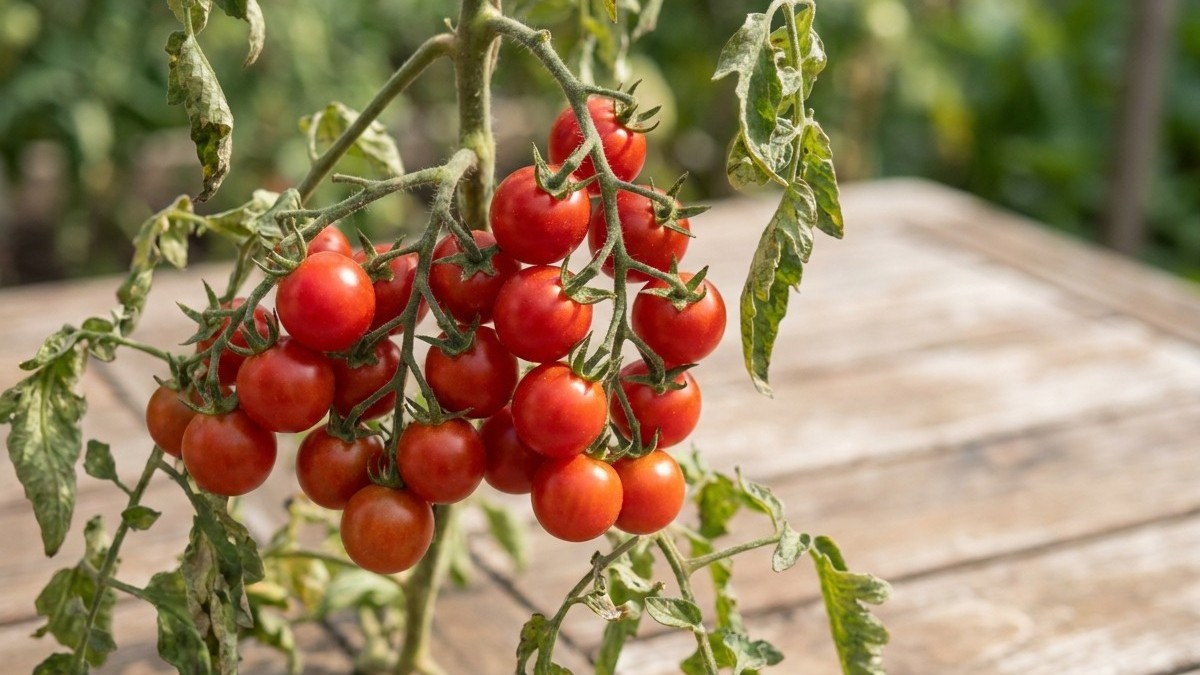

Full-size green tomatoes should come off the vine before the first fall frost hits, and in western Washington that window runs November 13 to November 30 near the Seattle-area station (NOAA NCEI, station USW00024233). Ripe ones get picked whenever they color up. The catch is sorting which green fruit are worth saving, and figuring out how to finish them indoors once the vines come down.
When to pick tomatoes in Washington
The calendar isn’t the trigger here. Frost is. NOAA NCEI’s 1991-2020 climate normals put the first fall freeze at the Seattle-area station somewhere between November 13 and November 30, a 30-70% probability band rather than a fixed date. That spread matters: it means the freeze could land in mid-November one season and skate close to Thanksgiving the next, so gardeners in western Washington’s maritime lowlands need to start watching forecasts, not flipping a page on the wall calendar.
This same station anchors the spring side too, with last frost falling February 27 to March 18. Both windows describe the mild, cloud-buffered climate west of the Cascades, the part of the state where most backyard tomato patches sit. Washington’s USDA hardiness range spans 4a to 9a across the whole territory, and that spread alone tells you the frost dates above don’t travel east. High-desert Washington beyond the Cascades runs shorter, drier, and colder at night, and no comparable freeze-date figures for that region are published here, so treat the November window as a western Washington reference, not a statewide rule.
Reading the plant, not just the date
Before frost forces the issue, ripeness cues do the real work. Look for:
- Color break at the blossom end, a faint pink or yellow tint spreading up from the bottom
- Full size for the variety, since fruit stops growing once it starts coloring
- Slight give when pressed gently, not hard and green-firm
- Glossy, taut skin rather than the dull, matte look of immature fruit
Fruit already showing color can ripen right on the counter in days. Fruit still fully green and firm is the batch that needs a decision before the frost window in that November band closes in.
What to Do With the green ones
Not every green tomato deserves the same treatment. Split them into two piles first. Mature green fruit is full-sized, glossy, and has that faint waxy sheen; it will ripen indoors given time. Immature green fruit is smaller, dull, sometimes still fuzzy at the stem end, and it mostly won’t ripen properly no matter how long it sits. That second pile is better used fried, pickled, or turned into green tomato relish rather than left waiting for a color change that isn’t coming.
Once the sorting is done, harvest strategy comes down to two approaches. Picking individual fruit by hand works when only a portion of the plant is loaded and the rest still has weeks to go. Pulling the whole plant, roots and all, and hanging it upside down in a garage or shed works better when a hard frost is imminent and dozens of fruit are still hanging at various stages. The hanging method lets fruit keep drawing on whatever sugars are left in the vine, which tends to produce better flavor than fruit stripped cold off a dead plant.
Handle for storage, not for looks
Check every fruit before it goes into a box or hangs on a stem. Skip anything with soft spots, cracks, or visible mold, since one bad tomato in a bin of green ones spreads rot fast. Twist rather than yank stems free if picking individually, and avoid stacking fruit deep in a bucket where the ones on the bottom bruise under the weight of the rest. A single layer, even if it takes up more counter or floor space, holds up far better over the following weeks.
Ripening indoors, and how long they keep
Mature green tomatoes ripen off the vine using the same ethylene gas mechanism that ripens them on it. A paper bag with a banana or apple tucked in speeds things along, since both fruits release extra ethylene as they age. Leaving tomatoes loose in a cardboard box, arranged in a single layer and checked every couple of days, works just as well without the bag, just a bit slower.
Room temperature, out of direct sun, gives the best flavor result. A spot near 65 to 70 degrees is typical guidance from land-grant extension programs, though the exact pace varies by fruit size and how far along the color break already was at harvest. Refrigeration is the mistake people make out of habit. Cold temperatures halt the ripening enzymes and also break down the texture, leaving tomatoes mealy even after they eventually color up. Keep them out on a counter or shelf instead, and only refrigerate fruit that’s already fully ripe and needs a few extra days before use.
Checking on progress
Inspect the batch every two to three days rather than letting it sit forgotten in a closet. Pull ripe fruit out as soon as it colors so it isn’t crowding the others or starting to soften past its prime. Any fruit that develops a soft, sunken spot or a moldy patch needs to come out of the batch immediately, since rot spreads to neighboring fruit through direct contact far faster than most people expect.
For guidance tailored to specific storage setups and pest-related fruit damage before harvest, Washington State University Extension maintains region-specific growing resources at extension.wsu.edu.
What goes wrong here
Western Washington’s fall weather works against ripening in a specific way: cloud cover thickens through October and November right as day length drops, and tomatoes ripen slower under weak, diffuse light even before any frost touches them. Gardeners who wait for a sunny stretch to pick can lose the whole window, since sunny stretches get scarce exactly when the frost dates in that November band start approaching.
Dampness compounds the problem once fruit comes indoors. The same maritime humidity that keeps gardens green all summer also encourages mold in storage bins, especially if fruit goes into a container still wet from rain or morning dew. Letting harvested tomatoes air-dry for an hour before boxing them up cuts down on this substantially.
Timing errors run in both directions. Picking too early, before fruit reaches full size, wastes the crop on tomatoes that will sit green and shriveled rather than ripening. Picking too late, after a hard freeze has actually touched the fruit rather than just threatened it, ruins texture inside the tomato even when the skin looks fine, and that fruit turns to mush within days. The safest habit is picking ahead of the forecast rather than reacting to it, since by the time frost damage is visible on the plant, the fruit closest to the ground has usually already been hit.
East of the Cascades, growers are working with a shorter season and drier air, which changes both the frost timeline and the mold risk described above. Specific freeze-date figures for that region aren’t published here, so eastern Washington gardeners should track local forecasts directly rather than borrowing the western Washington window.
Common questions
Can tomatoes ripen after a light frost touches them?
Fruit that only brushed against a light frost, without visible ice damage on the skin, can sometimes still ripen if brought inside quickly and dried off. Fruit with soft, water-soaked patches after frost exposure is already breaking down internally and won’t recover.
Should I pull the whole plant or pick individual tomatoes?
Pull the whole plant and hang it when frost is imminent and many fruit are still unripe at different stages. Pick individually when only a handful of tomatoes need attention and the rest of the plant still has time.
Does eastern Washington have a different frost timeline?
Yes, the high desert east of the Cascades runs a shorter, colder season than the maritime lowlands, though specific freeze-date figures for that region aren’t published in this guide. Check local forecasts rather than applying the western Washington window.
Will refrigerating green tomatoes speed up ripening?
No, cold temperatures slow or stop the ripening process and damage texture. Keep unripe tomatoes at room temperature and only refrigerate fruit that’s already ripe.