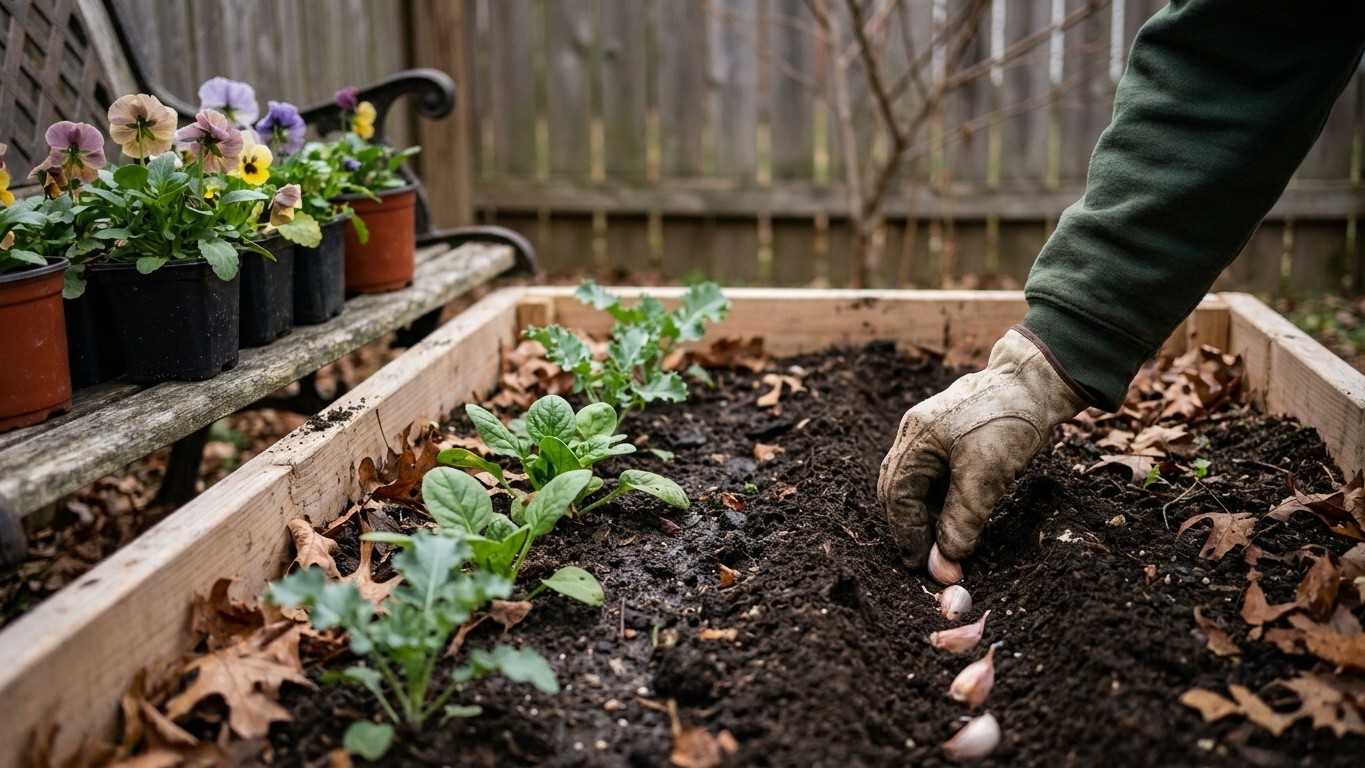

October in Washington still means planting, at least west of the Cascades. With first fall frost running November 13 to November 30 in the Seattle area (NOAA NCEI 1991-2020 Climate Normals, station USW00024233), there are still weeks of workable soil left. Garlic, shallots, hardy greens, cover crops and spring bulbs all go in now. East of the mountains, the window has usually already closed, so check local conditions before you dig.
What goes in the ground in October
The calendar says fall, but the soil doesn’t care about the calendar. What decides whether something belongs in the ground this month is soil temperature, day length and how many weeks are left before that first freeze, not the date on the seed packet. In the maritime lowlands around Puget Sound, Olympia and Bellingham, growers are typically looking at somewhere between six and nine weeks before the first fall frost hits (November 13 to November 30, per NOAA NCEI data for the Seattle station). That’s enough time for a real planting push, just not enough for anything that needs a full summer to mature.
Garlic and shallots are the headline crop this month. Both need eight to nine months in the ground before harvest, and planting now, while soil is still workable and before the heavy rains set in, gives the cloves time to root before winter cold slows them down. Push cloves root-down, about two inches deep, into loose, well-drained soil, and mulch after planting rather than before, so the ground has a chance to warm slightly and the roots get established.
Hardy greens are the second big category: spinach, mache (corn salad), arugula and overwintering varieties of kale and collards can still be direct-sown or set out as transplants. These crops tolerate light frost and, in the mild maritime climate west of the Cascades, often keep producing sparingly right through winter under a cloche or row cover. Fava beans and hardy pea varieties bred for fall sowing are also worth a try where drainage is good, since standing water rather than cold is what actually kills them.
Cover crops belong on this list too. Cereal rye, crimson clover and winter wheat sown now will hold and improve bare beds through the wet season, out-competing weeds and adding organic matter come spring.
East of the Cascades, in the high desert climate around Spokane, Yakima or the Tri-Cities, October soil is often already too cold for anything but garlic, and even that needs to go in on the early side of the month. That region runs on a shorter, drier, more continental season than the maritime west, and a Seattle-based frost window simply doesn’t apply there.
| Region | Typical October conditions | What still goes in |
|---|---|---|
| Western Washington (Puget Sound, coastal) | Mild, wet, several weeks before first frost | Garlic, shallots, hardy greens, cover crops, spring bulbs |
| Eastern Washington (Spokane, Yakima, Tri-Cities) | Colder, drier, frost often already arrived or imminent | Garlic only, planted early in the month, plus bulbs |
What to start under cover
Working backward from the first fall frost is the only arithmetic that matters here. If frost lands in the November 13 to November 30 window, and a crop needs, say, five weeks from transplant to a usable harvest, then anything started under cover in the first half of October still has a reasonable shot at feeding the household before the cold really sets in. A crop needing ten or twelve weeks does not. That’s the whole calculation, and it’s worth redoing for your own zip code rather than trusting a generic date.
Cold frames and unheated hoop houses are where most of the action happens this month. Quick-maturing salad greens, baby lettuce mixes, radishes and mizuna can still be sown under cover for a late-fall or even winter harvest, since the structure buys several degrees of frost protection and cuts wind exposure. Spinach and mache sown under cover now will often sit through winter in a holding pattern, slow but alive, ready to take off again once light returns in late winter.
Indoors, this is also the month for starting spring-flowering bulbs meant for forcing, paperwhites and amaryllis chief among them, since both need a lead time of six to ten weeks before bloom. That timeline runs independent of outdoor frost, which makes it a useful project when the garden itself has gone quiet.
The two ways this goes wrong are predictable. Sow too early under cover and warm early-October days can push seedlings into leggy, rootbound growth before they even get planted out. Sow too late and the shrinking daylight, not the cold, stalls growth entirely, since most leafy crops need a minimum day length to keep producing regardless of temperature.
What is ready to pick
October is one of the fullest harvest months of the year in Washington, on both sides of the mountains. Winter squash and pumpkins come off the vine once the stem has dried and hardened and a fingernail can’t easily pierce the skin; leave them on too long past that point and a hard frost will shorten their storage life fast. Apples and pears are peaking across the state’s orchards, and a ripe apple should separate from the branch with a gentle twist rather than a tug.
Root vegetables, carrots, beets and potatoes, generally improve with a light frost, which converts starches to sugars and sweetens the flavor, so there’s little rush to pull them the moment cold arrives. Leeks and the last of the brassicas, broccoli, cauliflower and cabbage, are also coming ready, often tolerating light frost better than almost anything else in the garden.
Grapes for both eating and wine are being picked across the state’s growing regions this month, judged by taste and sugar rather than by color alone.
For anything already in storage from earlier harvests, this is a good month to check onions, garlic and winter squash for soft spots or sprouting. One soft onion in a mesh bag can start a chain reaction that ruins the rest, so a quick weekly check saves more than it costs in time.
The jobs that matter this month
Garlic planting sits at the top of the list, and it has a real deadline: cloves need enough time to root before the ground turns cold and wet, so pushing this into November in the maritime west, or later than early October east of the mountains, usually means a weaker harvest.
Cleaning up spent summer crops matters more now than it will later. Diseased tomato and squash vines left in place over a wet Pacific Northwest winter give blight and fungal spores a place to overwinter and reinfect next year’s beds. Pull and dispose of anything that looked sickly, rather than composting it.
Cover cropping bare beds is a job that only pays off if it happens now, since cereal rye and crimson clover need several weeks of root growth before winter cold slows them down. Skip this window and those beds sit exposed to rain and weeds all winter instead.
Fall is also the time to plant spring-flowering bulbs, daffodils, tulips and crocus, since they need a cold period in the ground to bloom properly.
On the maintenance side, this is when dormant pruning of fruit trees can begin once leaves drop, when tools benefit from a real cleaning and sharpening before storage, and when it’s worth ordering seed for next season before the more popular varieties sell out. Soil testing now, rather than in spring, gives amendments like lime or compost time to work into the ground over winter. Compost piles built through summer are worth turning one more time before the cold slows the whole process down. Checking beds, cold frames and fencing for storm damage before the wet season is well underway is a small job that avoids a bigger one later.
What not to do in October
The classic mistake this month is misreading a warm afternoon as a sign the season is holding. Air temperature and soil temperature are not the same thing, and by October, soil in Washington is cooling faster than the air feels. Planting warm-season crops, tomatoes, peppers, basil, squash starts, into that cooling soil almost always ends in stalled growth or rot, regardless of how mild the week feels.
Uncovering hardy crops after a mild stretch is the second common error. A few sunny days can tempt gardeners to pull row covers off overwintering greens or newly planted garlic, but the protection is there for the freeze that follows the warm spell, not for the warm spell itself. Leave it on.
Nitrogen-heavy feeding is also poorly timed this month. Nitrogen pushes soft, leafy growth that has no time to harden off before frost arrives, leaving plants more vulnerable to cold damage than if they’d been left alone. If anything, a low-nitrogen, phosphorus-and-potassium-leaning feed suits fall-planted garlic and overwintering crops better.
Finally, waiting too long to bring in winter squash and tender storage crops is a risk not worth taking. A single hard freeze can soften squash skins and shorten their storage life dramatically, even if the rest of the plant looks fine.
Checking this against your own county
A statewide October is a starting point, not an instruction. Washington’s geography swings from marine-moderated lowlands around Puget Sound to high desert east of the Cascades to mountain valleys with their own frost pockets, and elevation alone can shift a frost date by weeks in either direction. The NOAA frost windows cited here come from a station in the Seattle area; a garden in Wenatchee, Spokane or up in the foothills is working with a different climate entirely.
Before finalizing a fall planting plan, check current conditions and local guidance through Washington State University Extension, which maintains county-specific resources and planting guidance tuned to the state’s varied growing regions.
Common questions
Is it too late to plant garlic in October in Washington?
No. October is generally considered the prime garlic-planting window west of the Cascades, giving cloves time to root before the ground turns cold and wet. East of the mountains, early October is safer than late October.
Can I still start a vegetable garden in October?
Only with hardy, fast-maturing crops. Quick greens, radishes and garlic can still go in; anything needing a long growing season will run out of daylight and warmth before it matures.
What USDA hardiness zone is Washington State?
Washington spans USDA Plant Hardiness Zones 4a to 9a, according to the USDA Plant Hardiness Zone Map. That’s a wide range across one state, so a zone-based recommendation should be checked against your specific location rather than the state average.
Do I need to cover my plants if frost is forecast in October?
For anything not frost-hardy, yes. Row covers or cloches make a meaningful difference for tender crops still in the ground, while garlic, hardy greens and cover crops generally don’t need it at this stage of the season.