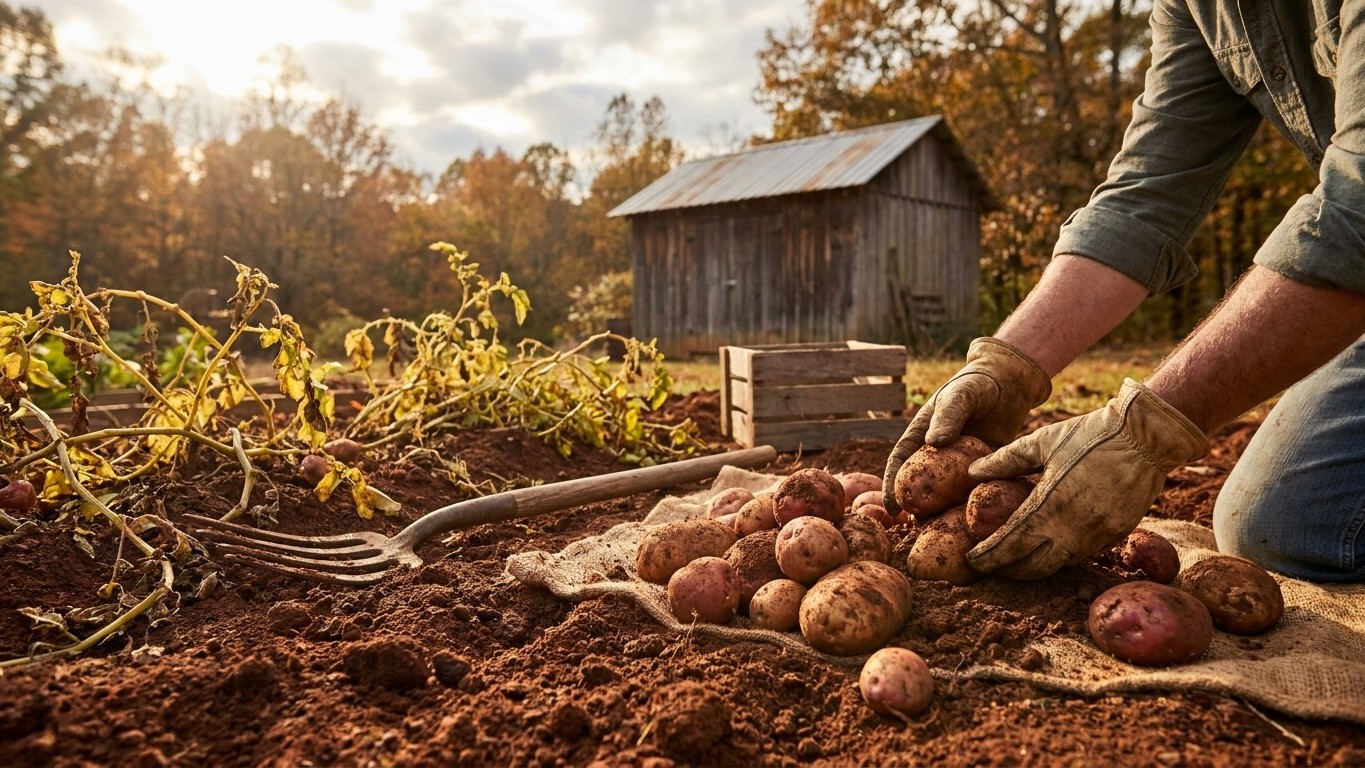

In western Washington, potatoes typically come out of the ground before the first fall frost, which arrives sometime between November 13 and November 30 depending on the year. That’s a mild, late window compared to most of the country. But the mean minimum temperature of the coldest month here runs 37.1 F, close enough to the storage target that an unheated space can’t be trusted without a second look. Where the crop cures and where it spends winter depends on which building you actually have.
The short answer
Two numbers set the calendar and the risk here. The first fall frost lands between November 13 and November 30, based on NOAA’s 1991-2020 climate normals for the Seattle reference station. That’s late enough that most home gardeners can leave potatoes in the ground well into fall without worrying about a freeze cracking the soil or damaging tubers left in place. Vines will die back on their own timeline; frost isn’t usually the thing forcing the dig.
The second number matters more once the crop is out of the ground. The mean minimum temperature of the coldest month sits at 37.1 F. That’s an average of nightly lows across the coldest stretch of winter, not a floor. On an average night in that month, temperatures dip to around 37 F, but averages hide the tails: some nights run colder, some milder. An unheated garage or shed that isn’t insulated tracks outdoor air closely, which means it can slide below freezing on the sharper cold snaps even in a season where the norm stays mild.
That distinction is the whole story for storage here. A space with a mean nightly low of 37.1 F sounds close to the 40-45 F range that potatoes want, and some winters it will hold there without help. But “close” isn’t the same as reliable, and a single hard freeze in an uninsulated structure ruins a bin of potatoes as completely as a whole season of neglect. The fix isn’t complicated: a basement, an insulated closet, or a structure with some thermal mass buffers those swings far better than a bare wood shed with a single wall between the potatoes and the outside air.
One more note on geography: these figures come from the Seattle reference station and describe the mild, maritime climate west of the Cascades. Eastern Washington is high desert country with a shorter growing season and colder winter minimums, and the frost window and storage math there look different. Don’t apply a coastal harvest date to a Spokane garden, or the reverse.
Curing, and where
Before potatoes go into long-term storage, they need to cure. Utah State University Extension recommends 55-60 F with high humidity for 2 to 3 weeks, a period that lets cuts and bruises from digging seal over and lets the skin toughen up so the tuber doesn’t lose moisture or let in rot organisms once it’s stacked in a bin. Skipping this step is the single most common reason a fall harvest starts sprouting or shriveling weeks before it should.
In western Washington, the window for curing lands right as fall is cooling off, which means the space you choose has to be picked with the season already in mind, not left to chance.
- Dig and let the tubers sit exposed for an hour or two in a shaded spot, never in direct sun, so surface moisture can dry before they’re moved indoors.
- Brush off loose soil without washing the tubers; washing invites rot during the curing period.
- Move them to a space holding 55-60 F. Early in the harvest season, a shaded porch or an open garage often lands in that range during the day, but as the calendar moves toward that November frost window, outdoor-adjacent spaces cool faster than the target allows.
- Choose a basement or an interior room over an unheated porch once nights start dropping, since a basement’s mass holds warmth and humidity far more evenly than a space with outside walls.
- Keep the space dark and humid for the full 2 to 3 weeks, checking that airflow isn’t drying the tubers out faster than they can heal.
- Sort before storage, setting aside anything soft, cut, or showing green skin, since those tubers won’t hold through winter regardless of how well the rest of the batch cured.
A shaded porch works for the first half of the curing window in most falls here, but as temperatures fall toward that November frost date, it stops holding 55-60 F reliably. A basement or an interior closet away from exterior walls tends to be the more dependable choice for the back half of curing, and it’s the space most homes in this region actually have available.
Storing through this winter
Once cured, potatoes want a dark space held at 40-45 F, according to Utah State University Extension, or 38 F at 95 percent humidity per the University of Maine Cooperative Extension. Both ranges sit close together, and both depend on a space that doesn’t swing wildly with the weather outside.
Here’s where the coldest month’s mean minimum of 37.1 F becomes the deciding factor. A basement, especially one below grade, is buffered by the surrounding soil and tends to run warmer and steadier than outdoor air, often landing right in that 40-45 F band without any added insulation. A detached, uninsulated garage or shed is a different story. Its indoor temperature tracks outdoor swings closely, and since 37.1 F is only the mean, colder nights within that month push well below freezing. A bin of potatoes sitting against an exterior wall in that kind of space can freeze solid on a night the season’s average would suggest is fine.
The practical answer for most homes in this climate is a basement, a root cellar if one exists, or an insulated interior closet, in that order of preference. If a garage or shed is the only option, moving the storage container away from exterior walls and adding insulation (an old blanket, a foam layer, a straw bed under and around the bin) closes much of the gap between what the space would otherwise do and what the potatoes need. Checking the bin during any hard cold snap, rather than assuming the season’s mild average will hold, catches a freeze before it costs the whole harvest.
Darkness matters as much as temperature. Light exposure, even low household light, triggers greening and a bitter compound called solanine building up just under the skin. A cardboard box with a loose lid, or a bin tucked into a dark corner of the basement, handles this easily; a shelf near a window does not.
What goes wrong here
- Curing space that’s already too cold by the time the crop comes out of the ground. As harvest stretches toward the November frost window, a porch or garage that worked fine in early fall drops below the 55-60 F cure target. Move curing indoors to a basement or interior room once outdoor lows start falling.
- An unheated storage space that freezes on the coldest nights of the season. The 37.1 F mean minimum hides colder individual nights. Insulate the bin, move it off exterior walls, or relocate storage to a basement before the first hard cold snap of winter.
- Rot from tubers stored damp or unsorted. High humidity that’s good for storage also encourages rot if a bruised or cut tuber goes into the bin unnoticed. Sort carefully after curing and again partway through winter, pulling any soft or discolored potatoes before they spread rot to the rest.
- Sprouting from a storage space that runs too warm. A heated basement corner near a furnace, or a mudroom that shares warmth with the house, can push past 45 F and start tubers sprouting mid-winter. Check the actual temperature at the storage spot rather than assuming the whole basement reads the same.
- Insect or disease pressure from soil-borne pests during the growing season showing up as damaged tubers at harvest, which then fail in storage no matter how well they’re cured. An appropriate insecticide or appropriate fungicide applied during the growing season, following label directions, reduces this risk before it ever reaches the storage bin.
Common questions
Can potatoes stay in the ground past the first fall frost here?
Vines die back with cooling weather regardless of frost, and a light frost on foliage doesn’t harm tubers underground. But leaving them in cold, wet soil for weeks risks rot, so digging soon after vines die back is safer than waiting for the season’s last possible day.
Is a garage good enough for winter storage in western Washington?
Sometimes, but not reliably. An uninsulated garage tracks outdoor temperature closely, and the coldest month’s mean minimum of 37.1 F means individual nights can dip well below freezing. Insulating the bin or choosing a basement instead removes the guesswork.
What temperature actually ruins stored potatoes?
Freezing temperatures damage the tubers directly, while anything consistently above roughly 45 F encourages sprouting. The target ranges published by Utah State University Extension (40-45 F) and the University of Maine Cooperative Extension (38 F at 95 percent humidity) both sit in that narrow band above freezing and below sprouting temperatures.
Does curing matter if the potatoes are going straight into a cool basement?
Yes. Curing seals over cuts and toughens skin regardless of where the potatoes end up afterward. Skipping it and moving straight to cold storage still leaves the tubers vulnerable to moisture loss and rot organisms entering through unhealed spots.