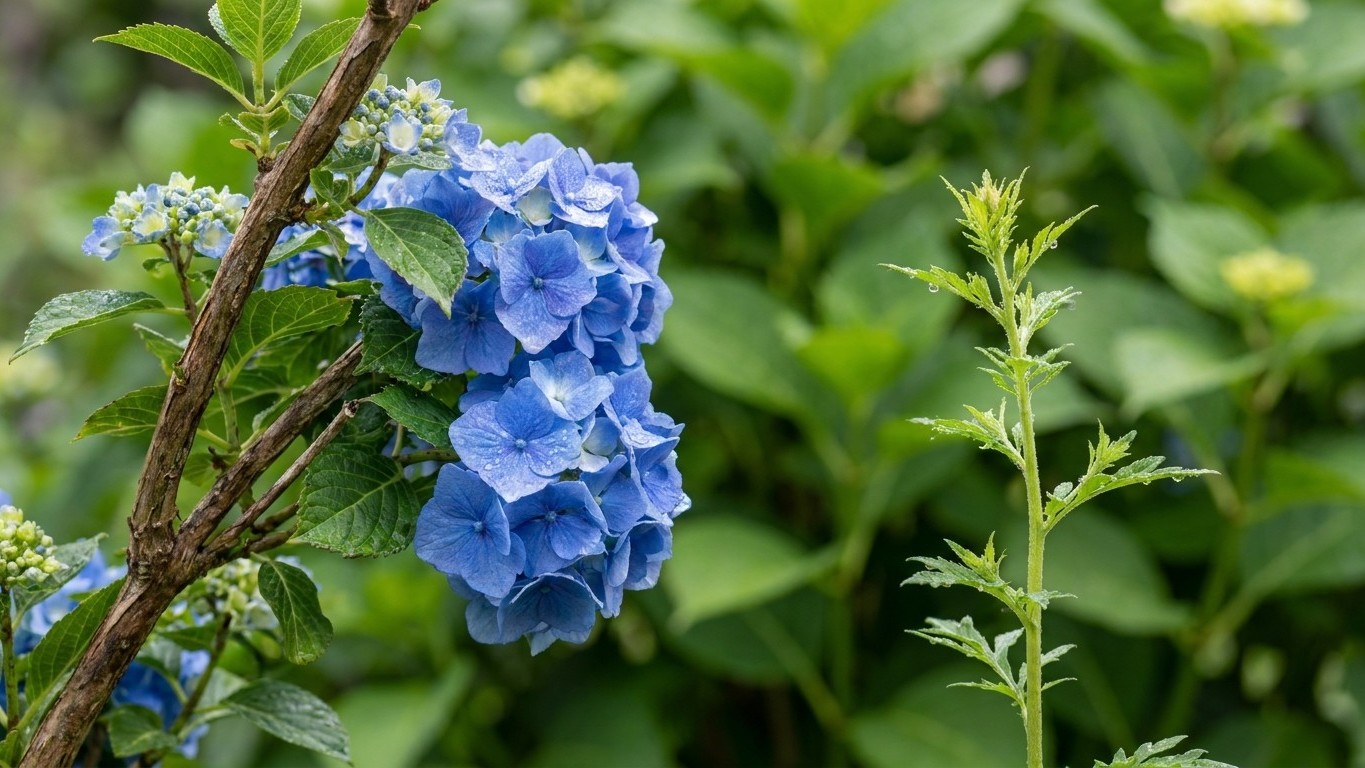

A common kind of hydrangea damage in West Virginia shows up in April, when a warm March has pushed buds open and a late freeze catches them. Winter protection here has two jobs: insulating the root crown and stems through the cold months, and keeping flower buds from waking too early. How much your shrub needs depends mostly on whether it blooms on old wood or new wood. For planting and care through the rest of the year, see growing hydrangeas in West Virginia.
What this comes down to in West Virginia

Put protection on after the first hard frosts, which at the Charleston reference station fall between October 21 and October 31, and keep it ready until the last spring frost window of April 9 to April 23 has passed. Both ranges come from NOAA NCEI’s most recent 30-year Climate Normals for Charleston, where they mark the dates on which a 32 F freeze has a 30 to 70 percent chance of occurring.
Charleston sits in a river valley, so higher ground across the state freezes noticeably earlier in fall. The same is true in spring, when cold air lingers on ridges and in hollows well after the valley floor has warmed. Treat the Charleston dates as a starting point and shift them toward the earlier side of the fall range if you garden on a hill.
The 2023 USDA Plant Hardiness Zone Map puts West Virginia in zones 5b to 7a. That system rests on a single variable, the average annual extreme minimum temperature, so it tells you whether stems can survive the coldest night of a typical year. It says nothing about a freeze after buds have swollen. A bigleaf hydrangea rated for zone 6 can lose many or all of its flower buds in a cold zone 6 winter, because its buds sit exposed on last year’s stems all winter.
That is why the wood a hydrangea blooms on sorts the species into groups that need very different effort:
| Type | Flower buds form on | Protection worth the effort |
|---|---|---|
| Bigleaf (Hydrangea macrophylla) | Old wood; reblooming types such as Endless Summer also bloom on new wood | Mulch plus a leaf-filled cage in colder spots |
| Mountain (Hydrangea serrata) | Old wood | Mulch and shelter from wind |
| Oakleaf (Hydrangea quercifolia) | Old wood | Mulch and a spot out of the wind |
| Panicle (Hydrangea paniculata), such as Limelight | New wood | Mulch over the roots is enough |
| Smooth (Hydrangea arborescens), such as Annabelle | New wood | Mulch; can be cut to the ground in late winter |
Which types come through a cold year at all is covered in Which Hydrangeas Survive a West Virginia Winter. Here the question is how to get the old-wood types to the other side with their buds alive.
Working it out for your own garden
Start with your own first fall frost. Take the Charleston range of October 21 to October 31, then move it earlier if you live on a ridge or in a high valley, since the Charleston dates apply to the river valley only. Do not mulch or cage until the leaves have dropped and the ground has had a few hard frosts. Mulch laid on warm soil gives mice and voles a cozy nest next to the stems, and it keeps the crown wet.
Next, work out the spring side. Count back about two weeks from the last frost window of April 9 to April 23, which gives a range of roughly March 26 to April 9. That is when to start loosening a cage and pulling mulch back from the crown, in stages over a week or so. Keep a bedsheet, burlap, or frost cloth where you can reach it until the window closes, because a shrub that has been uncovered and leafed out can lose its buds in one cold night.
Then match the effort to the type. Take two examples. Annabelle, a smooth hydrangea, flowers on the growth it makes that same spring, so even a killing winter costs it nothing but a late start. A thick mulch over the roots is all it needs. Endless Summer, a bigleaf, carries buds on old stems, but it also blooms on new growth, so a bud loss means a later, lighter show instead of none. A bigleaf that blooms only on old wood has no such backup. For that kind, a wire cage as tall as the shrub, filled with shredded leaves or straw and left open at the top, is a common defense.
How can I tell whether the buds survived?
Wait for the shrub to leaf out before cutting anything. In late April, bend a stem gently and scratch the bark with a fingernail. Green underneath means living tissue, while brown and brittle wood is dead and can be cut back to the first pair of healthy buds. A bigleaf that leafs out but never flowers lost its flower buds and kept its stems. Flower color is a separate matter of soil chemistry, explained in Why Hydrangeas Are Pink in West Virginia, and How to Turn Them Blue.
What changes across the state
West Virginia is a mountainous state, and that is what moves your dates. The Allegheny Plateau and the high ridges of the eastern mountains run colder, with earlier fall freezes, later spring freezes, and deeper snow. The Ohio River valley and the lower southwestern counties are milder. The zone range of 5b to 7a reflects that spread, with the high country at the cold end and the river bottoms at the warm end.
Local shape of the land can matter as much as county. Cold air is heavy and drains downhill on still nights, so a hydrangea at the bottom of a hollow can freeze while one on a slope above it stays warmer. A bed against the south side of a house or a stone wall holds heat longer, which helps in fall but can push buds open too soon in a warm March.
Wind is the other variable. On exposed ridges and open hilltops, winter wind dries out buds and stems, and old-wood bigleafs there often need a burlap windbreak on the windward side as well as a cage. In sheltered valleys and in the eastern mountains with reliable snow, a good snow cover is itself a fine insulator, and stems under it often come through unharmed. Wherever late-winter weather swings between warm and freezing, the timing of uncovering is especially important.
The mistakes this state punishes

One common mistake is uncovering too early. A warm run of March days tempts people to strip the cage, but the last frost window in Charleston does not open until April 9 and runs to April 23, and it opens later on higher ground. Buds that break in March are the ones a mid-April freeze kills. Pull mulch back in stages and keep frost cloth handy.
Mulching too early is the second. Laying thick mulch in September or early October holds warmth and moisture against the crown and invites rodents. Wait for the leaves to fall and the ground to cool, and keep mulch a couple of inches back from the stems at first.
Pruning old-wood types in fall is the third, and it can cost you a whole season of flowers. Cutting a bigleaf, mountain, or oakleaf hydrangea in autumn removes next summer’s flower buds. Leave them alone until the shrub leafs out, then take only what is dead. New-wood types such as Annabelle and Limelight can be cut in late winter without harm.
Feeding late is the fourth. Fertilizer in late summer or fall pushes soft new growth that the first freeze burns, so stop feeding well before the first frost. Wrapping a shrub in plastic is the fifth: it traps moisture, heats up in winter sun, and rots buds. Burlap and open cages let air through.
Last, planting an old-wood bigleaf in an exposed, windy spot and counting on mulch to rescue it. Siting in shelter often does more than any wrapping.
Checking this against your county
The Charleston dates are a starting point for a valley location. Your own yard may freeze earlier or later, depending on elevation and the lay of the land. Your county office of West Virginia University Extension can tell you the typical frost dates and zone for your area, and the extension’s hydrangea guidance covers the rest.
Common questions
When should I put winter protection on hydrangeas in West Virginia?
After leaves have dropped and a few hard frosts have passed. In Charleston the first frost range is October 21 to October 31. Higher elevations freeze earlier, so protect sooner there.
Do panicle and smooth hydrangeas need to be covered?
No. They bloom on new wood, so a layer of mulch over the roots is enough. Even if the stems die back, flowers form on the growth that follows.
When do I take the protection off?
Begin loosening it about two weeks before the last spring frost window of April 9 to April 23, which means roughly March 26 to April 9 in Charleston, and do it in stages. Keep frost cloth ready until the window ends.
Is a hydrangea dead if the stems are bare in April?
Not necessarily. Bigleaf and oakleaf types leaf out late, often into May. Scratch a stem with a fingernail: green tissue means it is alive. Cut only wood that is brown and brittle after new leaves have appeared.