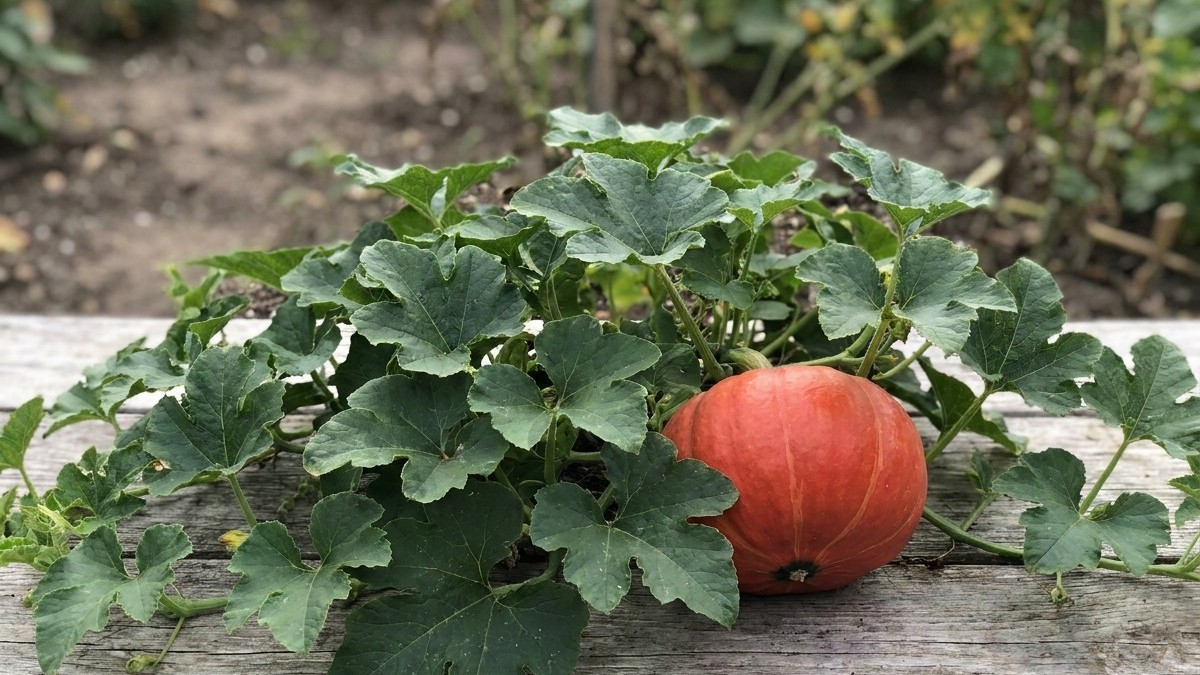

Pumpkin trouble in Nunavut comes mostly from the calendar, with insects a distant second. Squash bugs and cucumber beetles, the two usual pumpkin pests across much of the country, favor warmer summers than the north offers. The mean last spring frost at the Rankin Inlet station is June 19 and the mean first fall frost is September 13, so the vines have little time to spare, and any leaf damage eats into it.
Which pests attack pumpkin in Nunavut
Two insects define pumpkin trouble in most of North America: squash bugs and cucumber beetles. Nunavut has no county extension network, so there is no territory-level pest list to quote for either one. Both are worth knowing by sight in case they arrive on transplants, in soil or in a shipment of garden supplies.
Squash bugs are flat, shield-shaped insects that feed on sap from leaves and runners. Cucumber beetles are small, yellow-green and striped or spotted. They chew seedlings and scar young fruit, and they can spread bacterial wilt from plant to plant. Each insect has its own state-level write-up elsewhere on this site, so the detail is skipped here.
Other garden insects can be set aside. Pests that live on trees, or on cabbage-family crops, have no reason to go near a pumpkin vine because they feed on other hosts. A bug found on a nearby plant is not automatically a pumpkin pest. Check whether it is actually on the vine and actually feeding.
Where the crop is concerned, the clock matters more than the insect list. Utah State University Extension gives the pumpkin rule: fruit matures 45 to 55 days after flowering, and it is harvested with the stem attached before frost. Anything that strips leaves or delays flowers shortens the window those days have to fit into. A pest that would be a nuisance in a long southern summer can decide the harvest in a short one.
The first habit to build is simple. Turn leaves over and look at the undersides every few days while the vines are growing. Eggs, clustered nymphs and feeding beetles show up there long before the top of the plant looks bad.
When each one shows up, and what it does first
The calendar is set by the frost window, and that window is a midpoint. The mean last spring frost of June 19 means frost falls later than that in one year out of two. The mean first fall frost of September 13 means it arrives earlier in one year out of two. Those dates come from the Rankin Inlet station, and districts farther north or on higher ground run weeks behind it. Treat both as the middle of a range and never as a safe date.
Soil comes into it as well. Pumpkins are sown when the soil reaches 65 F, and that moment is not the last frost date, because soil lags the air by weeks. Cucumber beetles go for seedlings, so watch young plants closely. The first sign is small ragged holes in the seed leaves, or a seedling that simply vanishes. When the soil warms up, sowing is when they matter most. The timing question is covered in When to Sow Pumpkins in Nunavut.
Squash bugs usually matter later, once the vines are running and the plants are large. The first sign is a cluster of small, shiny eggs on a leaf underside, often tucked against a vein. After that come yellow flecks that turn brown, then a leaf that droops while its neighbors look fine. On a heavy infestation a whole runner can wilt and blacken.
Flowering is the second pressure point. A flower that opens late leaves little margin for fruit that needs 45 to 55 days to ripen, and a leaf-stripped vine sets fewer flowers. Late in the season, feeding scars on a nearly mature rind do cosmetic harm, and open scars let rot in. A fruit that starts to soften at a scar after a cold night needs checking.
Telling the damage apart from everything else
Many things that look like insect damage are not. A cold snap, dry soil or a gust of wind can mimic a feeding pest almost exactly. Diagnosis comes before any action, and you should avoid assuming a cause from a photo or a description. The table gives the sign that separates each case.
| What you see | Possible causes | What settles it |
|---|---|---|
| Yellow flecks turning brown, leaf droops | Sap-feeding insect, or dry soil | Eggs or insects on the leaf underside point to an insect. Moist soil with a drooping leaf points away from water. |
| Small round holes in seed leaves | Chewing beetles, or slugs | Beetles are seen on the plant in daylight. Slugs leave slime trails and feed at night. |
| Torn leaf edges, big tears | Wind or hail | Tears follow veins and appear after a storm. Insect chewing leaves ragged, scalloped edges. |
| Pale, evenly yellow older leaves | Cold soil or a nutrient shortage | Yellowing is uniform across the plant and no insect is present. |
| White powder on leaves | Fungal disease | The powder rubs off on a finger. Insect damage does not. |
| Wilting at midday that recovers by evening | Heat or water stress | The vine is upright again by morning. A vine that stays down needs a closer look. |
| Scars or soft spots on the rind | Insect feeding, handling damage, or frost injury | Frost injury follows a cold night and shows on the exposed side. Scrapes are shallow and dry. |
One rule decides most of these. A wilted runner that stays wilted needs expert eyes because the cause may be inside the stem. Take a sample or a clear photo to the extension office rather than guessing. When in doubt, do not treat.
What actually works here, and what is a waste of time
Physical barriers do the most good, and timing matters more than any product. Floating row cover laid over seedlings at sowing keeps beetles off during the weeks they do the most damage. Remove it, or open the sides, once female flowers appear, because pumpkins need insects to carry pollen. A vine left covered through flowering sets no fruit. Once the vines run, they outgrow most casual chewing.
Hand work is realistic on a small plot. Check leaf undersides every few days, scrape off egg clusters and crush any nymphs you find. A board or flat piece of cardboard left on the soil overnight draws squash bugs underneath, and they can be collected in the morning. At season’s end, clear the vine debris so adults have nowhere to overwinter.
Calendar choices help too. Sow when the soil reaches 65 F, and do not wait for the first sign of pests to start. Waiting for a pest-free week costs days the fruit needs, and the 45 to 55 days after flowering have to finish before frost. Harvest with the stem attached, then keep the fruit as described in When to Cut Pumpkins in Nunavut, and How Long They Keep. A whole pumpkin keeps for three to six months at 45 to 50 F in a cool, dark place, and the gas from ripening apples, potatoes or tomatoes ages it faster.
Several habits waste effort. Spraying at random, or at the first bug seen, hits pollinators and beneficial insects along with the pest. Planting late to dodge insects shortens the ripening window. Covering the plants through flowering ends fruit set. Pesticides are not part of the plan. Which products are registered where you live is a question for the extension service or the agricultural office that serves your community.
Where to check this for your own county
Nunavut has no counties and no county extension offices, so the closest equivalent is the agricultural or environment office that serves your community, along with any local gardening group. They know which insects have actually been seen nearby. For the growing rules on pumpkins, Utah State University Extension is the reference behind the 45 to 55 day clock and the 65 F sowing guidance.
Pest presence varies inside a territory as much as between regions. Communities far from the Rankin Inlet station run weeks behind its frost dates, and an insect common in one settlement may never have been seen in another. A statewide or national description says little about a single garden, and a neighbor’s experience across town may not apply either.
When you contact an office, bring something concrete. A clear photo of the leaf, the underside and the stem works best, along with the approximate date flowers opened and the date of your last frost. A live insect in a sealed jar helps if the office will take it. The overall growing picture is in Growing Pumpkins in Nunavut.
Your next step is a short one. Write down the date the first female flower opens, add 45 to 55 days, and compare the result with mid-September. That sum tells you whether a pest worry or a calendar worry deserves your attention first.
Common questions
Do squash bugs live in Nunavut?
Nunavut has no extension record of them that a gardener can check. They favor warmer summers than the north usually offers, so look for them on the underside of the leaves and let a local agricultural office confirm the identification.
Can insects stop a pumpkin from ripening before frost?
They can slow it. Fruit needs 45 to 55 days after flowering, and a vine stripped of leaves or flowers loses time it cannot get back. The first fall frost averages September 13 at the Rankin Inlet station, and in one year out of two it arrives earlier.
Should I leave row cover on all season?
No. Remove it or open the sides when female flowers appear, because pollinating insects have to reach them. Covered flowers set no fruit.
How do I tell insect damage from frost injury?
Frost injury follows a cold night and shows up on the exposed side of leaves and fruit, with no insects present. Insect damage comes with eggs, insects or chewed edges. If the cause is unclear, take a photo to your local agricultural office.