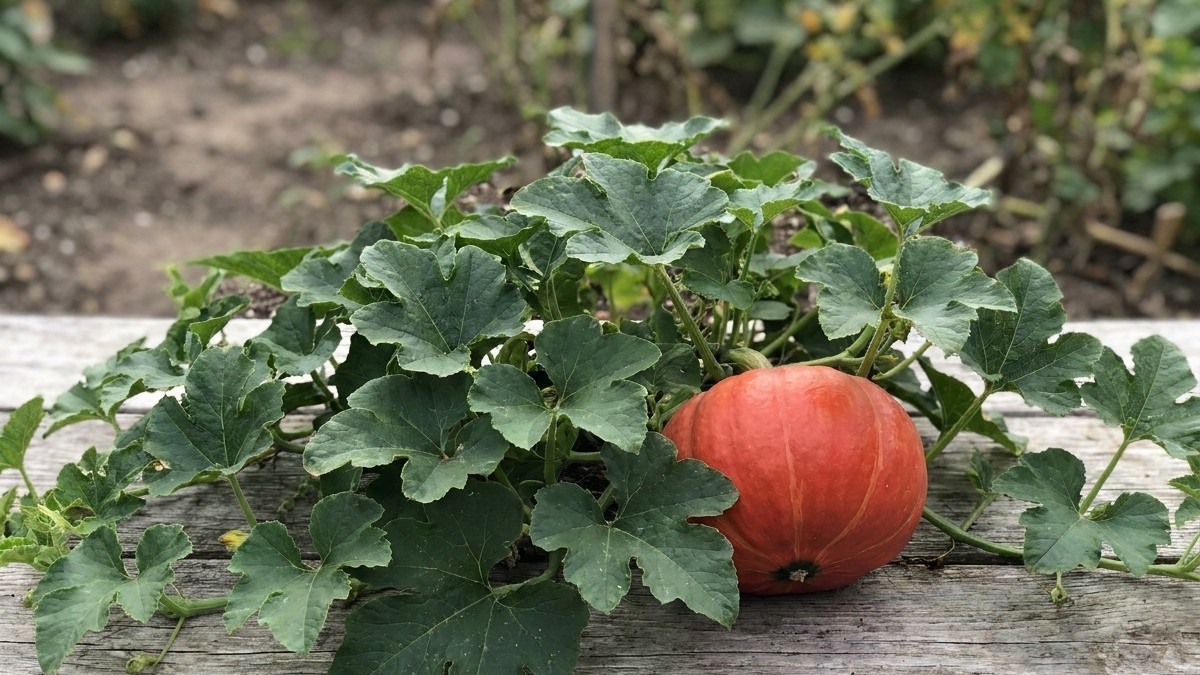

Cut a pumpkin when the rind is hard enough that a fingernail won’t dent it, the color is deep and even, and the stem has dried and turned woody. Do it before a hard freeze, which in the Charleston river valley can arrive as early as mid-October. A whole pumpkin kept cool and dark can last three to six months at best, and a warm porch or a spot next to the fruit bowl cuts that short.
When pumpkins are ready in West Virginia
A ripe pumpkin has a hard rind, one solid color all the way around, and a dry, corky stem. The calendar deadline is the first fall freeze, which at the Charleston reference station falls between October 18 and November 1, and the fruit needs 45 to 55 days after flowering to mature.
Those two frost dates come from the NOAA NCEI 1991-2020 Climate Normals for Charleston (station USW00013866). They mark the band where the odds of a 32 F freeze run between 30 and 70 percent. Charleston sits in a river valley, so gardens on ridges and at higher elevations freeze noticeably earlier. If your patch sits above the valley floor, plan around an earlier deadline and ask your county extension office what the local frost pattern looks like.
The 45 to 55 days start when the flower opens, not when the seed goes in. Seed packets count from sowing, so their number reads longer. That difference matters in the fall. A flower that opens too late gives a green fruit, because the frost arrives before the clock runs out. At the early edge of the frost window, flowers that open after late August are a gamble. At the late edge, the cutoff slides toward mid-September. Anything that sets fruit after that is better treated as a bonus than a crop.
How do you check that a pumpkin is ripe?
Go to the patch a few days before you expect frost and check each fruit against four signs:
- The rind is hard and resists a fingernail pressed into it.
- The color is even, with no green patches, and the underside has darkened where it sat on the ground.
- The stem is dry, woody and ridged.
- The vine has started to yellow and die back.
What if frost is forecast before the fruit is ripe?
Cut anything that has begun to color, leaving the stem attached, and bring it indoors before the freeze. Pumpkins that are mostly orange often finish coloring in a sheltered spot, though a fruit that is still fully green will not improve. Our guide on Will Pumpkins Ripen Before Frost in West Virginia? goes through that decision fruit by fruit.
Planting date is where the whole schedule starts. Pumpkins are sown when the soil reaches 65 F. That is not the same as the last spring frost, which at Charleston falls between April 9 and April 23, because soil lags the air by weeks. A patch sown on the frost date sits in cold ground and grows slowly, which pushes flowering later and shrinks the margin before fall. The full planting sequence is in Growing Pumpkins in West Virginia. Vines stripped by late-season insects also set fruit more slowly, and What Eats Pumpkin in West Virginia, and When covers the squash bugs and cucumber beetles behind that damage.
Keeping them, and for how long
University of Illinois Extension, in its guide Choosing a Pumpkin, says a whole pumpkin keeps for three to six months in a cool, dark location between 45-50 F. That is the best case. Six months describes a sound, fully ripe fruit in ideal conditions, and a pumpkin with a bruise, a broken stem or a warm spell in its history will give out earlier. Treat the low end as the realistic plan and the high end as a bonus.
Storage starts at the cutting. Utah State University Extension advises harvesting with the stem attached and before frost. A stem snapped off leaves an open wound where rot gets in, so use pruners and cut a clean stem rather than twisting or pulling. Lift the pumpkin from underneath. A stem works poorly as a handle, and a cracked one shortens the keeping time. A frozen pumpkin is also finished. Utah State’s guidance is to store them where they will not freeze, and a pumpkin that has frozen turns soft and watery within a few days of thawing.
Which fruit should never sit beside stored pumpkins?
Illinois Extension names three: apples, potatoes and tomatoes. Ripening fruit and vegetables give off a gas that ages a pumpkin faster, which is why the porch next to the apple crate is a bad place for it. The advice is to keep pumpkins away from anything still ripening. A shelf at the other end of the cellar from the potato bin works better than the same shelf beside it.
How long does a carved pumpkin last?
The 45-50 F range and the three-to-six-month figure apply to a whole pumpkin with an intact rind. Once the rind is cut, the flesh is exposed and the pumpkin breaks down much faster. Carve close to the day you want to display it. Do not rely on the storage numbers for a carved fruit, and leave the pumpkins you want to keep uncarved.
Where in the house that actually is
The target of 45-50 F, cool and dark, is colder than most living space and warmer than a freezing garage. A domestic refrigerator runs colder than a pumpkin wants, and a heated room runs warmer. A garage or porch swings with the weather and can drop below freezing on a hard night, then warm up on a sunny October afternoon. The room that comes closest is usually an unheated interior space, such as a basement corner away from the furnace, a cool pantry or a closet on an inside wall of a spare room.
| Spot | How it behaves | Verdict for a whole pumpkin |
|---|---|---|
| Refrigerator | Colder than the 45-50 F range, and the space is small | Too cold, and rarely big enough |
| Heated living space | Warmer than the range, often with bright windows | Fine for a week or two of display, poor for storage |
| Garage or open porch | Swings with the weather and can freeze | Risky unless a thermometer proves otherwise |
| Unheated basement or cellar | Cool, dark and fairly steady | Closest match, if kept away from ripening fruit |
| Cool interior closet or pantry | Steadier than a garage, often near the range | Good second choice |
Every house is different, and a basement beside a furnace duct can run warm even in winter. Put a thermometer in the spot for a few days before you commit the pumpkins, and a min-max model is better still because it records the overnight low and the afternoon high. If the low dips toward freezing, the pumpkins will not make it, and if the high sits well above 50 F, expect them to age faster than the three-to-six-month window suggests.
Once the pumpkins are in, check them every week or two. Pick out any with a soft spot, a leak or mold, and use them first, because one rotting fruit can start trouble in its neighbors. Lay them in a single layer on a shelf, cardboard or a dry board, and leave a little air space between them. Avoid bare concrete in a damp cellar, where moisture collects under the rind.
Common questions
When should I cut pumpkins in West Virginia?
Cut them when the rind resists a fingernail, the color is solid and the stem is dry, and always before the first freeze. At the Charleston reference station that freeze arrives between October 18 and November 1, and higher elevations freeze earlier.
Do the 45 to 55 days count from planting?
No. Utah State University Extension counts them from flowering. The seed goes in when the soil reaches 65 F, and the flower opens some time after that, so the fruit clock starts later than the planting date.
How long do whole pumpkins keep after cutting?
University of Illinois Extension gives three to six months in a cool, dark location between 45-50 F. That is the maximum under good conditions, and a bruised fruit or a warm room will bring it down.
Can I keep pumpkins in the garage?
Only if a thermometer shows the spot stays above freezing and close to the 45-50 F range. A garage that swings with the weather can freeze a pumpkin on a cold night, so check the low before you rely on it.