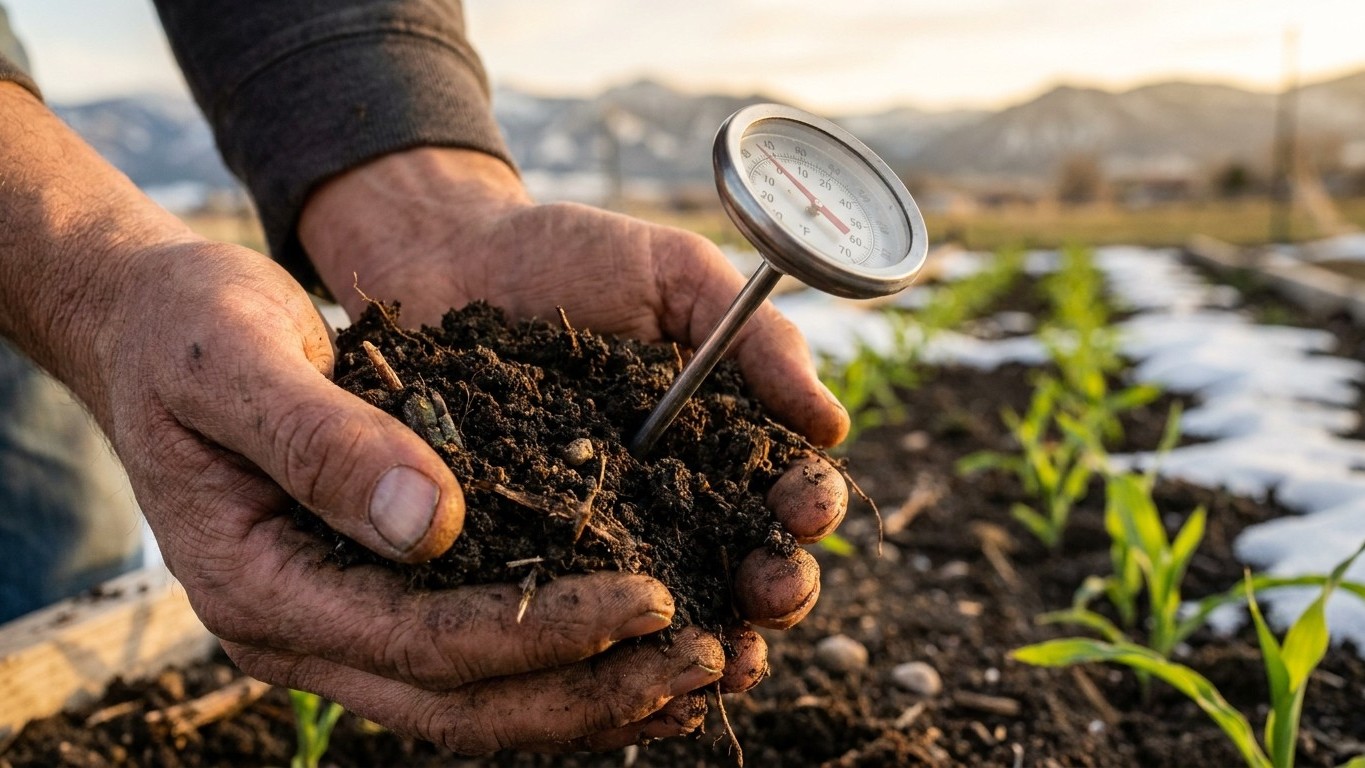

Will Sweet Corn Ripen in West Virginia? The answer is yes for most of the state’s valley gardens, though the calendar that decides it isn’t the one gardeners usually check. Soil temperature, not frost, sets the planting date, and that number lags weeks behind the last freeze. Once soil clears 60°F, sweet corn needs 60 to 90 days to reach harvest before autumn’s first freeze shuts the season down. In the Kanawha Valley, that math works with room to spare. Higher up the state, the margin gets tighter fast.
The short answer
Corn seed doesn’t respond to frost dates the way tomatoes or peppers do. It responds to soil temperature, and that threshold sits at 60°F. The problem is that soil doesn’t warm on the same schedule as the air. Frost can be long gone and the ground still too cold for a kernel to sprout without rotting first. That gap between “frost is over” and “soil is warm enough” is where a lot of early plantings fail before they ever break the surface, which is why knowing When to Sow Sweet Corn in West Virginia matters more than watching the frost calendar alone.
Around the reference station near Charleston, NOAA’s 1991-2020 Climate Normals put the last spring frost somewhere between April 9 and April 23. That’s the frost date. The soil-warming date comes later, and how much later depends on the spring you get. Charleston sits in a river valley, which tends to warm faster than higher ground nearby, but the exact week soil clears 60°F isn’t something climate normals track the way frost dates are tracked.
What the same data source does give is the other end of the season: the first fall frost, arriving between October 18 and November 1 in that valley. Stack the two together and the usable window, from a soil-warm planting date to that first fall freeze, runs wide. Even after losing several weeks to the soil lag, there’s still comfortably more than 90 days left on the clock before frost returns. That’s the whole range sweet corn needs, with slack left over.
One more number worth knowing: the same Charleston station averages 16 days a year at 90°F or hotter. That’s not a heat wave count, it’s a baseline. It tells you how much water demand and heat stress to expect once plants are up and growing, which matters more for irrigation planning than for whether the crop fits the season. The season fits. The heat load is what you manage once it does.
Elevation changes the picture. The Kanawha Valley numbers above describe a lower-elevation river valley. Gardens sitting higher across the state see frost arrive earlier in fall and linger later in spring, which shrinks the window from both ends at once. The short answer for the valley is a comfortable yes. The short answer for a mountain garden is “check your own numbers before you commit to a slow variety.”
Does a late variety fit here?
“Late” in sweet corn terms doesn’t mean planted late, it means slow to mature, needing more days between planting and harvest than a fast type. Whether a late variety fits depends entirely on how much runway sits between soil-warm planting and first fall frost, and that runway varies across the state even though the frost data above describes one valley.
A 60-day variety
A 60-day sweet corn is the fast end of the range, the kind bred for short seasons or gardeners who want an early harvest before the slower types come in. Planted once soil clears 60°F, it needs to be picked well before the first fall frost hits October 18 through November 1 in the valley. Given how wide that window runs, a 60-day type finishes with a month or more of slack left on the calendar. That slack is useful: it covers a late, cool spring without costing the harvest, and it leaves room to try a second, staggered planting a few weeks after the first for a longer picking season instead of one big harvest all at once.
A 90-day variety
A 90-day sweet corn sits at the far, slow edge of what’s sold as sweet corn, closer to what long, hot growing regions plant. In the Kanawha Valley, it still fits. Ninety days from a soil-warm planting date lands well before even the earliest fall frost date in that stretch of the state. The catch isn’t the calendar in the valley, it’s the mountains. Higher elevations see frost days arrive earlier in autumn than the valley numbers above show, and a garden sitting a few thousand feet higher may simply not have 90 clear days available. Where elevation is a factor, don’t assume the slow variety fits. Check it against your own county’s frost pattern before planting it, because the valley numbers won’t cover a ridge-top garden.
What goes wrong here
Three failures show up again and again in West Virginia sweet corn patches, and only two of them come from the climate.
- Soil sown too cold. Planting on the calendar date instead of the soil reading is the single most common mistake. Seed sitting in cold, wet ground rots before it sprouts, or comes up weak and uneven. The remedy is a soil thermometer, not a date circled on a calendar: wait until the ground itself clears 60°F, even if that means planting well after the last frost has passed.
- A variety too late for the season. A 90-day type planted in a high-elevation garden with a short frost-free stretch can run out of season before the ears fill out. The remedy is matching the variety’s days-to-maturity to the actual frost window at that elevation, not to the valley numbers a neighbor twenty miles away might be using.
- Sweetness lost, and this one has nothing to do with weather. Sweet corn comes in different sweetness types (commonly labeled su, se and sh2), and if two different types tassel and release pollen at the same time nearby, the ears cross-pollinate and the sweetness the gardener planted for is gone. The remedy isn’t distance, it’s timing: stagger plantings so the types don’t tassel together, or grow only one sweetness type per season. Whatever type is grown, plant it in a block of three or more rows rather than a single long row, since corn is wind-pollinated and needs that shape to pollinate itself reliably.
Checking this against your own county
The frost and soil numbers in this article describe one reference point, a lower-elevation river valley near Charleston. West Virginia’s terrain runs from river bottoms to high ridges within a short drive, and frost timing shifts noticeably with elevation in both directions, arriving earlier in fall and lingering later in spring the higher a garden sits.
Before committing to a slow, 90-day variety in particular, check the actual frost pattern for the specific county the garden sits in. West Virginia University Extension maintains county-level offices across the state and can speak to local frost timing and soil conditions in a way a single statewide average never fully captures. That local check matters more the higher and more remote the garden site is.
Common questions
When should I plant sweet corn in West Virginia?
Plant once soil temperature clears 60°F, not on the last frost date itself. In the Charleston-area valley, the last spring frost typically falls between April 9 and April 23, but soil takes additional time beyond that to reach planting temperature. Use a soil thermometer rather than the calendar.
Does a late, 90-day variety work in the mountains?
It can, but it isn’t guaranteed the way it is in the lower valley. Higher elevations see frost arrive earlier in fall, which shrinks the window a slow variety needs. Check local frost timing with the county extension office before planting a 90-day type at elevation.
How do I know sweet corn is actually ripe?
Look for three signs together, not just one: the silks have turned dry and brown, the husks are still moist and green, and puncturing a kernel releases milky juice rather than clear liquid or thick paste. All three together mean it’s ready.
Can I grow two different sweet corn varieties in the same garden?
Yes, as long as the different sweetness types (su, se, sh2) don’t tassel at the same time. Overlapping tassel timing cross-pollinates the ears and dulls the sweetness the variety was chosen for. Stagger the planting dates instead, and grow each type in its own block of three or more rows.