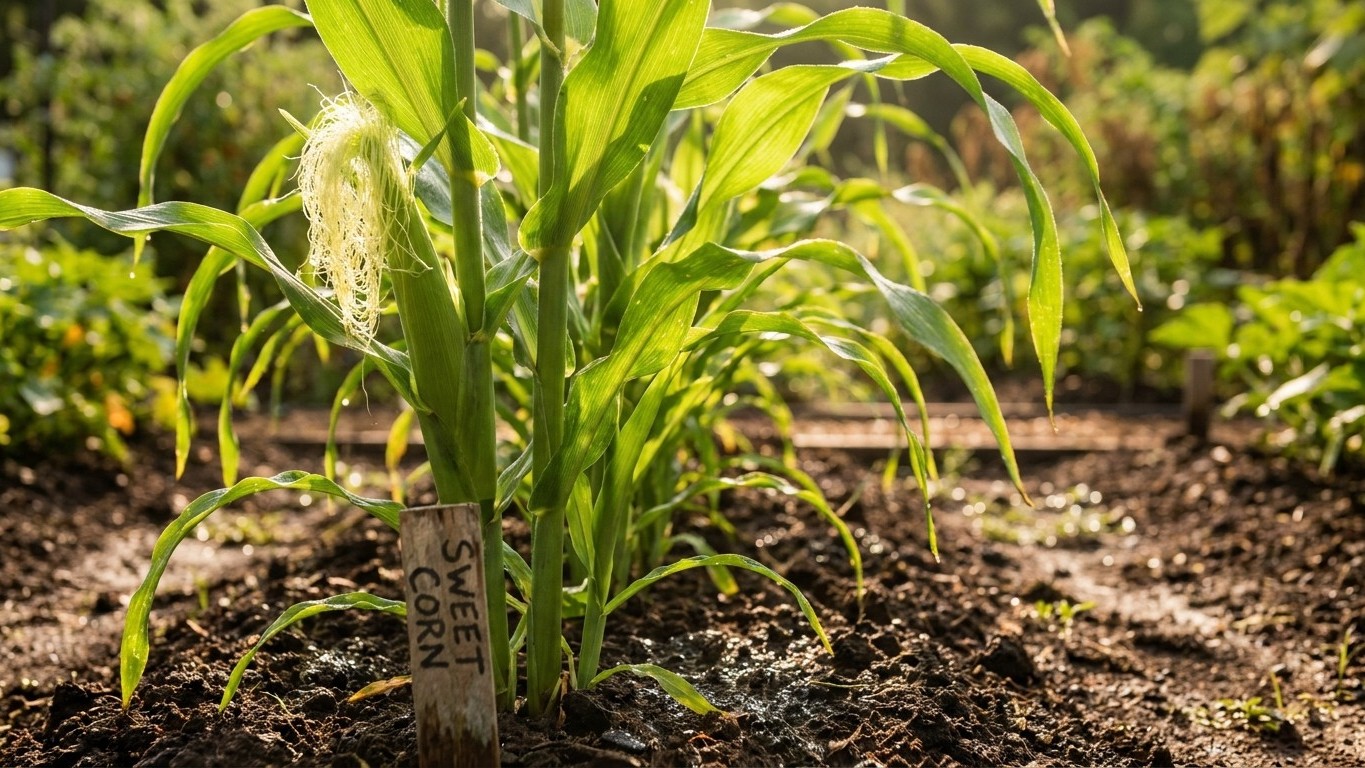

Yes, sweet corn ripens in most of West Virginia, but only if you plant by soil temperature rather than by the frost calendar most gardeners rely on. Around Charleston, the last spring freeze usually falls between April 9 and April 23, while the first fall freeze arrives between October 18 and November 1. That gap gives a long frost-free season, and it’s comfortably wide enough for the 60 to 90 days sweet corn needs to mature, provided the soil itself is warm enough when the seed goes in.
The short answer
Frost dates tell you when the air stops freezing, not when the ground is ready for corn seed. Sweet corn needs soil above 60°F to germinate reliably, and in this part of the state that threshold arrives well after the last spring freeze has passed, not on the same week. Around the Charleston reference station, that last freeze sits between April 9 and April 23, but treating that date as planting day is the single most common mistake made with this crop here. The soil under a garden bed warms slower than the air above it, especially after a wet spring, so growers who trust the calendar instead of a soil thermometer often push seed into cold, damp ground and wonder why it rots instead of sprouting.
Once the soil clears 60°F, the real question becomes whether there’s enough time left before autumn to finish the 60 to 90 days sweet corn needs from planting to harvest. Here, the first fall freeze doesn’t show up until October 18 at the earliest, and in many years it holds off until November 1. That means the frost-free window at low elevation, counted from the latest common spring freeze to the earliest common fall freeze, still runs close to six months. Even after allowing for the soil to catch up to 60°F once the frost has passed, there’s comfortably more than 90 days of usable season left for the crop to mature, even in a cautious year.
Summer heat plays a supporting role too. The reference station averages 16.0 days a year at 90°F or hotter, a moderate heat load that keeps corn growing at a steady pace without the kind of extreme stress that can stall pollination in hotter regions. That’s not a guarantee of an easy season, since a stretch of cool, cloudy weeks in June can slow things down regardless of what the average says, but heat stress isn’t the limiting factor for sweet corn here the way it can be farther south or at lower, hotter elevations.
The catch is elevation. The Charleston normals describe a river valley, and valleys warm earlier in spring and hold heat longer in fall than the ridges and hollows found across much of the rest of the state. A garden a few hundred feet higher can see its last frost land days later and its first fall frost arrive weeks earlier, which shrinks the safe window without changing anything about the plant itself. The corn doesn’t care what elevation it’s grown at. The calendar available to it does.
Does a late variety fit here?
Sweet corn varieties are sold by the number of days they need from planting to harvest, and that range runs from about 60 days on the fast end to roughly 90 on the slow end, matching the window Utah State University Extension gives for the crop as a whole. Whether either end of that range fits West Virginia depends on where the garden sits, not just what the seed packet promises.
| Milestone | Typical value (Charleston area) |
|---|---|
| Last spring freeze | April 9 to April 23 |
| First fall freeze | October 18 to November 1 |
| Frost-free season, worst case | About 178 days |
| Days needed, fast variety | 60 days |
| Days needed, slow variety | 90 days |
A 60-day variety
A fast variety is the easy case. Even counting from the latest common last freeze, April 23, and allowing for the soil to lag behind that date before it clears 60°F, a 60-day corn still has the entire summer and a good stretch of early fall to finish before the earliest common fall freeze on October 18. This is the safer choice for anyone gardening above the valley floor, where spring soil warms later and fall frost arrives sooner than the Charleston normals describe. It’s also the more forgiving choice in a cool, wet spring, since it leaves the most slack if planting gets pushed back a week or two while the soil finishes warming.
A 90-day variety
A 90-day variety is where the math gets tighter. Down in the river valleys, where the frost-free season stretches close to six months, there’s still room to spare for the slowest sweet corn on the market, as long as it’s planted once the soil has genuinely warmed rather than on the frost date alone. Higher up, the answer changes. Where spring soil warming lags and the first fall freeze can land earlier than the valley normals suggest, a 90-day variety can run out of season before it finishes filling its ears, especially if a cool spring pushes planting back past when the seed packet assumes. In those gardens, a full-season, 90-day sweet corn is a real risk, and the shorter end of the range is the more honest bet.
What goes wrong here
Most sweet corn failures in this state trace back to one of three causes, and only one of them has anything to do with climate.
- Soil sown too cold. Planting on the frost-free calendar date instead of by soil temperature is the most common mistake in this climate. Seed dropped into soil still below 60°F sits and rots instead of sprouting, especially after a wet spring. The remedy is simple: check the soil with a thermometer a few inches down before planting, and wait for it to clear 60°F even if the frost-free date has already come and gone.
- A variety too late for the season. A 90-day corn planted late, or planted at a higher elevation where the season is shorter than the valley normals suggest, can be caught by fall frost before it finishes maturing. The remedy is matching the variety to the site: choose a shorter-maturity type at higher elevation, or in any year when a cold, wet spring delays planting past the usual window.
- Sweetness lost because two types tasseled together. This one has nothing to do with weather. Standard (su), sugary-enhanced (se) and supersweet (sh2) sweet corn types cross-pollinate if their tassels shed pollen at the same time, and the result is starchy, disappointing ears no matter how well the season went. The remedy is timing, not distance: stagger plantings so the types don’t tassel together, and grow each type in its own block of three or more rows so pollen falls mostly within that block rather than drifting into a neighboring planting of a different type.
Common questions
Does last frost date tell me when to plant sweet corn?
No. The last frost date only tells you when the air stops freezing. Sweet corn needs soil above 60°F to germinate well, and that threshold is reached later than the last frost, sometimes considerably later depending on how wet and shaded the soil has been through early spring.
How do I know sweet corn is actually ripe?
Check for three signs together, never just one: the silks should be dry and brown, the husks should still be moist and green, and juice from a punctured kernel should run milky rather than clear or thick. All three need to line up before you pick.
How soon after silks appear should I pick?
That’s a separate clock from the planting-to-harvest days on the seed packet. Once silks emerge, most sweet corn is ready roughly 17 to 24 days later, and that narrower window is what decides which week to actually harvest, not the 60-to-90-day figure used to judge whether the variety fits the season at all.
Can I grow two sweet corn types in the same garden?
Yes, but not if they tassel at the same time. Plant each type in its own block of three or more rows and stagger the planting dates so the tassels shed pollen in different weeks. The source material gives no specific distance to keep them apart, only the timing condition, so relying on separation in time matters more than trying to guess a safe distance.