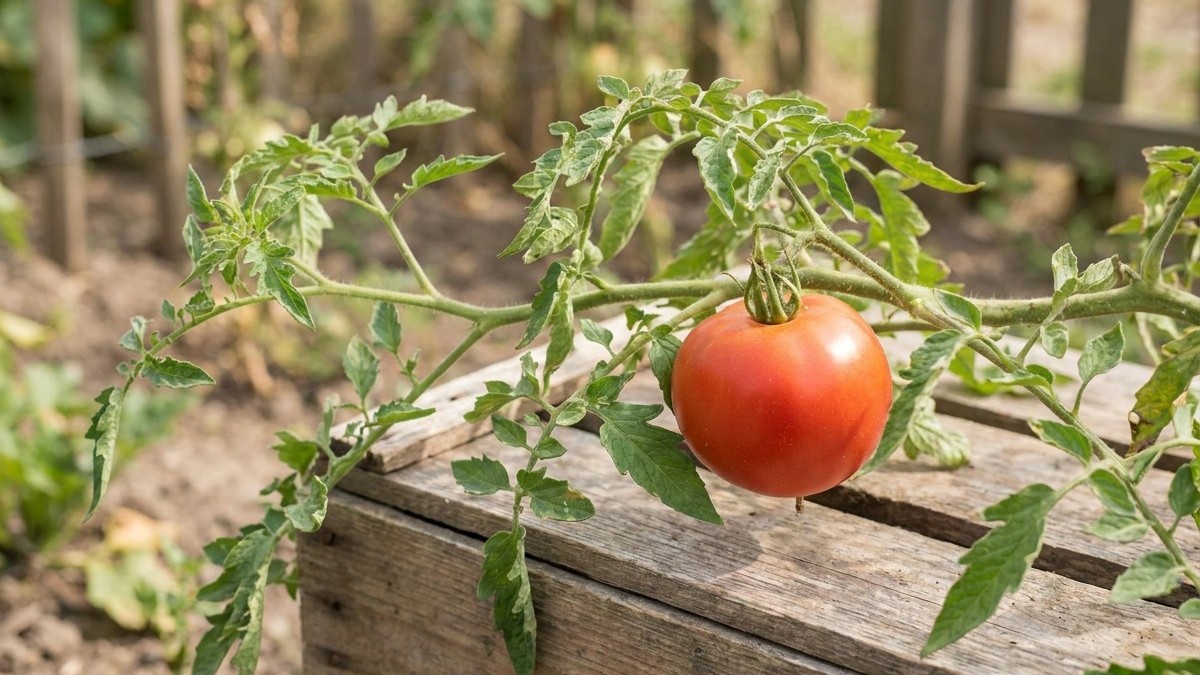

The short answer: pick tomatoes in Wisconsin before the first fall freeze hits, and that freeze typically lands between October 17 and October 29 depending on where you garden. Anything still on the vine with a hint of color, even a pale white-green blush, can finish ripening on a counter. Fully green, hard fruit takes longer and needs a different approach.
When to pick tomatoes in Wisconsin
The frost date isn’t a single day you circle on a calendar. NOAA’s 1991-2020 climate normals put the first fall freeze at the Green Bay station (USW00014839) somewhere between October 17 and October 29, and that’s a probability band, not a promise. Some years the freeze shows up early in that window, some years late, and a handful of years it slips past it entirely.
Location changes this more than most gardeners expect. Lake Michigan holds heat well into fall, so towns right along the lakeshore often dodge a hard freeze for another week or two beyond what the regional window suggests. Move inland toward southern Wisconsin’s farm country and that first freeze frequently arrives in early October instead. Head north toward the Northwoods and it can show up earlier still, sometimes well before the statewide window even opens. If you garden near Superior or Rhinelander, treat the October dates as optimistic.
Reading the plant, not just the calendar
Frost risk should drive the final harvest, but the plant itself tells you plenty before that. Once nighttime temperatures dip into the low 50s consistently, ripening on the vine slows to a crawl. Fruit that’s already showing color, anywhere from a faint yellow-green blush to full orange, will keep coloring up indoors just fine. Fruit that’s still hard and uniformly dark green is a tougher call.
A practical rule many Wisconsin growers use: watch the extended forecast once you’re inside that October window, and strip the plant the day before any night that’s forecast to dip near 32 F. Waiting for an official frost warning often means losing fruit that a single cold night could have saved. Green tomatoes exposed to actual frost, not just a chilly night, turn mushy and won’t ripen properly even indoors.
Timing also depends on when you planted, which is covered on this site’s planting dates page rather than here. What matters for the harvest decision is simply this: count backward from your local frost window, and once you’re within a week or two of it, start checking the vines daily instead of weekly.
What to Do With the green ones
Not every green tomato is the same tomato. There’s a real difference between a fruit that’s fully sized but still hard and pale green (what growers call “mature green”) and one that’s small, misshapen, or still growing fast. Mature green fruit has finished its growth and will ripen off the vine with reasonably good flavor. Immature fruit rarely ripens well and often just shrivels or rots instead.
Before your frost date arrives, go through the plant and sort as you pick:
- Fruit with any blush of color: set aside for quick ripening, usually within a week.
- Full-size, hard, pale green fruit: mature green, worth saving for indoor ripening over several weeks.
- Small, hard, dark green fruit still clearly growing: unlikely to ripen well; best used green.
That last category is where fried green tomatoes and green tomato relish come from, and it’s a legitimate use rather than a consolation prize. Slicing and pickling small green tomatoes, or breading and frying them, avoids the gamble of trying to ripen fruit that was never going to make it anyway.
For the mature green tomatoes you’re planning to ripen, handle them gently when picking. Twist or clip the stem rather than tugging on the fruit itself, since a torn stem scar is one of the more common entry points for rot during storage. Wipe off garden soil with a dry cloth instead of washing them; added moisture at this stage speeds up mold, not ripening.
Whole-plant pulling is another option if a hard freeze is imminent and there’s no time to sort fruit individually. Some gardeners uproot the entire tomato plant and hang it upside down in a garage or basement, letting the fruit ripen while still attached to the vine. This works, though it takes more space than boxing individual tomatoes and the results are less predictable since some fruit will still be too immature to finish.
Ripening indoors, and how long they keep
Tomatoes ripen through a plant hormone called ethylene, and mature green fruit still produces it after picking. That’s why a tomato left alone on a windowsill eventually turns red on its own, no sunlight required for the actual color change. Light isn’t the ripening trigger people assume it is; warmth and that ethylene signal are what matter.
A single layer of tomatoes in a shallow box, stems facing down, works better than a deep pile where fruit on the bottom gets crushed or trapped in humidity. Wrapping each tomato individually in newspaper slows moisture loss and keeps one rotting fruit from spreading trouble to its neighbors, which happens more often than gardeners expect once a box sits untouched for a couple weeks.
Temperature controls the pace. A cool room, roughly 55 to 70 F, ripens fruit gradually over two to four weeks, and the flavor tends to hold up reasonably well. Pushing the temperature warmer speeds things up but at some cost to taste; tomatoes forced to ripen quickly in a hot spot rarely taste as good as ones given time. A brown paper bag with a banana or apple inside concentrates ethylene and speeds up individual fruits that are already showing color, useful for a handful of tomatoes you want ready in a few days rather than weeks.
Storage after ripening
Once a tomato is fully red and ripe, refrigeration becomes an option, though it’s a tradeoff. Cold storage slows further softening and can stretch a ripe tomato’s usable life by roughly a week, but it also dulls flavor and can make the texture mealy. Most guidance from extension programs favors counter storage for tomatoes you’ll eat within a few days, saving the fridge only for a genuine surplus.
Green, unripe tomatoes should never go in the refrigerator. Cold temperatures below about 55 F halt the ripening process for good, sometimes permanently, leaving you with a tomato that stays green and hard indefinitely instead of finishing on schedule. If you’re not ready to deal with a box of green tomatoes right away, a cool room works far better than a cold one.
Check boxes every few days rather than forgetting about them in a corner. Mature green tomatoes, spread out and checked regularly, can realistically keep for four to six weeks before they either ripen or spoil, which gives a lot of flexibility for a late-season harvest that would otherwise be wasted.
What goes wrong here
Rot is the most common failure, and it usually starts at the stem scar or at any spot where the skin broke during picking. One soft, leaking tomato in a box of otherwise sound fruit can spread mold to its neighbors within days, which is exactly why checking boxes regularly and wrapping fruit individually pays off. Pull anything that’s gone soft or shows dark spots the moment you notice it.
Waiting too long in the garden is the other frequent mistake. A tomato exposed to an actual freeze, not just a cool night but a hard frost around 32 F, suffers cell damage that shows up as a watery, collapsed texture once it warms back up. That fruit won’t ripen properly even if it looked fine on the vine the night before, and it’s usually not salvageable. This is the practical argument for picking a day ahead of a forecast freeze rather than waiting to see how bad it actually gets.
High humidity in an enclosed ripening box encourages mold even without a bruise to start it, particularly in a damp basement. Cracking a lid or leaving boxes slightly open for airflow helps, and skipping the newspaper wrap in especially humid storage spots can matter more than the wrap’s benefit of slowing moisture loss.
Uneven ripening within the same box is normal, not a sign anything’s wrong. Fruit picked at slightly different maturity stages, or sitting at different spots relative to airflow and warmth, will color up on its own schedule. Sorting by color every few days and pulling ripe fruit as it finishes, rather than waiting for the whole batch to turn at once, keeps the earliest ripening tomatoes from overripening while you wait on the stragglers.
Common questions
Can I ripen tomatoes on a sunny windowsill instead of a dark box?
You can, but direct sun isn’t doing the ripening work; warmth and the fruit’s own ethylene are. A sunny spot that also gets hot during the day can actually push fruit toward that faster, lower-quality ripening rather than helping it. A moderate room temperature works just as well without the risk of overheating fruit near glass.
Should I pick all my tomatoes at once before frost, or just the ripe ones?
If a hard freeze is genuinely imminent, strip the plant of everything worth saving, sorting by maturity once it’s off the vine rather than in the garden. If frost is still a week or more out, there’s no rush, and letting fruit color up naturally on the vine gives better flavor than any indoor method.
How do I know if a green tomato is mature enough to ripen well?
Size and firmness matter more than color at this stage. A full-size tomato that’s pale green rather than dark green, with a slightly waxy sheen and a defined shoulder shape, has usually finished growing and will ripen reasonably well. Small, glossy, dark green fruit that still looks like it’s mid-growth is a poor candidate.
Does the reported frost date apply to my specific town?
Not exactly. The October 17 to October 29 window comes from a single reporting station near Green Bay, and Wisconsin’s geography spreads that risk out considerably. Areas right along Lake Michigan’s shoreline typically see their first freeze later than that window, while inland spots in southern Wisconsin often freeze in early October and northern areas can freeze earlier still. Checking a local forecast in the two weeks around your region’s typical date is more reliable than relying on a single statewide figure. Wisconsin’s county extension offices can also provide more localized guidance.