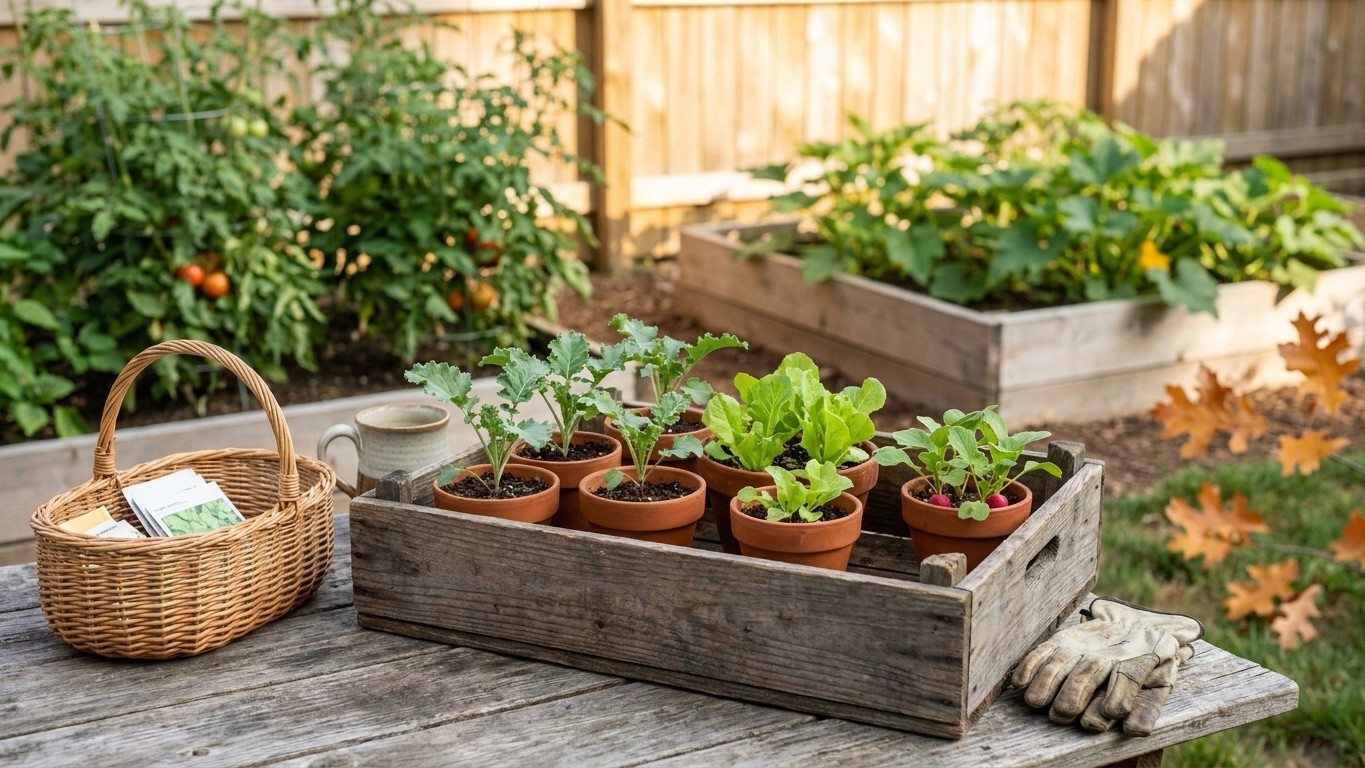

August in Wisconsin is a planting month, not a waiting month. Fall greens, root crops, and a last flush of quick beans still fit before the first frost (October 17 to October 29), while it’s too late to set out new tomatoes, peppers, or squash. Harvest is running full tilt at the same time, so this is a month of picking and sowing together.
What goes in the ground in August
The frost window, not the calendar page, decides what’s still safe to sow. Wisconsin’s first fall freeze lands somewhere between October 17 and October 29 depending on where you garden, according to NOAA NCEI 1991-2020 climate normals. Count backward from the early end of that range, October 17, and you get a working deadline for every crop still going into open ground this month.
Quick-maturing greens are the safest bet. Lettuce, spinach, arugula, and mustard greens all finish in 25 to 45 days, so early and mid-August sowings have plenty of room. Radishes and turnips move even faster. Beets and kale need closer to 50 to 60 days, which pushes their sowing window to the first half of the month. Carrots, at 70 to 75 days, are the tightest call of the bunch, and they’re worth it anyway because a light frost sweetens the roots rather than ruining them.
Bush beans are the gamble crop. At roughly 50 to 55 days to harvest, they only pencil out if sown in the first week of the month, and a cool, wet stretch can push them past the frost line fast. Peas for a fall crop face a different problem: August soil is often too warm for good germination, so results are hit-or-miss even with a fast 55-to-60-day variety.
| Crop | Days to maturity | Latest safe sowing |
|---|---|---|
| Radishes | 25-30 | Late August |
| Lettuce, arugula | 30-45 | Mid-to-late August |
| Spinach | 40-45 | Mid-to-late August |
| Beets, kale | 50-60 | Early August |
| Bush beans | 50-55 | First week of August |
| Carrots | 70-75 | Very early August |
What doesn’t belong in the ground this month: new tomato, pepper, squash, or cucumber plants. There simply isn’t enough frost-free season left for them to produce before that October freeze arrives, even in the mildest lakeshore pockets.
What to start under cover
Starting seeds indoors or under a shade cloth in August solves a problem outdoor sowing can’t: soil and air temperatures in the 80s make lettuce and spinach germinate poorly, or not at all, when scattered directly into a bed. Starting those same seeds in trays in a cooler spot, then transplanting once the heat breaks, sidesteps the germination failure entirely.
The math still runs backward from the frost window. Fall broccoli and cabbage transplants need about 60 to 70 days from transplant to harvest, plus another two to three weeks as seedlings before they’re ready to go into the garden. Working back from October 17, that means broccoli and cabbage seed should already be started by early August at the latest for a realistic fall crop; anything started after the first week is racing the clock.
Two ways this goes wrong. Start too early, under lights or in a warm spot, and the seedlings turn leggy and rootbound before the garden has room or cool enough weather for them, producing weak transplants that stall after they’re set out. Start too late, and the plants never bulk up enough size before the light and warmth drop off in September, leaving small heads or none at all. The safer error, if you have to choose, is starting a few days early and potting up into larger cells rather than letting seedlings wait too long to go in.
Fast greens are more forgiving. A tray of lettuce or spinach started indoors in early-to-mid August can still go out by early September and finish well before frost, giving you a second window even if the brassica timing has already passed.
What is ready to pick
August is the harvest peak for most of the Wisconsin garden. Tomatoes are coloring up steadily now, and the ones that split or crack after a heavy rain should come off the vine right away rather than waiting for perfect color. Peppers, summer squash, zucchini, and cucumbers all need picking every two to three days at this point, since a single overlooked zucchini can balloon to baseball-bat size overnight and signals the plant to slow down new fruit production.
Sweet corn is ready when the silks have browned and dried and a squeezed kernel releases a milky, not clear, liquid. Green beans come off best while the pods are still slim, before the seeds inside swell and toughen the pod. Blueberries and raspberries are at or past their main flush; berries that pull free with the gentlest tug are ripe, and any left too long tend to drop and mold on the cane below.
Garlic and onions harvested earlier in summer should be well into curing by now, spread out of direct sun in a dry, airy spot. Check them weekly. Any bulb going soft, sprouting, or showing a moldy neck should be pulled from the batch and used first, before it spreads rot to the rest of the cure.
The jobs that matter this month
Watering rhythm matters more in August than in any other month, because heat and uneven rain stress plants right as they’re setting and ripening fruit. Deep, infrequent watering, aimed at the soil rather than the leaves, does more good than a daily light sprinkle, and it cuts down on the fungal leaf disease that thrives on wet foliage overnight.
Mulch pulled back in spring for warmth should go back down now, thick enough to hold soil moisture through hot stretches and to keep weeds from competing with plants that are already working hard to ripen. Tomato cages and stakes need a final check and tightening; a heavy-fruited plant that topples in an August storm loses fruit to rot on the ground that a simple tie-up would have saved.
Succession sowing and pest scouting
Every week or two, another short row of radishes, lettuce, or greens keeps the harvest coming instead of dumping everything at once. Pest scouting deserves a walk-through every few days: squash vine borer damage shows up as sudden wilting of a single vine even with wet soil, Japanese beetles skeletonize leaves in visible patches, and tomato hornworms are easiest to catch by looking for their dark droppings on leaves below the feeding site rather than trying to spot the caterpillar itself, which blends in well.
Raspberry canes that already fruited this season (on June-bearing types) can be cut to the ground now, clearing space and airflow for next year’s new canes to mature. It’s also the month to finish curing garlic and onions and to start planning which beds will host fall brassicas versus a final round of greens, since bed space is about to get tight.
What not to do in August
The most common mistake is planting new warm-season crops because the weather still feels like summer. A tomato or pepper transplant set out in mid-August has no realistic path to a harvest before frost; that space is better used for a fast green or a fall brassica transplant instead.
Heavy nitrogen fertilizer on tomatoes and peppers late in the season pushes leafy growth at the expense of ripening fruit, and it can actually delay the harvest window rather than help it. If feeding is needed at all this late, a lower-nitrogen, higher-potassium formula supports fruit finishing better than a general all-purpose blend.
Letting watering lapse during a hot, dry stretch is another costly slip. Fruiting crops under moisture stress drop blossoms, produce misshapen fruit, or shut down production early, and by the time wilting is visible the damage to that week’s harvest is already done. Finally, resist the urge to compost diseased tomato or squash foliage showing blight spots; home compost piles rarely reach the sustained heat needed to kill off those fungal spores, and they can reinfect next season’s bed instead of disappearing.
Checking this against your own county
A statewide frost window is a starting point, not a personal forecast. Wisconsin runs from USDA hardiness zone 3b in the far north to 6a in the southeast, based on the USDA Plant Hardiness Zone Map, and elevation, lake effect, and simple north-south distance shift real planting dates by weeks in either direction. Land near Lake Michigan or Lake Superior sees frost delayed compared with inland spots at the same latitude, while low-lying frost pockets inland can freeze earlier than official averages suggest.
For dates tuned to your county, the University of Wisconsin-Madison Division of Extension publishes local planting guidance and county-level contacts that account for these differences far better than a single statewide range can.
Common questions
Can I still start tomatoes from seed in August in Wisconsin?
No. Tomatoes need well over 60 days from transplant to first ripe fruit, and starting from seed in August leaves no realistic path to harvest before the October frost window.
Is it too late to plant carrots in August?
Only barely, and only if sown very early in the month. At 70 to 75 days to maturity, carrots sown in the first few days of August can still mature before the earliest fall frost date of October 17, but sowings later in the month are a real gamble.
Why did my August-sown lettuce fail to germinate?
Soil and air temperatures in the 80s often stall or block lettuce germination outright. Starting the seed indoors or in a shaded spot, then transplanting once temperatures ease, solves the problem better than repeated direct sowing.
Should I fertilize my vegetable garden in August?
Only lightly, and skip high-nitrogen blends on fruiting crops like tomatoes and peppers this late, since they push leaf growth instead of helping fruit ripen. A lower-nitrogen feed suits crops still finishing their harvest.