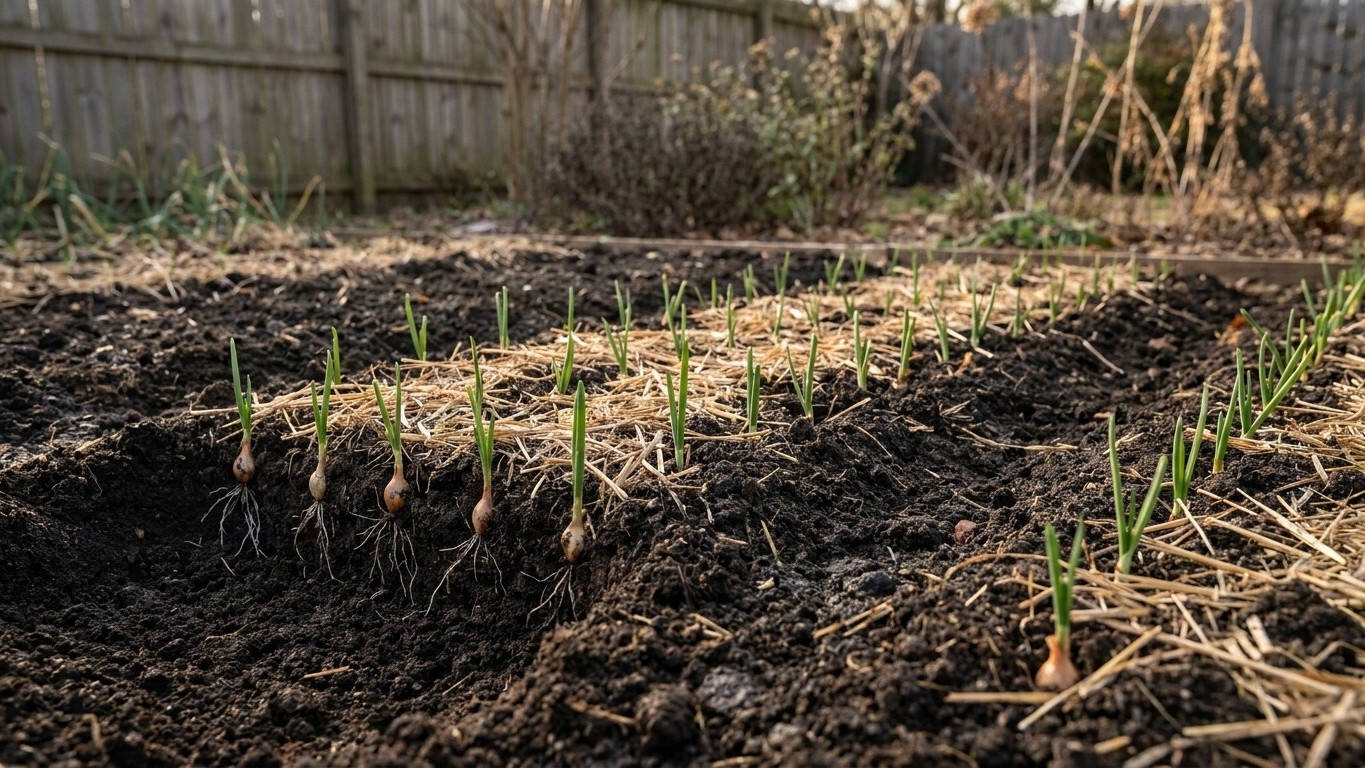

Garlic is one of the tougher crops in a Wyoming garden, but it is not untouched. Sap-feeding insects, maggots, microscopic soil worms and digging animals all go after it, and each strikes at a different stage. Fall-planted cloves face little risk over winter. The trouble starts when spring shoots grow and carries through to lifting the following summer. The county extension office can confirm what is active near you.
Which pests attack garlic in Wyoming
The service to ask is University of Wyoming Extension, the land-grant program that answers pest questions for the state. Rather than memorize insect names, it helps to sort garlic’s troublemakers by where they feed. Four groups cover most of what a Wyoming grower will see:
- Tiny sap-feeding insects that scrape the leaves and leave pale or silvery streaks.
- Maggots and other larvae that work into the base of the plant and the bulb.
- Microscopic soil worms (nematodes) that distort the plant and the bulb’s base.
- Digging animals, such as rodents, that tunnel to the cloves.
Which pests can you rule out?
Pests of trees and shrubs show up on statewide lists, and they do not belong in a garlic bed. Borers, for example, feed on wood, and garlic has none. Pests of cabbage-family leaves are also off the hook. Garlic is an onion-family bulb with narrow, sulfur-rich leaves, a different meal altogether. A gardener who treats the bed for an insect that eats apple bark is wasting a weekend.
The frost window shapes the whole picture. The first fall frost at the reference station falls between September 24 and October 5 (NOAA NCEI 1991-2020 Climate Normals, 32F freeze probabilities, 30-70% band, station USW00024018). That is a midpoint. Frost can arrive within a range of dates, so a late frost can leave soft fall growth exposed longer than you planned. At 6,000 feet the frost-free season runs about 130 days, and frost is possible in any month at higher elevations. A short season leaves little time to recover from a pest setback, which is why timing matters more than any remedy.
Garlic planted in autumn and lifted the following summer spends roughly nine months in the ground. Most of that is quiet. The pests that matter come at two points: when the shoots emerge, and as the bulb swells before lifting.
When each one shows up, and what it does first
Nothing much happens after planting. The cloves root in cooling soil, and the plant does little above ground before the freeze. Digging animals are the exception. A hole where a clove was, or loose soil on the bed, can appear any time the ground is workable, including right after planting. Mulch laid before the ground freezes can give rodents a warm place to settle, so mulch is best applied once the soil is cold.
Spring changes things. When snow melts and shoots push up, the first insect sign is usually on the leaves: silvery or pale streaks that appear soon after the shoots are tall enough to feed on, followed by tips that curl or turn yellow. The culprits are tiny sap-feeders, and they multiply as the weather warms. A gardener usually notices the damage before the insect, since the animals are small and hide in the folds of the leaf.
Root-zone larvae and soil worms show up differently. A single plant starts to wilt or yellow while its neighbors stay green, and it may pull out of the ground with almost no resistance. The base looks soft, discolored or tunneled. Soil worms tend to produce stunted, twisted plants, often in a patch rather than a single stalk, with swollen or distorted bases. Both problems start below ground, so by the time the leaves show it, the damage is already done.
Through early summer the bulb is sizing up, and the plant needs its green leaves to do it. Anything that strips leaf area or damages the base now costs bulb size directly. By lifting time the evidence is in the bulb: tunnels, soft spots, brown stains at the base, or cloves that have been chewed. Late damage does not heal in storage, so bulbs showing it should be set aside from the ones you plan to keep.
Telling the damage apart from everything else
Yellow leaves in a garlic bed rarely point to one cause. Dry soil, a nutrient shortfall, a fungal disease and frost injury can all produce the same color. The insect explanation is tempting because it is the one you can act on, and that is exactly why it gets over-diagnosed. The table below pairs common symptoms with an insect cause and the look-alikes worth ruling out.
| Symptom | Possible insect cause | Look-alike | What settles it |
|---|---|---|---|
| Silvery or pale streaks on leaves | Tiny sap-feeders | Wind scour or sun scald | Streaks that follow the leaf folds and sit where the leaf is sheltered point to insects; scour hits the exposed side |
| Yellow tips across the whole row | Seldom an insect | Dry soil, nutrient shortfall, frost injury | A whole row changing at once points to water or soil; insects tend to pick plants one at a time |
| One plant wilts and lifts out easily | Larvae at the base | Rot from wet soil, mechanical damage | Tunnels and a soft, discolored base separate larvae from plain rot |
| Stunted, twisted plants in a patch | Soil worms | Compacted or poorly drained soil, herbicide drift | Distorted bases and a patch-shaped pattern; a lab test through the county office can confirm |
| Missing cloves, loose soil | Digging animals | Frost heave pushing cloves up | Cloves lying on the surface, intact, suggest heave; gnawed cloves or tunnels suggest animals |
The simplest test costs nothing. Pull one affected plant and look at the roots and the base before you reach for any explanation. White, firm roots and a clean base rule out most insects. Brown, mushy or tunneled tissue is what to bring to the extension office.
Only a trained eye or a lab can say what is in your garden. The signs above tell you which question to ask, and your county extension office can give the answer.
What actually works here, and what is a waste of time
Physical barriers beat treatments in a short season. A floating row cover laid over the bed before the shoots are tall and before the first insects arrive keeps sap-feeders and egg-laying flies off the plants. It has to go on early, with the edges buried or weighted down. A cover set out after the insects are already inside just holds them in. Hardware cloth under the bed or a wire cage around the cloves stops digging animals, and it is cheap to install at planting time.
Rotation does more than most gardeners expect. Pests that overwinter in the soil are waiting for the same crop in the same spot, so a bed that grew garlic or onions last year should not get them this year. Clean seed matters as well: plant only firm, undamaged cloves from healthy bulbs. After lifting, clear out the old stalks and trimmings, since leftover plant parts shelter larvae and soil worms.
Calendar choices help as well. Planting so that cloves root before the ground freezes, without pushing a lot of top growth ahead of winter, gives the plant less soft tissue to lose. Because the first fall frost falls somewhere in the September 24 to October 5 window and can come later, treat that window as an average rather than a deadline you are safe on either side of. Where elevation shortens the season, the varieties on Garlic Varieties That Suit Wyoming Winters are worth a look.
Several popular moves are a waste of effort. Spraying on a schedule, without knowing what is feeding on the plant, treats a problem you may not have. Home-made garlic or pepper sprays wash off and do not reach larvae at the base or worms in the soil. And replanting in the same spot rewards whatever stayed in the soil.
Only your extension service knows what is approved in Wyoming. Products and rules change, and the label is the law. Ask before you buy.
Where to check this for your own county
University of Wyoming Extension runs a county office across the state. That is where to take a plant sample, a photo, or a question about a bed that is not behaving. The staff know which pests have turned up locally and what the current recommendations are.
Location matters more than people expect. A pest documented somewhere in Wyoming says little about the next valley over. A pest that thrives in a warm, low-lying garden may never reach a high, cold one, and a statewide listing cannot show which kind of garden is yours.
For the calendar side, When to Plant Garlic in Wyoming: Counting Back From the First Frost lays out the planting window, and Growing Garlic in Wyoming covers the full season.
The next step is simple. When you see damage, bag one affected plant with its roots and soil, take a few photos, and bring both to the county office. A sample taken in spring, while the symptoms are fresh, is far more useful than one pulled after the bulbs are lifted.
Common questions
When do pests start attacking garlic in Wyoming?
Digging animals can act any time the soil is workable, including right after planting. Insects and larvae wait for spring, once the shoots are up and the weather warms. Damage keeps building while the leaves are green and the bulb is sizing up, until lifting the following summer.
Is garlic really pest-proof?
No. Garlic is often described as resistant, but sap-feeding insects, larvae, soil worms and digging animals all affect it. The strong smell does not protect the bulb below ground.
Do I need row cover in Wyoming?
It is one of the most reliable tools, provided it goes on early and the edges are sealed. A cover applied after insects are present does not help. The short season and the possibility of frost in any month at higher elevations also make covers useful for protecting growth.
Can I plant garlic where onions grew last year?
Better not to. Garlic and onions share pests, and those that overwintered in the soil will find the new crop immediately. Move to a bed where neither has grown recently.