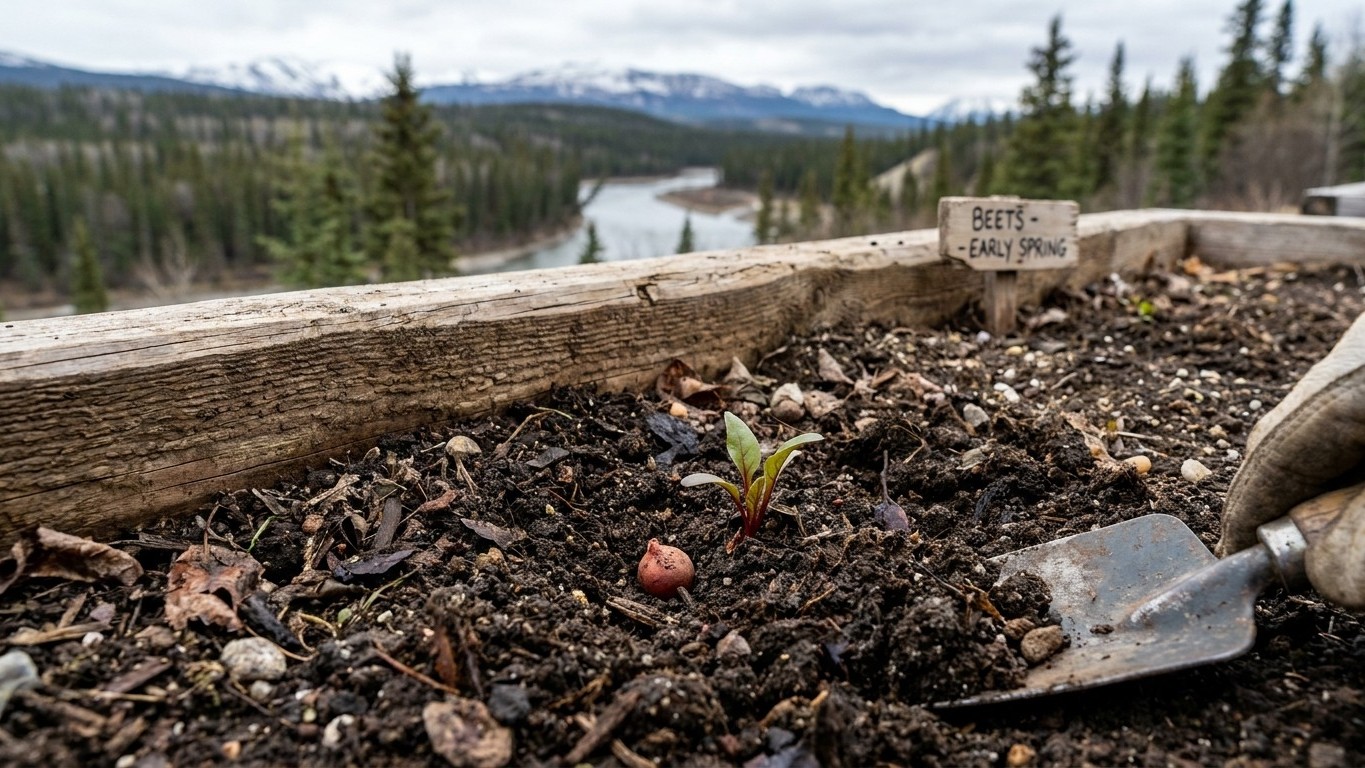

Yukon’s ground starts as a Brunisol, a young soil common on recently formed material, running loam to silt with imperfect drainage and a near-neutral pH around 6.8. That texture is workable for beets, which want deep, well-drained soil loaded with organic matter, but the imperfect drainage means water management matters more here than heat management. For specific dates, see When to Sow Beets in Yukon: sow two to three weeks before the average last frost, June 5 at Whitehorse, and watch soil moisture through the first six weeks. Bolting, not woodiness, is the failure that actually shows up in this climate.
The short answer
The numbers behind that Brunisol profile matter more than the label. Across the mapped agricultural surface of the province, this soil order covers 41 percent of the ground, ahead of Gleysolic soils, which tend to show up in wetter, lower-lying spots. The measured texture runs 47 percent sand, 15 percent clay and 38 percent silt, which is a loam-to-silt blend, and the organic matter content sits high at roughly 12.0 percent, estimated from measured organic carbon. Drainage is classed imperfect, meaning water moves through slowly enough to matter but not so slowly that the ground stays saturated for weeks.
For a beet, that combination is a mixed bag. Utah State University Extension calls for deep, sandy, well-drained soil rich in organic matter, amended with no more than 1 inch of composted organic matter per 100 square feet. Yukon’s median soil already carries plenty of organic matter, so a gardener working ground close to that median profile should skip heavy compost additions and check first whether more organic matter is even needed. The sand fraction, just under half, is on the low side of what beets prefer, and paired with imperfect drainage, it raises the odds of a root that forks or a bed that stays soggy after snowmelt or a hard rain.
On the heat side, the picture is different from most of the beet-growing map. Utah State University Extension flags heat above 85 F combined with water stress as the trigger for woody roots. No figure for the number of days a year Whitehorse crosses 90 F is published here, so that specific count can’t be stated, but Yukon’s short, cool growing season makes sustained heat spikes far less common than in warmer states in this series. That shifts the practical risk toward the cold end of the season, toward frost timing and spring moisture, rather than toward a late-summer heat wave cooking the crop into a woody root.
None of this is a diagnosis for one backyard. The province spans hundreds of individual soil series, the survey behind these numbers covers only the agricultural belt, and the far north isn’t represented at all. River flats, muskeg edges and any lot a builder has graded or filled will read completely differently from the median. Treat this overview of Beet Soil in Yukon as a starting point for what the region’s ground tends to do, then confirm it with a soil test on the actual bed.
The six weeks that decide it here
Sowing two to three weeks ahead of the average last frost, June 5 at Whitehorse, puts a beet’s first six weeks in a fairly narrow window: roughly mid-May through late June, right as the ground is finishing its thaw and drainage class starts to matter most. That average date is a mean from Environment and Climate Change Canada’s climate normals, not a guarantee. In one year out of two, the last frost falls later than June 5, so a gardener sowing on the calendar date alone is working from the midpoint of a spread, not a safe line.
What that spring typically brings, on ground classed as imperfectly drained, is a wet start. Snowmelt has to move through soil that doesn’t shed water quickly, so the early part of the window tends to run damp rather than dry, especially in low spots. That’s actually favorable for beet germination and the first few true leaves, since Utah State University Extension identifies water stress in the first six weeks, not excess moisture, as the trigger for premature flowering. The risk flips later in the window, once meltwater has drained off and the topsoil dries out faster than the layers below.
That’s where bolting risk actually concentrates here: not at sowing, when the ground is likely still damp, but three to five weeks in, if a dry stretch hits a seedling growing in soil that sheds moisture unevenly because of its imperfect drainage class. A gardener who assumes the early wet spring means the whole six weeks are covered on water is the one most likely to get caught. The safer approach is to treat the first two or three weeks as low-risk for thirst and the back half of the six-week window as the stretch that needs checking, especially in any bed on higher, faster-draining ground within the same yard.
What goes wrong here
- Soggy, forked roots from imperfect drainage. Snowmelt sitting in a Brunisol that drains imperfectly can leave roots misshapen or split. Raise the bed a few inches above grade or work in coarse material to open up the loam-to-silt texture before the first sowing.
- Bolting from a dry stretch three to five weeks in. Once spring meltwater drains off, the topsoil in this texture class can dry faster than expected. Utah State University Extension ties water stress in the first six weeks directly to premature flowering, so a consistent watering check in that back half of the window matters more than watering at sowing.
- Over-amending an already rich soil. With organic matter already estimated near 12.0 percent, adding compost past the 1 inch per 100 square feet ceiling from Utah State University Extension can push nutrient balance the wrong way and encourage leafy top growth at the root’s expense. Test before adding anything.
- Sowing on the mean frost date and getting caught by a late one. Because June 5 is an average, not a floor, a seedling sown right at that date can still meet a frost in roughly half of all years. Hold a floating row cover ready for the two weeks after the mean date rather than assuming the calendar has cleared the risk.
- Running out of season on a late sowing. Beets are direct-seeded, so the 60 to 80 days to harvest count from the day seed goes into the ground, not from a transplant date. A sowing pushed too far past the mean frost date to dodge cold risk can bump against fall’s shortening days before the root sizes up.
Checking this against your own county
Everything above starts from a provincial median, and Yukon’s agricultural land is not one soil or one microclimate. A bed near a river flat, a spot on a gravelly bench, and a yard on filled ground can all sit under the same “Yukon” label and behave nothing alike. Before committing a season’s worth of beet seed to a plan built on these averages, get a soil test done on the actual bed and ask about local frost timing for the specific valley or bench the garden sits on.
The provincial agriculture department’s own site currently refuses automated verification, so the reliable starting point for contacting an extension resource is the federal Department of Agriculture and Agri-Food Canada: agriculture.canada.ca. They can direct a gardener to the right regional contact for soil testing and local growing advice specific to their district.
Common questions
Is Yukon’s soil good for beets without any amendment?
The provincial median already carries an estimated 12.0 percent organic matter, which is on the rich side, so many gardeners on soil close to that median won’t need much added. Utah State University Extension caps composted organic matter at 1 inch per 100 square feet regardless, so a soil test before adding anything is the safer move.
When should beet seed go in the ground in Yukon?
Utah State University Extension’s guidance is to sow two to three weeks before the last frost. With the mean last frost at Whitehorse falling June 5, that points to a mid-to-late May window, but that date is an average and frost falls later in about half of all years, so watching the ground and forecast still matters more than the calendar.
Is woodiness or bolting the bigger risk for Yukon beets?
Bolting is the more likely failure here. Woodiness comes from heat above 85 F combined with water stress, and sustained heat of that kind is uncommon in Yukon’s short, cool growing season. Bolting, triggered by water stress in the first six weeks after sowing, is the risk tied more directly to this region’s spring drainage pattern.
How long does it take to grow a beet from seed in Yukon?
Beets are sown directly in the ground, not transplanted, and the count of 60 to 80 days to harvest runs from that seeding date. Given the province’s short season and the mean frost date of June 5, timing the sowing early within the recommended two-to-three-week pre-frost window helps make sure the root sizes up before fall.