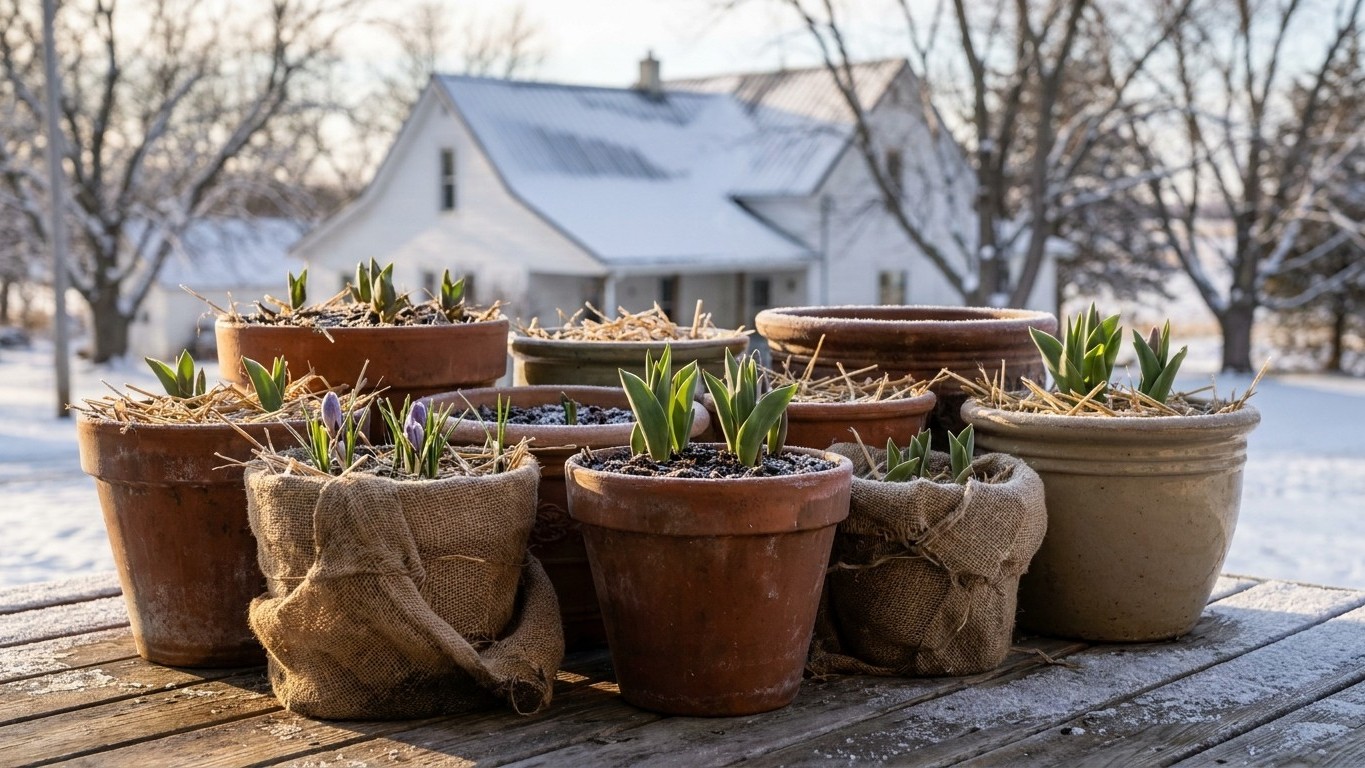

In Yukon, dahlias, cannas and gladiolus come out of the ground after the first frost blackens the foliage. At Whitehorse A, that frost arrives on average around August 25. Dig roughly a week or two after it, which in a typical year means early September, and treat the date as a window rather than a deadline. None of the three survives a Yukon winter outdoors. All of them must be dried, stored cool and checked through the cold months.
Do you have to dig them up in Yukon?
Yes, every year, without exception. Whitehorse sits in zone 1b of the Canadian plant hardiness system, according to Natural Resources Canada’s plant hardiness site (planthardiness.gc.ca). That is a Canadian zone, not a USDA zone. The two systems cannot be swapped. The Canadian one is built on seven climate variables, the USDA one on a single winter-minimum figure, and NRCan itself says there are no simple conversions between them. Canadian zone 4a, for example, overlaps nine USDA zones, from 3a to 7a. Whenever you see a Yukon zone number, read it as Canadian and keep it off any US map.
The figure that settles the question is simpler. At the Whitehorse reference station, the mean daily minimum of the coldest month is -19.2 °C, per Environment and Climate Change Canada’s 1981-2010 normals (that is -2.6 °F, if you want to compare with a US garden). That is an average night in the coldest month, not a record low. Colder nights are routine.
What the cold does to these plants
Dahlia tubers, canna rhizomes and gladiolus corms are storage organs from warm climates. They carry no built-in tolerance for frozen soil. When ice forms inside the tissue, the cells burst, and the organ turns to mush in spring. Mulch slows the cooling of the ground but cannot stop it, and a Yukon winter is long enough to outlast any blanket of straw or leaves. Plan to dig all three every fall and replant them each spring.
The Whitehorse figures describe the reference city, not the whole territory. Colder districts, farther north or higher up, will have earlier fall frosts and deeper winter cold, so nothing about the verdict softens as you travel. If anything, the lifting date moves earlier.
Hardy bulbs are a different story, and the rules for them are separate. Tulips, daffodils and their relatives are planted in fall and left in place, and you can sort out which ones suit your winter in Which Spring Bulbs Survive Your Winter. The broader picture of fall-planted and spring-planted types lives under Spring Bulbs. The three plants in this article belong to the other camp, the tender ones that live in a box in your basement from fall to spring.
When to lift them
Wait for the frost that blackens the foliage. That blackened, slumped look is the signal. Dahlia leaves go dark and limp, canna leaves collapse into soggy brown, and gladiolus foliage browns and flops. Once you see it, lift within about a week or two of that frost.
Turning the frost date into a digging window
Environment and Climate Change Canada puts the average first fall frost at Whitehorse A (climate ID 2101300) around August 25, based on the 1981-2010 normals. That is a mean date, not a safe one. In roughly one year out of two, the first frost comes later than that. So the average year points to a digging window of about September 1 to 8, while a late frost pushes the window later and an early one pulls it forward. Watch the plants and the forecast, not the calendar.
The Whitehorse A station is also only one corner of the territory. Northern and upland gardens run weeks behind in spring and ahead in fall, meaning their first frost falls earlier. If you garden in a colder district, your digging window starts earlier than the Whitehorse figures suggest. For a fuller picture of how the dates shift, see First and Last Frost Dates in Yukon.
If the first light frost hits in mid-summer-like conditions and then the weather warms, you may not see the blackening right away. Don’t dig because of a cold forecast alone. A sheet or frost cloth over the clumps for a night or two can carry blooming plants a little further, and then the first hard frost does the job properly.
Why earlier lifting backfires
Digging while the plants are still green feels responsible, like beating the cold. It is the usual way to lose tubers. Through late summer and into fall, the foliage keeps feeding the underground organ. Starches move down into the tuber, and its skin thickens and toughens. Lift too early and you get a thin-skinned, half-fed tuber with a weak seal against moisture and fungus. In a storage box, those are the ones that go soft, then gray and slimy, and then infect their neighbors.
The frost’s own message, that the tops are finished, is also the plant’s cue to shut down. Lifting a week or two later lets the skin set and the stem scar close, which is what makes storage possible. Don’t wait much longer, though. Once the soil itself begins to freeze, the damage reaches the tubers below ground, and the digging fork turns up mush.
The mechanics are the same for each plant. Cut dahlia and canna stalks back to a few inches, and cut gladiolus foliage close above the corm. Then work a garden fork in a wide circle around the clump, well outside the stem, and lever the whole mass upward. Spearing a tuber neck with the tines is an easy mistake, because dahlia necks snap with almost no effort, and a neck-less tuber will not sprout.
Storing them over winter
Storage comes down to three steps: cure, clean lightly, then keep everything cool, dark and slightly moist. Cool and dark keep the tissue from waking up and sprouting early. Slightly moist keeps it from drying into a wrinkled husk. Too much moisture rots it, too little shrivels it, and the whole job is staying between those two.
Curing and cleaning
Let the lifted clumps dry for a short time somewhere sheltered, airy and out of the rain, such as a garage bench or a covered porch. The aim is to dry the surface skin and let any cut ends seal, not to dehydrate the tubers. Brush off loose soil by hand. Skip the hose. Washing them is tempting, but it leaves moisture in the crevices and shortens storage life. Trim off broken or obviously rotten pieces before packing.
How the three differ
The three do not want identical treatment, and mixing them in one box is a common mistake.
| Storage point | Dahlia tubers | Canna rhizomes | Gladiolus corms |
|---|---|---|---|
| Curing | Short, light drying of the skin; necks are fragile | Brief drying; leave a little soil on the rhizome | Longer, thorough drying in an airy spot |
| Cleaning | Brush only; leave the crown intact | Shake off the worst of the soil | Remove the shriveled old corm and husks; keep the new corm and any cormels |
| Packing | Lightly damp medium such as peat, vermiculite or wood shavings | Barely damp medium in a box or crate | Dry, in a mesh bag, paper bag or open tray |
| Moisture | Slightly moist; they shrivel easily | Slightly moist, but they fail if left soggy | Dry; damp storage invites mold |
| What to look for | Soft spots, shriveling, mold | Mushy patches, drying out | Soft or moldy corms, sprouting |
Dahlias and cannas are the thirsty ones, kept in a lightly damp packing material so the tissue stays plump. Gladiolus is the odd one out. Its corm is a dry, papery bulb-like organ, and the usual way to store it is dry, with the old shriveled corm pulled off the bottom of the new one. If you put gladiolus in damp peat, expect trouble.
Choose a spot that stays cool and dark but never freezes. In Yukon, that means thinking hard about where “cool” actually is. An unheated garage or shed can drop well below freezing in a normal winter, with a coldest-month average night of -19.2 °C at Whitehorse. A basement room, an insulated crawlspace or a cellar corner tends to be safer. Frozen tubers look fine in storage and turn to jelly in spring, so you don’t find out until it’s too late.
Then comes the step that saves the most plants. Check the stored tubers once a month. Open each box, lift a few tubers and look and feel. Remove any soft or moldy piece immediately, before it spreads. If the tubers have started to wrinkle, mist the packing medium lightly. If a box smells musty or looks wet, open it up and let it air out. A monthly check takes minutes and usually decides whether you have a full box in spring or half of one.
What goes wrong
Four problems account for most losses, and each one leaves a recognizable mark.
- Rot. Soft, dark or slimy patches, often with a sour smell or fuzzy mold. It comes from storing too wet, packing tubers that were never dried, or leaving damaged pieces in the box. Cure briefly, trim damaged tissue and use only slightly damp packing.
- Shriveling. Wrinkled, leathery, lightweight tubers. The storage room is too dry or too warm. Add a little moisture to the packing and move the box somewhere cooler.
- Lifting too early. Thin-skinned tubers that go soft within weeks. The cure is patience: wait for the frost-blackened foliage, then lift.
- Leaving them in the ground. Tubers that turn to mush by spring, or simply never appear.
That last mistake comes from reading advice written for gentler places. Gardening articles from milder regions often say dahlias and cannas overwinter in the soil under a thick mulch. In a milder garden, that can work. In Yukon, it does not. A tuber that survived under mulch in a warmer place says nothing about Whitehorse, and the coldest-month figure of -19.2 °C shows why. Don’t borrow a winter plan from somewhere with a different climate, however confident the advice sounds. Lift after the frost, not before it, and never leave the tubers outside for winter.
Once you have the digging and storage routine down, the next set of questions is about what to plant next. For hardy bulbs that really can stay put, see Planting Spring Bulbs in Yukon, and for other local advice, browse the Yukon guides.
Common questions
Can I leave dahlias in the ground in Yukon if I mulch heavily?
No. Whitehorse is in zone 1b of the Canadian hardiness system, with a coldest-month mean daily minimum of -19.2 °C. Mulch slows freezing but cannot prevent it across a winter this long. Dig them every year.
What if there is no frost by mid-September?
The August 25 date for Whitehorse A is only an average, and in about half of years the first frost comes later. If the frost is late, keep the plants growing and cover them on any night when frost is forecast. Dig after the foliage is blackened, or if the ground itself threatens to freeze. Do not dig green plants just because the calendar says it’s time.
Do I need to wash the tubers before storing them?
No, and it usually does harm. Water left in crevices promotes rot. Let the clumps dry briefly, brush off loose soil and trim any damaged pieces. A thin layer of soil on canna rhizomes is not a problem.
Can dahlias, cannas and gladiolus share a storage box?
It is better to keep them apart. Dahlias and cannas want a slightly damp packing medium, while gladiolus corms keep best dry. Mixing them means one group is always too wet or too dry. Separate boxes also keep rot from jumping between types. Label each box, because the tubers look alike by February.