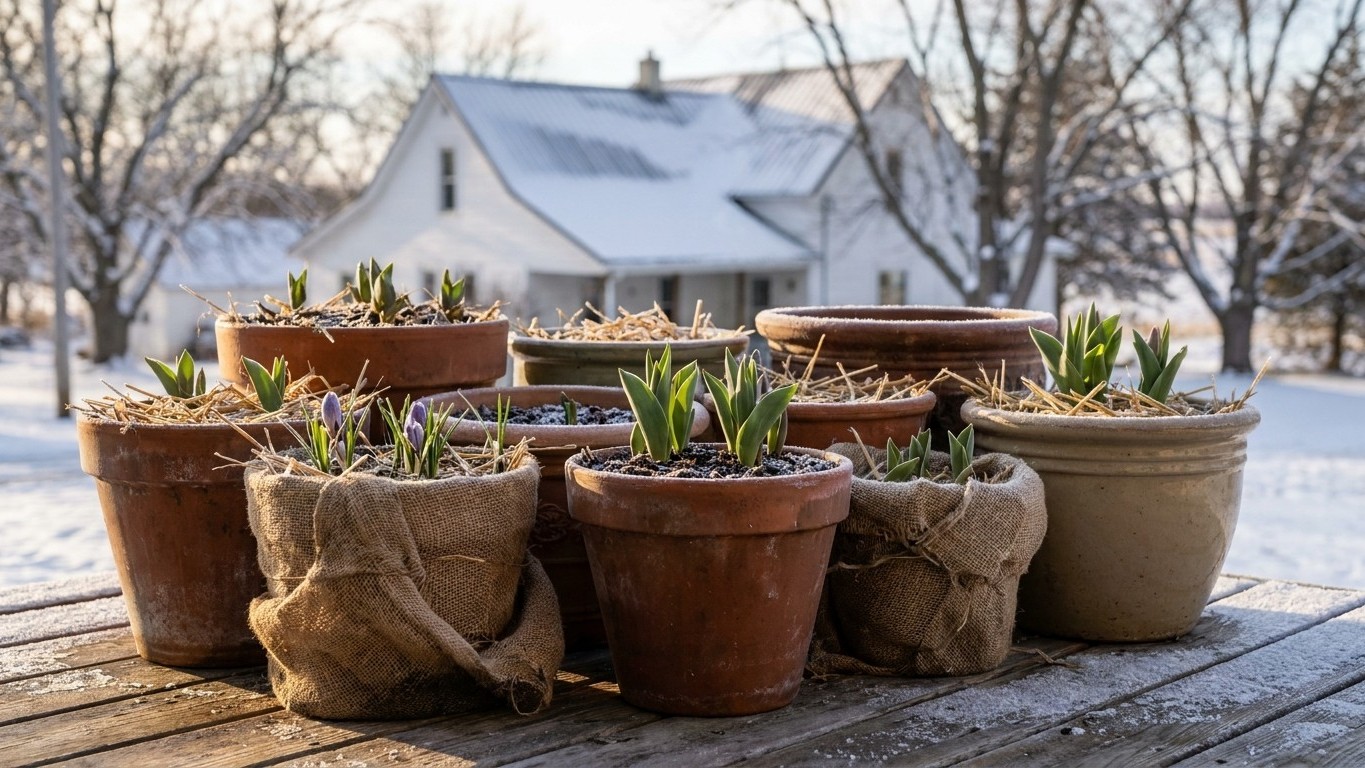

Whether to dig up dahlias, cannas and gladiolus in Arizona depends on which Arizona you garden in. In Phoenix and the rest of the low desert, the ground does not freeze deeply, so the tubers, rhizomes and corms can stay put under mulch. In Flagstaff and the high country, a hard freeze kills them in the soil, and they have to come up within a week or two after the first frost blackens the foliage. The sections below cover where the line falls, the lifting window, storage and the usual failures.
Do you have to dig them up in Arizona?
In Phoenix and the low desert, leave them in the ground under mulch; in Flagstaff and the high country, lift them every fall. That is the decision to write on the seed-packet envelope. Everything else is detail about where your yard sits between those two poles.
The low desert: stay in the ground
Arizona is not one climate. The USDA Plant Hardiness Zone Map (2023 edition) runs from 4b to 10b across the state. That system rests on a single variable, the average annual extreme minimum temperature, so it tells you how cold the worst night of a typical year gets, not how long summer lasts or how wet the soil stays. Because the range is so wide, a single zone number cannot speak for the whole state. Phoenix is the better yardstick for the desert floor.
NOAA’s 1991-2020 Climate Normals for Phoenix put the mean daily minimum of the coldest month at 45.3°F. A typical coldest night still sits well above freezing. Phoenix reached 32°F in only 6 of the 30 springs in that record, and NOAA lists the frost-free season there as 365 days. Frost heave, frozen soil and tubers turned to mush overnight are northern problems. They are not what happens to a dahlia root in a Phoenix bed.
What mulch does in the low desert is a different job. It buffers soil temperature swings and holds moisture so the roots are not baked or sitting in a dry crust. It also helps you avoid the more common winter mistake there, which is keeping the bed too wet while the plants are dormant.
The high country: lift them
Flagstaff and the high country are a different climate entirely, and they freeze hard. A dahlia tuber or canna rhizome left in frozen soil does not wake up in spring. Gladiolus corms are no tougher. If your winters regularly turn the top layer of soil solid, the verdict flips: dig them up.
The ground in between
Where exactly does the line fall? The data behind this article does not name a zone number or a town where it switches, so no one can honestly draw it for you. The colder the site (farther north, higher in elevation), the earlier the first fall frost and the harder the ground freezes. A yard in Flagstaff clearly belongs on the lifting side, and a yard in Phoenix clearly does not. Anywhere between, judge by your own winters. If you see frost blacken tender plants most years, or you have lost a canna to a cold snap, lift. If you have never needed to cover a tomato plant in January, leave them.
You can check local frost patterns in First and Last Frost Dates in Arizona. If you grow hardy spring bulbs as well, Which Spring Bulbs Survive Your Winter sorts out which of those need the same treatment. Dahlias, cannas and gladiolus are tender summer bloomers, and they follow different rules from tulips and daffodils.
When to lift them
The signal is a frost that blackens the foliage. Not a light chill, not a cool week, but the kind of freeze that turns dahlia leaves to wet black cloth and flattens canna stalks. That is the plant’s cue that the season is over. Lift the tubers and rhizomes within about a week or two after that frost.
Waiting that long is deliberate. Until the top growth dies, the leaves keep feeding the underground storage organs, and the skins keep toughening. A tuber lifted in the middle of the growing season is still plump with unfinished business. Its skin is thin and its tissue is full of sugars and water. Put it in a box and it breathes out moisture, bruises easily and invites the soft rot that turns a promising clump into a sour-smelling bag of slime by January. Lifting early does not save the tubers from frost. It hands you immature ones.
The delay after the freeze also has a ceiling. A week or two lets the tubers settle without leaving them exposed to a second or third freeze, and without leaving them in wet, cold soil where rot can start before you ever get them into storage.
What the window looks like in Arizona
For Phoenix there is no window to give you. NOAA’s records show no reliable fall freeze there, and the frost-free season is listed as 365 days. A frost-based calendar simply does not apply in the low desert. If you are in the low desert and decide to lift anyway, to divide a crowded clump or to move corms to a better-drained bed, take your cue from the plant. Lift once the foliage has declined and died back on its own, not while it is still green and growing.
In Flagstaff and the high country, the frost date is the clock. Colder, higher sites get their first fall frost earlier, so the lifting window arrives earlier there too. Gardeners at the top of the elevation range often have to move while the neighbors in lower, warmer pockets are still enjoying blooms. Look up your local first fall frost in the frost dates reference and count forward from the night that blackens your plants, not from a calendar date.
When the frost comes before the plants have finished, as in a sudden early freeze, the rule still holds. Cut the stems back to a short stub, leave the roots in place for the same week or two, and then dig. Use a garden fork rather than a spade, start well out from the stem, and lift the whole clump gently. Dahlia necks snap easily, and a broken neck means a tuber that will not sprout.
Storing them over winter
The goal is simple on paper: cure, clean lightly, store cool, dark and slightly moist so nothing rots and nothing shrivels. In practice, the three plants want different amounts of moisture, and the gap between them is where most losses happen.
Curing and cleaning
After lifting, let the clumps dry for a few days in a shaded, airy, sheltered place, out of direct sun and out of rain. This is curing. It lets surface moisture evaporate and the skin firm up so small wounds heal over. Brush off loose soil by hand. Resist the urge to hose everything spotless. A light rinse is fine for heavy clay, but washing tubers soaks them and puts rot back on the menu, so dry them again if you wash. Cut away any obviously mushy pieces with a clean knife before storing.
How the three differ
- Dahlias (tuberous roots): thin skins, fragile necks, shrivel quickly. Pack them in lightly damp wood shavings, peat or vermiculite in a ventilated box so each clump is surrounded but not touching its neighbor.
- Cannas (rhizomes): thicker and more forgiving. Store them in barely damp packing material and watch for firmness. They rot less readily than dahlias but wrinkle if allowed to dry out completely.
- Gladiolus (corms): cure these until the husks are papery, pull off the old shriveled mother corm from each new one, and store them dry in a mesh bag or paper sack with airflow. Damp packing invites mold on a corm.
Spring-flowering bulbs are a separate story, and Spring Bulbs covers that group, which includes plants that stay in the ground all winter and want chilling rather than rescue.
Where to put the boxes
Aim for cool and dark, but above freezing. In the high country, an unheated basement or an insulated garage that stays above freezing works for most gardeners. The danger there is cold, not heat. In the low desert, if you lift and store, the problem reverses: garages and sheds get warm and dry, which shrivels tubers. An interior closet or a cooler interior room is a safer choice than an uninsulated outbuilding.
Open every box once a month and check the contents. It takes ten minutes. Look for tubers that have gone soft or grown mold and pull those out immediately, because rot spreads to neighbors. If the clumps look wrinkled or hollow, mist the packing lightly. If they look glossy and wet, open the box and let it air for a day. That monthly check is the step that rescues a stored collection. Most lost tubers are lost between October and March because nobody looked.
What goes wrong
Four failures account for nearly every ruined collection, and each leaves a recognizable mark.
Rot shows as soft, brown or black patches, a sour smell and sometimes fuzzy mold. It comes from lifting too early, packing tubers damp, skipping the cure or sealing them in plastic. Prevention is dry curing, ventilated containers and the monthly check. Cut out small spots with a clean knife and let the cut surface dry before repacking.
Shrivelling shows as wrinkled, lightweight, leathery tubers or hollow-feeling rhizomes. Storage that is too warm or too dry causes it, and dahlias are the first to go. Slightly damp packing fixes most early cases. Tubers that have shriveled past the point of recovery will not sprout.
Lifting too early shows up as the soft, rot-prone tubers described above. The cure is patience: wait for the blackening frost, or for the plant to die back on its own, then give it a week or two.
Then there is the one that catches Arizonans specifically, which is leaving tubers in the ground a notch too far north or too high in elevation. A mild autumn in a high-country yard can lull a gardener into skipping the dig, and one hard freeze in the following weeks can finish the job. The dahlia that looked fine in November is a black mush in April. If your winters bring regular hard freezes, lift every year and do not gamble on a mild fall.
The reverse mistake is real too. Low-desert gardeners who copy northern instructions lift plants that would have been fine, then lose them to a dry, hot storage spot. If you are unsure which camp you fall into, the Arizona guides hub pages for your area give you a better sense of local winters before you decide.
Common questions
Can I leave dahlias in the ground in Phoenix?
Yes. NOAA’s 1991-2020 normals put the coldest month’s mean daily minimum at 45.3°F, and Phoenix has no reliable fall freeze. Mulch the bed, keep the soil from getting waterlogged while the plants are dormant, and expect heat rather than cold to be the limiting factor. Summer heat is the larger challenge for dahlias in the low desert, not winter.
Do cannas need to be dug up in Flagstaff?
Yes. Flagstaff and the high country freeze hard, and cannas are tender rhizomes. Cut the stalks back after a frost blackens them, lift the clumps within about a week or two, cure them briefly, and store them in barely damp packing in a cool, dark place that stays above freezing.
Should gladiolus corms be stored damp like dahlias?
No. Gladiolus corms keep best dry and with airflow, in a mesh bag or paper sack. Damp packing that suits dahlias and cannas invites mold on corms. Separate the new corm from the old shriveled one after curing.
What if I lift and the weather turns warm again?
That is common in a mild fall, and it is no reason to hurry. The tubers still need to cure and to be stored cool. Warm spells in storage areas can start tubers sprouting early, so move boxes to a cooler room if you see pale shoots. When spring comes, wait until your local last frost has passed before planting out. For help with the planting side, see Planting Spring Bulbs in Arizona, which covers the bulbs that go in the ground in fall.