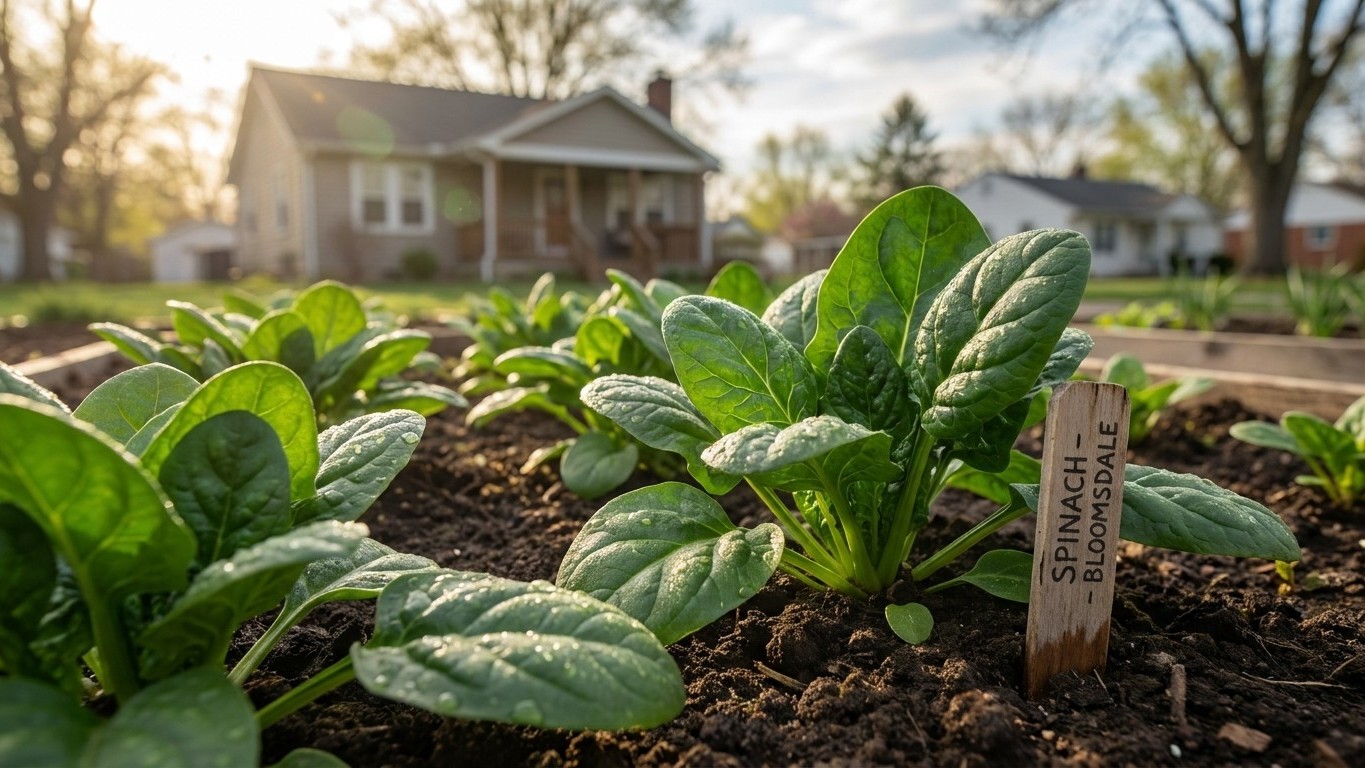

Will Spinach Bolt Early in Yukon? Spinach in Yukon typically bolts within three to five weeks of a strong start, not because the region runs hot but because its summer days stretch past 18 hours of light, a signal that pushes the plant straight into flower. Whitehorse averages zero days a year at or above 90 F, so heat almost never enters the picture. The trigger here is daylight, and it arrives whether the air feels like summer or not.
The short answer
On the longest day of the year, the reference city for Yukon’s climate records sees 18 hours and 45 minutes of daylight. That number matters for spinach in a way that runs opposite to how it works for a crop like onions elsewhere on this site: onions need long days to build a bulb, and a far-north garden with extra daylight is an advantage for them. Spinach reads the same long-day signal as a command to stop making leaves and start making a seed stalk. There is no version of a cool northern summer that cancels this out. The plant does not care that the air stays mild; it responds to how much light falls on it each day, and in Yukon that amount climbs toward a peak most of the rest of the country never sees.
So which factor actually ends the crop here, heat or day length? The data points squarely at day length. Whitehorse’s average of zero days above 90 F tells you heat stress is close to a non-issue in most seasons; spinach grown in this territory is very unlikely to sit for weeks under conditions that would scorch it in a warmer state. What it cannot avoid is the calendar. Daylight lengthens through spring at a rate steep enough that, by early June, hours of light are already well beyond what triggers flowering in a cool-season leaf crop, regardless of whether the thermometer cooperates.
That leaves a narrow, honest picture for anyone planning a Yukon spinach bed. Heat is not the enemy. The enemy is the sun staying up. Growers who treat this as a heat-tolerance problem, choosing a spot with afternoon shade or watering heavily to keep roots cool, are solving the wrong problem. What actually buys time is timing itself: getting seed in the ground early enough that a harvestable crop exists before the daylight climb reaches its peak, and accepting that once the long-day trigger fires, no amount of cool air will hold the plant back.
This also reframes how to think about variety choice and succession planting, both covered further down, along with a full breakdown of When to Sow Autumn Spinach in Yukon. But the baseline fact stands on its own: in Yukon, day length decides when spinach bolts, and the summer’s mild temperatures, remarkable as they are for almost every other vegetable, do nothing to change that clock.
How long the spring window really is
Stacking the frost data against spinach’s own rules gives a rough but usable sense of how much spring is actually available before bolting risk takes over.
- The general rule is to sow spinach two to three weeks before the last spring frost. Yukon’s reference station averages a last frost on June 5, which puts a typical sowing date somewhere around mid-to-late May.
- That June 5 figure is a mean, not a promise. In roughly half of all years, the last frost lands later than that date, so a gardener planting without row cover or cold frames should treat late May as an optimistic target, not a safe one.
- From a mid-to-late-May sowing, spinach has somewhere in the neighborhood of four to six weeks of genuinely productive growth before the days approaching the solstice push it toward flowering. That window shrinks fast for anyone who sows later, since the daylight climb does not wait for the garden to catch up.
- Heat essentially never shortens this window from the other end. With zero days a year averaging above 90 F, the spring crop is not going to fail because of a hot stretch the way it might in a warmer state; day length alone sets the closing date.
- Practically, this argues for harvesting early and often rather than waiting for plants to reach full size. Cutting outer leaves as soon as they are usable, instead of holding out for a fuller stand, captures more of the crop before the plant shifts its energy into a seed stalk.
The autumn crop, and when the soil lets you sow
A fall planting faces two separate obstacles, and in Yukon they do not carry equal weight.
Soil too warm to germinate
Spinach seed germinates poorly once soil temperatures climb above 80 F, a threshold documented by Utah State University Extension. That obstacle is real in warmer states, where gardeners have to wait out a hot late-summer soil before fall seed will even sprout. In Yukon, it barely applies. With an average of zero days a year reaching 90 F in the air, soil temperatures pushing past 80 F are uncommon outside a sunny, exposed bed during the brightest weeks around the solstice. Growers here are far less likely to be held back by warm ground than by the calendar itself.
Counting back from first frost
The bigger obstacle is time running out. Yukon’s reference station averages a first fall frost on August 25, and, as with the spring date, that figure is a midpoint: frost arrives later than that in about half of all years, and earlier in the other half. Utah State University Extension’s guidance for a fall crop is to sow 50 to 75 days before the date you want to harvest, with no specific days-to-maturity figure published for spinach itself. Counting back from August 25 puts a 50-day sowing around the start of July and a 75-day sowing in mid-June. Both of those dates sit uncomfortably close to the same long, bolt-triggering daylight that threatens the spring crop, which means a fall planting in Yukon is working against two clocks nearly at once: not enough days left before frost, and still not enough shortening of daylight to fully relax the bolting pressure. Leaning toward the later end of that 50-to-75-day range, closer to early July, gives the crop a better chance of growing during days that have started measurably shortening past the solstice.
Checking this against your own county
Yukon does not divide into counties, and the Whitehorse station behind these averages describes one location, not the whole territory. Communities further north, at higher elevation, or away from the Whitehorse valley can run frost dates weeks earlier or later, and neither the spring nor the fall window calculated here will match every yard exactly.
For a reading closer to home, the territory’s own agricultural office is the right first call, and Agriculture and Agri-Food Canada’s site is a working, verifiable starting point (agriculture.canada.ca). Local garden clubs and community greenhouse programs in Whitehorse and Dawson also track first and last frost informally from year to year, which can sharpen these federal averages into something closer to a specific backyard.
Common questions
Does shade cloth stop spinach from bolting in Yukon’s long days?
Shade cloth reduces light intensity and can lower leaf temperature, but it does not shorten the hours of daylight reaching the plant. Since bolting in spinach is tied to day length as well as warmth, shade alone will not cancel the long-day trigger driving Yukon’s short growing window.
Which spinach variety resists bolting best in a far-north garden?
Utah State University Extension names Bloomsdale, Melody, Teton, and Olympia as spinach varieties, but publishes no comparative data on bolt resistance among them. No source used for this article ranks these varieties against each other for long-day tolerance, so no claim can be made here about which performs best in Yukon.
Would a hoop house or cold frame help extend the season?
Cold frames and hoop houses mainly protect against frost and cold soil, which helps with early spring sowing and a slightly later fall harvest. They do nothing to change how many hours of daylight a plant receives, so they cannot delay bolting caused by the long summer days themselves.
Is succession sowing worth it given such a short spring window?
Sowing small batches every week or two through the available spring window, rather than one large planting, spreads out harvest and reduces the chance of losing an entire crop to a single bolt event. Given how narrow the spring window is here, staggered sowings make more efficient use of the four to six usable weeks than one large sowing does.