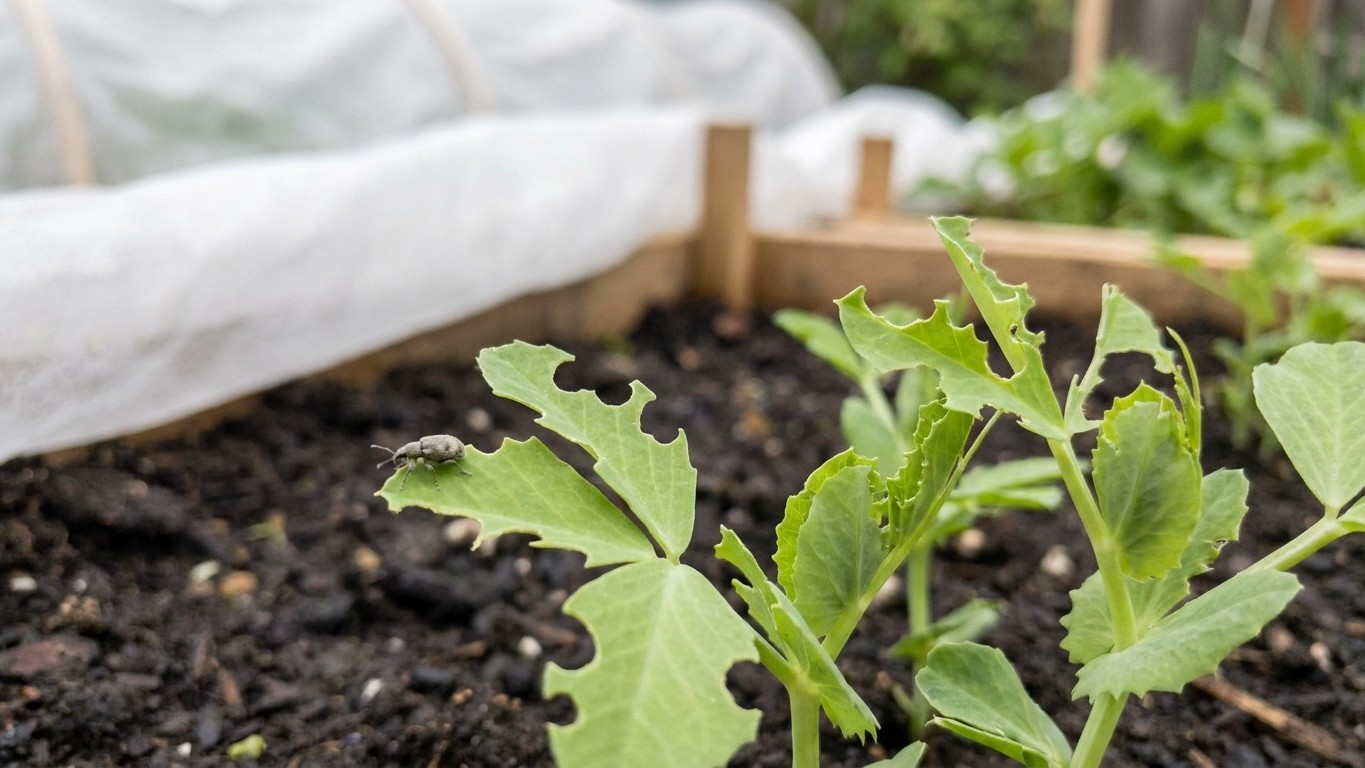

Pea leaf weevil damage in British Columbia tracks soil warming each spring, not a fixed date on the calendar. Gardeners here watch for lace-edged pea and fava bean leaves within a few weeks of seedlings breaking ground, with the real threat happening underground, in the root nodules, where a floating row cover can still make the difference.
Reading the calendar from your last frost

The Vancouver area’s average last spring frost falls on March 18, according to Environment and Climate Change Canada’s 1981-2010 Climate Normals for the VANCOUVER INT’L A station. That figure is a mean, not a guarantee: in one year out of two, frost shows up later than March 18. Treat it as the midpoint of a window you plan around, not a date you circle and forget.
The pea leaf weevil doesn’t read a calendar at all. It answers to soil temperature. Adults become active once the ground warms enough for them to fly and feed, which means a mild March pushes activity earlier and a cold, wet spring delays it by weeks. That variability matters more here than in many places, because coastal British Columbia’s climate swings noticeably from one season to the next.
When damage actually appears
Feeding notches on leaf margins typically show up within a few weeks of seedlings emerging, once adult weevils find the young plants and start feeding along the edges. That timing is why row covers need to go on before or right at emergence, not after the first notches are already visible. Pulling covers off too early, before plants reach a stage where they can outgrow minor feeding, defeats the purpose of putting them on at all.
What it attacks, and what the damage looks like
Pea leaf weevil targets a specific group of legumes: field peas, garden peas, fava beans (also called broad beans), and related plants like vetches and some clovers. Home gardeners growing peas or fava beans in raised beds or backyard rows are the ones most likely to encounter it.
The first sign most people notice isn’t the insect. It’s the leaf. Adult feeding leaves distinctive notches, U-shaped or crescent-shaped bites cut into the outer edge of leaflets, working inward from the margin. On young seedlings, a few of these notches look cosmetic. A heavier infestation gives leaves a scalloped, almost lace-like edge, and severely fed-on seedlings can look pale and stunted even before you spot a single weevil.
The stage that actually causes the worst damage
Adult notching is the visible clue, but it’s rarely what threatens the plant’s survival. The larvae are the real problem. After adults lay eggs near the base of the plant, the larvae hatch and move into the soil, where they feed on the root nodules, the small nodes where legumes host the bacteria that fix nitrogen from the air. Destroyed nodules mean less nitrogen for the plant, which shows up later as pale, stunted, slow-growing peas or beans, sometimes long after the adult feeding notches have stopped being the obvious symptom.
That distinction matters for anyone trying to act on what they see. Adult feeding on leaves is a warning sign. Root nodule damage from larvae is already underway underground, out of reach of anything you can spray or cover at that point.
How British Columbia sits in this pest’s range

This pest is documented in two territories tracked on this site. A count that narrow suggests British Columbia sits closer to an edge of the pest’s known range here, rather than sitting in the middle of heavily documented pea-growing country. That doesn’t mean the insect is rare in the province. It means less local, published entomology work has been done to pin down its exact timing and severity here compared to major pea-growing regions further inland.
There’s no dedicated British Columbia extension publication built specifically around this pest’s local behavior in the data behind this site. The nearest published guidance comes from Idaho, across the border, where state extension entomologists have documented the insect’s biology and its damage to peas and fava beans in detail. That guidance is useful for understanding the insect itself, its life cycle, its host preferences, its feeding pattern, but it was written for Idaho’s climate and Idaho’s planting calendar, not for coastal British Columbia’s cooler, wetter spring pattern.
| Territory | Documented in local dataset | Pest guidance source | Note |
|---|---|---|---|
| British Columbia | Yes, presence confirmed | Borrowed from a neighbouring state | Coastal climate, generally milder and wetter spring than inland pea country |
| Idaho | Yes, presence confirmed | University of Idaho Extension (local) | Source of the published guidance used for this pest |
What that leaves a British Columbia gardener with is a real insect, confirmed present, but a timing picture that has to be adjusted for local frost dates and soil conditions rather than lifted straight off a neighbouring state’s calendar.
What actually works against it
The cheapest and most effective defenses target the insect before it ever gets underground, because once larvae reach the root nodules, almost nothing a home gardener does at that point reverses the damage.
- Timing your planting: delaying seeding until the soil has warmed past the point of peak adult flight activity means fewer adults find your seedlings at their most vulnerable stage, right at emergence.
- Row covers: a floating row cover placed over seedlings at emergence physically blocks adult weevils from reaching the leaves to feed and lay eggs. The cover stops working the moment it comes off, or the moment plants flower and need pollinator access, so timing its removal matters as much as timing its installation.
- Hand-picking adults: on small backyard plantings, checking foliage in the evening, when weevils tend to be active on leaves, and removing them by hand can meaningfully cut numbers before eggs are laid.
- Crop rotation: avoiding peas or fava beans in the same bed year after year denies adult weevils a predictable, familiar food source close to where they overwintered.
- Clearing plant debris: removing old pea and bean residue after harvest eliminates a favored overwintering site for adult weevils near next year’s planting area.
All five measures work by intercepting the adult stage, before eggs are laid or before larvae burrow into root nodules. Once larvae are established underground, feeding on nodules out of sight and out of reach, covers, hand-picking, and rotation from this season can’t undo that damage. At that point, the priority shifts to next year’s prevention rather than this year’s cure, which is exactly why timing your defenses around the emergence window matters more than any single tactic on its own.
Common questions
Does pea leaf weevil kill mature pea plants?
Rarely outright. The bigger risk is stunted growth and reduced yield from damaged root nodules, which limits the nitrogen the plant can use, rather than the plant dying from adult leaf feeding alone.
Can I use the same row cover timing every year?
Not reliably. Since the insect responds to soil warming rather than a fixed date, and British Columbia’s last frost average of March 18 shifts year to year, cover timing needs to follow local soil conditions each spring rather than a repeated schedule.
Is fava bean more at risk than garden pea?
Both are documented hosts, along with field peas and some vetches and clovers. Neither is singled out in available guidance as consistently harder-hit than the other; damage depends more on planting timing and adult activity than on which of the two legumes is in the ground.