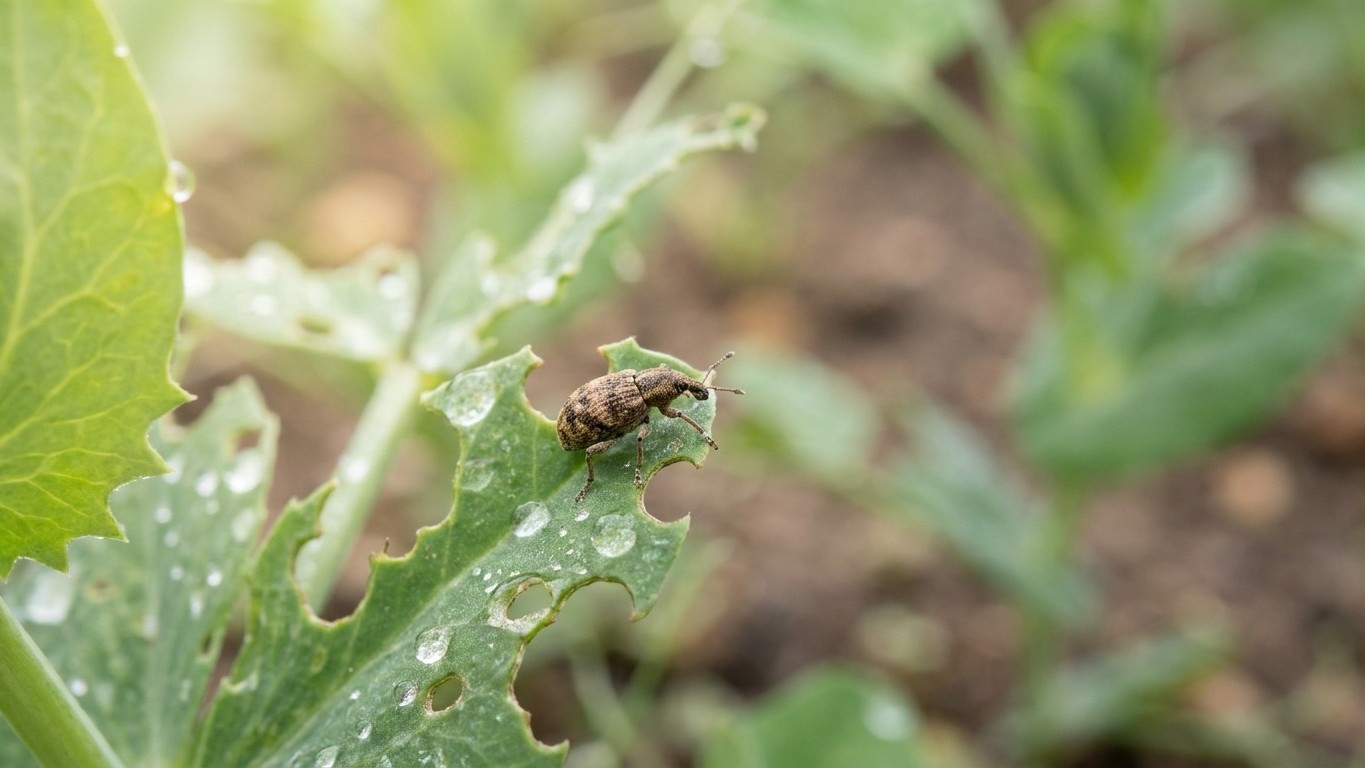

Pea leaf weevil in Idaho is a regional pest, not a statewide one: University of Idaho Extension places it only in northern Idaho and the Magic Valley. If you garden in Boise or the eastern valleys, this weevil isn’t part of your local pest pressure at all. Where it does show up, the damage starts on leaf edges and moves underground.
When Pea leaf weevil turns up in Idaho

University of Idaho Extension’s pest guidance for home vegetable gardens groups pea leaf weevil with a handful of other insects that follow a broad “late spring through summer” pattern, but the source doesn’t publish a specific monthly window for this species the way it does for some others. Mexican bean beetle gets a named month (mid-June, and only around Boise). Carrot rust fly larvae get a named cutoff (damage after late September). Pea leaf weevil gets a location instead of a date: northern Idaho and the Magic Valley, and nowhere else in the state.
That’s worth sitting with for a second. It means the honest answer to “when does pea leaf weevil show up” isn’t a calendar date at all. It’s a place. The Extension service is telling gardeners in its documented range to watch for the pest as part of the general late-spring-through-summer activity window that covers most of Idaho’s garden pests, rather than handing them a narrower target.
So if you garden in the Magic Valley or the northern panhandle counties, the practical move is to fold pea leaf weevil into your normal early-season scouting rather than waiting for a specific week. Check pea and legume plantings as soon as they emerge, and keep checking through the stretch when most other Idaho garden pests are active, since that’s the only window the local data actually gives you.
Reading the calendar from your last frost
The one date most Idaho gardeners actually build a season around is the last spring frost, and for the Boise station tracked by NOAA, that falls between April 23 and May 7, based on 1991-2020 climate normals. That’s a range, not a promise, and it’s specific to a low-elevation valley station. Northern Idaho and the Magic Valley, the two areas where pea leaf weevil actually turns up, sit at different elevations and typically run colder and shorter seasons than Boise, so treat that frost window as a reference point rather than a local guarantee.
Pea leaf weevil doesn’t check a calendar either. It answers to soil temperature. A warm early spring can bring adults out and onto emerging pea shoots well before a cold, wet one would. That’s part of why the Extension guidance leans on a broad activity window rather than a fixed date: the insect’s own schedule shifts with the weather, so any single date would be wrong in half the years anyway.
In practice, that means the first visible feeding damage tends to show up within the first few weeks after pea seedlings break the soil surface, since young, tender leaf tissue is what draws adult weevils in. If you’re planting close to your local frost-safe date, that’s roughly the stretch to start checking leaf margins. Anyone using row covers for early protection should have them in place before seedlings emerge and needs to plan on removing them once pea plants start flowering, since covers block the pollinators those blossoms need.
What it attacks, and what the damage looks like
The giveaway most gardeners notice first isn’t an insect. It’s the leaves. Pea leaf weevil feeding leaves a distinctive pattern of notches cut into the outer edge of leaflets, small semicircular bites that give the foliage a scalloped, lace-edged look. On a lightly hit plant that’s mostly cosmetic. On a heavily hit stand of young peas, it can slow growth right when the plants need to be putting energy into root and vine development.
Two life stages, two kinds of damage
The notching on leaves is adult feeding, and it’s the part you can actually see without digging anything up. But the more consequential damage happens out of sight. Weevil larvae live in the soil and feed on the root nodules that peas and other legumes rely on for nitrogen fixation. That underground feeding doesn’t show up as a visible wound, it shows up as a plant that seems undersized, pale, or slow to thrive for no obvious reason. Once larvae are established on the roots, foliar damage on the leaves above is really just the visible half of the problem.
The crops at risk are peas and other legumes with nitrogen-fixing root nodules, since that’s the food source the larval stage depends on. A gardener who sees notched pea leaves in a garden located in northern Idaho or the Magic Valley has good reason to suspect this weevil specifically, since the leaf pattern is fairly distinctive even without catching the insect itself.
How Idaho sits in this pest’s range

Across this site’s coverage, pea leaf weevil is currently documented in two territories, which puts Idaho on the narrow end of that range rather than in the middle of a widespread pattern. When a pest is documented in most territories tracked here, the story is usually about timing differences from one place to the next. That’s not the case here. With only two territories showing this pest, Idaho sits closer to an edge of its known range, and within the state itself the range narrows again, limited to northern Idaho and the Magic Valley rather than statewide.
That double narrowing matters for how much weight to put on this pest in your own planning. A gardener in the Treasure Valley, the Boise area, or eastern Idaho isn’t in the documented range at all, based on University of Idaho Extension’s own regional breakdown. Gardeners in the two documented regions have more reason to build pea leaf weevil into their routine scouting, since the local guidance specifically calls out those areas rather than treating it as a statewide concern the way it does with, say, slugs or grasshoppers.
None of this tells you how severe an infestation might get in a given year or how it compares to pressure in the other documented territory, since the source data doesn’t rank severity or trend. It only tells you where the pest has been documented and where it hasn’t.
What actually works against it
Several measures help reduce pea weevil damage, roughly in order from cheapest to most labor-intensive.
- Time your planting so peas get past their most vulnerable seedling stage before adult weevils are most active, since younger tissue draws more feeding than mature leaves; it’s not a guarantee, but it shifts the odds and costs nothing beyond paying attention to your local frost-safe window.
- Use row covers to physically block adult weevils from reaching emerging seedlings to feed and lay eggs nearby, though covers need to go on before or right at emergence and must come off once plants start flowering, or you’ll block the pollinators your peas need to set pods.
- Hand-pick adult weevils off plants, especially in the first couple of weeks after emergence when populations are still building and plants are small enough to check closely; it’s labor, not a permanent fix, but it directly removes adults before they lay eggs.
- Rotate crops and clear garden debris to reduce the places where adult weevils overwinter or where next season’s population gets a head start, denying overwintering adults an easy spot to settle near next year’s crop.
None of these measures do much once larvae are already established on root nodules underground. At that point the damage is happening below the soil line, out of reach of covers, hand-picking, or anything applied to the foliage above. The practical window for prevention is early: before eggs are laid, not after larvae have moved onto the roots.
Common questions
Does pea leaf weevil occur in Boise or the Treasure Valley?
University of Idaho Extension’s regional breakdown places this pest only in northern Idaho and the Magic Valley, not around Boise. Boise gardeners dealing with garden pests are more likely to run into pests like Mexican bean beetle, which the same source confines specifically to that area instead.
What plants does pea leaf weevil damage most?
Peas and other legumes with nitrogen-fixing root nodules are the crops at risk, since weevil larvae feed on those nodules underground while adults feed on the foliage above, leaving the characteristic notched leaf edges.
Is there a specific date to watch for pea leaf weevil in Idaho?
No. University of Idaho Extension doesn’t publish a specific monthly window for this species the way it does for some other garden pests. It’s grouped into the general late-spring-through-summer activity pattern that covers most Idaho garden pests, with location, not date, as the defining detail for this one.