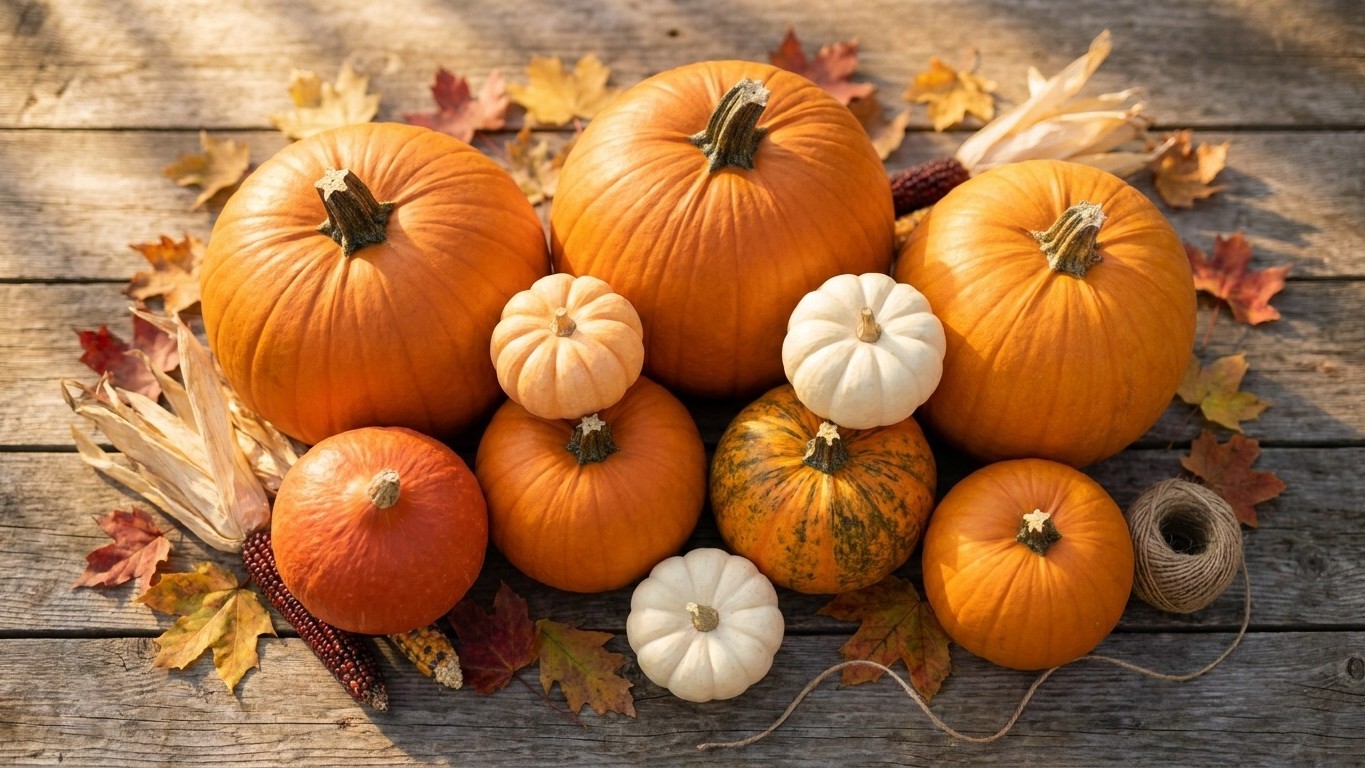

Utah State University Extension names nine pumpkin varieties by name: Autumn Gold, Connecticut Field, Spirit Hybrid, Jack Be Little, Wee-B-Little, Baby Bear, Lumina, Big Max, and Big Moon. That’s the actual answer, straight from the source, and it’s a shorter list than most garden catalogs suggest. Here’s what the extension says about each type and how to pick between them.
The short answer

Nine names. That’s what Utah State University Extension lists in its guidance on pumpkins in the garden: Autumn Gold, Connecticut Field, Spirit Hybrid, Jack Be Little, Wee-B-Little, Baby Bear, Lumina, Big Max, and Big Moon. The extension notes that some of these varieties “can be used for pies and carving,” which tells you right away that this isn’t a strict either-or split. A few of these pumpkins pull double duty.
University of Illinois Extension doesn’t name specific cultivars, but it draws a cleaner functional line that helps make sense of the Utah list. Carving pumpkins, according to Illinois Extension, are “great for decorating and carving” and “generally have bright orange smooth skin, can be very large, and have a stem.” Think Connecticut Field, Big Max, and Big Moon in that category, mostly grown for size and that classic jack-o’-lantern look.
Then there’s the other category. Illinois Extension calls these “processing pumpkins,” sometimes labeled “pie” or “sweet” pumpkins on seed packets. These are “more desirable for baking or cooking” because they “have high sugar content, are more flavorful, less watery, and have smooth-textured flesh.” Baby Bear and Jack Be Little fit that description more closely than a hulking Big Max ever would.
What’s notable is how few brand names actually show up in extension literature. Search around and you’ll find plenty of blogs claiming there are “50 best pumpkin varieties” or ranking obscure hybrids that never appear in any land-grant university publication. The extensions themselves stick to a shorter, more practical list, one built around what grows reliably and what performs well in the kitchen or on the porch, not marketing copy.
So if you’re standing at a farm stand wondering which pumpkin to grab, the honest answer is that the naming conventions in extension resources are sparser than seed catalogs suggest. Nine names from Utah State, a functional split from Illinois. That’s the documented ground truth, and everything else is either regional folklore or a seed company’s own branding.
What actually decides it
Skin and flesh structure
The biggest mechanism separating a good carving pumpkin from a good cooking pumpkin comes down to what’s under the skin. Illinois Extension describes carving types as having “bright orange smooth skin” built for a large, hollow cavity, ideal for scooping and cutting shapes. Processing pumpkins, by contrast, have “smooth-textured flesh” that’s denser and less stringy. That density is what makes a pie filling smooth instead of watery.
Sugar content and moisture
According to Illinois Extension, processing pumpkins carry higher sugar content and less water in the flesh. That’s a genetic trait bred into pie-type cultivars over generations, not something you can coax out of a carving variety by choosing a smaller one at the store. A Connecticut Field pumpkin, bred for size and display, simply doesn’t carry the same sugar concentration as a Baby Bear.
Size as a selection signal
Weight matters more than most shoppers realize. Illinois Extension recommends picking smaller pumpkins for cooking, “ideally between 4-8 pounds.” That range rules out the big carving varieties almost automatically. A Big Max or Big Moon pumpkin, prized for its size on the Utah State list, is the wrong pick for a pie filling recipe. Reach for the smaller varieties instead, the ones bred to concentrate flavor rather than volume.
Dual-purpose varieties complicate the split
Not every variety sorts neatly into one bucket. Utah State University Extension specifically notes that some of its listed varieties can be used for both pies and carving. That crossover exists because a handful of cultivars were bred as compromises: decent size for display, decent flesh quality for cooking. It’s worth checking the specific variety rather than assuming size alone tells you the purpose.
How to do it
- Decide the purpose first. Are you carving a jack-o’-lantern for the porch, or cooking a pie? This determines everything downstream, since carving and processing pumpkins are bred for different traits.
- Match the variety to the goal. For carving, look toward larger types like Connecticut Field, Big Max, or Big Moon, all named on the Utah State list and consistent with the smooth, large-skinned profile Illinois Extension describes. For cooking, look toward smaller varieties like Baby Bear or Jack Be Little.
- Check the weight if cooking. Illinois Extension’s guidance is specific: aim for 4 to 8 pounds. Anything heavier is likely bred for size, not flavor, and will cook up wetter and less sweet.
- Inspect the skin and stem. Look for a pumpkin that’s fully intact, without soft spots, cracks, or a stem that’s already loose. A firm, unbroken pumpkin holds up longer whether you’re carving it or storing it for later cooking.
- Carry it properly. Lift the pumpkin from underneath, cradling its base. Never carry or lift a pumpkin by the stem. The stem isn’t a handle; it’s a point that snaps easily, and a broken stem opens the pumpkin to faster decay.
- Time the carving to the day you plan to display it. There’s no published extension research on how many days a carved pumpkin lasts, and no bleach dip or petroleum jelly protocol comes from University of Illinois Extension or Utah State University Extension. What actually helps: choose a sound, blemish-free pumpkin, keep it whole as long as possible, and carve it close to the day you intend to display it rather than days in advance.
- Store whole pumpkins in a cool, dry spot until ready. Keeping the pumpkin uncarved and away from moisture buys you more time than any topical treatment applied after cutting.
What goes wrong
- Choosing a carving variety for pie filling. A Big Max or Connecticut Field pumpkin looks impressive but delivers watery, less flavorful flesh. Remedy: pick a variety Illinois Extension would classify as a processing type, and stick to the 4-8 pound range for the sweetest, driest flesh.
- Picking an oversized pumpkin for cooking because it’s cheap or available. Bigger isn’t better in the kitchen. Remedy: weigh it before buying, or ask if it’s labeled a pie or sweet variety like Baby Bear or Jack Be Little.
- Lifting or carrying the pumpkin by the stem. The stem breaks off easily and isn’t structural. Remedy: always support the pumpkin from underneath with both hands.
- Expecting a bleach dip or petroleum jelly rub to preserve a carved pumpkin for days. No university extension publishes that protocol or a specific shelf-life figure for carved pumpkins. Remedy: skip the folk remedies, choose a sound pumpkin, and carve it close to the day you plan to display it rather than relying on treatments to extend its life.
- Buying and carving weeks ahead of the display date. A carved pumpkin exposed to air starts breaking down quickly regardless of treatment. Remedy: keep the pumpkin whole in storage and carve as close to the actual event as your schedule allows.
- Assuming the first fall frost is a fixed date. Gardeners sometimes plan harvest timing around a specific calendar day. Remedy: treat the mean first fall frost as an average, occurring around a general window rather than on a guaranteed date, and don’t confuse a light frost with a hard freeze when deciding when to bring pumpkins in from the vine.
Common questions
Which pumpkin varieties does an extension service actually name for carving?
Utah State University Extension lists Connecticut Field, Big Max, and Big Moon among varieties suited to larger, decorative use, consistent with University of Illinois Extension’s description of carving pumpkins as having bright orange, smooth skin and large size.
Which pumpkin varieties are named for cooking or pies?
Baby Bear and Jack Be Little appear on the Utah State University Extension list and align with what Illinois Extension calls processing or pie pumpkins, prized for high sugar content and smooth flesh rather than size.
How long does a carved pumpkin last?
Neither University of Illinois Extension nor Utah State University Extension publishes a specific number of days or a preservation protocol involving bleach or petroleum jelly. What’s documented is simpler: choose a sound, unblemished pumpkin, keep it whole as long as possible, and carve it close to the day you intend to display it.
What size pumpkin should I buy for baking?
Illinois Extension recommends smaller pumpkins, ideally between 4 and 8 pounds, since these tend to carry more concentrated flavor and less water in the flesh compared to large carving types.