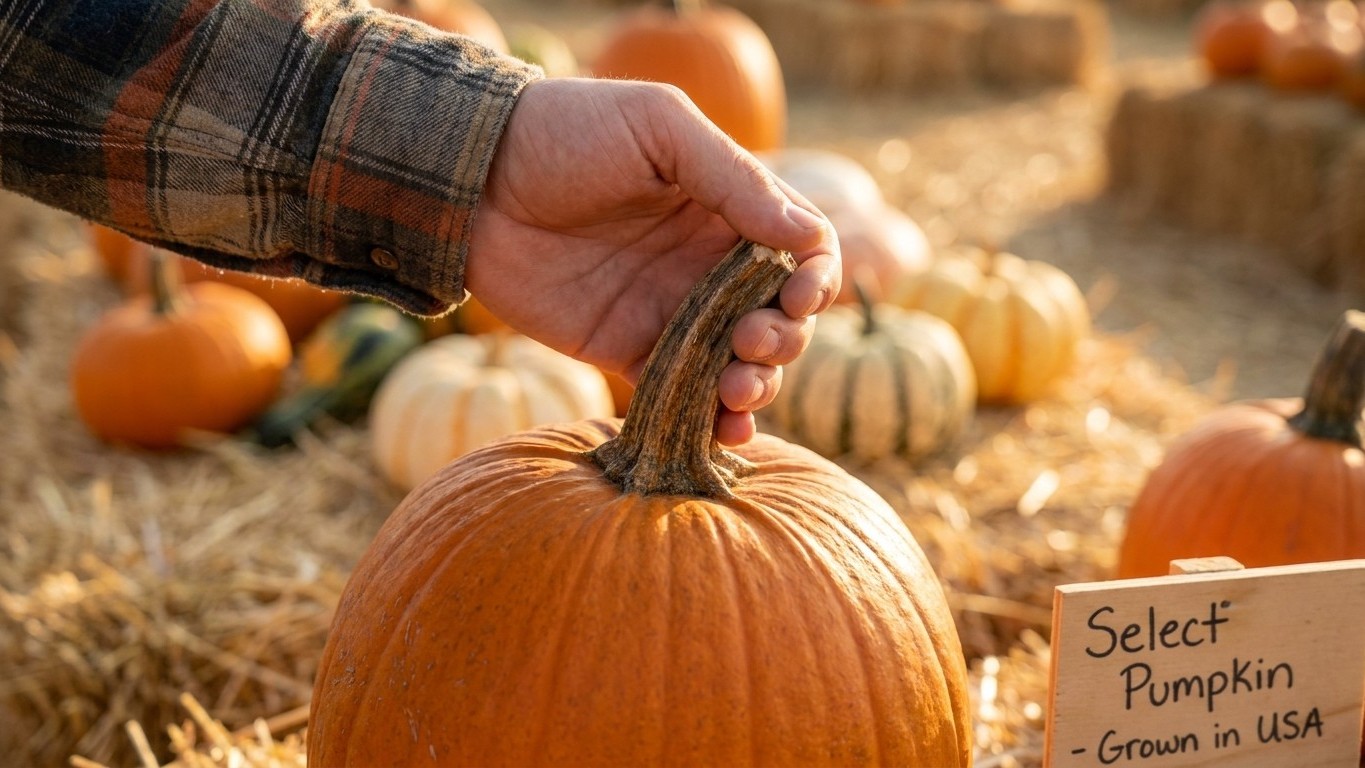

The stem tells you what the shell can’t: whether the pumpkin has already started breaking down from the inside. A stem with 1 to 2 inches left standing means the seal at the top is intact, which is the difference between a jack-o’-lantern that holds its shape and one that collapses early. Skip the pumpkin with a broken or missing stem, no matter how good the color looks.
The short answer

University of Illinois Extension puts a specific number on this: look for a pumpkin with 1 to 2 inches of stem left. That’s the guidance, not a rough guess, and it’s worth taking seriously at the patch or the stand because it’s one of the few objective checks you can do before you buy.
The reasoning behind that number is straightforward. The extension explains that once the stem breaks off, that section of the pumpkin becomes exposed, increasing the chance of the pumpkin spoiling prematurely. The stem isn’t decoration. It’s a plug over a wound, and when it’s gone, the fruit has an open door for rot to get started weeks before you’d planned on carving anything.
This means the stem check comes first, before you even look at the color or turn the pumpkin over to check the bottom. A short, snapped-off stub, or worse, no stem at all, should send you to the next pumpkin in the pile. It doesn’t matter how symmetrical the shape is or how deep the orange color runs. A compromised stem is a compromised pumpkin, full stop.
Stem length isn’t the only thing to check, though it’s the first filter. University of Illinois Extension also notes that shoppers should avoid pumpkins with blemishes and soft spots, and that the pumpkin should feel heavy for its size. Shape, by contrast, is unimportant. A lopsided pumpkin with a solid 2-inch stem, no soft spots, and good heft is a better choice than a picture-perfect round one with a broken stem.
One more thing worth clearing up now, because it trips people up at the display: the stem is a handle in appearance only. It’s actually the seal over the vine attachment point, and it’s not built to bear the weight of the fruit hanging from it. Treating it like a carrying handle is one of the fastest ways to turn a good pumpkin into a bad one before it even gets to your porch.
What actually decides it
The stem length matters because of what’s happening underneath it, not because of how it looks sitting on top of the pumpkin. Two mechanisms are doing the work here, and understanding them changes how you shop and how you handle what you bring home.
The stem as a seal, not a handle
A pumpkin’s stem is the remnant of the vine connection, the spot where the fruit was attached to the plant while it grew. Once harvested, that area becomes the pumpkin’s most vulnerable point, structurally and biologically. An intact stem of 1 to 2 inches covers and protects that connection point. It’s a physical barrier over what would otherwise be an open wound.
This is why the “handle” instinct is a real risk. Lifting a pumpkin by its stem puts direct stress on that seal, and if it snaps or even cracks partway, you’ve just created the same exposure the extension warns about, except now it happened in your driveway instead of at the source. Always lift a pumpkin with two hands under its base or sides. The stem is there to be looked at, not gripped.
Exposure and premature spoiling
Once the stem area is broken open, the pumpkin loses its natural seal at exactly the spot where decay organisms have the easiest access. University of Illinois Extension is direct about the outcome: that exposed section increases the chance of the pumpkin spoiling prematurely. This isn’t about the pumpkin looking a little worn after a few weeks on the porch. It’s about the internal breakdown starting earlier than it would have with the seal intact, well before you’ve had a chance to carve it, let alone display it.
This mechanism is also why a pumpkin can look completely fine on the outside, deep color, firm shell, no visible soft spots, and still be a poor choice if the stem is gone. The visible surface isn’t where the early damage shows up first. The stem is the tell, which is exactly why it’s the first thing to check rather than an afterthought.
How to do it
- Check the stem first. Look for 1 to 2 inches of stem still attached, per University of Illinois Extension. If it’s broken, cracked, or missing entirely, set that pumpkin aside and move to another.
- Scan the whole shell for blemishes and soft spots. Run your eyes, and lightly your hand, over the surface. Any soft give under light pressure, or visible bruising, is a pass on that pumpkin.
- Judge weight, not shape. Pick it up (by the base, not the stem) and compare it to similarly sized pumpkins nearby. A heavier pumpkin for its size is the better pick. An odd shape, a lean, a flat side, none of that matters.
- Lift and carry with two hands under the pumpkin, never by the stem. The stem is a seal, not a handle, and stressing it during transport is how a good pumpkin at the store becomes a compromised one at home.
- Store it whole and undamaged until you’re ready to carve. Keep it out of direct sun and off hot pavement, and avoid stacking anything on top of it or against the stem.
- Carve close to the day you plan to display it. There’s no published extension guidance on how many days a carved pumpkin lasts, so the practical move is to choose well, keep the pumpkin whole as long as possible, and cut into it near the day it needs to look its best, close to October 31 rather than weeks ahead.
What goes wrong
- Buying a pumpkin with a short, broken, or missing stem. This is the single biggest miss, since a compromised stem exposes the fruit and raises the odds of it spoiling before carving day. Remedy: check stem length before anything else, and hold out for the 1 to 2 inch range University of Illinois Extension recommends.
- Carrying the pumpkin by the stem. It looks like a handle, but it’s a seal, and lifting the full weight of the pumpkin from that point is how an intact stem gets cracked or snapped after purchase. Remedy: always carry pumpkins with two hands supporting the base.
- Choosing based on shape or size alone. A perfectly round, oversized pumpkin with soft spots or a bad stem is a worse buy than a lopsided one that’s heavy, firm, and has its stem intact. Remedy: judge on weight, firmness, and stem condition, since shape is unimportant according to the extension guidance.
- Ignoring soft spots because the rest of the shell looks good. A single soft patch is often a sign of internal breakdown that will spread. Remedy: run a hand over the whole surface, not just the side facing you on the display table.
- Expecting a specific “shelf life” once carved. No extension service publishes a number of days a carved pumpkin lasts, and no verified preservation protocol exists from these sources. Remedy: don’t plan around a countdown. Keep the pumpkin whole and well-chosen for as long as possible, and carve it near the day you want it on display.
- Storing pumpkins in full sun or on hot surfaces for weeks. Heat accelerates the same internal breakdown that a broken stem exposes it to. Remedy: keep whole, uncarved pumpkins in a cool, shaded spot until you’re ready to cut into them.
Common questions
Is a short pumpkin stem a dealbreaker?
Per University of Illinois Extension, yes, it’s a real red flag. The recommended length is 1 to 2 inches, and once that stem is broken off, the exposed area raises the risk of the pumpkin spoiling early. It’s worth passing on a pumpkin with a short or missing stem even if everything else looks fine.
Can I carry a pumpkin by the stem if it looks sturdy?
No. The stem functions as a seal over the pumpkin’s vine attachment point, not as a structural handle. Lifting the full weight of the fruit from that point risks cracking or snapping it, which creates the same exposure problem an already-broken stem causes. Carry pumpkins with two hands under the base.
How many days will a carved pumpkin last?
There’s no published figure from University of Illinois Extension or Utah State University Extension on how long a carved pumpkin holds up, and no verified preservation method (dips, coatings, or otherwise) comes from these sources. The practical approach is to choose a pumpkin with an intact stem, no soft spots, and good weight, keep it whole as long as you can, and carve it close to the day you want it displayed, near October 31.
Does shape matter when choosing a pumpkin?
No. University of Illinois Extension states plainly that shape is unimportant. What matters is weight (heavier for its size is better), a shell free of blemishes and soft spots, and a stem of 1 to 2 inches still attached. An irregular shape with all three of those in good order is a solid pick.