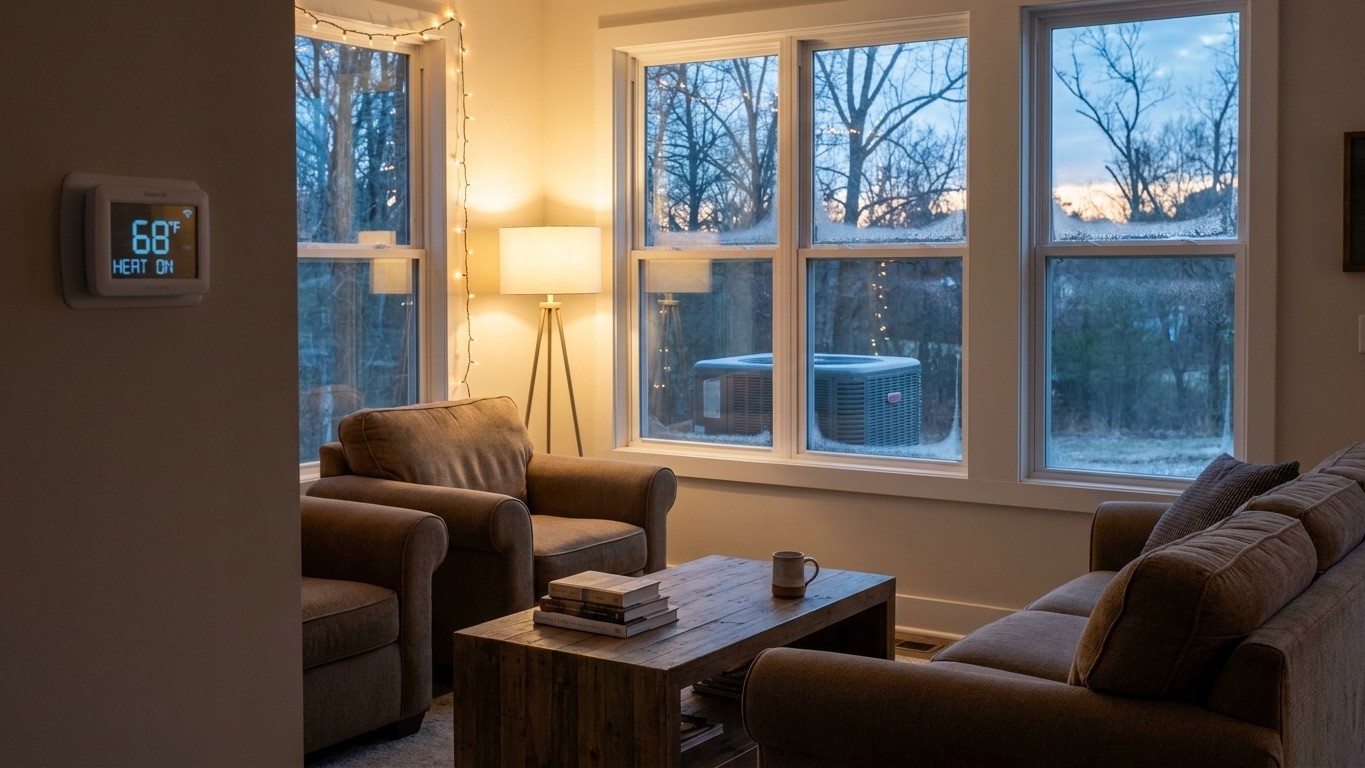

Winters in Mississippi rarely bite hard, but they linger longer than most people expect. The coldest month averages a low of 36.6°F, which sounds mild until you’re the one paying to keep a house comfortable through weeks of that chill. Here’s what actually drives your heating costs and choices.
How cold it gets, and for how long

The coldest month in the Jackson area has a mean daily minimum of 36.6°F, according to NOAA’s 1991-2020 Climate Normals. That’s not a record low, and it’s not the coldest night you’ll ever see. It’s the average low across the coldest 30 or so days of the year, which matters more for planning than any single cold snap.
A number that hovers just above freezing tells a specific story. This isn’t a two-week polar event followed by months of mild weather. It’s a slow, steady stretch where furnaces and heat pumps kick on nightly for a season that stretches roughly from late November through February, sometimes nudging into March in a stubborn year. For a closer look at When Does the Heating Season Start in Mississippi?, the pattern is worth understanding before the first cold snap hits, and knowing When Can You Turn the Heat Off in Mississippi? can help you avoid running the system longer than necessary on the tail end of the season. The equipment never has to fight single-digit temperatures, but it does have to run consistently, night after night, for a good chunk of the year.
What this means for equipment choices
Heat pumps do well in this range. They lose efficiency as temperatures drop toward freezing and below, but a low that sits around 36.6°F rarely pushes a properly sized heat pump into its weak zone. Contrast that with a territory where winter lows regularly sit in the teens or single digits: there, a heat pump alone starts to struggle, and backup heat becomes non-negotiable. In Mississippi, the math favors systems built for moderate, sustained demand rather than brief, brutal extremes.
Supplemental heat sources, wood stoves, fireplaces, space heaters in back bedrooms, tend to matter here in a different way than up north. They’re less about survival and more about comfort and cost control on the coldest nights, when running a central system harder starts to show up on the utility bill.
What a cord of wood is worth here
If wood heat is part of your plan, the first thing to get straight is what you’re actually buying. A cord isn’t a weight. It’s a volume: a stack measuring 4 feet by 4 feet by 8 feet, or 128 cubic feet total. That distinction is where a lot of firewood buyers get shorted, because a loosely stacked, oddly shaped pile can look like a cord and fall well short of one.
| Measurement | Value |
|---|---|
| Dimensions | 4 ft x 4 ft x 8 ft |
| Total volume | 128 cubic feet |
| Heat output (seasoned hardwood) | about 20 million BTU per cord |
That 20 million BTU figure, from Michigan State University Extension, is an average for well-seasoned hardwood. Species and moisture content push it up or down considerably, so treat it as a benchmark, not a guarantee for any specific load you buy. MSU puts that heat output in terms most homeowners can picture: one cord of well-seasoned hardwood is roughly equivalent to 145 gallons of #2 fuel oil, or 215 gallons of LP gas.
Density is the whole game here. A cord of a dense hardwood packs more actual wood mass into that same 128 cubic feet than a cord of a lighter species, so it burns longer and throws more heat before you’re back out at the woodpile. Given how mild and extended the Mississippi heating season tends to run, a single well-chosen cord of dense, properly seasoned hardwood can carry a household through a meaningful stretch of the season’s supplemental heating needs, though exact coverage depends heavily on how much you lean on wood versus your primary system.
How long wood takes to dry in Mississippi
Seasoning is where a lot of firewood promises fall apart, and it’s not a fixed calendar number. It depends on your climate. Green wood can hold more than 60 percent moisture, and MSU Extension recommends burning at 20 percent or less. Everything in between is water that has to evaporate before the wood does any useful heating.
Split and stacked so air can move through the pile, wood generally reaches that 20 percent target after one full summer of drying. Mississippi’s combination of long, hot, humid summers cuts both ways: the heat helps drive moisture out, but the humidity slows the process compared to a drier climate. Red oak is the notable exception. Its cell structure makes it dry more slowly than most other hardwoods, so it typically needs more time before it’s ready to burn, regardless of climate.
Burning wood before it’s properly seasoned isn’t just a minor inconvenience. The heat that should be warming your house instead gets spent boiling off trapped water, so you get less usable heat per log. That unburned moisture also condenses in the flue as creosote, which builds up faster with wet wood and means your chimney needs cleaning sooner than it would with well-dried fuel. None of this is dangerous if you keep up with sweeping, but it’s an avoidable cost and an avoidable chore. The fix is simple: split it, stack it loosely enough for airflow, and give it a full summer before you burn it, longer if it’s red oak.
Where to check before you buy
Everything above describes conditions around Jackson, the reference point for Mississippi’s climate normals. The state itself stretches from Gulf Coast lowlands to hillier terrain up near the Tennessee line, and elevation, tree cover, and local humidity patterns shift the details from one county to the next. Species availability changes too. What’s cheap and plentiful near the coast may be scarce further north, and vice versa.
Before you commit to a wood supplier or a heating strategy, check with the Mississippi State University Extension Service. Extension offices track local species availability, offer guidance suited to specific counties, and stay current on burn restrictions, which are set at the local level and can change from year to year depending on drought conditions, air quality alerts, or municipal ordinances. A call to your county’s extension office costs nothing and can save you from buying wood you can’t legally burn during a restricted period, or from picking a species that’s a poor fit for how your particular corner of the state seasons wood.