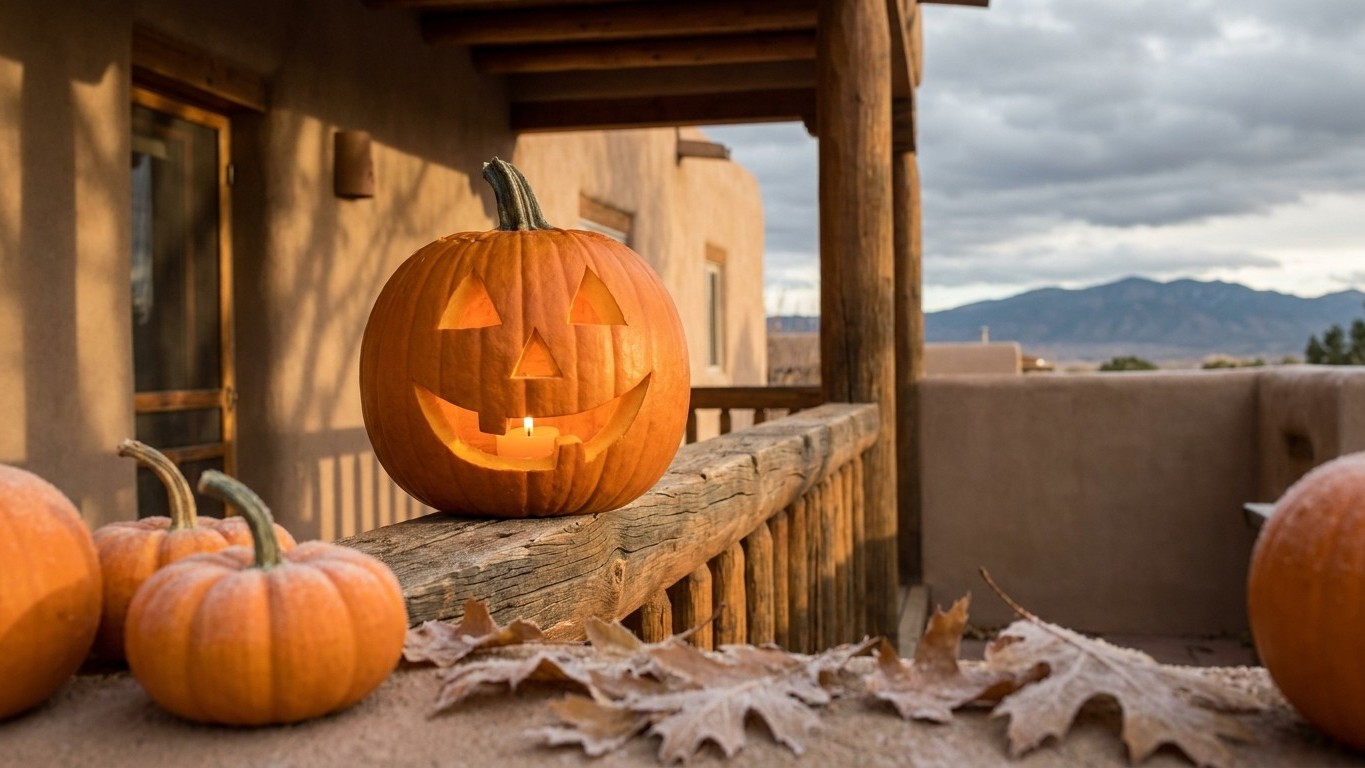

New Mexico’s mean first fall frost lands somewhere between October 29 and November 9, according to NOAA climate normals for the Albuquerque area. That window straddles Halloween almost exactly. It means a pumpkin left on a porch until October 31 usually escapes frost damage, but in some years the cold edges in a day or two early. Carve close to Halloween, and watch your local forecast the week before.
The short answer

Start with the number: the mean first fall frost for the Albuquerque reference station falls somewhere in the stretch from October 29 to October 9 of November, a span that runs from just before Halloween to more than a week after it. That’s not a single date. It’s a 30-70% probability band built from three decades of weather records, and it moves depending on where you are and how high up you sit.
For most of the pumpkins carved across New Mexico, that math works in your favor. If the average first freeze doesn’t show up until early November in a given location, then October 31 arrives with the pumpkin still safe from frost damage on most years. The carving window, in practical terms, runs right up to Halloween itself, with only the last day or two before it carrying any real frost risk at the reference station.
Here’s the catch, and it’s the one thing every gardener in this state learns eventually: New Mexico’s elevation swings are enormous. Albuquerque sits at roughly a mile up. Taos, Los Alamos, and other high-country towns sit higher still, and cold air settles into their valleys earlier in the fall. Move south and drop in elevation toward the Rio Grande valley near Las Cruces, and the growing season stretches noticeably longer. The statewide mean frost date is a starting point, not a forecast for your specific yard.
So the real answer to “when should I carve” isn’t a fixed day. It’s a window: carve anytime from a week before Halloween through Halloween itself, and treat the days right around October 29 as the point where you should start checking overnight lows if you’re at higher elevation. A pumpkin that’s still whole and uncarved tolerates a light chill far better than one that’s already been cut open, so the pressure to carve early “just in case” isn’t necessary. Wait until you’re close to the day you actually plan to display it.
Frost or heat: which one gets it here
The cold end
New Mexico’s coldest month brings a mean daily minimum of 26.4 F at the Albuquerque reference station, well below the 45-50 F band recommended for storing a whole pumpkin. That figure describes deep winter, not late October, but it tells you which direction this state’s temperature problem points. In the higher elevations, especially the northern mountains and mesa towns, the risk in late October is genuine cold: a light freeze that can nip the skin of a pumpkin left outside overnight once temperatures start dropping toward that 30-70% frost window in late October or early November.
That’s the freeze risk, and it’s real for anyone gardening or displaying pumpkins above a few thousand feet in the northern half of the state. A freeze doesn’t ruin a pumpkin instantly, but repeated cold nights soften the flesh and shorten how long it stays firm once you finally cut into it.
The warm end
Drop down into the lower-elevation valleys of southern New Mexico, around Las Cruces and the Rio Grande basin, and the picture flips. Late October there often stays mild enough that a pumpkin sitting on a sunlit porch or in a warm garage can sit above the 45-50 F storage band for weeks at a stretch. Warmth, not cold, is what shortens shelf life in these areas: it speeds up the natural softening process and invites mold before the pumpkin even gets to the front step.
New Mexico genuinely splits down the middle on this question. High country deals with an early-arriving freeze risk right around the Halloween timeframe. Low-elevation desert valleys deal with the opposite problem, warmth lingering into what should be pumpkin storage season. Knowing which side of that line your town falls on matters more than any statewide average.
Where to keep it until you carve
- Unheated garage or detached storage shed. These spaces track close to outdoor temperature without direct sun, which in most of New Mexico’s fall weather lands nearer the 45-50 F range than a heated living space would.
- A shaded, covered porch, away from the afternoon sun. Works well in the cooler northern and high-elevation parts of the state; in the warmer south, check that afternoon heat isn’t pushing the space above the storage band.
- A cool interior closet or mudroom, away from heating vents. Useful once nighttime temperatures start swinging widely, which happens often in New Mexico’s high desert climate.
- Never near a bowl of ripening fruit. Apples, potatoes, and tomatoes give off a gas that speeds up a pumpkin’s aging, according to University of Illinois Extension. Keep the pumpkin on its own shelf, not next to the produce bowl.
- Away from direct heater vents or sunny windowsills. Both push a stored pumpkin well past 50 F, which shortens the three to six months a whole pumpkin can otherwise keep.
- Handle it by the body, never by the stem. The stem isn’t a handle, it’s a seal over the pumpkin’s exposed flesh. Once it breaks off, that spot becomes an entry point for rot, so a pumpkin with 1 to 2 inches of intact stem should stay that way until carving day.
Checking this against your own county
Albuquerque’s frost data is a useful reference point, not a rule for your specific address. If you garden or display pumpkins in Santa Fe, Taos, Roswell, or anywhere at a meaningfully different elevation, the timing can shift by a week or more in either direction, and mountain valleys often see frost settle in earlier than the official reference station suggests.
The most reliable way to check your own numbers is the New Mexico State University Cooperative Extension Service, at aces.nmsu.edu. County extension offices track local frost patterns and can tell you how your specific area compares to the statewide reference figures used here.
Common questions
How long does a carved pumpkin actually last?
No university extension publishes a firm number for a carved pumpkin, and none publishes a preservation method to extend it. What’s actually documented applies to whole pumpkins: choose one with an intact stem, keep it whole in a cool dark spot between 45-50 F, and carve it close to the day you plan to display it. That’s the extent of the research-backed guidance.
Does a hard freeze mean the same thing as frost?
No. A frost is a light chill that can nip exposed skin; a hard freeze is a deeper, more sustained cold that does more damage. New Mexico’s reference frost window describes the first frost, not a hard freeze, so don’t treat the two as interchangeable when deciding when to bring a pumpkin inside.
Does my hardiness zone tell me when frost will hit?
No. A hardiness zone describes winter cold severity for growing perennial plants, not the calendar date of the first fall frost. Use the frost date data above for timing, and treat hardiness zone maps as a separate tool entirely.
Should I buy a pumpkin with a short or missing stem?
Avoid it. Look for 1 to 2 inches of stem still attached. Once that seal breaks, the exposed spot becomes the weak point where the pumpkin starts to spoil early, regardless of how good the rest of it looks.